Do You Need To Book Vesuvius In Advance?
How the Vesuvius crater ticket system works, when tickets sell out, how the last-minute release functions, and whether booking a tour in advance beats hunting for a slot.
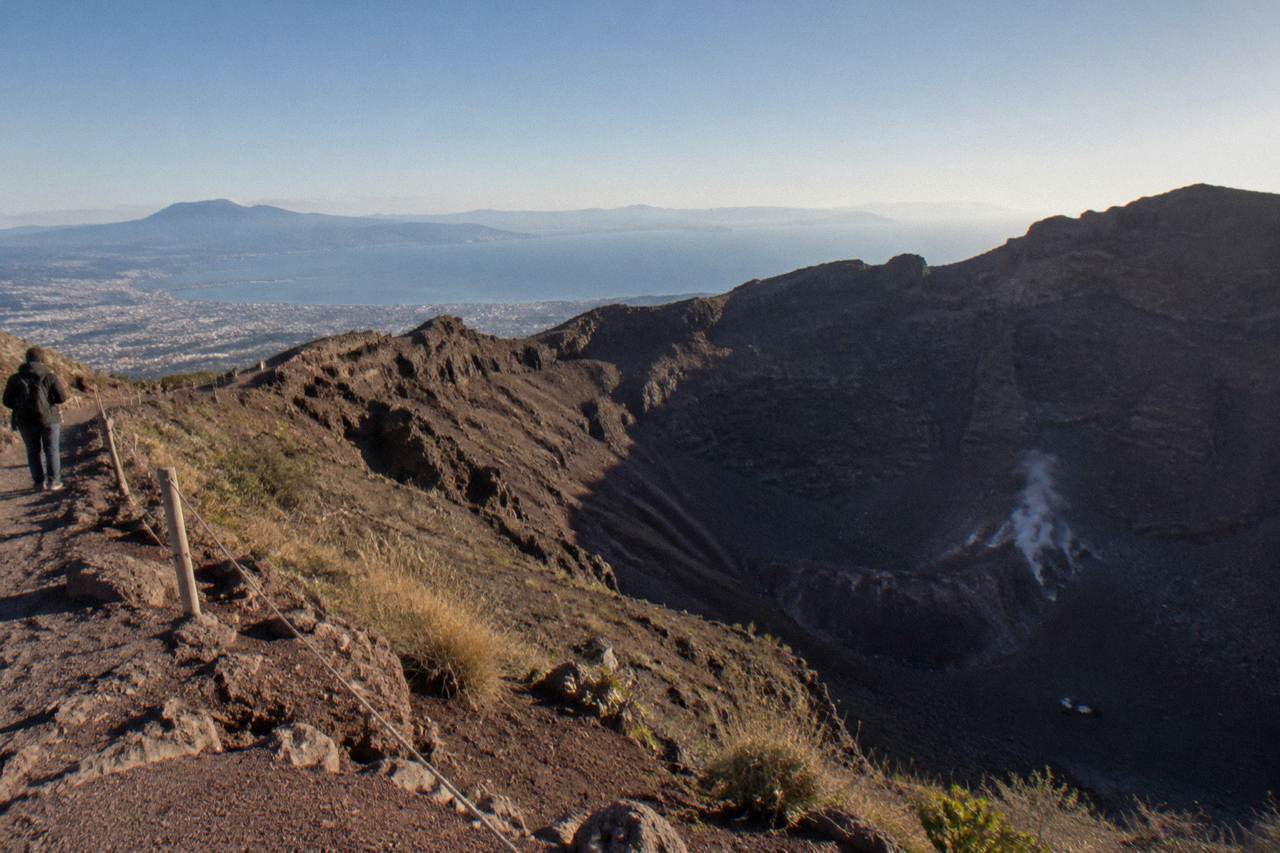
Do You Need To Book Vesuvius In Advance?
Yes, in practice you do. Vesuvius crater tickets are sold exclusively online in timed 10-minute slots of 50 people, released 30 days ahead. In July and August, when the daily cap is 3,240, popular morning slots go quickly. The park holds 20 percent of daily tickets for a last-minute release, but those are named tickets bought on the entrance wifi 30 minutes before a slot: a gamble rather than a plan.
The question sounds simple, and the mechanics behind it are stricter than most visitors expect. There is no ticket office at the crater trail where you can walk up and pay cash. The park's own access rules state that entry to the Gran Cono, the crater path everyone photographs, is "purchasable exclusively online", sold by the park's authorised online seller in slots every ten minutes. A normal ticket is then valid from 120 minutes before to 120 minutes after the printed slot, which builds some flexibility into the day once you have actually secured one.
The reason the advance-booking question sits right at the purchase decision is that a booked tour dissolves it. Products like the skip-line ticket with digital guide, from €16 per person and rated 4.2 from 3,756 reviews, fold the crater entry into the booking, so you never visit the slot calendar at all. Independent travellers, on the other hand, are competing with everyone else for the same 50-person slots released a month out.

How much pressure you face depends heavily on the season. The table below shows the daily caps the park sets by month, alongside the last access time for the crater trail. Winter caps are a third lower than summer ones, but winter demand is far lower too, so the practical squeeze is a July or August morning.
| Months | Crater access hours | Daily visitor cap |
|---|---|---|
| January, February, November, December | 09:00 to 15:00 | 2,160 |
| March, October | 09:00 to 16:00 | 2,520 |
| April, May, June, September | 09:00 to 17:00 | 2,880 |
| July, August | 09:00 to 18:00 | 3,240 |
A useful framing: the park's adult ticket is €10 under its ticketing rules; the park's authorised online seller shows €11.68. Reduced entry is €8 (€9.55 online) for under 25s and residents of the 13 park municipalities, with ID required, and children under 6 with an adult go free. Booking early costs nothing extra in principle; the online price is the price. The full breakdown of what you pay for sits in the Mount Vesuvius Tickets: What You Buy And Where guide.
How Does The Vesuvius Ticket System Actually Work?
Every crater ticket is sold online by the park's authorised seller, in 10-minute slots holding 50 people each, with inventory for a given day released 30 days ahead. A ticket is valid from two hours before to two hours after its printed slot, within opening hours. Tickets are personal, and the system enforces the daily caps the park sets for each season, from 2,160 in winter to 3,240 in July and August.
The slot architecture is the part most first-time visitors misunderstand. You are not buying a day pass; you are buying a ten-minute arrival window. Fifty people per window go up in controlled numbers, and once a window fills, it is gone from the calendar. The park's protocol caps the flow at 360 hikers per hour, admitted as 60 people every ten minutes in three groups of 20. That pacing is why the trail never feels like a stadium even in summer, and it is also why a sold-out morning cannot simply absorb extra walk-ups.
The 30-day release window matters for trip planning. If you are reading this five months before travel, there is literally nothing to book yet for the crater itself. Set a reminder for the 30-day mark before your intended visit date and buy then. Tours, by contrast, are bookable for future dates well ahead, which is one of the quiet advantages of the tour route: you confirm the whole day early and let the operator handle the slot mechanics inside its own allocation.
One more mechanic worth knowing: above 1,000 metres, every visitor is accompanied by the park's volcanological guides, and this accompaniment is mandatory for each group. You do not need to arrange it yourself. It is built into the ticketed access, and it applies whether you arrive on a €16 digital-guide product or as part of an eight-hour Pompeii combo. The park explains the slot and accompaniment rules on its official Gran Cono page.
Booking a tour instead of a bare ticket does not just save a calendar refresh. It also gives you a cancellation buffer: most roster listings, including the Herculaneum and Vesuvius tour that anchors this article, flag free cancellation on the listing, so a change of plans does not strand the money. Confirm the operator's current schedule before you travel, since trail hours shift with the seasons.
What Happens If Vesuvius Tickets Sell Out?
If a day sells out, the park releases a last-minute allocation: 10 extra tickets per slot, released 30 minutes before that slot, buyable only on the wifi near the entrance, with a maximum of 5 per email address. Twenty percent of each day's tickets are held back this way. Since a recent rule change these last-minute tickets are named, meaning the name on the ticket must match your ID.
That last-minute release is a genuine safety valve, but it deserves honest framing. Standing at 1,000 metres elevation hoping to grab one of ten named tickets on weak signal, for a slot starting in half an hour, is not a plan you build a trip day around. It works best for people already in the area with flexible timing, for example someone staying in Ercolano or Pompeii with a spare morning. For everyone else it is the fallback, not the strategy.
The stronger sellout answer is to change the product. Two roster listings in particular exist precisely for this scenario: the skip-line ticket with multilingual audio guide, from €22 per person, rated 4.4 from a small pool of 35 reviews, and the entry with transfer and audioguide from Pompeii, from €42.30 per person, rated 4.2 from 88 reviews. Both wrap crater entry into a bookable product, and both sit in the Vesuvius tickets with tour category, where the inventory picture is different from the public slot calendar.
There is also a closure rule that interacts with sellouts and refunds. The ticket office and path close automatically on days with an orange weather alert or higher, with automatic refunds for slots inside the closure. Slots adjacent to a closure are refundable on request within 30 days, and refunds are processed within 60 days. So a ticket you bought 30 days out is not money at risk from weather; the park's rules handle that case. What the rules do not handle is a family of five arriving in August with no booking at all.
Do I Need To Book Vesuvius In Advance?
For a bare crater ticket in peak summer, yes, book on the day the 30-day window opens. In shoulder months like April, May, June or September, booking a few days to two weeks ahead is usually enough for off-peak slots. In winter the pressure drops sharply, though the daily cap drops too, to 2,160. If you book any tour that includes crater entry, the advance-booking question transfers to the operator and stops being yours.
The honest version of this answer has three tiers. Tier one is July and August: the caps are at their highest, 3,240 a day, but demand outpaces them for the comfortable morning hours, and slots around 09:00 to 11:00 are the first to fill. Book at the 30-day mark. Tier two is the shoulder season, where the 2,880 daily cap meets thinner crowds and same-week booking often still finds midday slots. Tier three is November through February, when the 2,160 cap is rarely the binding constraint; the weather alert system is the bigger variable, and the flexibility of a tour with free cancellation is worth more than calendar speed.
The season also changes what the day feels like. Summit-level conditions run roughly 6 to 7 degrees cooler than Naples every month, and November is the wettest summit month in the modelled 1991-2020 climate average, with 180 mm of rain across 13.6 rain days. July is the driest, at 16 mm. Those figures are climate averages, not forecasts, but they explain why November's booking pressure is low: the view odds are worse, and the orange-alert closure rule bites more often.
| Month | Daily cap | Summit avg high/low (C) | Summit rain mm (days) |
|---|---|---|---|
| July | 3,240 | 22.1/14.5 | 16 (3.3) |
| August | 3,240 | 22.8/15.2 | 22 (3.9) |
| September | 2,880 | 18.7/12.0 | 90 (8.7) |
| October | 2,520 | 14.8/8.5 | 129 (10.5) |
| November | 2,160 | 10.4/4.9 | 180 (13.6) |
Whatever the month, one thing never changes: the walk itself. The Gran Cono trail is 4,010 metres round trip, about two and a half hours at an easy pace, with an official difficulty rating of low. Booking windows and slot calendars are the stressful part; the hike is not. If you are weighing effort against time, the piece on Can You Hike Mount Vesuvius For Free? covers what is and is not possible without paying.
Should You Book A Guided Tour Or Just A Ticket?
A bare ticket suits confident independent travellers who can work the 30-day release and reach the trailhead under their own steam. A tour suits everyone else, and especially anyone combining Vesuvius with Pompeii or Herculaneum, because the operator holds the entry allocation, arranges the transfer, and carries the cancellation flexibility. The price gap is smaller than it looks once you add transport and the risk of a wasted slot.
Consider the arithmetic. The online crater ticket shows €11.68. Add the public bus from Pompeii at €3.80 on board for the EAV 808, and the two listed costs together sit below the price of the cheapest guided product on the roster, before any Pompeii entry. The bare-ticket route is genuinely cheap, and a recent review of the transfer-with-tickets product from a guest named Mia, United Kingdom, captures the appeal: "Was great and being able to explore and walk up in our own time was amazing! The staff on both ends in Pompeii and on the volcano are friendly."
But the bare-ticket route makes you the logistics manager. The EAV 808 runs nine departures a day each way in the timetable in force from 1 October 2026, with the last uphill bus arriving at 15:25, which is after the winter last entry of 15:00, so the bus cannot be your only plan in the cold half of the year. A review of the Pompeii-to-Vesuvius bus transfer from Nicola, United Kingdom, makes the same point from the satisfied side: "Easy way to get from Pompeii to Vesuvius and back again. Well organised and they will drop you back at Pompeii station or the original meeting point."
The transfer-plus-ticket products sit in the middle of this decision, and two of the strongest are worth naming. The bus transfer with park entry included runs from €35.10 per person, rated 4.3 from 1,923 reviews. The direct transfer with guaranteed entry, also from €35.10 per person, is rated 4.4 from 1,785 reviews. Both remove the slot calendar without adding a guide's commentary, which is the right trade for many self-directed visitors. Deeper comparisons live in the Mount Vesuvius hiking tours category.
Between those poles sits the skip-line ticket with multilingual audio guide at €22 per person. It is the cheapest way on the roster to buy entry without visiting the slot system yourself, and its 4.4 rating comes from a small pool of 35 reviews, which is worth knowing rather than glossing. For a fuller treatment of the money side, including what each option costs end to end, see How Much Does It Cost To Go Up Mount Vesuvius?.
How Much Time Do You Need At Mount Vesuvius?
Budget three to four hours at Vesuvius itself: two and a half hours for the crater trail round trip, plus arrival buffer, ticket checks at the hut at 1,118 metres, and time at the turnaround at 1,170 metres. A tour that includes transfers runs three hours door to door from Pompeii or Ercolano, and half-day products from Naples run 3.5 to 4 hours including pickup.
The trail numbers come straight from the park's own infobox. The Gran Cono is 4,010 metres round trip with a top altitude of 1,175 metres, officially rated low difficulty, starting and finishing at the Quota 1000 plaza in Ercolano. Protocol rules cap a guided tour at two hours on the shortest route and three hours on the longest, which tells you the experience is bounded by design, not open-ended.
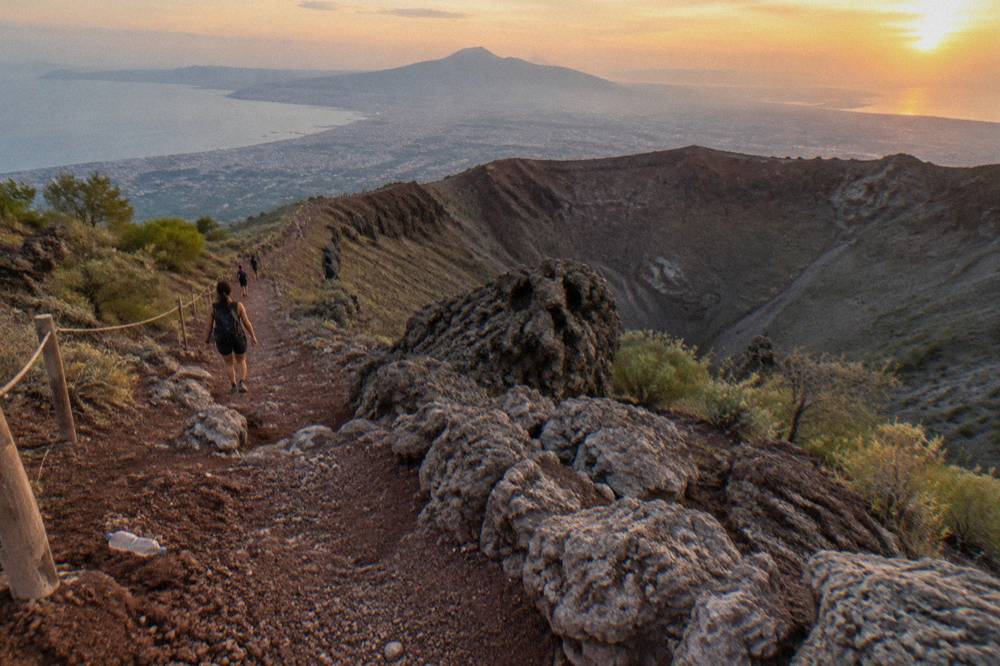
The time budget interacts with booking in one direct way: your slot time. Because a ticket is valid from two hours before to two hours after the printed slot, you have a four-hour arrival window, but the visit itself must end within one hour of the last access time for that month. In October, for instance, last access is 16:00, so the walk must be finished by 17:00 regardless of when you started. Booking a late slot with a slow morning behind you can collide with that ceiling.
For context on the wider day, if Vesuvius is one stop of several, the realistic floor for a combined ruins-and-crater itinerary is around six hours, and the fuller products run seven to eight. The small print that matters here: sunset tours are not crater hikes, because park access ends between 15:00 and 18:00 depending on month, well before dusk in every season.
How Long Do You Need For Mount Vesuvius?
For Vesuvius alone, plan half a day: roughly three hours on site, or four with a Naples pickup and transfer. Paired with Pompeii, the working floor is six hours and the comfortable standard is seven to eight. Adding Herculaneum as well pushes the day to eight or nine hours, which is exactly what the roster's three-site products are built to deliver.
The three-site day is where advance booking stops being optional in any practical sense. Coordinating a Pompeii entry, a Vesuvius crater slot and a Herculaneum arrival inside one daylight window, using public transport, is an advanced puzzle. Pompeii's own admission system now runs timed entry caps of 15,000 visitors between 9:00 and 13:00 and 5,000 between 13:00 and 17:30 in the summer season, on top of a 20,000 daily cap, and its tickets are personal and nominative. Layer the Vesuvius slot system on top and the appeal of one booking that covers everything becomes obvious. If you're unsure whether Pompeii alone justifies prebooking outside a packed itinerary, our guide to buying Pompeii tickets in advance sorts out when it genuinely matters.
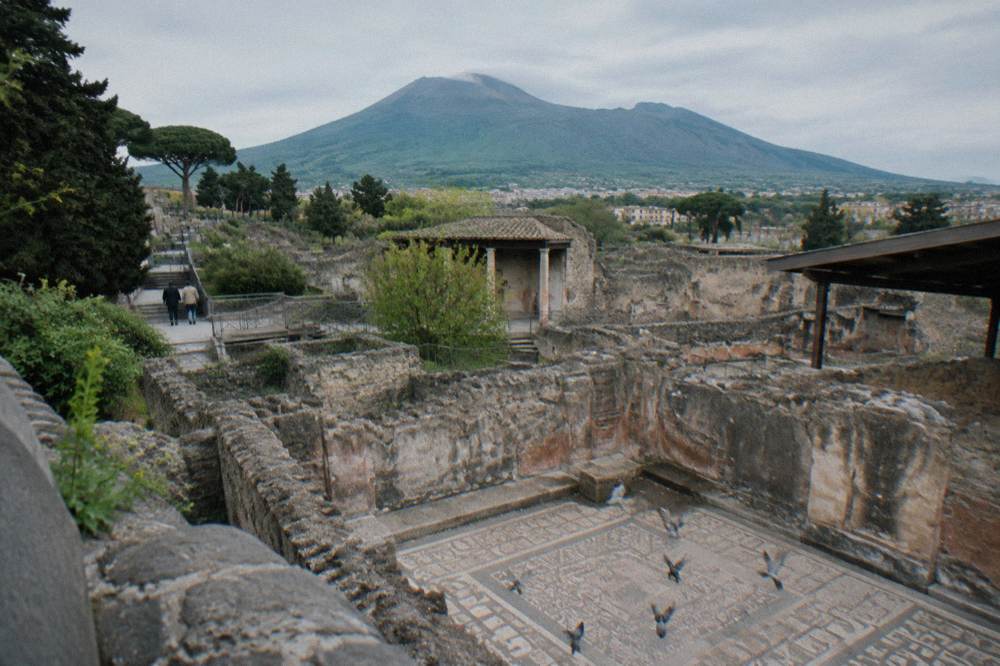
The featured option for this article is the five-hour Vesuvius and Herculaneum tour, from €84 per person, rated 4.3 from a small pool of 21 reviews. It covers two sites in one bookable morning or afternoon with transfers included, which is the exact problem the slot system otherwise forces you to solve twice. Herculaneum and Vesuvius tours as a category exist because the pairing is natural: the buried town and the volcano that buried it, an interpretive arc that a raw ticket cannot give you.
For the full three-site ambition, products like the Pompeii, Herculaneum and Vesuvius full-day tour from €112.50 per person, rated 4.1 from 1,098 reviews, or the Naples pickup three-site day from €120 per person, rated 4.6 from 588 reviews, exist specifically so that the slot calendars of three attractions become one operator's scheduling problem. Pompeii's hours, caps and ticket tiers are published on the official Pompeii visiting info page if you decide to build the day yourself.
One quiet point in favour of booking a Vesuvius tour through a site like Mount Vesuvius Tours rather than gambling on the public calendar: the roster products are bookable for future dates and most flag free cancellation, so your commitment is soft, while a bare slot ticket bought at the 30-day mark is a firm appointment with a volcano. The trail status itself is seasonal and weather-dependent, so check the operator's live listing and the park's alert notices for your dates.
Common Questions About Booking Vesuvius In Advance
Do You Need To Book Vesuvius In Advance?
Yes in peak summer, when morning slots can fill on the day the 30-day release opens. In shoulder season a few days to two weeks ahead usually secures an off-peak slot, and in winter same-week booking often works. Any tour that includes crater entry removes the question, since the operator holds the allocation.
Do I Need To Book Vesuvius In Advance?
For a bare ticket, book at the 30-day mark in July and August, a few days ahead in spring and autumn, and with flexibility in winter when the daily cap is 2,160. The last-minute release of 10 named tickets per slot, sold 30 minutes before on the entrance wifi, is a fallback rather than a reliable plan.
How Far In Advance Do Vesuvius Tickets Go On Sale?
Crater tickets are released 30 days ahead, in 10-minute slots of 50 people each, sold only online by the park's authorised seller. There is no earlier window and no on-site cash sales, so the 30-day mark is the earliest anyone can book a given day.
What Happens If Vesuvius Is Sold Out?
Ten extra named tickets per slot are released 30 minutes before each slot, buyable on the wifi near the entrance, up to 5 per email address. Beyond that, tours that bundle crater entry, such as transfer-and-ticket products from €35.10 per person, are the practical route onto the trail.
How Much Time Do You Need At Mount Vesuvius?
About three hours on site: the Gran Cono trail is 4,010 metres round trip, two and a half hours at an easy pace, plus arrival and ticket checks. With pickup and transfer from Naples, half-day products run 3.5 to 4 hours.
Do Vesuvius Tickets Sell Out?
Yes, particularly the comfortable morning slots in July and August against a 3,240 daily cap. Shoulder months sell out more slowly, and winter pressure is low, but no month is immune on clear weekends. Booking at the 30-day release, or buying a tour with entry included, removes the risk.