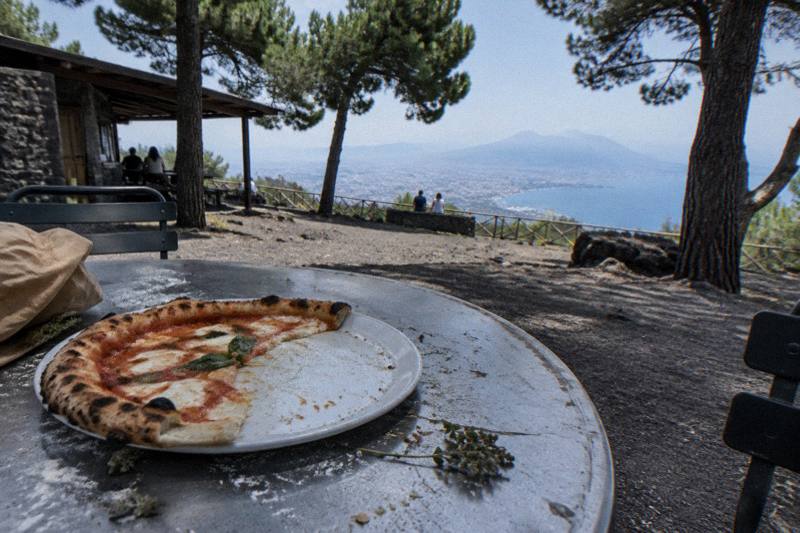
Can You Hike Mount Vesuvius For Free?
No, the Vesuvius crater trail is not free: every walker needs a slot ticket, €10 full or €8 reduced, sold only online. Here is who walks free, what else on the volcano costs nothing, and the cheapest ways up.
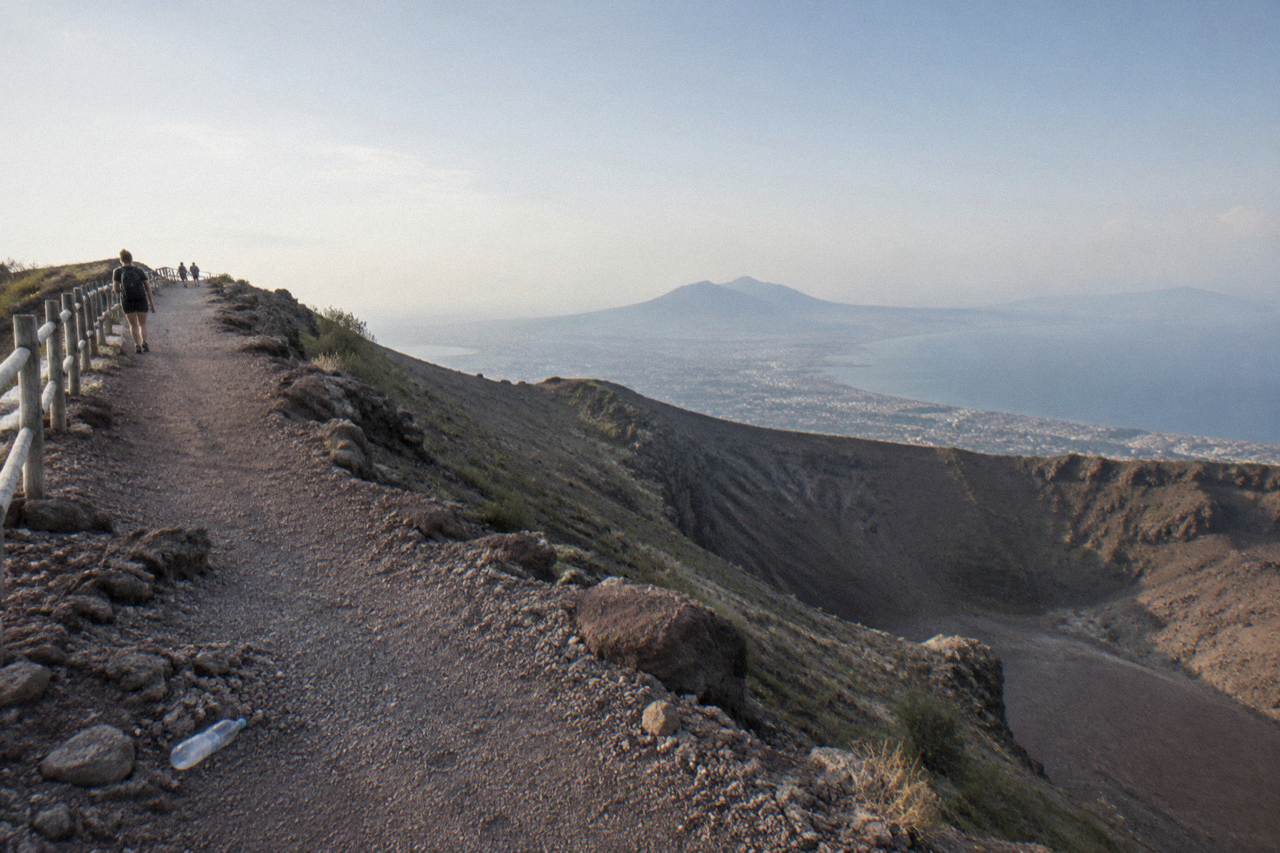
No, you cannot hike the Vesuvius crater trail for free. Every walker on Trail 5, the Gran Cono, needs a timed slot ticket bought online in advance: €10 full price under the park's ticketing rules, €11.68 as sold by the park's authorised online seller. Only children under 6 with an adult and visitors with certified disability plus one companion walk free. If the entry fee makes you pause, our comparison of the Vesuvius and Etna volcano hikes can help you decide which one deserves your money.
That is the whole answer, but the honest version has more moving parts. The ticket is not a cash grab tacked onto a public footpath: the crater trail sits inside a national park with a hard daily cap, a mandatory volcanological guide service above 1,000 m, and an online-only sales system that releases slots 30 days ahead, 50 tickets per 10-minute window. The cap runs from 2,160 walkers a day in the winter months to 3,240 in July and August. Without a ticket there is no trail, and the box office at the top does not sell them: everything is bought in advance or through the last-minute mechanism described below. Once the ticket is sorted, a related question tends to come up on the crater rim, and our guide to taking a rock home from Mount Vesuvius explains what the park rules actually say.
What can be free, or close to it, is everything around the walk. Reaching the trailhead on public transport costs a few euros. The views from the lower slopes cost nothing at all. And if your budget is genuinely zero, the free and tip-based walking tours of Naples described in our free walking tours guide cover the city end of the story, though none of them climbs the volcano. For the crater itself, the cheapest paid routes in are the short transfer-plus-ticket products, and we name the exact prices further down.
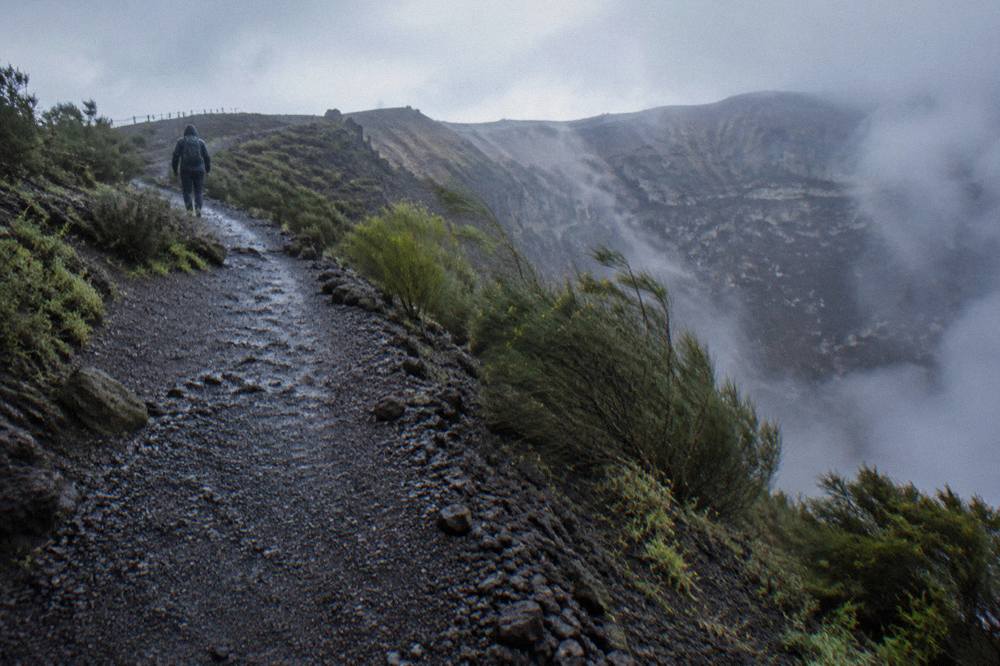
The pricing logic matters when you are comparing options. A bare ticket is €10, but almost nobody pays exactly €10 at checkout: the park's authorised online seller shows €11.68, reduced €9.55, and the park's own rules state the base figures as €10 full and €8 reduced for under-25s and residents of the 13 park municipalities, ID required. We print both numbers because the park prints both numbers, and the gap between them is a booking reality you will meet at payment. If a "free volcano hike" appears anywhere online, it is either a walk that never reaches the crater or a tour price that leaves the ticket out and collects it later.
For walkers who want the crater without a full-day tour, the three shortest, cheapest products below cover the spread: a bus-and-ticket bundle from Ercolano, an entry-plus-transfer with audioguide from Pompeii, and a bare transfer with entry from €35.10. Each is a genuine alternative to hiking "free", which does not exist.
Who Actually Walks Up Vesuvius For Free?
Exactly two groups walk the crater trail without paying: children under 6 accompanied by an adult, who take a free online ticket with ID, and visitors with certified disability plus one companion, arranged by email with the seller. Licensed guides walk free when guiding. Everyone else pays the full or reduced fare, with no student, senior or EU discount beyond the under-25 reduced rate.
The free categories are narrower than many budget guides imply. A child under 6 is free, but a 7-year-old is not, and the reduced rate for under-25s and park-municipality residents is €8 base, €9.55 as sold online, with ID checked. The disability exemption is real and specific: certified 100 percent disability plus a companion, arranged in advance rather than at the gate. There is no pensioner rate, no unemployed rate, no "free after 4pm" scheme, and no day of the week when the crater is free in the way Pompeii and Herculaneum open free on the first Sunday of each month.
The full price ladder looks like this, with both the park's base figures and the online-seller figures in one place:
| Category | Base price (park rules) | As sold online | Who qualifies |
|---|---|---|---|
| Full adult | €10 | €11.68 | Everyone not in a category below |
| Reduced | €8 | €9.55 | Under-25s and residents of the 13 park municipalities, ID required |
| Child under 6 | Free | Free online ticket, ID shown | Must be with an adult |
| Certified disability + companion | Free | Arranged by email | Certified disability |
| Licensed guides | Free | Free when guiding | Professionals guiding a group |
One more detail separates Vesuvius from almost every other hike in Italy: above 1,000 m, accompaniment by the park's volcanological guides is mandatory for every group. The guides' service is built into the ticket system, not sold separately, so there is no way to dodge it and no way to pay extra for it. That is also why "free hiking" around the crater rim does not exist in any form: the upper rim route itself is reserved for researchers, and the public turnaround sits at 1,170 m on the standard route.
Can You Reach The Vesuvius Trailhead Cheaply?
Yes, and this is where a tight budget actually bites. The EAV bus 808 from Pompei Piazza Anfiteatro to Quota 1000 costs €3.80 single on board, or €2.80 with an AC3 ticket bought in advance, and takes about 55 minutes. From the Quota 800 car park, a municipal shuttle covers the last 1.8 km for €1 each way, or you walk it in about 30 minutes for nothing.
The trailhead transport is the part of the day you control. Driving up costs parking: the municipal car parks along the provincial road run by Comune di Ercolano charge cars up to 8 seats €7 with a maximum 4-hour stay, and the park advises buying parking only after you have secured a crater ticket, because the ticket is the scarce item. There is no parking at the Quota 1000 plaza itself, and no public toilets there at present. The official parking operator's site lists the current rates by vehicle class.
| Option | Cost | Time | Notes |
|---|---|---|---|
| EAV bus 808 from Pompei Piazza Anfiteatro | €3.80 on board, €2.80 as AC3 ticket | 55 minutes | 9 runs a day each way; last bus up arrives 15:25 |
| Municipal shuttle Quota 800 to Quota 1000 | €1 each way | About 4 minutes | Alternative: 1.8 km on foot, about 30 minutes |
| Car parking, provincial road (Area B) | €7, max 4 hours | Walk or shuttle up from Quota 800 | Buy only after securing a crater ticket |
| On foot from Quota 800 | Free | About 30 minutes | 1.8 km uphill on the access road |
The bus schedule has one trap worth knowing: the last uphill run arrives at Quota 1000 at 15:25, which is after the 15:00 last winter access. In the November-to-February window, and on late October days, the later buses simply deliver you too late, so the free-ish plan only works with a morning slot. The timetable, in force from 1 October 2026, is the document to check before committing.
If even €3.80 each way feels like too much, the genuinely free alternative is to reshape the day. Hike the lower slopes from Ercolano or Trecase on public paths, or spend the money on a bundled product instead: the bus transfer to Vesuvius with park entry fee included from €35.10, rated 4.3 across 1,923 reviews, folds the ticket and the ride into one price. One guest review from Nicola in the United Kingdom sums up the format: "Easy way to get from Pompeii to Vesuvius and back again. Well organised and they will drop you back at Pompeii station or the original meeting point." Whichever option you choose, our guide to how tough the Vesuvius crater trail really is explains what the climb itself demands.
Are Any Other Vesuvius Trails Free To Walk?
The park lists 11 numbered trails beyond the crater path, and their access rules and statuses change often, so no honest page can promise a specific free trail on a specific day. What is certain: only Trail 5, the Gran Cono, reaches the crater, and it always requires the paid slot ticket. Some other paths have opened with free access and registration at times, always announced by the park.
The 11 trails run from the Valle dell'Inferno on the north side to the Pineta di Terzigno, and several of them, including the path through the Riserva Tirone nature reserve, have at times been walkable free of charge with sign-in at the entrance. But trail status on an active volcanic massif is a moving target: sections close for maintenance, weather damage and habitat protection, and the park announces changes itself. Treat any third-party page claiming a trail is "currently free" as suspect, and read the park's own trail pages before you plan a walk that is not the Gran Cono.
What those other trails never give you is the crater. The Gran Cono is the only route to the rim, and every walker on it moves through the timed-slot system described above. So the realistic free-or-cheap menu on Vesuvius is: a paid crater ticket, plus free exploring of the wooded slopes, plus free time in Naples or the archaeological parks on their free first Sundays. Trying to invert that order, free crater first, is how walkers end up at the ticket hut at 1,118 m being turned back.
The bundled short tours are worth a look even for committed budget travellers, because the arithmetic sometimes surprises people. The Mount Vesuvius tour by bus with ticket included from Ercolano, from €42 per person and rated 4.1 across 71 reviews, costs only a little more than a solo online ticket at €11.68 plus the €3.80 bus each way from Pompeii, and it removes the timing risk of the last bus. You can read the tour's own page or Check availability alongside it.
Is Mount Vesuvius A Difficult Hike?
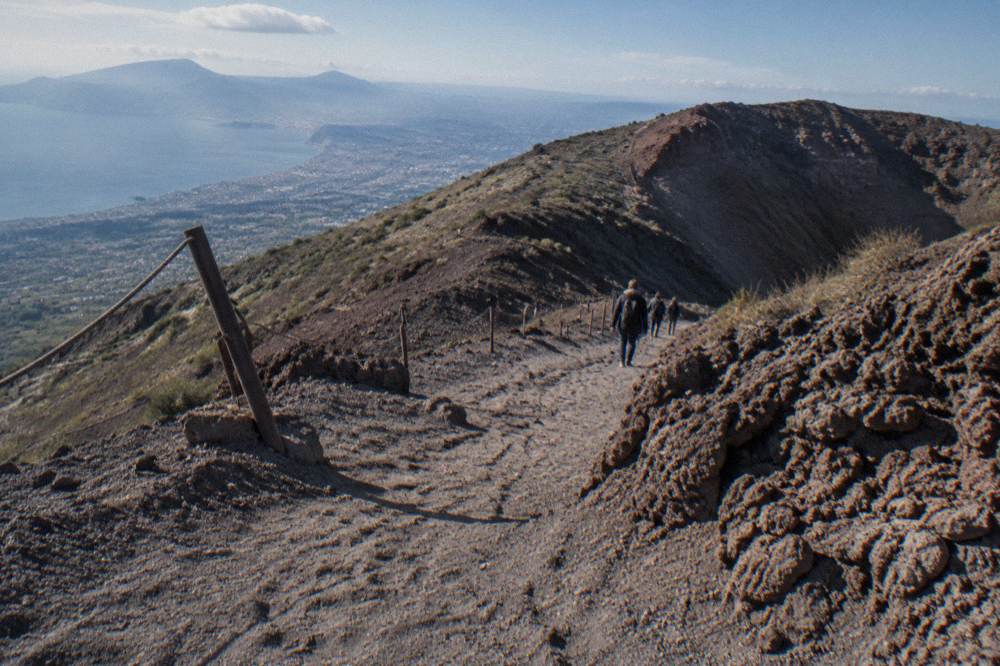
No, the standard crater walk is officially rated low difficulty: 4,010 m round trip, about 2 hours 30 minutes, on a well-worn path from the Quota 1000 plaza to a turnaround at 1,170 m. It is steep gravel, not scrambling, and the main challenges are loose volcanic ash underfoot, sun exposure with no shade, and the climb from plaza to turnaround rather than technique.
The park's own infobox calls the Gran Cono "pendente, facile e breve", sloped, easy and short, and the numbers back that up. The path starts at the Quota 1000 plaza, passes the ticket hut at 1,118 m, and turns around at 1,170 m: you climb steadily on a surface of compacted ash and loose gravel where trainers with grip beat fashion footwear every time. Visitors do not reach the 1,281 m summit, which is reserved, and they do not circle the rim: the turnaround is a viewpoint over the 580 m-wide crater with fumaroles steaming on the inner walls. One thing the trail itself will not give you is a bathroom, so check where to find toilets at Mount Vesuvius before you set off.
What catches people out is not the climbing but the conditions. The summit level runs about 6 to 7 C cooler than Naples in every month of the year, wind on the exposed upper path can strip several more degrees, and in summer the reflected heat off the ash is fierce. One review of a full-day Pompeii and Vesuvius tour from Millie in the United Kingdom makes the point in plain terms: "Very uneven surfaces and very hot in summer so trainers and water bottles." For a full segment-by-segment breakdown, our guide to how hard the Vesuvius walk really is covers the route in detail. Those same conditions are a good reason to think about how long you want to spend on the mountain, and our guide to choosing between a half-day and full-day Vesuvius tour lays out the tradeoffs.
Difficulty also depends on which product you buy, and this is where the free-versus-paid question meets the fitness question. A self-managed visit means you control your pace on the climb from the bus stop or shuttle drop. A guided product like the Vesuvius entry with transfer and audioguide from Pompeii, from €42.30 per person and rated 4.2 across 88 reviews, gives you a fixed schedule instead. Neither changes the trail itself, which is the same ash path for everyone.
Is The Hike Up Vesuvius Worth It?
For most visitors, yes, and the reasons are concrete rather than emotional: an elliptical crater 580 m across with active fumaroles on its inner walls, a standing view across the Bay of Naples to Capri and Sorrento on clear days, and the odd experience of walking a path that only exists because of the 1944 eruption. The walk costs about the price of a pizza, and no other active volcano in Europe is this accessible by public transport. Those steaming vents are a reminder that the mountain is far from dormant, and our guide to whether Vesuvius will erupt again explains what scientists are actually monitoring and how that shapes a visit.
The honest counterargument is visibility. Vesuvius stands in a humid, developed plain, and on hazy or cloudy days the bay disappears while the crater, 580 m across and steaming faintly, remains the main event. November is the wettest month at summit level with a modelled 180 mm of rain across 13.6 rain days; July the driest with 16 mm. If your date is fixed and the forecast is poor, the money is better spent on a flexible product, since most transfer tours carry free cancellation flags and the park refunds automatically when an orange weather alert closes the trail.
Worth also depends on what you would do with the same day instead. Standing on the rim of the volcano that buried Pompeii in AD 79, traditionally dated August 24 though a 2018 find at the site points to October, is a different experience from reading about it, and many walkers pair the crater with the ruins. The all-in question of cost, hours and season is laid out in How Much Does It Cost To Go Up Mount Vesuvius?, which totals the ticket, transport and food scenarios line by line.
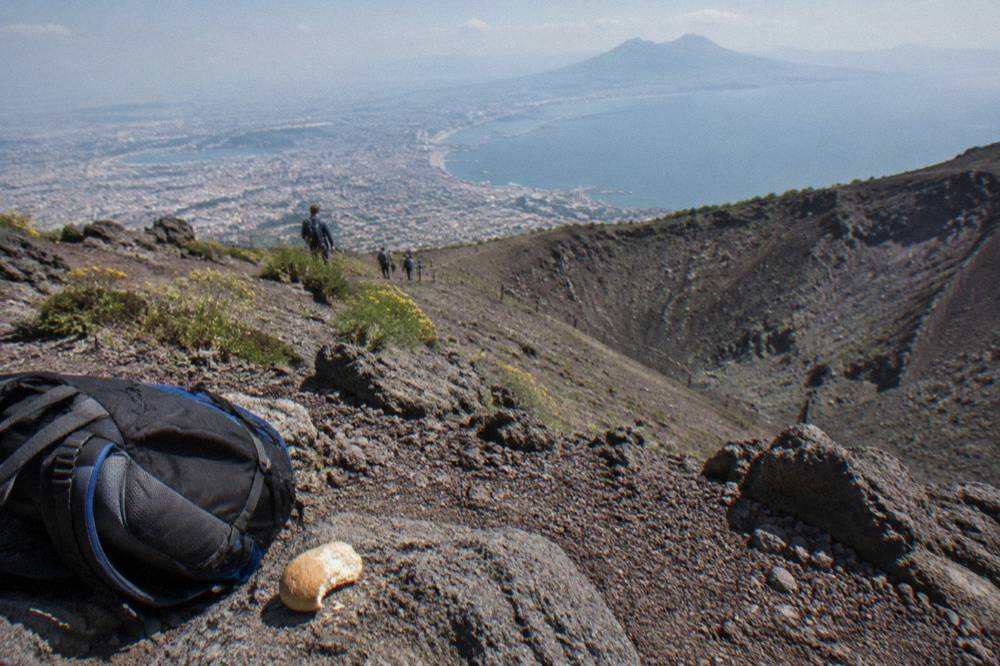
The budget verdict, having compared the listings: the crater itself justifies €11.68, the cheapest bundled transfers from Pompeii start at €35.10 per person, and the free parts of the volcano, the views from the lower roads, the park's woodland paths, the city walks below, are genuinely good rather than consolation prizes. A detailed breakdown of every ticket type, including who qualifies for reductions, sits in our Mount Vesuvius Tickets: What You Buy And Where guide.
How Do You Plan A Cheap Vesuvius Day Without A Tour?
Buy the slot ticket online 30 days out at €10 full or €8 reduced, take the EAV bus 808 from Pompeii at €3.80 or less, carry your own food and water, and pick a morning slot in a shoulder month. Done that way the whole day, Naples to crater rim and back, costs under €20 per person, and the only fixed appointment is the 10-minute entry window softened by the plus-or-minus 120 minute rule.
The sequence matters more than the amounts. Ticket first, because slots in July and August sell out and the last-minute pool of 10 named tickets per slot is a gamble, not a plan: it goes on sale 30 minutes before the slot, only on the wifi near the entrance, capped at 5 per email address. Transport second, because the bus timetable, with its last uphill arrival at 15:25, has to match your slot. Our Do You Need To Book Vesuvius In Advance? piece covers the booking windows in detail. Timing third: crater access runs 09:00 to 15:00 from November to February, 09:00 to 16:00 in March and October, 09:00 to 17:00 from April to June and in September, and 09:00 to 18:00 in July and August, with the visit required to end within an hour of last access.
| Month block | Crater access hours | Daily walker cap | Summit high/low (modelled 1991-2020 average) |
|---|---|---|---|
| January, February, November, December | 09:00 to 15:00 | 2,160 | 5.6/0.0 in January |
| March, October | 09:00 to 16:00 | 2,520 | 14.8/8.5 in October |
| April to June, September | 09:00 to 17:00 | 2,880 | 19.2/11.6 in June |
| July, August | 09:00 to 18:00 | 3,240 | 22.8/15.2 in August |
The cheap-day plan also has a weather escape built in. When the regional civil protection authority issues an orange alert or higher, the ticket office and trail close automatically, and refunds for slots inside a closure are issued without a request, within 60 days. That removes the main financial risk of booking a cheap independent day weeks ahead, and it applies to everyone, including walkers holding €8 reduced tickets.
If you would rather outsource the logistics but keep the price low, the bare transfers are the middle path. The Mount Vesuvius transfer with entry ticket, from €35.10 per person and rated 4.2 across 59 reviews, is a 3-hour round trip with pickup, and formats like it sit in the middle of the price range between a bare ticket and a full guided day. Walkers comparing guide-led versus independent days will find the fuller comparison in the site's hiking and ticketing rundowns, where guided products are listed side by side with their review counts.
One last budget note that no first page of search results says clearly: the expensive version of Vesuvius is not the ticket, it is the tour stack. A €11.68 ticket plus €7.60 of bus is under €20. Full-day Pompeii-and-Vesuvius products with lunch run from about €45 to €160 per person depending on group size and inclusions, and they earn their price in convenience, not in access. On Mount Vesuvius Tours we price both paths honestly so you can pick the one that matches your budget rather than your fears about missing out.
Common Questions About Free Vesuvius Hiking
Can You Hike Mount Vesuvius For Free?
No. The crater trail, Trail 5, requires a timed online slot ticket for every walker: €10 full or €8 reduced under park rules, sold at €11.68 and €9.55 by the authorised seller. Only children under 6 with an adult and certified disability plus companion go free.
Is There Any Way To Get A Free Vesuvius Ticket?
Only the last-minute release, and it is not free, just late. When a day sells out, 10 named tickets per slot go on sale 30 minutes before the slot, on the wifi near the entrance, at the normal price, maximum 5 per email address.
Is Mount Vesuvius A Difficult Hike?
No. The standard route is 4,010 m round trip, about 2 hours 30, rated low difficulty, running from the Quota 1000 plaza past the ticket hut at 1,118 m to a turnaround at 1,170 m. Loose gravel and sun exposure are the real challenges, not gradient or exposure.
Can You Walk On Vesuvius Without A Guide?
You can visit without booking a commercial tour, but not without the park's guides. Above 1,000 m every group is accompanied by the park's volcanological guides, a service included in the ticket system, so the crater path is never a fully self-guided walk.
What Is The Cheapest Way To Get To The Vesuvius Trailhead?
The EAV bus 808 from Pompei Piazza Anfiteatro, €3.80 single on board or €2.80 as an AC3 ticket, about 55 minutes to Quota 1000. From the Quota 800 side, the municipal shuttle is €1 each way or the 1.8 km access road is a free 30-minute walk.
Is The Hike Up Vesuvius Worth It?
For most visitors yes: a 580 m-wide crater with active fumaroles, views to Capri and Sorrento on clear days, and the only active-volcano crater walk this cheap and this reachable by public transport in Europe. Pick a clear-weather day and it earns its €11.68.