Should I Go To Pompeii Or Vesuvius First?
Compare the logistics of visiting Pompeii and the Vesuvius crater in a single day, with tips on which order saves time and how tours handle the sequence.
Should I Go To Pompeii Or Vesuvius First?
Visit Pompeii first in the morning, then head to Vesuvius for an early-afternoon hike. The crater trail closes at 15:00 in winter and 16:00 in spring/autumn, so starting with Pompeii and booking a timed Vesuvius ticket from 13:00 onward is the most reliable self-guided sequence.
That answer works for the 2026 season because Pompeii opens at 9:00 year-round, and the ruins can take a solid three hours without feeling rushed. By starting at the Porta Marina entrance you beat the excursion buses that arrive around 10:30. You walk the Forum, a couple of houses and the amphitheatre, then catch the Pompeii and Vesuvius tours hub bus or a booked transfer up to the crater. The route works especially well between April and September when Vesuvius stays open until 17:00 or 18:00 and you have a full afternoon to complete the hike.
Tours that sell both sites in a single ticket nearly always set the order: about two-thirds of them visit Pompeii first and the crater later. The typical coach tour from Naples leaves at 08:30, spends three hours in the archaeological park, breaks for lunch, and reaches Quota 1000 around 14:00. The practical reason is parking: coaches cannot idle on the narrow mountain road while a group hikes, so the operator drops everyone at the ruins, then drives up later when the midday traffic eases. If you book a tour, you do not need to decide the sequence; the operator already has.
Is It Better To Do Pompeii Or Vesuvius First?
If you have no tour booked, visiting Pompeii first is almost always the smoother choice. The archaeological park can be as short as two hours for a highlights loop, leaving the afternoon wide open for the volcano. Doing Vesuvius first means you must finish the hike and drive down before Pompeii's last entry, which in winter is 15:30 and would force a very early mountain start. The morning-ruins, afternoon-crater split works in every season.
The numbers back this up. Pompeii's ticket offices close at 15:30 from mid-October to mid-March, and at 17:30 the rest of the year. If you turned up at 14:30 after a Vesuvius morning you would have barely an hour inside, which is not enough time for even the abbreviated express route. On the other hand, the crater trail's last entry matches the rhythm perfectly: a 13:00 slot in spring or autumn gives you until 17:00 to reach the top, snap photos, and descend, and you can leave Pompeii at midday feeling unhurried.
Parking logistics reinforce the same order. Most visitors leave a car in the official Quota 800 parking area and take the municipal shuttle (€1 each way) to the trailhead. Between 07:00 and 09:00 private cars are banned on the upper road anyway, so a morning drive-up is not possible. That naturally pushes Vesuvius into the afternoon slot. Taxis and private tour vehicles can use the road at any hour, but they still need to drop you back in Pompeii in time to visit the ruins, and that tight turnaround makes independent Pompeii-first planning the safer bet.
Should I Go To Mount Vesuvius Or Pompeii First?
In a nutshell: if you are on an organised tour, the operator decides the order. If you are self-guiding, pick Pompeii first. The one exception is a half-day day-trip that only includes the crater hike. In that case you go straight to the volcano and save Pompeii for another day entirely, because squeezing both into an afternoon is not feasible.
Some tours, particularly those sold as "from-Rome" coach trips, reverse the sequence and visit Vesuvius first, then Pompeii. The reason is the long drive: they leave Rome at 07:00, reach the Quota 1000 parking around 10:30 when the trail is freshly open and the morning crowds are thin, then return to Pompeii for lunch and the ruins in the early afternoon. The schedule sounds counter-intuitive but works because the coach driver can drop everyone at the trailhead, wait, and drive straight to the Pompeii coach park afterward without backtracking. You will see the itinerary labelled clearly on the listing; check for a line that says "Vesuvius visit first" or a time-staggered plan.
If you are building your own day from scratch, a clock-based approach is useful. Pompeii's express entry is €20, its morning slot runs 9:00-13:00, and a good walk can be done in three hours. The Vesuvius ticket (€10 face value, sold at €11.68 via the authorised online seller in timed slots) can be booked for a 12:30 or 13:00 entry. This alignment means you can exit Pompeii through the Piazza Anfiteatro gate, catch the EAV 808 bus (€3.80 on board, nine departures a day) and be at the crater entrance within 55 minutes. The 13:00 up-bus from Pompei Anfiteatro reaches Quota 1000 at 13:55, leaving nearly two hours inside the park before the 16:00 closing time in October.
Can You Do Pompeii And Vesuvius In The Same Day?
Yes, absolutely, and it is the most common day trip in the region. A same-day combo works best with an organised tour that bundles transport and skip-the-line entry, but a self-guided version is straightforward if you stick to the bus timetable and pre-book both tickets. The key is to start early and treat the ruins as the morning anchor and the crater as the afternoon capstone.
An analysis of the 138 roster tours on Mount Vesuvius Tours shows the same-day combination is by far the dominant product. More than 90 of them pair Pompeii and Vesuvius in one outing, with durations between six and ten hours. The most popular meeting-point formats are Naples departures (over half the tours) and coach trips from Rome, Sorrento or the Amalfi Coast. Each tour solves the transport math so you do not have to, and the operator books the crater time slot automatically.
Below is a sample self-guided timeline that works in any month when the crater is open. Adjust the Vesuvius entry to your season using the park's hours.
| Time | Activity | Notes |
|---|---|---|
| 08:30 | Arrive Pompeii Porta Marina entrance | Express ticket €20; audio guide available |
| 08:45 | Walk Forum, baths, brothel, amphitheatre | ~2.5 km loop, mostly flat |
| 11:30 | Exit Pompeii via Piazza Anfiteatro | Walk to bus stop (5 min) |
| 12:00 | EAV 808 bus to Vesuvius Quota 1000 | €3.80 on board; 55 minutes |
| 13:00 | Start Gran Cono hike (timed slot) | 2.5 hours round trip, guided |
| 15:30 | Descend, return bus or private transfer | Check return times; last bus 16:50 |
| 16:30 | Back at Pompeii station | Connect to Circumvesuviana or parked car |
The table is aspirational: bus times shift, and a packed Pompeii morning may push the schedule 20 minutes later. For that reason, buying a 13:30 crater slot instead of 13:00 adds a sensible cushion. The park's flexibility rule allows entry up to two hours either side of your printed time, so a 13:30 ticket buys you until 15:30 in March and October, and until 15:00 in winter.
For a smoother ride, booking a Pompeii, Herculaneum and Vesuvius tour eliminates the bus-timetable anxiety entirely. The tour manages the transfers, and the morning Pompeii stop is timed to fit the crater slot the operator has pre-reserved.
The same-day pace works for visitors who want a Pompeii visit of recognised highlights only. If you want a deep dive into every insula, split the trip across two days and stay overnight in Pompei town. That slower approach also lets you pair Pompeii with Herculaneum, using the middle day for a slower, more thorough tour. The EAV 808 bus is the only practical direct link between the two sites, as our detailed guide to walking from Pompeii to Vesuvius explains.
The Pompeii Archaeological Tour & Wine Tasting at Mt. Vesuvius is a neat middle ground. It runs five hours from Pompei town in the afternoon, so you could hike the crater independently in the morning and join the guided ruins walk and vineyard lunch after 13:30. The tour covers the main Pompeii sections with an archaeologist and finishes with a seated tasting of four Lacryma Christi wines and a light lunch, leaving you free to return to Naples before dinner. Check the live listing for current availability and the exact meeting point, which is near the Pompeii ruins entrance.
Can You Walk From Pompeii To Mount Vesuvius?
No practical walking route connects the Pompeii ruins to the crater trailhead. The distance from Piazza Anfiteatro to the Quota 1000 parking is roughly 25 km by road, and on foot the trek would climb over 800 vertical metres through private farmland and steep, unmarked scrub. The only sensible ways up are the EAV 808 bus, a private shuttle, or a tour vehicle.
The old Via Vesuvio that once wound through the towns has been broken by post-eruption lava flows, and there is no continuous footpath. Google Maps will occasionally suggest a 4-hour walk, but that path includes sections of busy provincial road with no shoulder and passes through the perimeter of the national park where pedestrian access is not allowed outside the official numbered trails. Trail 5, the Gran Cono path, starts only from the Quota 1000 plaza and does not connect downwards. The park rangers insist that hikers must arrive at the trailhead by vehicle.
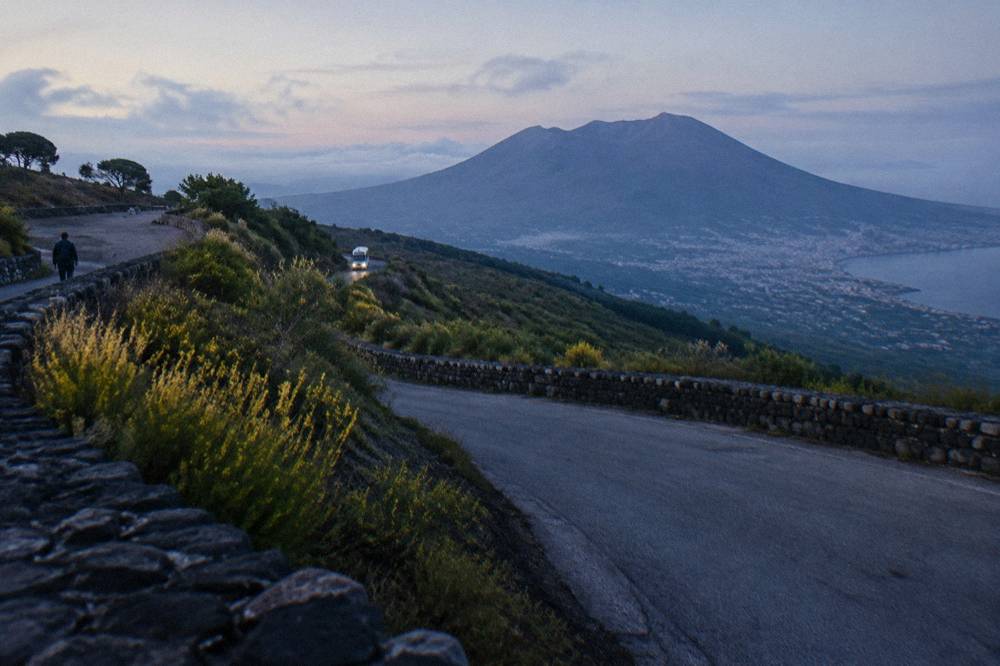
The EAV bus 808 is the fixed-route public transport option. It runs nine return journeys a day from Pompei Anfiteatro, with the first departure at 08:30 and the last up-trip at 14:30. The journey takes 55 minutes and costs €3.80 per person on board. Timetables are published on the EAV website and are valid from 1 October 2026. If you miss the last return bus at 16:50, a taxi from the upper parking will cost around €30 to €40 and can be hailed at the rank near the ticket hut; think of that as an emergency backup only.
Tours handle the transfer as part of the package. An audio-guided combo day that departs from Naples or Pompeii includes the drive in the price, and even the short, three-hour bus-transfer tours from Pompeii town will drive you up to Quota 1000, give you roughly 90 minutes at the crater, and bring you back to the station.
How Many People Died In Pompeii When Mount Vesuvius Erupted?
Estimates place the death toll in Pompeii from the AD 79 eruption at around 2,000 people, though the total number across all the buried towns and nearby villas is certainly higher. The exact figure will never be known because pyroclastic surges incinerated many bodies, and excavation has reached only about two-thirds of Pompeii's buried area so far. About 1,150 body casts have been recovered within the city walls.
The traditional date for the eruption is August 24, but a charcoal graffito found in Regio V in 2018 carries the date 17 October, leading the archaeological park to say an October date is "highly probable." Whichever summer or autumn day it was, the sequence killed in two phases. First, a heavy fall of pumice that collapsed roofs and trapped those who stayed indoors. Next, a series of pyroclastic surges that shot down the slopes at hundreds of kilometres per hour, causing instant death by thermal shock. The body casts themselves are not skeletons; they are the hollow imprints of bodies preserved in hardened ash, a fact that often surprises first-time visitors who expect to see bones.
Herculaneum suffered a different fate: the first surge arrived at night when many residents had already fled, but those who remained sheltering in the boathouses perished from heat so intense their skulls exploded. No safe zone existed within 10 km of the vent, a reality that makes standing on the crater rim today feel far more immediate. The crater you hike is the same vent that destroyed the cities below, and the emotional core of the whole day is looking down at the fumaroles while knowing you are walking on the remains of an eruption that still shapes the landscape.
A small-group Herculaneum and Vesuvius tour offers a quieter alternative for those who want the volcano plus a less crowded ancient site. The seven-hour minivan trip visits Herculaneum first, where intact wood, fresco and upper-storey buildings survive far better than at Pompeii, then drives up to the crater trail in the early afternoon. A Neapolitan pizza lunch is included. Because the Herculaneum scavi are smaller and less busy, this sequence feels more relaxed than the standard Pompeii-first plan and still delivers a full volcanic narrative. Check availability on the live listing, as group sizes are capped.
How The Order Affects A Guided Tour Day
If you book a tour, the itinerary order is fixed, and the operator has already built the day around slot availability and driving distances. You do not need to decide Pompeii-or-Vesuvius-first; the tour will state the sequence explicitly. What matters is choosing a tour whose schedule fits your travel pace and meal preferences.
The roster splits clearly into three patterns. The most common, at roughly half the tours, is a morning Pompeii stop, a midday meal included in the fare, and a 13:00-14:00 crater slot. These tours tend to finish around 17:00. They work for visitors staying in Naples, Sorrento or the Pompeii area and suit anyone who wants a structured day without lunch logistics. The second pattern, typical of Rome-originating tours, flips the order and does Vesuvius first, often aiming for the 10:00-11:00 early-day slot, then returning for a Pompeii afternoon walk. These tours are longer, around 12 hours door-to-door, and include a lunch stop on the way back. The third pattern, common with small-group and private tours, is flexible: the guide may ask the group whether they prefer the ruins or the hike first, though only if the crater slot allows it.
| Tour Sequence | Typical Departure | Crater Slot | Pompeii Time | Lunch Arrangement |
|---|---|---|---|---|
| Pompeii first, crater after | 08:30 Naples | 13:00-14:00 | 2-3 hours | Included or free time |
| Vesuvius first, Pompeii after | 07:00 Rome | 10:30-11:00 | Afternoon | On return leg |
| Flexible (small group) | From 08:00 | Booked by guide | Morning or afternoon | Set by group |
| Wine-tasting combo, afternoon only | 13:30 Pompei | Morning free | Guided 2-h walk + vineyard lunch | Included |
That variety means there is no single "best" sequence; the best plan is the one that matches your logistics. A Naples-based traveller with only one full day will find the Pompeii-first tours the easiest to fit into public transport, and a guided tour from Naples that bundles both sites removes all the logistics. The crater access hours are the hard fence. No matter which order a tour follows, the crater must be visited before the last entry, which is 15:00 in winter and 18:00 in peak summer. A tour that promises an 18:30 crater hike in October is advertising something that cannot happen legally; always cross-check the month-specific park hours. The existing guide to Pompeii and Vesuvius in one day goes deeper into timeline planning for each season.
The Wine-Tasting Wrinkle
If a combination of ruins, volcano and wine appeals, then timing the crater and Pompeii visits around a vineyard lunch gives you a third sequence. Many tours slot the tasting after Pompeii, before the crater, making Vesuvius the last activity of the day and the meal a midday break. This order works well in spring and autumn when the crater closes at 17:00 and you want a comfortable sit-down lunch rather than a rushed sandwich.
The wine tour roster lists about twenty tours that add a tasting to the ruins-and-crater mix, and the sequence nearly always runs Pompeii-wine-Vesuvius. The logic is simple: the vineyards on the southern slopes of the volcano are on the way up from Pompeii town, so a stop at a family winery such as Cantina del Vesuvio breaks the climb. A 09:00 arrival at Pompeii, a 12:00 wine tasting and light lunch, then a 14:00 crater slot leaves enough time to finish the hike and be back at the station before 17:00.
This order also sidesteps the problem of hiking on a full stomach. By doing the meal after the ruins but before the climb, the walking is done in the cooler part of the day and you are not marching uphill right after a three-course lunch. The tours that include a pizza or farm-produced lunch at the winery usually give the portion size on the listing; they tend to be light enough that hikers can manage the 2.5-hour crater round-trip.
The one tour that stands out for its blend of archeology and wine is the five-hour afternoon tour from Pompeii that pairs a guided ruins walk with a Lacryma Christi tasting. Check availability on the live listing, as the operator releases dates monthly.
Common Questions About Pompeii Or Vesuvius First
Is It Better To Do Pompeii Or Vesuvius First?
Pompeii first works best for independent travellers because the ruins open at 9:00 and can be completed by midday, leaving the afternoon open for the crater. An organised tour decides the sequence for you; the operator books the Vesuvius time slot automatically.
Should I Go To Mount Vesuvius Or Pompeii First?
Self-guided visitors should choose Pompeii first in nearly all cases. The only scenario where Vesuvius-first makes sense is a coach tour from Rome that reverses the order to save driving time. If you are hiking independently, aim for a 13:00 Vesuvius slot after a morning at Pompeii.
Can You Do Pompeii And Vesuvius In The Same Day?
Yes, it is the most popular day-trip combination from Naples. Over 90 roster tours offer both sites in a single outing, usually with a lunch stop included. A self-guided same-day plan requires an early start, a pre-booked Vesuvius ticket for 13:00 or later, and an awareness of the bus timetable back.
Can You Walk From Pompeii To Mount Vesuvius?
No walking path connects the ruins to the crater trailhead. The only public transport option is the EAV 808 bus from Pompei Anfiteatro, which takes 55 minutes and costs €3.80 on board. Private shuttles and tour vehicles cover the same route.
How Many People Died In Pompeii When Mount Vesuvius Erupted?
About 2,000 people died in Pompeii itself, with the total across all buried towns certainly higher. Pyroclastic surges caused instantaneous death, and the roughly 1,150 body casts on display are hollow ash impressions, not skeletal remains.
What Is The Best Guided Tour Of Pompeii?
A tour that includes an archaeologist guide and a skip-the-line ticket provides the most context in the limited time you have on a combo day. Several Naples-based tours pair a morning Pompeii walk with Vesuvius entry and lunch; check the live listing for the latest review count and group size.