Why Is Pompeii Called Sin City?
Uncover the truth behind Pompeii's scandalous Sin City nickname, the real archaeological evidence and the moralizing Victorian spin, plus how to visit the ruins and Vesuvius in one day.
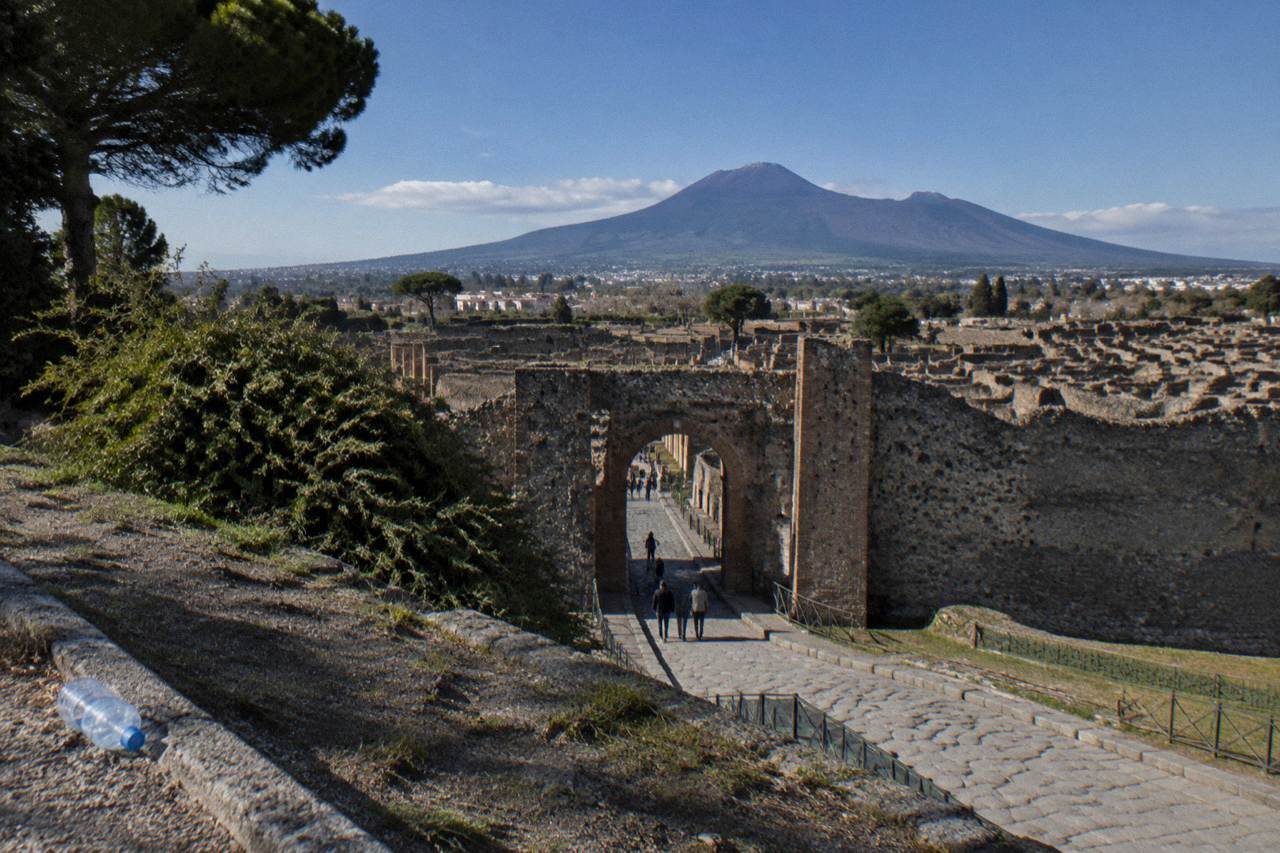
Roman Pompeii was a bustling commercial port of about 12,000 people when Mount Vesuvius buried it in AD 79, an eruption traditionally dated to August 24 though a charcoal graffito found in 2018 points to October. That catastrophe sealed an ordinary provincial city under metres of ash, preserving its bakeries, taverns, laundry notices, election slogans, and its one confirmed brothel. The Sin City label is partly a product of what early excavators chose to emphasise, a lens that saw every phallic carving as proof of moral rot. The archaeological record tells a more complicated story, one that still fascinates visitors who walk the same streets today and look up at the same volcano. Mount Vesuvius Tours keeps its coverage grounded in what the ruins actually hold, and the tours that make them accessible.
Why Is Pompeii Called Sin City?
Pompeii earned its Sin City nickname because its ruins preserved a rare concentration of erotic art, a purpose-built brothel with graphic frescoes, and hundreds of phallic symbols on walls and pavements. Early excavators treated these finds as proof of an ancient den of vice, while modern archaeologists counter that such symbols were everyday good-luck charms and the label says more about Victorian shock than ancient Roman morality.
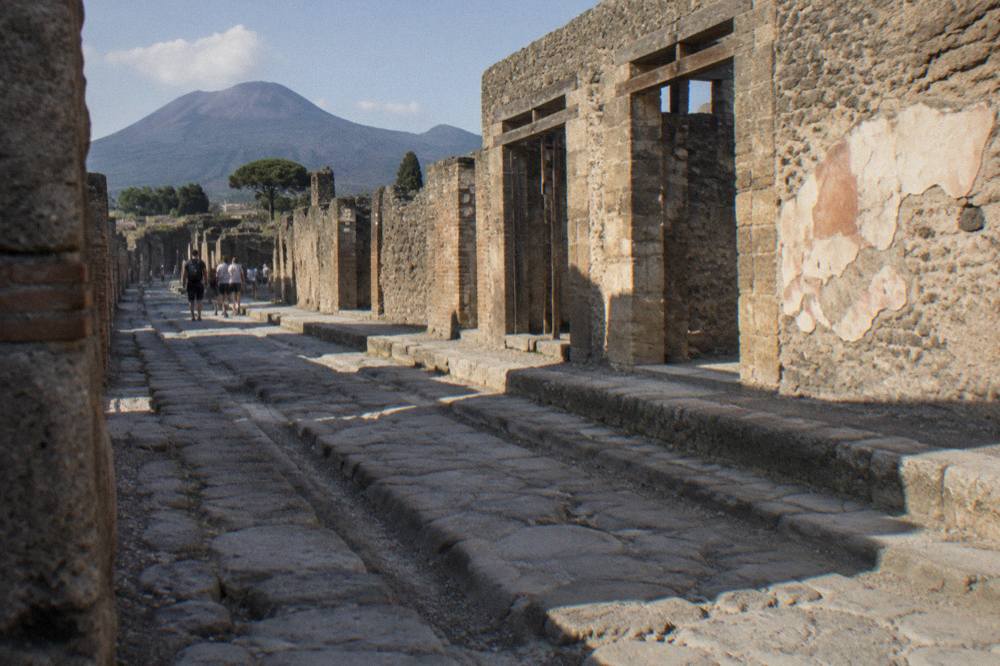
Pompeii was not exceptional in its erotic material. Rome, Ostia, and other Vesuvian towns had similar imagery, but Pompeii was excavated early and became a public spectacle. The Lupanar, the only building on the site universally accepted as a brothel, sits on a side street near the Forum. Its ten small rooms have stone beds and a series of explicit frescoes on the walls that may have served as a menu of services or simply as advertisement. The painted figures show couples in various positions, some of them humorous or theatrical rather than arousing to the modern eye. The presence of the frescoes gave the building a notoriety that spread across Europe when engravings of the images were published and circulated widely.
Away from the Lupanar, phallic symbols appear on street corners, at the entrance to bakeries, and in the paving stones of the Via dell'Abbondanza. Roman culture used the phallus as an apotropaic charm to ward off the evil eye, much like a horseshoe in later centuries. The Priapus fresco in the House of the Vettii, depicting the god weighing his own enormous phallus against a bag of coins, is a fertility and prosperity symbol, not a sex advertisement. Yet the cumulative effect on the early excavation teams and their patrons was overwhelming, and guidebooks of the era played up the scandal at every opportunity.
You can still visit the Lupanar today. The building is often crowded, especially on days when cruise ships call at Naples. A well-reviewed tour that includes an archaeologist guide will place the frescoes in their Roman context rather than leaving you with the sensationalised version. The Pompeii and Vesuvius tours hub lists several options, and many of the highly booked combos include guided walks through the Forum and the Lupanar before the drive up to the crater. Entry to Pompeii runs on nominative tickets with a daily cap of 20,000, so booking a tour that bundles entry tickets removes one layer of logistics on a busy day.
What Does The Archaeological Record Actually Show?
The vast majority of Pompeii's surviving writing is not erotic at all. More than 11,000 graffiti inscriptions have been catalogued, and the largest categories are electoral endorsements, gladiator fight announcements, price lists, personal insults, and declarations of love. The erotic material is highly visible because it is rare and striking, not because it is representative. A visitor walking a typical Pompeii street in AD 79 would have encountered far more bakery signs and workshop advertisements than brothel imagery.
The town supported approximately 34 bakeries, multiple fulleries for cleaning and processing wool, a thriving garum fish-sauce industry, and a population more concerned with the upcoming municipal elections than with vice. The electoral graffiti is relentless: "Vote for Lucius Popidius Sabinus for aedile, he is worthy" appears in multiple locations. Taverns and snack bars, called thermopolia, lined the main streets where workers grabbed quick meals from terracotta jars set into marble counters. This was a working port city, not a Las Vegas of antiquity.
The erotic frescoes that do survive come predominantly from private homes, not public spaces. The House of the Vettii, owned by two freedmen who made their money in trade, contains the famous Priapus fresco and a series of small erotic panels in a side room. The placement of these images within domestic architecture suggests they were for private viewing by invited guests, not public display. Roman attitudes toward sexuality were complex and varied, but the evidence from Pompeii simply does not support the idea of a city-wide culture of debauchery.
| Stereotype | Archaeological evidence |
|---|---|
| Pompeii was unusually debauched | Erotic imagery was common across Roman Italy; the city's fame stems from exceptional preservation, not exceptional vice. |
| The brothel frescoes prove the town was a sex hub | The Lupanar is the only building universally accepted as a brothel among hundreds of excavated structures; most similar imagery comes from private homes. |
| Phallic symbols indicate obscenity | Phalli were apotropaic charms used throughout the Roman world to ward off evil, appearing on jewellery, door knockers and street corners alike. |
| Graffiti is mostly sexual | Of more than 11,000 catalogued inscriptions, electoral endorsements, price notices and personal messages far outnumber erotic texts. |
| The eruption was divine punishment | The AD 79 eruption was a geological event, not a moral reckoning; Roman authors like Pliny the Younger described it in naturalistic terms. |
The eruption itself is often folded into the Sin City narrative as a form of divine retribution, yet contemporary Roman accounts do not support that reading. Pliny the Younger's letters to Tacitus describe the cloud, the ashfall, and the panic in naturalistic, observational prose, with no suggestion that the gods were punishing anyone. The moralising frame came later, driven partly by a popular novel and partly by a broader cultural need to find meaning in catastrophe.
Why Is Pompeii Called The Sin City?
The nickname gained lasting traction after Edward Bulwer-Lytton's novel The Last Days of Pompeii painted the city as a decadent playground destroyed by divine wrath. The book became a bestseller and shaped the English-speaking world's image of Pompeii for generations, while some religious commentators of the period framed the eruption as punishment for the city's alleged immorality, a narrative that continues to circulate in pulp tourism and social media even though the archaeological evidence does not support it.
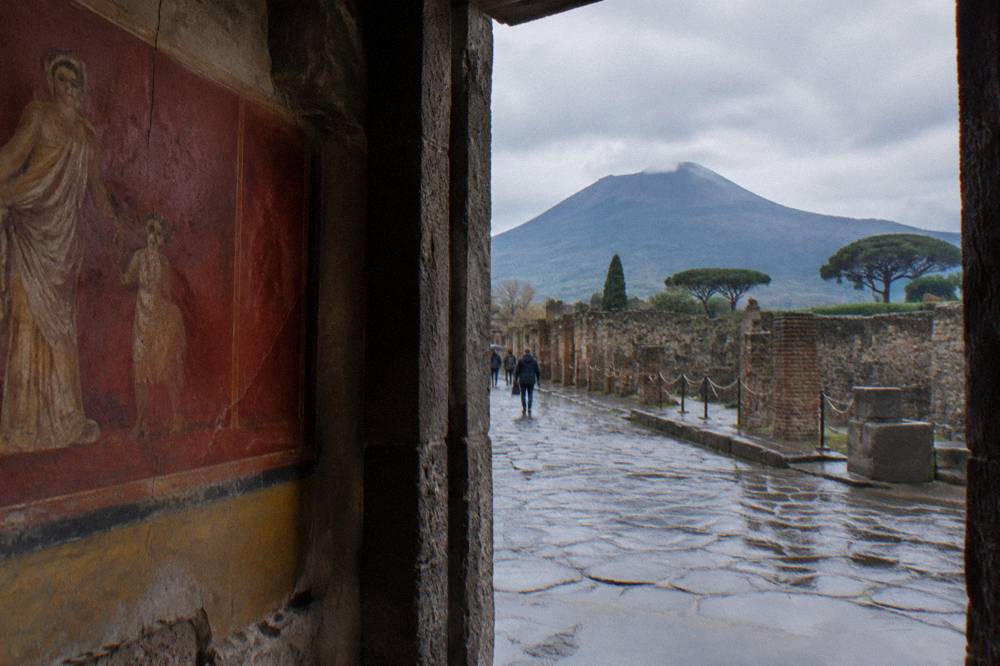
Bulwer-Lytton was not an archaeologist. His Pompeii is full of scheming priests, corrupt nobles, and a blind flower girl who represents pure Christianity about to supplant the pagan darkness. The volcano erupts as a moral reckoning, a dramatic but historically useless frame. Actual Roman moralists like Seneca and Pliny the Elder complained about luxury, gluttony, and sexual excess, but they directed their barbs at Rome and the resort town of Baiae, not at Pompeii. No ancient source singles out Pompeii as particularly immoral or sinful, and the town's surviving inscriptions suggest its residents were far more preoccupied with bread prices, property disputes, and the upcoming games at the amphitheatre.
The perception gap between the novel and the stones matters for the modern visitor. A traveller who arrives expecting an ancient Sodom will miss the real city entirely. The graffiti on the walls, far more numerous than the erotic frescoes, is mostly mundane. One inscription reads "Lucilla made money from her body," a line that might refer to sex work or might be a slander against a rival, we simply do not know. Another records that "On April 19th, I made bread." The reading of such texts demands a dose of scepticism that the Sin City label actively discourages. Walking Pompeii with a good guide, ideally one who can read the Latin inscriptions aloud and explain the context, transforms the experience from a voyeuristic curiosity hunt into a genuine encounter with Roman daily life.
If you are planning a visit and want to skip the sensationalism in favour of real historical context, the Herculaneum and Vesuvius tours category also includes several small-group options that pair the less-crowded Herculaneum ruins with the crater hike. Herculaneum was a wealthier town than Pompeii, and its preservation is in some respects even better: wooden furniture, upper-storey buildings, and even foodstuffs survived the pyroclastic flow. The contrast between the two sites helps put the Sin City label in perspective, because Herculaneum has no Lupanar and very little erotic imagery, yet it was destroyed by the same eruption on the same day.
How Does Vesuvius Fit Into The Pompeii Story?
Mount Vesuvius is central to Pompeii's story because its catastrophic eruption in AD 79 both annihilated the city and, paradoxically, preserved it under layers of ash and pumice, freezing Roman life in extraordinary detail. Standing on the crater's rim and gazing into the vent that unleashed the destruction adds a visceral, haunting dimension to the archaeological experience.
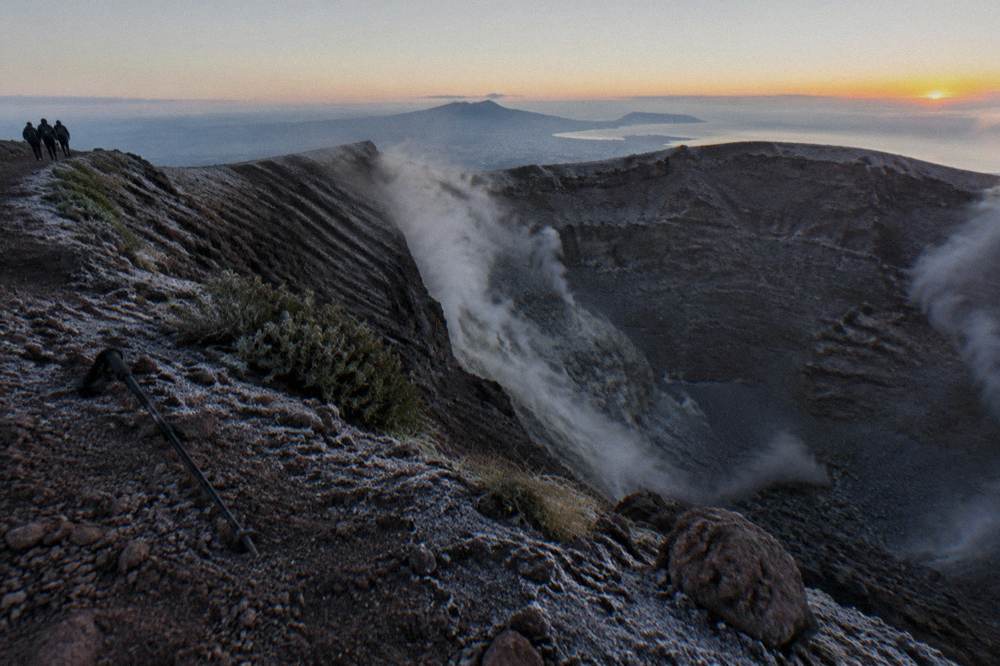
The volcano rises to 1,281 metres above sea level, and the authorised Gran Cono trail (Trail 5) is a 4,010-metre round trip that takes about two and a half hours. Every visitor above 1,000 metres is accompanied by the park's volcanological guides, a mandatory rule under the current protocol. The crater is elliptical, up to 580 metres across, and fumaroles still vent on the inner walls, a quiet reminder that the mountain is in a resting phase, not extinct. The park's adult ticket is €10 under its ticketing rules, sold through the authorised online seller at €11.68 including the booking fee, with reduced rates of €8 and €9.55 for eligible visitors and free entry for children under six with an adult.
Geologically, the AD 79 eruption was a Plinian event, named after Pliny the Younger who documented it. The column of gas and pumice rose an estimated 33 kilometres into the stratosphere before collapsing into pyroclastic surges that raced down the slopes at hundreds of kilometres per hour. The exact date has been debated since a charcoal graffito found at Pompeii in 2018 reads "XVI K Nov," meaning 17 October, leading the archaeological park team to call an October date highly probable. The traditional date remains 24 August, and the debate is unlikely to be settled definitively. What is certain is that the eruption happened in late summer or early autumn, when the city was fully populated and the harvest was being processed.
A well-reviewed combo tour that bundles Pompeii, the Vesuvius hike and a meal gives you the two halves of the story: the destroyed city in the morning, the destroyer in the afternoon. The operator on one popular listing, POMPEII & VESUVIUS: FROM NAPLES WITH LUNCH & ENTRY TICKETS, runs the day from Naples with both entry tickets included and a panoramic lunch before the crater walk. At a starting price of €45 per person across 313 reviews and a 4-star rating, the value sits in the mid-range for Naples departures that bundle both sites.
What Can You See At Pompeii Today?
At Pompeii today you can explore an astonishingly preserved Roman city, including the Forum, the grand Amphitheatre, the Lupanar brothel, the opulent House of the Faun, the frescoed Villa of the Mysteries, and the haunting plaster casts of victims, all spread across 66 hectares with about a third still buried.
Entry to Pompeii operates on a nominative ticket system with a hard daily cap of 20,000 visitors, introduced after the site saw record-breaking crowding in previous years. Between 16 March and 14 October, admission is split into two time bands: 15,000 places from 9:00 to 13:00 and 5,000 from 13:00 to 17:30. The Pompeii Express ticket, covering the ancient city only, costs €20, while the Pompeii+ at €25 adds the suburban villas and a shuttle. A three-day Pompeii Plus ticket costs €30 and includes Oplontis, Stabiae and Boscoreale. Reduced entry at €2 applies to EU citizens aged 18 to 25, and the first Sunday of every month is free with direct gate access. From 1 January 2027, a single €25 ticket valid for 30 days will cover one entry per site across the entire archaeological park, replacing the current tiered system.
| Aspect | Detail |
|---|---|
| Pompeii Express ticket | €20, ancient city only (reduced €2 for EU 18-25) |
| Pompeii+ ticket | €25, adds suburban villas and shuttle |
| Pompeii Plus 3-day | €30, includes Oplontis, Stabiae and Boscoreale |
| Daily cap | 20,000 visitors maximum |
| Summer hours (16 Mar-14 Oct) | Open 9:00, last entry 17:30, close 19:00 |
| Winter hours (15 Oct-15 Mar) | Open 9:00, last entry 15:30, close 17:00 |
| Closed | 25 December and 1 January |
| Free entry | First Sunday of every month, direct gate access |
Herculaneum, the other major site buried by the same eruption, is a compact alternative or addition. Its full ticket is €16, with the same €2 reduced rate for young EU citizens. Summer hours run 8:30 to 19:30 with last entry at 18:00, and winter hours 8:30 to 17:00 with last entry at 15:30. Herculaneum is closed only on 25 December. The Villa dei Papiri and the Ancient Theatre remain closed for excavation and restoration with no announced reopening date. If you have already read our guide to Pompeii And Vesuvius In One Day, you will know that combining both archaeological sites with the crater hike in a single day is ambitious but feasible with an organised tour, especially one that starts early and includes direct transfers between the sites.
How Can You Visit Pompeii And Vesuvius In One Day?
The most efficient way to visit both Pompeii and Mount Vesuvius in a single day is to join a guided tour from Naples. These all-inclusive excursions handle timed entry tickets, transportation between sites, a guided walk of the ruins, and a hike to the crater rim, saving you hours of logistical hassle and ensuring you experience the highlights without rushing.
The most popular combo on the Naples departure board runs at 4.8 across 9,744 reviews and starts at €53.25 per person. That particular tour includes a pizza lunch on the volcano slopes, a guided walk through the Pompeii ruins, and the crater trail with a volcanological guide. Other highly booked listings cover the same ground with variations: some substitute a wine tasting for the pizza lunch, some run in a small-group format with a minivan, and some depart from Sorrento or the Amalfi Coast for a higher per-person price that reflects the longer transfer. The key variable is whether the listing price includes the Pompeii entry ticket and the Vesuvius park ticket, and the roster shows that many do, but it is worth checking the fine print on the operator's live listing.
For independent travellers who prefer to self-guide, the logistics start with a Circumvesuviana train from Napoli Centrale or Piazza Garibaldi toward Sorrento or Poggiomarino-Via Pompei, getting off at Pompei-Villa dei Misteri for Pompeii or Ercolano Scavi for Herculaneum and the Vesuvius shuttle connections. From Pompeii, the EAV Line 808 bus runs nine departures a day from Piazza Anfiteatro up to the Quota 1000 trailhead in about 55 minutes, with a single fare of €3.80 on board. The last uphill bus arrives at 15:25, which during the winter months is after the park's last entry time of 15:00, so check the season before relying on the bus. Our article on Should I Go To Pompeii Or Vesuvius First? walks through the timing in detail and recommends doing the ruins in the cooler morning, then the hike in the afternoon when the summit light is at its best.
The Vesuvius park ticket operates on a timed-slot system, with 50 tickets released per ten-minute slot up to 30 days ahead. A last-minute release of 10 nominative tickets per slot drops 30 minutes before the slot time, buyable only near the entrance. A normal ticket allows entry from 120 minutes before to 120 minutes after the printed slot, within the park's seasonal opening hours. On days when the regional Civil Protection authority issues an orange weather alert or higher, the ticket office and trail close automatically with refunds processed for affected slots. Read the Can I Take A Guided Tour From Naples To Vesuvius And Pompeii? article for a full comparison of the guided-versus-independent decision, including what a tour operator handles that a solo traveller would need to book separately.
Is The Sin City Label Fair?
No, the Sin City label is catchy but largely misleading. Pompeii was a normal Roman town with a normal range of behaviours, preserved so completely that its private life survives in exceptional detail. The label reflects later viewers more than the people who lived there; a fairer summary is a uniquely intact window into ordinary, colourful, sometimes raunchy daily life in the years before the eruption.
The most interesting thing about Pompeii is not the brothel, it is the sheer volume of everyday survival: the carbonised loaf of bread stamped with the baker's name, the surgical instruments in the House of the Surgeon, the amphora labels that still list their contents and origin, the stepping stones that kept pedestrians' feet dry on flooded streets. The erotic material is part of that texture, and it belongs in the story, but it was never the headline for the people who called Pompeii home. They were more worried about the aqueduct pressure, the next distribution of grain, and whether their candidate would win the upcoming election for aedile. The volcano settled all those concerns in a matter of hours, and what remains is a city frozen mid-sentence, not a den of iniquity awaiting judgement.
The volcano itself is monitored continuously by the INGV Osservatorio Vesuviano, which publishes a monthly bulletin from its network of seismic and geodetic stations. The alert level has been green throughout 2026, with parameters within baseline values. The September 2026 bulletin recorded 121 small earthquakes, the strongest at magnitude 1.7, and no significant ground deformation or geochemical changes were observed. The monitoring is part of a civil protection system that covers a red zone of about 700,000 residents across 25 municipalities in Naples and Salerno provinces, and while the mountain is quiet, the infrastructure around it is built for vigilance. The walk to the crater rim is one of the few places in the world where a tourist can stand on an active volcano in a monitored, guided, ticketed setting and look straight down into a geological process that is still running, however slowly.
Common Questions About Pompeii's Sin City Reputation
Why Is Pompeii Called Sin City?
The nickname comes from the concentration of erotic frescoes, the Lupanar brothel and hundreds of phallic symbols preserved in the ash, which shocked early excavators and fed a Victorian narrative of divine punishment that was popularised by Edward Bulwer-Lytton's novel The Last Days of Pompeii. Modern archaeologists see the imagery as largely ordinary for Roman Italy, and the nickname as more revealing of the viewers than of the city itself.
Is Pompeii really a sinful city?
No. The archaeological record shows Pompeii was a working port town of about 12,000 people with bakeries, fulleries, taverns, and one confirmed brothel. The vast majority of surviving graffiti is electoral endorsements, price lists and personal messages, not erotic content. Roman culture used phallic imagery as a protective charm, not as obscenity, and no ancient source singles Pompeii out as especially immoral.
How did Pompeii get its Sin City reputation?
The reputation was shaped by three factors: the vivid preservation of erotic art that other Roman sites lost to decay, the enormous popularity of Bulwer-Lytton's novel which framed the eruption as moral judgement, and the Victorian-era fascination with the scandalous material that emerged from the excavations. Guidebooks and later popular media amplified the narrative long after archaeologists had moved on to a more nuanced interpretation.
Can you visit the brothel at Pompeii?
Yes. The Lupanar is open to visitors and is located on a side street near the Forum. It has ten small rooms with stone beds and explicit frescoes above the doorways. The building is often crowded, and a guided tour with an archaeologist will explain the context of the imagery rather than leaving visitors with the sensationalised version. Entry to Pompeii requires a timed ticket, with a daily cap of 20,000 visitors.
Is Vesuvius still active?
Yes. Mount Vesuvius last erupted in March 1944 and is currently in a quiescent phase with a green alert level. The INGV Osservatorio Vesuviano monitors it continuously, and the September 2026 bulletin recorded 121 small earthquakes under the crater, all within baseline values. The Gran Cono trail to the crater rim is open to visitors with mandatory volcanological guides and timed online tickets, and the trail closes automatically on days with an orange weather alert or higher.
How can I visit Pompeii and Vesuvius together?
Book a combo tour from Naples that bundles both entry tickets, a guided walk of the ruins, lunch, and the crater hike into a single day. The most popular listing carries a 4.8 rating from 9,744 reviews and starts at €53.25 per person. Independent travel is possible using the Circumvesuviana train to Pompei-Villa dei Misteri and the EAV 808 bus to the trailhead, but the logistics are tight and booking a tour removes the coordination between timed entries.