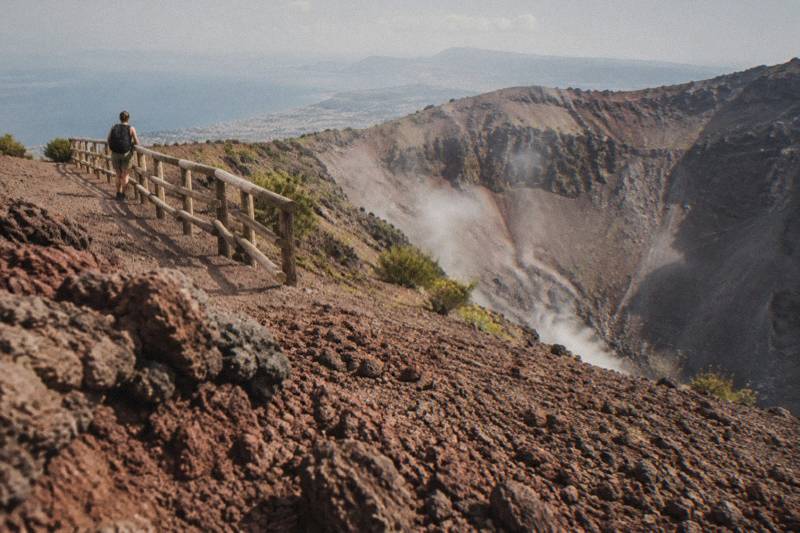
Mount Vesuvius Shuttle Bus And Parking
Vesuvius is one of the few major European attractions where the last two kilometres are genuinely awkward. Here is exactly how the parking areas, the €1 shuttle and the public bus fit together, and when a tour with transport included is the simpler call.
Short answer
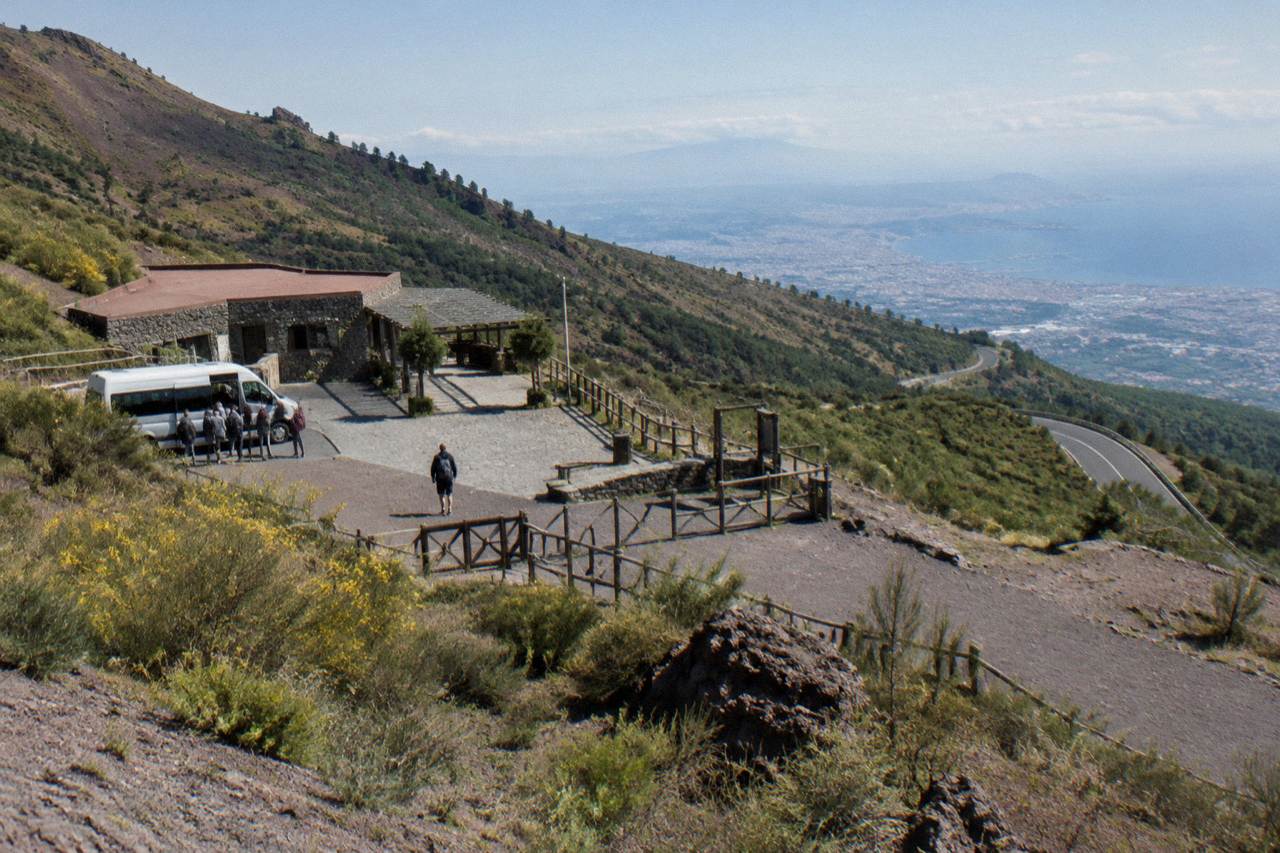
You cannot park on the Quota 1000 plaza itself. Drivers park along the provincial road, run by the Comune di Ercolano, at €7 for cars up to 8 seats with a maximum stay of 4 hours, then take the €1 shuttle about 4 minutes up to Quota 1000 or walk 1.8 km in about 30 minutes. Bus riders can take the EAV 808 from Pompei for €3.80 on board.
Vesuvius is not a drive-to-the-door attraction. The crater trail starts at the Quota 1000 plaza high on the mountain, the plaza itself allows no parking, and the road below it is managed with time limits, paid bays and a small municipal shuttle. Most confusion among visitors comes from this final stretch rather than the motorway drive or the train ride that precedes it. This guide lays out the whole chain: where cars stop, what each option costs, how the shuttle and the public bus run, and which tours fold the transport into the price so none of it is your problem.
The headline facts are simple. Parking along the provincial road is run by the Comune di Ercolano and costs €7 for cars up to 8 seats, with a maximum stay of 4 hours. The Ercolano shuttle between Quota 800 and Quota 1000 costs €1 each way and takes about 4 minutes, against roughly 30 minutes on foot for the 1.8 km stretch. The EAV 808 public bus connects Pompei Piazza Anfiteatro with Quota 1000 in 55 minutes for €3.80 paid on board. Everything below is sourced from the park's own published rules and the transport operators.
Where Do You Actually Park For Mount Vesuvius?
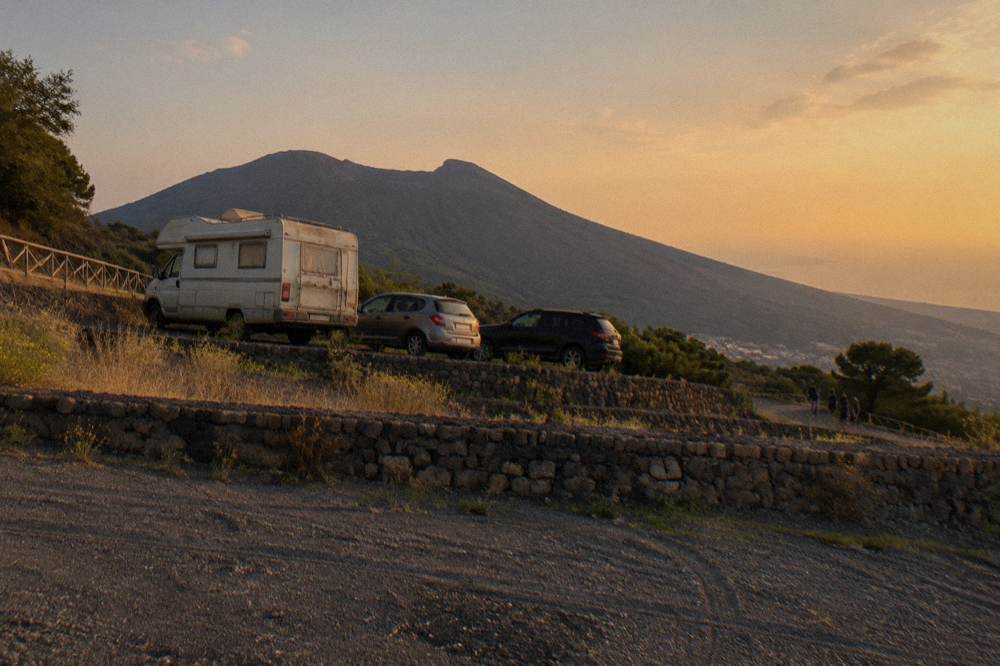
Nobody parks at the top. The Quota 1000 plaza, where the crater trail begins, is managed by the park and parking there is not allowed, and there are no public toilets there at present. All visitor parking sits below on the provincial road, run by the Comune di Ercolano: a maximum stay of 4 hours applies, with cars up to 8 seats charged €7.
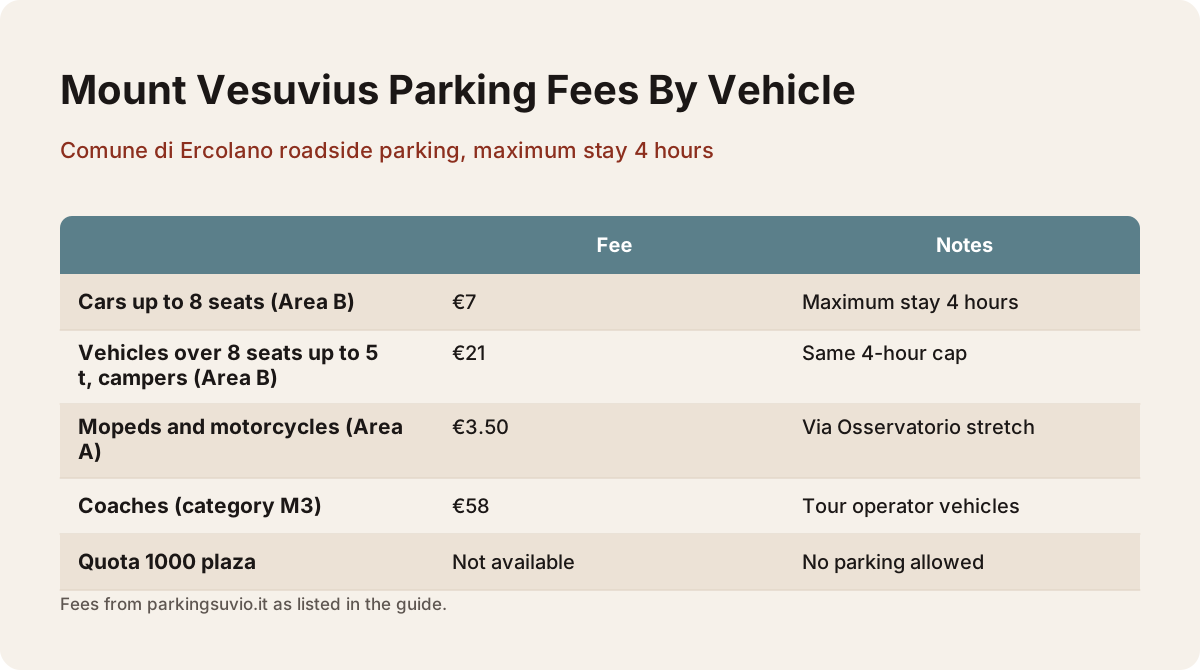
The parking operation is documented at parkingsuvio.it, which divides the roadside into areas. Area B, between the Quota 800 junction and the chairlift plaza, is where most cars land, at €7 for cars up to 8 seats. Larger vehicles up to 5 tonnes and campers pay €21 there, mopeds and motorcycles €3.50, and coaches €58. Area A covers Via Osservatorio between Quota 800 and Quota 1000 and is largely restricted rather than general parking. The 4-hour cap is enforced, and it is tight rather than generous: the crater walk is 2 hours 30 minutes round trip by the park's own estimate, so a pause at the viewpoint, a queue at the ticket hut and the shuttle ride both ways can consume most of the allowance.
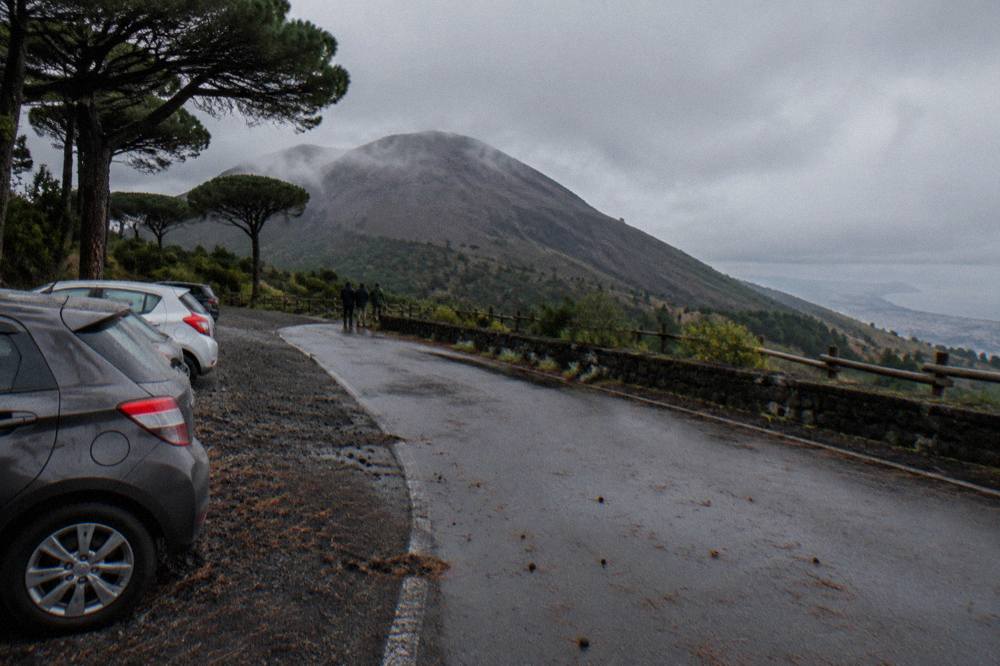
The park's own guidance is to buy your parking permit only after you have secured a Gran Cono crater ticket, not before. The crater ticket is the scarce item: it is sold only online by time slot, and the parking is not. Reversing that order is the classic way to pay €7 for a mountain you never climb.
| Parking area or vehicle | Fee | Notes |
|---|---|---|
| Cars up to 8 seats (Area B) | €7 | Maximum stay 4 hours |
| Vehicles over 8 seats up to 5 t, campers (Area B) | €21 | Same 4-hour cap |
| Mopeds and motorcycles (Area A) | €3.50 | Via Osservatorio stretch |
| Coaches (category M3) | €58 | Tour operator vehicles |
| Quota 1000 plaza | Not available | No parking and no public toilets there at present |
How Does The Shuttle From Quota 800 To Quota 1000 Work?
A municipal shuttle run by the Comune di Ercolano connects the Quota 800 parking area with the Quota 1000 trailhead for €1 each way, a ride of about 4 minutes. The alternative is walking the same 1.8 km on foot, which takes roughly 30 minutes uphill, and many visitors walk down instead to skip the queue for the return ride. The shuttle is the only wheeled link between the two levels for ordinary visitors.
The reason the shuttle exists at all is the traffic ban on Via Osservatorio. Between Quota 800 and Quota 1000, private cars are barred at set hours, with exceptions for scheduled buses, taxis, licensed hire cars, motorcycles and goods vehicles. So a visitor who drives to the mountain ends, by design, at Quota 800 and transfers. Budget the transfer in your timing: the crater closing times are last-access times, and the visit must end within one hour of the last access, so a late-afternoon arrival plus a shuttle queue plus the climb from the plaza to the ticket hut at 1,118 m can push you past the window.
Walking the 1.8 km instead of riding is a legitimate choice on the way down, less so on the way up when the clock matters. The road is paved but exposed in stretches, and the elevation gain is real even before the trail proper begins. In July and August the summit-level average high is 22.1 to 22.8 C, roughly 6 to 7 degrees below Naples at the same moment, so the walk is cooler than the coast but still a 30-minute uphill start to a hike.
Is There A Public Bus Up Mount Vesuvius?
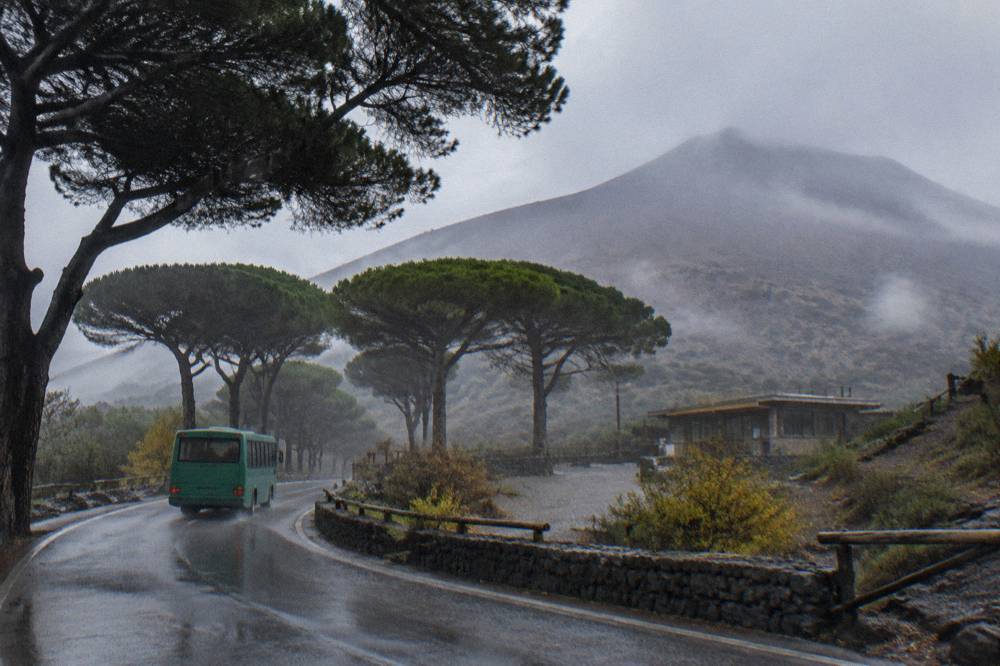
Yes, one: EAV line 808, which runs from Pompei Piazza Anfiteatro up to Quota 1000 in about 55 minutes, with 9 departures a day each way, the first up at 8:30 and the last at 14:30, last return down at 16:50. The fare is €3.80 for a single trip paid on board, or €2.80 using the AC3 ticket bought at a station or online.
The full timetable is published by EAV at eavsrl.it, with the current version in force from 1 October 2026. The bus calls at Villa dei Misteri, Porta Marina, Torre del Greco Via De Nicola, Ercolano Osservatorio and the Seggiovia at Quota 750 on its way up, which makes it a viable link not only from Pompeii itself but from points along the Circumvesuviana corridor. Fare rules sit with UnicoCampania, the regional fare body.
The catch is the last uphill run. It arrives at Quota 1000 at 15:25, which is after the last winter entry time of 15:00 and leaves almost nothing in hand in March or October, when last access is 16:00. Anyone planning the bus as their only plan needs an uphill departure no later than early afternoon. Downhill returns run until 16:50, so the way back is rarely the constraint.
| EAV 808 direction | First | Last | Frequency | Journey time | Fare |
|---|---|---|---|---|---|
| Up, Pompei Anfiteatro to Quota 1000 | 08:30 | 14:30 | 9 runs daily | About 55 minutes | €3.80 on board, €2.80 as AC3 |
| Down, Quota 1000 to Pompei Anfiteatro | 09:35 | 16:50 | 9 runs daily | About 55 minutes | Same |
Two adjacent facts matter for anyone arriving by rail. The Circumvesuviana from Napoli Centrale or Piazza Garibaldi toward Sorrento or Poggiomarino-Via Pompei serves both Ercolano Scavi and Pompei-Villa dei Misteri, either of which feeds this bus corridor. And the Campania Express tourist train is suspended from 1 October 2026, so it should not appear in any plan; ordinary Circumvesuviana services are the rail option (see Circumvesuviana Frequency). Train fares are not stated on the sources used here, so check the operator before travelling.
For readers weighing the bus against a packaged ride, the comparison set below covers the three main transfer-and-ticket formats bookable from Naples, Rome and Pompeii.
Can You Reach The Vesuvius Crater Without A Tour?
Yes. Independent visitors combine Circumvesuviana rail with either the EAV 808 bus from the Pompeii side or taxis and private shuttles from Ercolano Scavi, then buy a crater ticket online in advance, since none is sold at the trailhead. Every visitor above 1,000 m is accompanied by the park's volcanological guides regardless of how they arrived, so independence costs you the logistics effort, not the guiding.
The ticket mechanics are the part that trips people up. The park's adult ticket is €10 under its ticketing rules; the park's authorised online seller shows €11.68. Reduced tickets are €8 (€9.55 online) for under-25s and residents of the 13 park municipalities with ID, and children under 6 with an adult go free. Slots hold 50 tickets each and open 30 days ahead; if a slot sells out, 10 last-minute tickets per slot are released 30 minutes before it, buyable only via the wifi near the entrance, capped at 5 per email and issued by name. A normal ticket allows entry from 120 minutes before to 120 minutes after the printed slot, within opening hours.
The independent route works best from Pompeii, where the 808 bus does the climb. The full mechanics of that connection, including meeting the bus from the excavations, are covered in the guide to getting from Pompeii to Vesuvius. From Naples the chain is one station longer, and the route from Naples to Mount Vesuvius walks through it stop by stop.
The third leg of the triangle is the tour that removes the question entirely. The Pompeii and Vesuvius combo with transfer and tickets, from €77.40 per person with a 4.0 rating from 307 reviews, bundles bus transport from Naples with an audio guide at the ruins and crater entry handled for you. For a same-day arrival by train from the capital, the option starting in Rome or Naples, from €25 per person, 4.3 across 826 reviews, is essentially a ticket-plus-transfer product with three possible start points.
What Does Parking And Transport Cost In Total?
A self-drive visit stacks three costs: €7 for up to 4 hours of roadside parking for a standard car, €1 each way for the shuttle between Quota 800 and Quota 1000, and the crater ticket at €10 under the park's rules, shown at €11.68 by the authorised seller. Bus arrivals instead pay €3.80 on board each way and skip parking entirely. Groups should note the coach rate is €58.
That self-drive total, roughly €20 per person before food, assumes a car already at your disposal and no parking overrun. Add the 4-hour exposure: overstay and the economics sour quickly. The bus total is lower still but buys schedule rigidity, since the last uphill run lands at 15:25.
Which Vesuvius Tours Include The Transport?
A large share of the bookable products fold the ride into the price: transfer-and-ticket products from €25, half-day all-inclusive trips from €44.80, and combo days pairing Pompeii with the crater from €35.10. The distinguishing question is whether park entry is bundled or collected separately, which varies listing by listing, so check what the operator's page includes before comparing prices.
The transfer-led end of the roster is broad. The direct transfer with guaranteed entry from Naples, from €35.10, 4.4 from 1,785 reviews, is a clean example of entry bundled with the ride. The Pompeii crater transfer with ticket from Pompeii, from €49, 4.1 from 551 reviews, does the same from the excavations. Half-day all-inclusive options from Naples, from €44.80 with pickup, 4.5 from 891 reviews, suit cruise-day schedules. The full spread of shuttle-inclusive products sits on the Vesuvius transfer and ticket tours listings, and the departure-based roster from the city is covered by the tours from Naples pages.
| Tour | From | Rating and reviews | What the listing includes |
|---|---|---|---|
| Bus transfer with park entry fee | €35.10 per person | 4.3 from 1,923 reviews | Pickup, park entry |
| Direct transfer with entry tickets | €35.10 per person | 4.4 from 1,785 reviews | Pickup, guaranteed entry |
| Vesuvius Easy Tour, Naples or Pompeii | €35.10 per person | 4.3 from 244 reviews | Transfer, base format |
| From Pompeii crater transfer with ticket | €49 per person | 4.1 from 551 reviews | Shared bus, entry ticket |
| Half-day all-inclusive from Naples | €44.80 per person | 4.5 from 891 reviews | Pickup, all-inclusive format |
A guest review on the bus transfer product captures the appeal plainly: "Easy way to get from Pompeii to Vesuvius and back again. Well organised and they will drop you back at Pompeii station or the original meeting point." That is Nicola from the United Kingdom, and her point is the whole argument: on a day when you also want Pompeii, a transfer product removes the single biggest planning variable.
What Are The Driving Rules On Via Osservatorio?
Via Osservatorio, the stretch between Quota 800 and Quota 1000, bars private cars at set hours, specifically 07:00 to 09:00 and 13:00 to 16:00, with exceptions for scheduled buses, taxis, licensed hire vehicles, motorcycles and goods vehicles. Outside those windows the logic still pushes ordinary visitors to park low and shuttle up, because the Quota 1000 plaza has no public parking in any case.
The route to the mountain itself is straightforward: leave the A3 Napoli-Salerno at Torre del Greco and follow the SP144 to the Quota 800 car park, about 15 minutes and 7.3 km from the motorway exit. Drivers should hold the parking purchase until the crater ticket is confirmed, since the park's own page advises exactly that order, and treat the 4-hour stay cap as a hard boundary for the day's schedule.
One further traffic note: the roadside parking operation is the Comune di Ercolano's, not the park's, so disputes or questions about bays and permits go to the municipal operator rather than park staff at the top. Visitors arriving by hire car from Naples will find the whole drive signposted but should not expect to reach the trailhead itself by wheel.
For travellers without a car who still want door-to-trail convenience, the question of which transport mode wins from the city has its own write-up in What Is The Best Way To Get To Vesuvius From Naples?, comparing train, bus and packaged transfers in detail.
When Should You Arrive To Beat The Crowds?
Aim for a morning slot: crater access opens at 09:00 in every month, and the flow is metered at 60 people every 10 minutes, three groups of 20, capped at 360 hikers per hour. Daily caps range from 2,160 in January, February, November and December to 3,240 in July and August, so the squeeze is real in summer, and a slot before noon gives the most buffer.
The seasonal clock matters as much as the calendar. Last access is 15:00 from November through February, 16:00 in March and October, 17:00 from April through June and in September, and 18:00 in July and August. The visit must end within one hour of last access, and the last uphill 808 bus arrives 15:25, which already fails the winter window. Bus-based visitors need an uphill departure by mid-morning to be safe; drivers have more slack but still face the shuttle queue and the 4-hour parking cap.
| Months | Crater access hours | Daily visitor cap | Last uphill 808 bus arrives 15:25, workable? |
|---|---|---|---|
| Jan, Feb, Nov, Dec | 09:00 to 15:00 | 2,160 | No, after last access |
| Mar, Oct | 09:00 to 16:00 | 2,520 | Only just, no buffer |
| Apr, May, Jun, Sep | 09:00 to 17:00 | 2,880 | Yes, with margin |
| Jul, Aug | 09:00 to 18:00 | 3,240 | Yes, comfortably |
Weather closures are automatic, not discretionary: an orange regional weather alert or higher shuts the ticket office and trail for the day, with automatic refunds for slots inside a closure and refunds on request within 30 days for adjacent slots. Since November is the wettest summit month in the modelled 1991-2020 climate average, at 180 mm across 13.6 rain days, winter visitors should keep a flexible plan and watch the forecast rather than the calendar alone.
Bus Or Car: Which Suits Your Vesuvius Day?
Take the bus if you are already committed to Pompeii the same day, travelling light, and starting after an early Circumvesuviana run. Take the car if your party is three or more, you want shoulder-season timing, or the itinerary includes wineries and Herculaneum. Take a tour with transport in either case if the 4-hour parking cap or the shuttle chain sounds like stress rather than logistics.
The honest arithmetic favours the car for families once per-head bus fares multiply, and the bus for solo travellers and pairs who would otherwise pay €7 of parking plus €2 of shuttle for one or two people. The wildcard is the packaged transfer, which starts at €35.10 per person and removes both the driving and the ticket mechanics. A useful middle path from the Ercolano rail side is the roundtrip bus and entry product from Ercolano, from €36, 4.2 from 1,308 reviews, which pairs the Circumvesuviana arrival with a guaranteed climb.
For a fuller framing of the whole site, including the volcano's 1,281 m summit measured by INGV and the fact that the public trail ends at 1,175 m, the overview at Mount Vesuvius Tours collects the planning pieces in one place. The shuttle question is ultimately a small one inside a bigger decision, but it is the one that most often decides whether the day runs smoothly.
Is The Vesuvius Bus Or Shuttle Option Good For Cruise Passengers?
Cruise passengers docked in Naples are usually better served by a shore-excursion or pickup product than by the public chain, because the 808 bus starts in Pompei and the Circumvesuviana connection adds two legs and schedule risk to a fixed sailing time. Tours from Naples with pickup start from €51 per person with priority ticketing, and port-area products handle the return timing for you.
The Naples shore excursion pairing Vesuvius with Pompeii and a pizza lunch, from €129.73 per person, 4.0 from 316 reviews, is built around exactly this constraint. Shorter options exist for half days in port; the Vesuvius and Pompeii tour from Naples Port with tickets included, from €94.50, 4.3 from 117 reviews, is one. The schedule logic is blunt: a ship leaves when it leaves, and a missed 808 bus or a shuttle queue is a risk no cruiser needs.

The final choice rarely comes down to price. A family of four in a hire car pays less self-driving than on any tour, but carries the parking cap, the shuttle queue and the online ticket system. A pair on the bus pays the least of anyone and accepts the timetable. The transfer products, from €25 per person for the Rome or Naples ticket-and-transfer format upward, buy back the hours that public transport spends. Whichever way you lean, book the crater slot first and build outward from it, because that is the one element of the day that genuinely sells out.
For most readers the practical summary is this: park low at Quota 800, ride the €1 shuttle or walk the 1.8 km, and never plan to touch the plaza by car. From Pompeii, the 808 bus is cheap and works, provided you ride up in the morning. From Naples, weigh the train-plus-bus chain against a transfer product honestly, because the savings are modest and the failure modes are real.
Common Questions About The Vesuvius Bus And Parking
Can You Park At The Top Of Mount Vesuvius?
No. The Quota 1000 plaza is managed by the park and allows no visitor parking, and there are no public toilets there at present. All parking is on the provincial road below, run by the Comune di Ercolano, at €7 for cars up to 8 seats with a maximum stay of 4 hours.
How Much Is The Shuttle From Quota 800 To Quota 1000?
The Ercolano shuttle costs €1 each way and takes about 4 minutes. Walking the same 1.8 km takes roughly 30 minutes, and many visitors ride up and walk down.
Is There A Public Bus To Mount Vesuvius?
Yes, EAV line 808 from Pompei Piazza Anfiteatro to Quota 1000, about 55 minutes, 9 departures a day each way under the timetable in force from 1 October 2026. The fare is €3.80 on board or €2.80 as an AC3 ticket. The last uphill run arrives 15:25, too late for winter last access at 15:00.
Can You Buy A Vesuvius Crater Ticket On The Mountain?
No. Tickets are sold exclusively online by time slot through the park's authorised seller, released 30 days ahead, at 50 per 10-minute slot. If a slot is gone, 10 last-minute tickets are released 30 minutes before it, buyable only via the wifi near the entrance, by name, max 5 per email.
Does The Vesuvius Bus Or Parking Close For Bad Weather?
The trail and ticket office close automatically on any day with an orange regional weather alert or higher, with automatic refunds for slots inside the closure. Check the alert status and the operator's schedule for your travel day before setting out.
Is A Tour With Transport Included Cheaper Than Driving?
Not always, but it removes the variables. Transfer-and-ticket products start from €25 per person depending on the start point, while a self-drive day costs about €20 per adult in parking, shuttle and ticket, before the cost of the car itself. Tours add value mainly through guaranteed entry and fixed return timing.