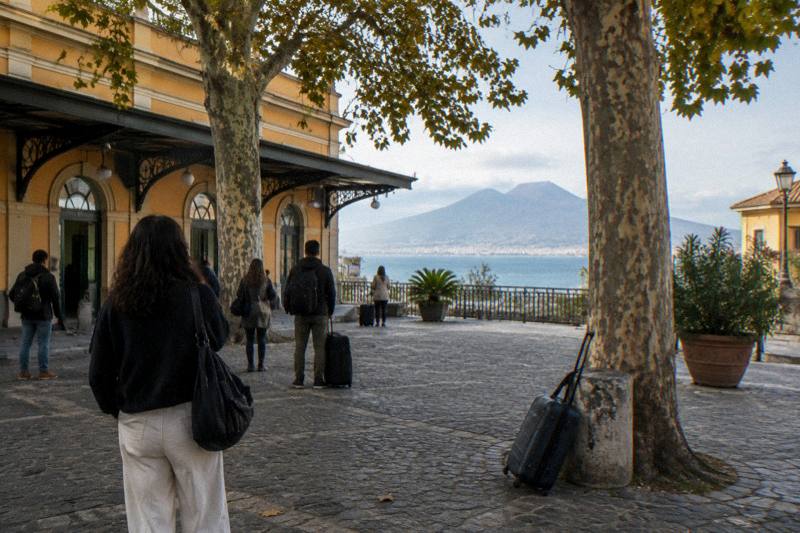
How Often Does The Circumvesuviana Train Run?
The Circumvesuviana connects Naples, Pompeii and Ercolano, but what does that mean for a Vesuvius visit? Route names, the EAV bus 808 timetable and how to plan a train-plus-bus day.
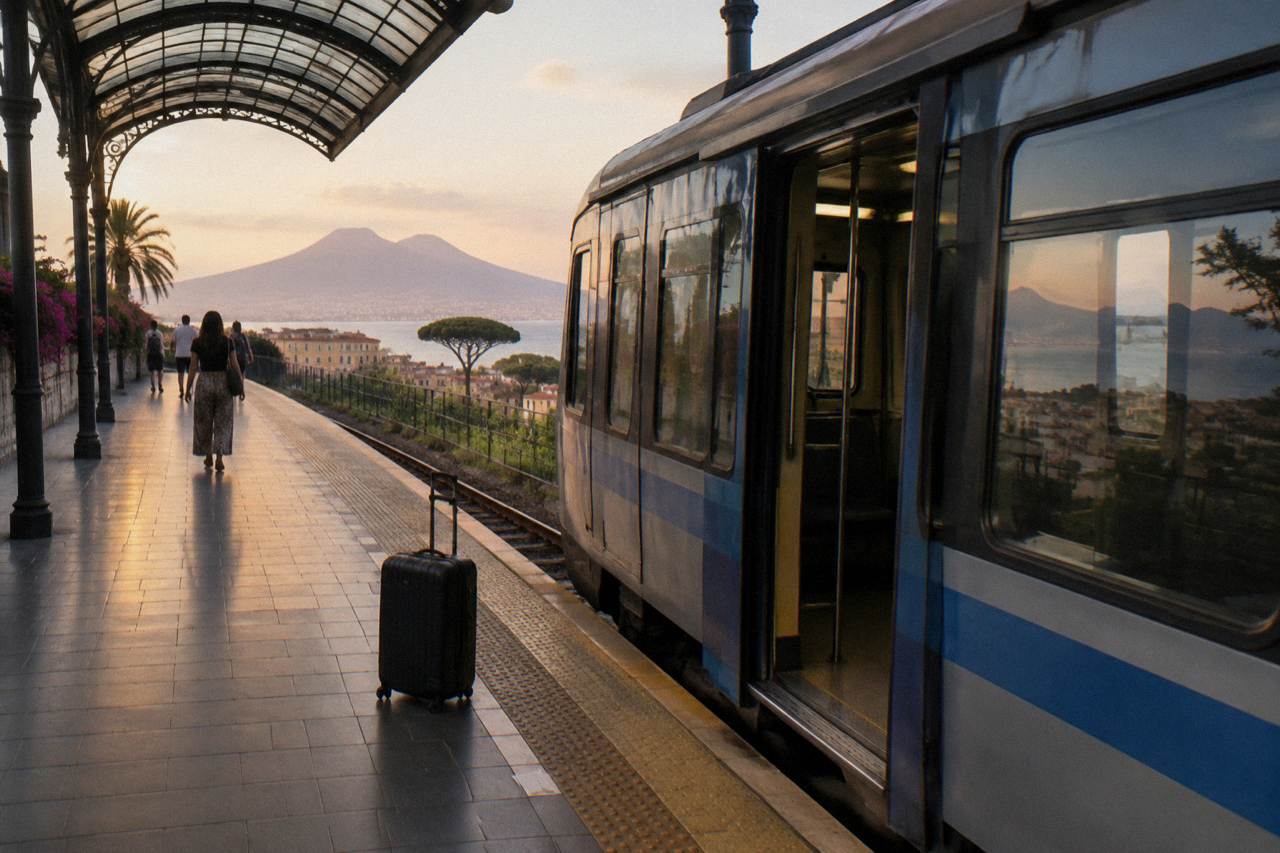
The Circumvesuviana is the narrow-gauge network that fans out from Naples across the Vesuvian plain, and for visitors it is the spine of almost every independent plan to see Pompeii, Herculaneum and the volcano itself. The honest answer about how often the trains run is that the timetable changes, we do not print an unverified frequency, and the operator's own timetable pages are the source that never goes stale. What we can state with confidence is the shape of the network, the two stations that matter for a Vesuvius day, and the public bus that actually finishes the climb. If the volcano itself is the reason you're riding that train, our guide to whether Vesuvius might erupt again explains what the monitoring data actually shows.
This matters more than it sounds. A traveller who gets the train leg right but misses the connection up the mountain loses half a day, because the crater path has fixed access hours and a fixed last entry. The sections below walk through the route names, the verified EAV bus 808 timetable with nine runs up and nine down, what the tickets cost, and where a booked tour quietly beats the timetable. This page sits alongside the wider planning material on Mount Vesuvius Tours, where the tour categories and seasonal guides fill in everything the train cannot.
How Often Does The Circumvesuviana Train Run?
The exact train frequency is not something this site can quote: timetables are revised and we do not print unverified figures. What is verified is the network shape: trains leave Naples toward Sorrento and toward Poggiomarino-Via Pompei, stopping at Ercolano Scavi for Herculaneum and Vesuvius shuttles, and at Pompei-Villa dei Misteri for Pompeii and the EAV bus up the volcano. Check the operator's timetable before travelling. If the train sounds like more hassle than you fancy, our guide to the best Pompeii tours from Naples covers options that handle the transport for you.
That answer feels incomplete to anyone standing on a platform, and the reason for it is simple. The operator, EAV, adjusts schedules, and any frequency we printed here would date the page the moment a new timetable came into force. What does not change is the geography. From Napoli Centrale and Piazza Garibaldi, Circumvesuviana trains run on two lines that matter to visitors: the Sorrento line and the Poggiomarino-Via Pompei line. Both pass the Vesuvian towns. The station names to memorise are Ercolano Scavi, which sits a short walk from the Herculaneum excavations and serves as the classic jumping-off point for taxis and private shuttles to the crater trailhead, and Pompei-Villa dei Misteri, which serves the Pompeii excavations at the Porta Marina side and is where the public bus to the volcano starts. If the ride from the station up to the crater is the part you're mapping out, our guide to the shuttle bus from Pompeii to Vesuvius explains how the public service and the bookable transfers compare.
The park itself publishes this routing guidance on its Gran Cono access page: take the Circumvesuviana from Naples, get off at Ercolano Scavi or Pompei-Villa dei Misteri, and continue up by shuttle or bus. Sorrento-based visitors are pointed at Pompei-Villa dei Misteri as well, since the Sorrento line passes through it. In other words, whatever the minute-by-minute frequency on the day you travel, the decision tree is stable: Ercolano for the shortest route up the mountain, Pompei for the ruins-first plan.
There is one dated fact worth carrying, because it changes the advice: the Campania Express, the premium tourist train that once ran the same corridor, has been suspended from 1 October 2026 until further notice. It should not appear in any current plan. The ordinary Circumvesuviana lines and the buses are the rail-based options that remain.
If reading a timetable and then gambling on a connection is not your idea of a holiday morning, the alternatives below change the calculus. The featured option on this page is the Vesuvius and Pompeii transfer with audio guide, from €86 per person with a 4 rating across 79 reviews, which handles both legs so the timetable becomes someone else's problem.
Where Does The Circumvesuviana Take You For Vesuvius And Pompeii?
The network takes you to the foot of the mountain, never up it. Ercolano Scavi station serves Herculaneum and the shuttle and taxi services to the Quota 1000 trailhead plaza; Pompei-Villa dei Misteri serves the Pompeii excavations and the EAV bus 808 to the same plaza. No train reaches the crater trail, which starts at 1,000 metres above sea level and is served only by road.
Think of the Circumvesuviana as a delivery system for two doorways. The first doorway is Ercolano Scavi, on the Sorrento line, minutes from the Herculaneum archaeological park and close to the access road that switchbacks up to the crater car park. Private shuttles and taxis wait around the station area in visitor season, and several tour operators collect here. The second doorway is Pompei-Villa dei Misteri, which puts you at the western entrance of Pompeii and at the origin of EAV bus line 808, the only public bus that climbs to the trailhead plaza itself.
The distinction matters because the two doorways suit two different days. An Ercolano-first plan gives you the shortest drive to the volcano and pairs naturally with Herculaneum, the smaller, better-preserved of the two buried towns. A Pompei-first plan gives you the bigger site and the certainty of a scheduled public bus up the mountain, at the cost of a longer ride on the switchbacks. Our how-to-get-from-Pompeii-to-Mount-Vesuvius guide, at How To Get From Pompeii To Mount Vesuvius, walks through that second option in detail, including what to do if a bus is full.
For a fuller picture of the operators that collect at these stations, browse the Vesuvius tours from Pompeii and Ercolano category on this site: it lists the departures that begin where the train drops you, so a tour pickup can replace the bus leg entirely. The choice between the two stations is also a choice between tour families, since Ercolano departures lean toward volcano-first days and Pompeii departures lean toward combined ruins-and-crater itineraries.
Is the transfer-plus-tour combo worth it over the do-it-yourself train day? For most first-time visitors, yes, and not only for comfort. The crater access hours are fixed, the bus up from Pompeii has only nine runs a day, and a tour that includes park entry removes the single most common failure point of an independent plan, which is arriving at Quota 1000 without a crater slot. The listing for this transfer flags free cancellation, so the commitment is low.
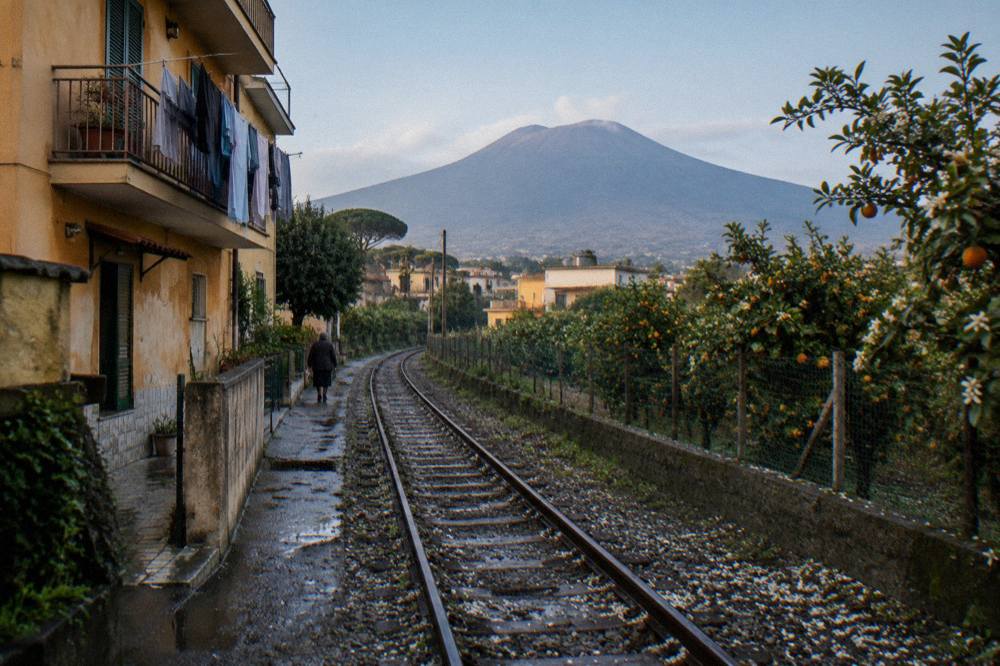
How Much Does The Circumvesuviana Train Cost?
Point-to-point Circumvesuviana fares are not verified on this site, so we do not print them. The verified figures around the trip are: the EAV bus 808 to the crater costs €3.80 per single journey bought on board, or €2.80 with an AC3 ticket bought at a station or online, and the Vesuvius park's adult crater ticket is €10 under its ticketing rules, shown at €11.68 by the park's authorised online seller.
The fare answer splits into three layers, and conflating them is how bad budgets happen. The first layer is the train itself. EAV's own fare structure did not rise on 1 October 2026 for its own tickets, but the station-to-station figures for Ercolano Scavi or Pompei Scavi are not in our verified set, so the honest instruction is to use the operator's fare finder on the UnicoCampania tourist fare pages before you travel.
The second layer is the bus up the mountain. EAV line 808, the Pompei to Vesuvio service, charges €3.80 for a single journey purchased on board, or €2.80 if you buy the AC3 ticket in advance at a station or online. That fare covers the 55-minute climb from Pompei Piazza Anfiteatro to the Quota 1000 plaza, which is the starting point of the crater trail. The full timetable is published by EAV as a downloadable PDF, and it is the single most useful document for this whole plan, so downloading it before your travel day is worth the two minutes.
The third layer is entry, and here the figures are firm. The park's adult crater ticket is €10 under its ticketing rules; the park's authorised online seller shows €11.68. Reduced entry is €8, or €9.55 online, for under 25s and residents of the 13 park municipalities with ID, and children under 6 with an adult go free. For anyone combining the volcano with Pompeii in the same day, Pompeii Express is €20 and Pompeii+ is €25, per the official Pompeii ticketing page, and a single €25 ticket covering all park sites arrives on 1 January 2027.
| Item | Verified price | Notes |
|---|---|---|
| Circumvesuviana train ticket | Not verified, check the operator's fare finder | Naples to Ercolano Scavi or Pompei-Villa dei Misteri |
| EAV bus 808, single, on board | €3.80 | Pompei Piazza Anfiteatro to Quota 1000, 55 minutes |
| EAV bus 808, single, AC3 ticket | €2.80 | Bought at a station or online in advance |
| Vesuvius crater ticket, adult | €10 under ticketing rules; €11.68 online | Sold only online by time slot by the authorised seller |
| Vesuvius crater ticket, reduced | €8; €9.55 online | Under 25s and residents of the 13 park municipalities, ID required |
| Pompeii Express | €20 | Ancient city only |
| Pompeii+ | €25 | City, suburban villas, Villa Regina, shuttle |
Is There A Bus From Pompeii Station To Mount Vesuvius?
Yes, and it is the verified heart of this article: EAV bus 808 runs nine times a day in each direction between Pompei Piazza Anfiteatro and the Quota 1000 trailhead plaza, a 55-minute climb, on the timetable in force from 1 October 2026. The first bus up leaves at 8:30 and the last at 14:30; the last bus down leaves the plaza at 16:50.
This is the timetable that answers the practical question the train cannot. You arrive at Pompei on the Circumvesuviana, walk or transfer to Piazza Anfiteatro on the amphitheatre side of the ruins, and ride the 808 up. Nine departures a day sounds generous, but the spacing matters: the buses are not hourly, and the last up run arrives at the plaza at 15:25, which is after the winter last entry to the crater path. In the November-to-February window, when crater access ends at 15:00, the final buses up cannot deliver a visit at all. Plan to be on one of the morning runs if your travel month has the short access hours.
| Bus 808 up, from Pompei Piazza Anfiteatro | Arrives Quota 1000 | Bus 808 down, from Quota 1000 | Arrives Pompei Anfiteatro |
|---|---|---|---|
| 08:30 | 09:25 | 09:35 | 10:30 |
| 09:50 | 10:45 | 11:00 | 11:55 |
| 10:45 | 11:40 | 12:00 | 12:55 |
| 11:30 | 12:25 | 12:40 | 13:35 |
| 12:00 | 12:55 | 13:10 | 14:05 |
| 13:00 | 13:55 | 14:00 | 14:55 |
| 13:30 | 14:25 | 14:50 | 15:45 |
| 14:00 | 14:55 | 15:30 | 16:25 |
| 14:30 | 15:25 | 16:50 | 17:45 |
Read the down column carefully before committing to a late slot. The gap between the 15:30 and 16:50 returns is 80 minutes, and missing the last bus down means an expensive taxi or a long walk. The route also serves stops including Villa dei Misteri, Porta Marina, Torre del Greco Via De Nicola, Ercolano Osservatorio and Seggiovia Quota 750, which makes it a partial connector between the two train doorways as well as a mountain service.
One more pairing to note: the bus drops you at Quota 1000, and the crater trail, Trail 5 or the Gran Cono, starts right there. It is a 4,010-metre round trip to a turnaround at 1,170 metres, officially rated low difficulty, with a 2 h 30 round-trip time, and every visitor above 1,000 metres is accompanied by the park's volcanological guides, which is mandatory. The park's trail page carries the access-hour table that decides which bus runs work in your month.
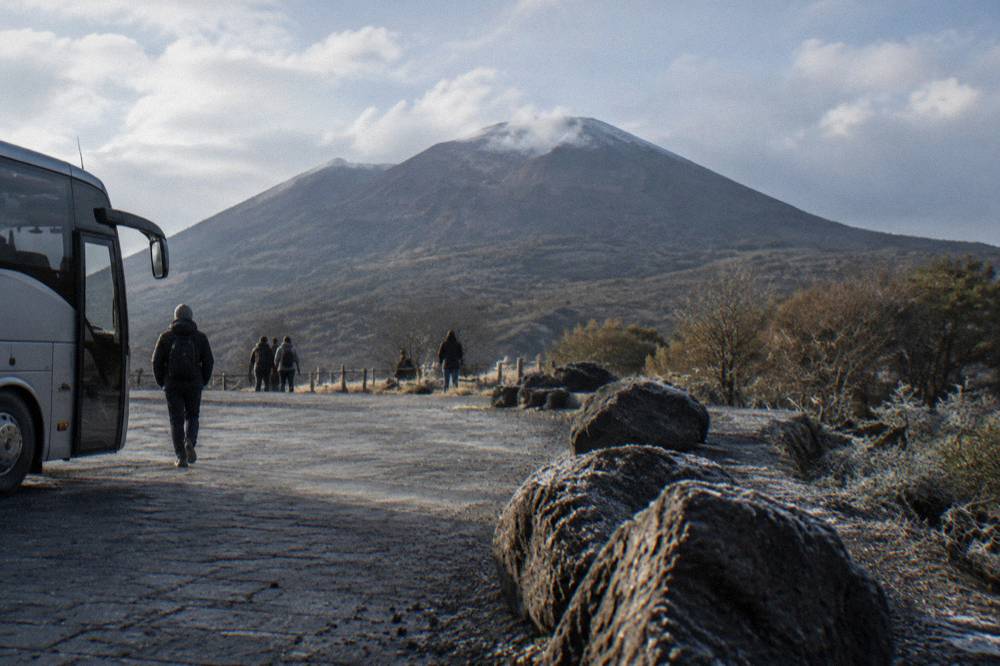
Can You Do Pompeii And Mount Vesuvius In One Day By Train And Bus?
Yes, and the bus timetable is what makes it work or breaks it. The pattern is: train to Pompei-Villa dei Misteri, a morning at Pompeii, the bus 808 up around midday, two to three hours at the crater trailhead, and a return bus before 16:50. Crater access hours shorten in October and again in November, so the later your month, the earlier your ruins start must be.
The single-day combination is the most requested itinerary in the area, and the arithmetic is unforgiving but doable. Pompeii deserves a minimum of two hours even on a fast pass, and realistically three. The bus climb takes 55 minutes each way. The crater round trip takes 2 h 30 at the official pace. Add lunch and platform time and you are at a full 8-hour day, which is exactly why the commercial versions of this itinerary, such as the guided combo days described in the site's Pompeii-and-Vesuvius-in-one-day guide, all run about that length.
The train-and-bus version saves money but hands you three hard constraints. First, crater tickets are sold only online by time slot, 50 per 10-minute slot, released 30 days ahead, so the visit must be pre-booked against a bus run you can actually catch. Second, a normal ticket is valid from 120 minutes before to 120 minutes after the printed slot, which gives some cushion. Third, the weather rule: the trail and box office close automatically on any day with an orange regional weather alert or higher, with automatic refunds for slots inside a closure. A prudent independent plan books a crater slot around noon or early afternoon, arrives on a morning bus, and treats everything after the descent as a bonus.
For readers who would rather not hold all of that in their heads at 7 a.m., a booked day tour is the stress-free equivalent. The from-Naples Pompeii and Vesuvius day tour with lunch included, from €67.20 per person and rated 4.3 across 14,121 reviews, is the volume option on this route; the same-family excursion with a pizza lunch runs from €53.25 per person at 4.8 across 9,744 reviews. Both include pickup, a meal and free cancellation on the listing, and both erase the bus timetable from your morning.
Guest reviews of the combined day bear this out. Millie from the United Kingdom, reviewing the Naples day tour, praised the guide but flagged the practical reality: "Very uneven surfaces and very hot in summer so trainers and water bottles." Dan from the United Kingdom, on the pizza-lunch variant, called it "a great trip for anyone wanting to visit Pompei and Mount Vesuvius in one day."
What Vesuvius Tour Options Start Where The Train Stops?
Tours collect at both rail doorways. At the Pompeii side, transfer-and-ticket products from around €35 per person bundle the ride up and crater entry; at Ercolano and Naples, guided half-days from around €41 per person add a guide to the same climb. Every listing on the roster flags free cancellation, and prices are from-prices per person unless the listing says per group.
The tour market has organised itself around the train stations, and knowing that turns the timetable question into a menu. The budget tier is the transfer tier, the collection the site groups under its shuttle-and-transfer category. The bus transfer with park entry fee, from €35.10 per person, 4.3 from 1,923 reviews, runs from Naples and Pompeii. The direct transfer with guaranteed entry, also from €35.10 per person, 4.4 from 1,785 reviews, departs Naples. Nicola from the United Kingdom reviewed the first of these: "Easy way to get from Pompeii to Vesuvius and back again. Well organised and they will drop you back at Pompeii station or the original meeting point." That sentence is the entire value proposition of the tier.
The mid tier adds a guide or a meal. The all-inclusive Mount Vesuvius half-day from Naples, from €44.80 per person, 4.5 from 891 reviews, includes pickup and entry logistics. The small-group Herculaneum and Vesuvius format from €140 per person suits travellers who want the second buried city on the same drive. And the journey-into-the-past combo from Pompeii, from €77.40 per person with pickup, 4.3 from 256 reviews, is the one that most directly replaces a train-and-bus day, since it starts where the Circumvesuviana leaves you and covers both sites.
The premium tier is private. A private three-site day with Herculaneum, Pompeii and Vesuvius, pickup included, runs from €265 per group and carries a 5 from 309 reviews. The site's private-versus-group comparison guide breaks down when the group price crosses over. Whatever the tier, the shuttle-style products sit together in the transfer category on this site, which despite the 4x4 label is a shuttle-and-transfer grouping, not an off-road claim.
What Are The Alternatives To The Circumvesuviana For Reaching Vesuvius?
The verified alternatives are: the EAV bus 808 from Pompeii, private shuttles and taxis from Ercolano Scavi, tour operator coaches with pickup in Naples, Sorrento, Pompeii or Rome, and driving yourself to the Quota 800 car park followed by a 1.8 km walk or a €1 municipal shuttle to the plaza. The Campania Express train is suspended and should not be planned around.
Each alternative trades money or flexibility against the timetable. Driving is the most independent. From the A3 Napoli-Salerno motorway, exit at Torre del Greco and follow the SP144 to the Quota 800 car park, about 15 minutes and 7.3 km from the exit. From Quota 800 to the trailhead plaza it is about 30 minutes on foot covering 1.8 km, or the Ercolano municipal shuttle at €1 each way for roughly 4 minutes. Parking on the provincial road is run by the Comune di Ercolano with a maximum stay of 4 hours and €7 for cars up to 8 seats, and the park advises buying parking only after your crater ticket is secured. There is no parking at the plaza itself.
Sorrento-based readers have a different set of rails to think about, and Naples readers should weigh the coach and minivan options before deciding that the train is the only way; the site's piece on What Is The Best Way To Get To Vesuvius From Naples? compares them directly. Rome-based readers have the longest version of the question: the fast-train combo from Rome, which links the high-speed rail leg to Pompeii or Herculaneum and the volcano in a 10-hour day from €147.60 per person, rated 4.1 across a small pool of 25 reviews, exists precisely because the Circumvesuviana does not reach the capital.
For the record on trains generally: there is no train from Naples to the volcano itself, only to the towns at its foot, a point we unpack in Is There A Train That Goes From Naples To Vesuvius?. The site's Naples departures hub collects every coach, minivan and shuttle product that leaves the city, which is the fullest alternative list in one place.
What Should You Know Before Riding The Circumvesuviana With A Vesuvius Plan?
Four verified rules shape the day: crater access runs 09:00 to 15:00 in January, February, November and December, to 16:00 in March and October, to 17:00 from April to June and in September, and to 18:00 in July and August; tickets are online-only by time slot; the last bus 808 up arrives after the winter last entry; and orange weather alerts close the trail automatically.
The closing times are last-access times, and the visit must end within one hour of them, so the usable window is tighter than the raw hours suggest. Match that against the bus table above and the pattern is clear: in the winter months an independent train-and-bus plan needs one of the first three morning buses, and honestly it needs luck with the ruins too. From April through October the arithmetic loosens enough for a comfortable single day. The site's month-by-month planning material covers the full picture, including summit temperatures that run about 6 to 7 C below Naples and the wettest month being November.
Dress for the gap between the coast and the crater. A July afternoon in Naples averages a high of 28.6 C, but the summit-level average high the same month is 22.1 C, and the trail is exposed ash and rock with no shade. Sturdy shoes and more water than feels reasonable are the standing advice in guest reviews, including Millie's quoted above. The site's clothing and packing guides for the volcano walk through the details, from footwear to layers for the summit wind.
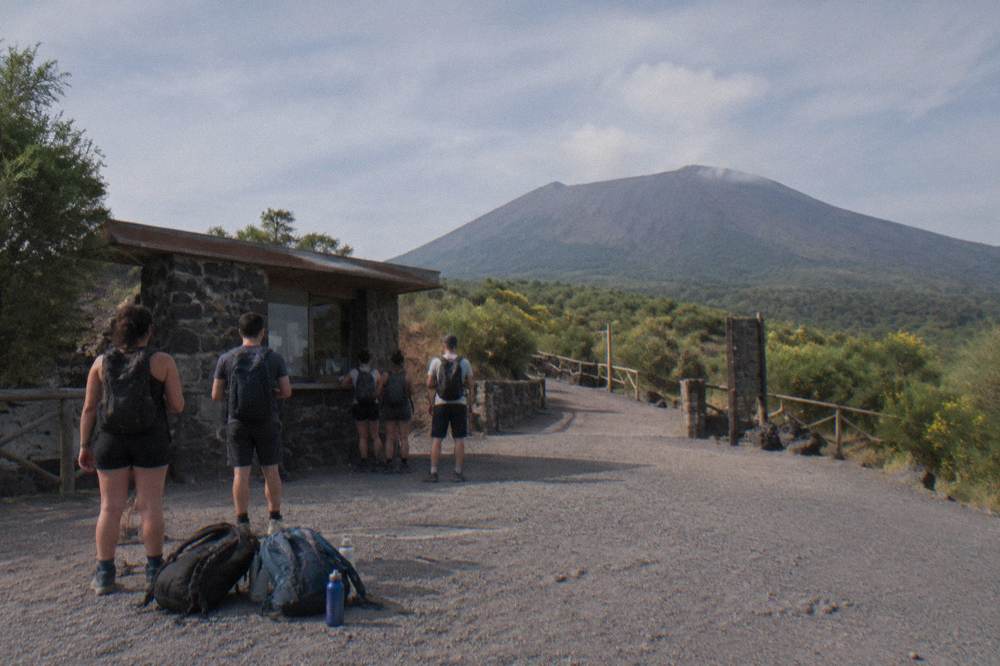
And a note on standing in this landscape at all: the volcano is monitored continuously and the alert level is published as green, with the September bulletin recording 121 small earthquakes of maximum magnitude 1.7. The crater you climb to is elliptical, up to 580 metres across, with fumaroles on its inner walls, and the last eruption was in March 1944. The red zone around the volcano holds about 700,000 residents across 25 municipalities, which is why the monitoring exists and why the park's volcanological guides accompany every visitor above 1,000 metres.
The bottom line on the original question: how often the Circumvesuviana runs is a timetable fact best read on the operator's own pages on your travel week, but what to do when it drops you off is a stable plan. Train to Pompei-Villa dei Misteri or Ercolano Scavi, bus 808 or shuttle to Quota 1000, pre-booked crater slot inside the access hours, and a booked tour whenever the timetable arithmetic stops being fun. That is the whole game.
Common Questions About The Circumvesuviana And Vesuvius
How Often Does The Circumvesuviana Train Run?
The exact frequency is not printed here because timetables change and no verified figure exists in our sources. The network runs from Naples toward Sorrento and Poggiomarino-Via Pompei, stopping at Ercolano Scavi and Pompei-Villa dei Misteri. Check the operator's live timetable for your travel date, and plan your Vesuvius connection around the verified EAV bus 808 schedule of nine daily runs each way.
How Much Does The Circumvesuviana Train Cost?
Point-to-point Circumvesuviana fares are not verified on this site. The verified connecting costs are the EAV bus 808 at €3.80 single on board or €2.80 with an advance AC3 ticket, and the crater entry at €10 under the park's ticketing rules, shown at €11.68 by the authorised online seller.
Does The Train Go Up Mount Vesuvius?
No. The Circumvesuviana reaches the towns at the foot of the volcano only. The climb from Pompei Piazza Anfiteatro to the Quota 1000 trailhead is done by EAV bus 808, a 55-minute ride with nine daily departures, or by shuttle, taxi, tour coach or private car.
Which Station Do I Need For Pompeii And Which For Vesuvius?
For Pompeii use Pompei-Villa dei Misteri, which serves the Porta Marina side of the excavations and the start of bus 808. For the shortest route to the volcano use Ercolano Scavi, close to Herculaneum and the shuttle and taxi services up the mountain. Sorrento-based visitors also use Pompei-Villa dei Misteri.
Can I Miss The Last Bus Down From Vesuvius?
Yes, and it is expensive if you do. The last bus 808 down leaves Quota 1000 at 16:50, and the previous one at 15:30, an 80-minute gap. Plan your crater slot so you are back at the plaza well before the final departure, or book a tour or transfer with a guaranteed return.
Is The Campania Express An Option For Vesuvius?
No. The Campania Express service has been suspended from 1 October 2026 until further notice. Use the ordinary Circumvesuviana lines and the bus or shuttle connections described above.