Pompeii Or Vesuvius: Which Should You Pick
One is a frozen Roman city, the other is the volcano that destroyed it. Here is how Pompeii and Vesuvius compare on time, cost, effort and payoff, so you can pick the right one for your single day.
Short answer
Pompeii Express costs €20 (Pompeii+ €25) and needs at least two to three hours on flat streets; the Vesuvius crater trail costs €10 (€11.68 online) and takes about two and a half hours round trip on a steady uphill path. Pompeii wins on history, Vesuvius on views; the honest answer for most visitors is a combo day.
Most visitors to the Bay of Naples have exactly one free day, and two famous names competing for it. Pompeii is a Roman city buried in ash in AD 79, traditionally dated August 24, though a 2018 find points to October. Vesuvius is the volcano that buried it, still monitored at green alert level, its summit standing 1,281 m above the bay. The two sites sit roughly half an hour apart by road, yet they could not feel more different: one is flat, shaded in places and endless, the other is a short, dusty climb to a rim of black lava. This comparison breaks the decision into time, money, effort and payoff, then gives a verdict by traveller type. The featured option throughout is the Mount Vesuvius and Pompeii Ruins Combo Day Trip, the site's answer for people who refuse to choose.
Pompeii Or Vesuvius: Which One Deserves Your Day?
Neither site is a consolation prize, and the choice is genuinely close. Pompeii offers an entire excavated Roman city of streets, houses, baths and an amphitheatre, and it needs serious time to reward you. Vesuvius offers a 4,010 m round-trip walk to the crater rim at 1,175 m, with fumaroles still steaming on the inner walls and a panorama across the bay that Pompeii cannot match. Pompeii feeds the mind; Vesuvius feeds the eye.
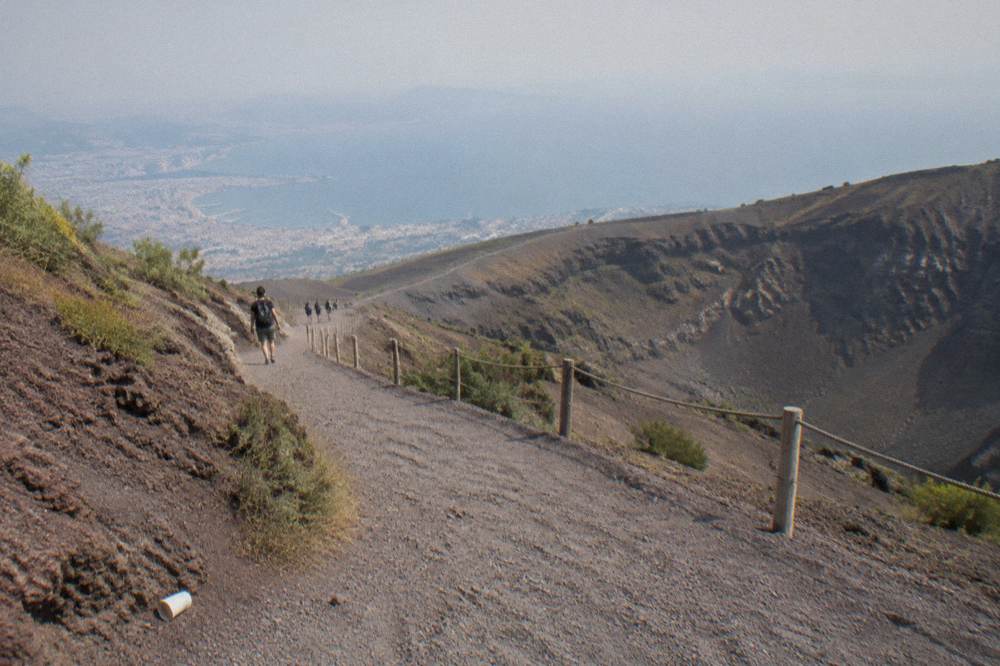
The real question is what kind of day you want. A visitor who loves archaeology can spend four hours in Pompeii and leave having seen perhaps half of what is open. A visitor who wants the postcard view of the bay, the smell of sulphur and the strange quiet of a live volcano's rim can be up and down the Gran Cono trail in two and a half hours and still have energy for a winery lunch on the slopes. The crater is elliptical, up to 580 m across, and the path every visitor walks is the park's Trail 5, the Gran Cono, officially rated low difficulty.
There is also a practical asymmetry that first-time visitors miss. Pompeii is close to a train station and tolerates walk-up visits within its caps; Vesuvius sells crater tickets only online, by timed slot, with 50 tickets released per 10-minute slot up to 30 days ahead. Spontaneity is easier at Pompeii. Planning is mandatory at Vesuvius, which is why a guided product such as the Naples shore excursion combining Vesuvius and Pompeii (from €129.73 per person, 4 from 316 reviews, lunch included) takes the ticketing problem off your plate entirely.
How Much Time Do Pompeii And Vesuvius Each Take?
Pompeii takes a minimum of two hours, though three to four is more realistic, with last entry at 17:30 in summer and 15:30 in winter; Vesuvius takes two and a half hours on the trail, with crater access ending between 15:00 and 18:00 depending on the season, so add travel time to both on top of those figures.
Time is where the two sites diverge most sharply, and it decides many one-day itineraries. Pompeii rewards depth: the Forum, the amphitheatre, the Villa of the Mysteries and the plaster casts are scattered across a site bigger than most town centres. Rush it in 90 minutes and you see a lot of walls. Vesuvius is the opposite economy: the whole experience is one loop of about two and a half hours, the park's rules cap a guided tour at two hours on the shortest route and three on the longest, and there is nothing to rush because there is nothing else to see once you are at the turnaround at 1,170 m.
Travel time matters as much as visit time. From Naples, the Circumvesuviana train reaches Ercolano Scavi for the Vesuvius side or Pompei Scavi for the ruins, and the park's own guidance names both stations. From Pompeii, the EAV bus 808 runs up to the Quota 1000 trailhead in 55 minutes for €3.80 on board, with nine departures a day in each direction under the timetable in force from 1 October 2026. That bus alone eats a big slice of a day, which is why transfer-plus-ticket products such as the From Pompeii/Naples Vesuvius Easy Transfer and Entry Ticket (from €39 per person, 4.3 from 1,121 reviews) exist: they convert an uncertain public-transport connection into a fixed three-hour outing.
If you are weighing a combined day, the timings stack cleanly. A combo tour such as the From Naples Pompeii and Vesuvius Day Trip with Pizza Lunch, from €53.25 per person with a 4.8 rating across 9,744 reviews, runs three and a half to eight hours depending on the option chosen, because it compresses both stops into one guided arc. Doing both independently on public transport in one day is possible but tight, especially outside summer when the crater's last access moves to 15:00 or 16:00.
For readers who want the full mechanics of doubling up, the guide to Pompeii And Vesuvius In One Day breaks down the hour-by-hour sequencing in detail.
What Do Pompeii And Vesuvius Cost To Visit?
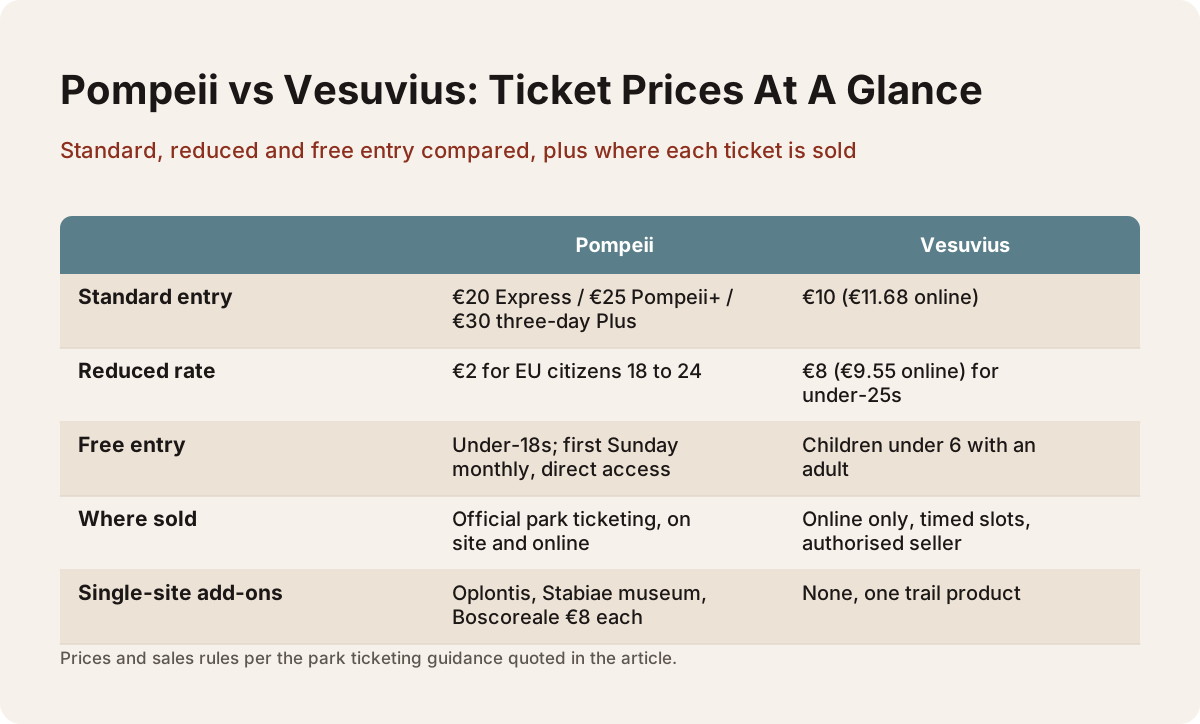
Pompeii Express, covering the ancient city only, costs €20, with Pompeii+ at €25 adding the suburban villas and shuttle, and a three-day Pompeii Plus at €30. The Vesuvius crater ticket is €10 under the park's ticketing rules; the park's authorised online seller shows €11.68. Reduced rates exist at both: €2 for EU citizens aged 18 to 24 at Pompeii, and €8 (€9.55 online) for under-25s and residents of the 13 park municipalities at Vesuvius.
On price alone, Vesuvius is the cheaper half-day and Pompeii the more expensive one, though neither is ruinous. The important detail is that Vesuvius tickets exist only online, sold by timed slot, and children under 6 enter free with an adult at both sites in practice, since Vesuvius waives the fee outright and Pompeii's reduced ladder covers minors. First Sundays of the month are free at Pompeii and Herculaneum with direct gate access, subject to the caps.
Here is the full head-to-head on entry costs:
| Item | Pompeii | Vesuvius |
|---|---|---|
| Standard entry | €20 Express / €25 Pompeii+ / €30 three-day Plus | €10 (€11.68 online) |
| Reduced | €2 for EU citizens 18 to 24 | €8 (€9.55 online) for under-25s and park residents |
| Free entry | Under-18s; first Sunday monthly, direct access | Children under 6 with an adult |
| Where sold | Official park ticketing, on site and online | Online only, timed slots, authorised seller |
| Single-site add-ons | Oplontis, Stabiae museum, Boscoreale €8 each | None, one trail product |
Guided tours change the arithmetic because they bundle tickets, transport and often lunch. The cheapest crater-only product on this site's roster is the Mount Vesuvius Excursion skip-line ticket with digital guide at from €16 per person (4.2 from 3,756 reviews), while the guided Mount Vesuvius Tour with Ticket from Naples runs from €41 per person with a 4.5 rating from 596 reviews and includes pickup. At the top of the combined range, the All-Inclusive Pompeii and Vesuvius day with lunch and wine tasting from Naples costs from €127.50 per person, 4.6 from 2,804 reviews. A ticket-only budget can keep the day around €35 per person; a fully guided one runs €50 to €150 depending on inclusions.
How Hard Is Each Visit Compared?
Pompeii is physically easy but fatiguing: the terrain is flat, but the streets are uneven Roman paving, dusty in summer, with long shadeless stretches. Vesuvius is a steady 4,010 m round-trip climb from the Quota 1000 plaza to 1,175 m, rated low difficulty by the park, on loose volcanic gravel that is harder on the knees going down than up. Neither requires fitness beyond normal walking, but Pompeii punishes the unprepared with distances, Vesuvius with gradient.
Footwear decides both visits. One guest review of the Naples Pompeii and Vesuvius day tour puts it plainly: "Very uneven surfaces and very hot in summer so trainers and water bottles," in the words of Millie from the United Kingdom. That sentence covers Pompeii's basalt cobbles and the crater's ash path in one go. The site's dedicated guides to How Hard The Walk Up Vesuvius and to hike difficulty go deeper, but the short version is that a moderately fit adult of any age completes the Gran Cono with rest stops, and the mandatory accompaniment by the park's volcanological guides above 1,000 m keeps groups paced.
| Factor | Pompeii | Vesuvius Gran Cono |
|---|---|---|
| Terrain | Flat, uneven Roman paving | Uphill gravel path, 4,010 m round trip |
| Highest point | Ground level, site is flat | 1,175 m turnaround point |
| Official difficulty | Not graded, urban walking | Low, per the park's trail infobox |
| Time needed | 2 to 4 hours | 2.5 hours round trip, tours capped at 2 to 3 |
| Main discomfort | Heat, dust, distance | Gradient, sun exposure, wind at the rim |
The closure rules also differ in ways that affect planning. Vesuvius's trail and box office close automatically on any day the regional civil protection authority issues an orange weather alert or higher, with automatic refunds for slots inside a closure; slots adjacent to a closure are refundable on request within 30 days. Pompeii has no equivalent weather trigger. If your day is weather-exposed, the ruins are the safer pick, and the volcano the gamble, though a booked tour with free cancellation flagged on the listing, as most on this roster carry, softens that risk.
Which Has The Better Views And Photos?
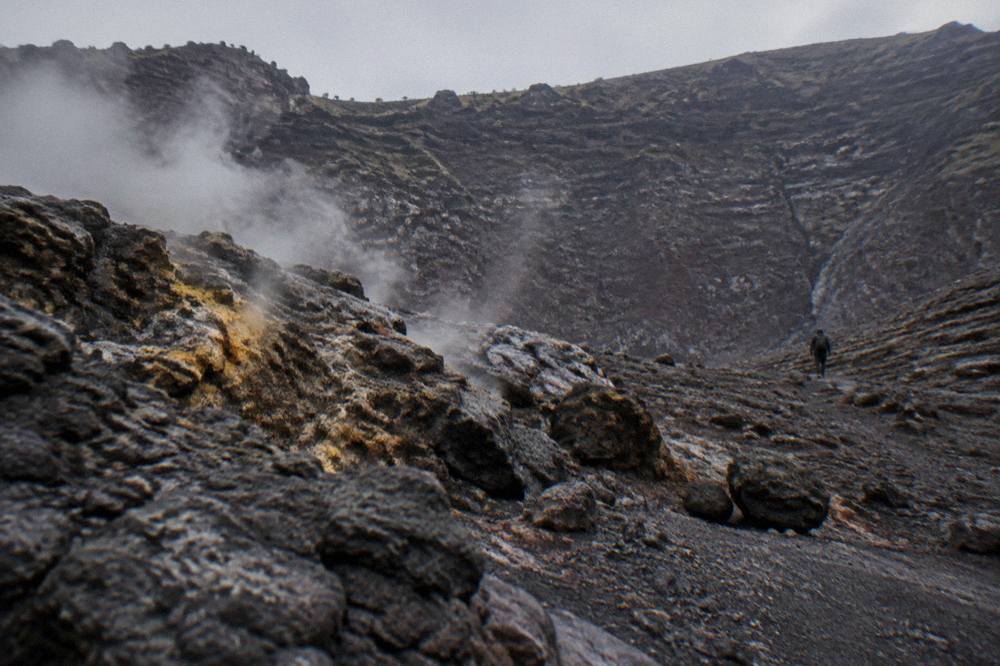
Vesuvius wins the view contest outright: from the rim at 1,175 m you look into a crater up to 580 m across with fumaroles steaming on the inner walls, and outward across the Bay of Naples toward Capri and Sorrento. Pompeii's best photographs are intimate rather than panoramic, frescoes, mosaics, casts and the long receding lines of Roman streets, though Vesuvius looming over the ruins is the most powerful image either site offers.
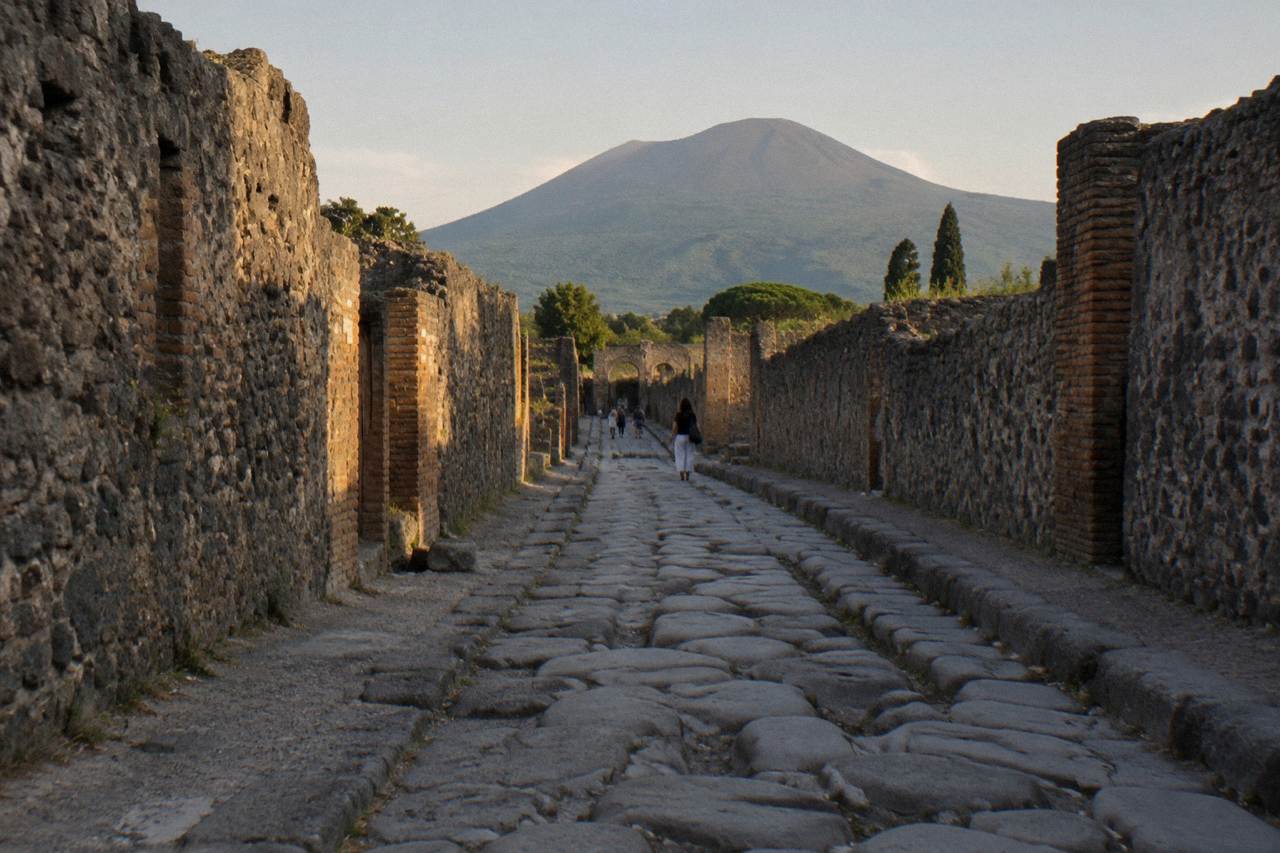
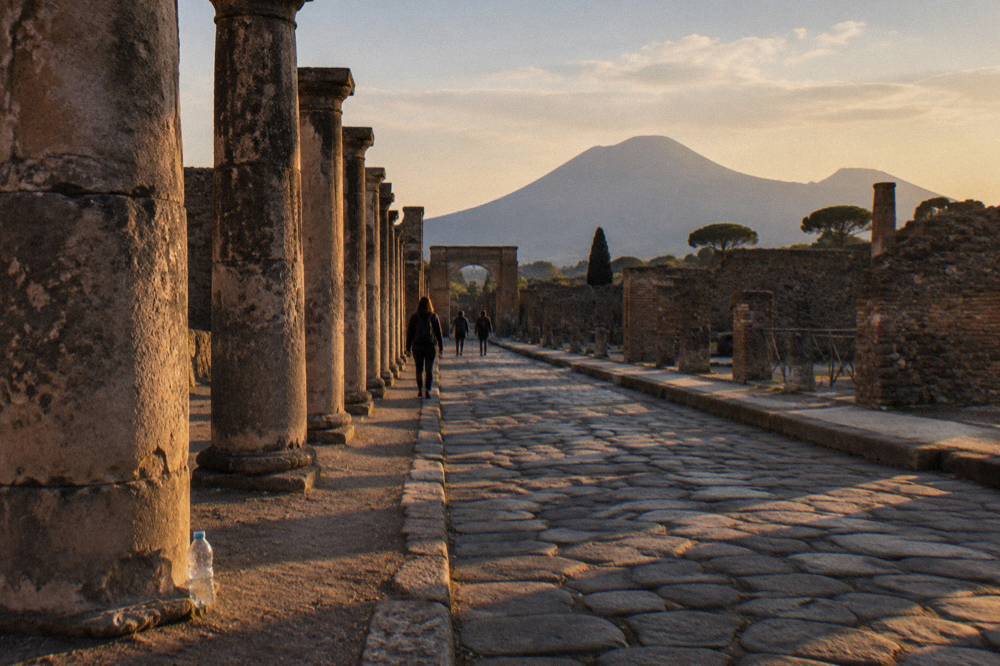
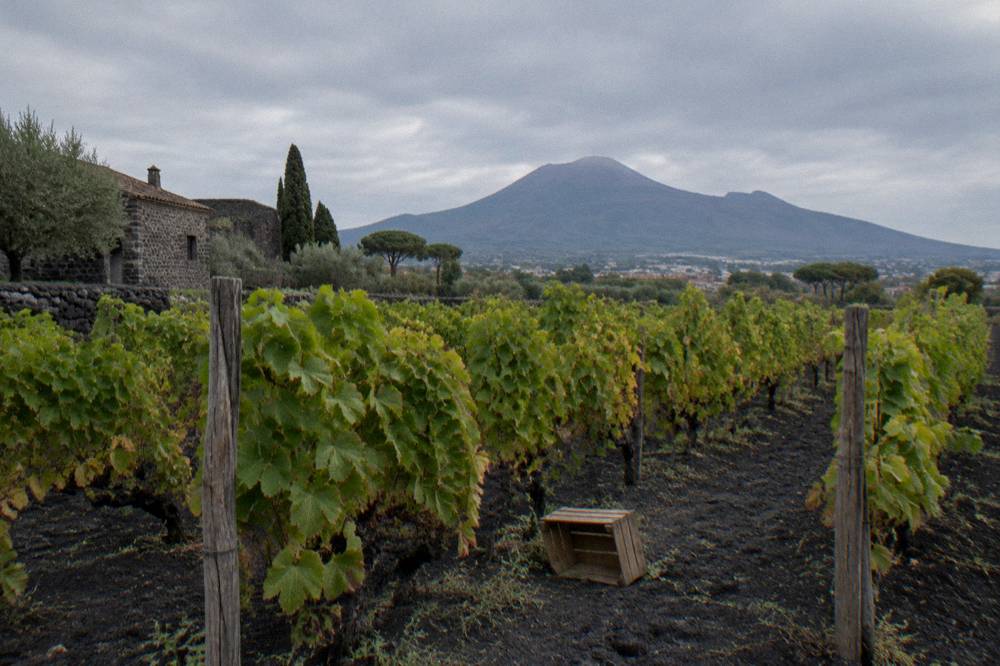
There is a strange irony at work: the most famous photograph taken at Pompeii is of Vesuvius. Every visitor ends up on the Via dell'Abbondanza or at the Forum shooting the volcano that ended the city. That cuts both ways in the decision. If you only see Pompeii, you get Vesuvius as scenery. If you only climb Vesuvius, you look down on the grid of the excavations as a pale patch by the coast, and the two thousand years of detail vanish into the distance.
For a taste of both without the full climb commitment, the From Naples All-Inclusive Mount Vesuvius Half-Day Tour, from €44.80 per person with pickup, 4.5 from 891 reviews, gets you to the crater area and back inside four hours, leaving the afternoon free. The reverse trade also exists: an archaeologist-led Pompeii-focused product such as the Exclusive Pompeii and Vesuvius Tour with Lunch from Naples, from €78.20 per person, 4.7 from 3,701 reviews, weights the day toward the ruins while still touching the volcano.
Pompeii Or Vesuvius For Families, Cruise Passengers And Short Trips?
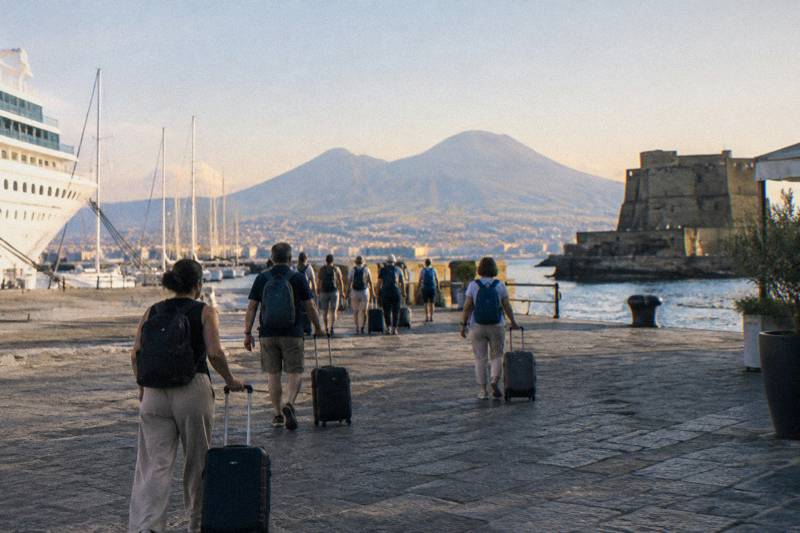
Families with children under 10 generally do better at Pompeii, where the scale is flat, exits are many and attention spans can drift between houses; children under 6 climb Vesuvius free but must manage the uphill. Cruise passengers docking at Naples typically choose a combined tour, because port time rarely allows two separate self-managed visits. Short-trip visitors flying out of Naples should pick whichever matches their energy: ruins if tired, the crater if fresh.
Cruise logistics deserve their own word. A shore excursion with pickup, such as the Naples Shore Excursion to Vesuvius and Pompeii with pizza lunch, from €129.73 per person, 4 from 316 reviews, is built around port timing, and a review from Rick, a passenger, captures the value: "Great pickup. Great tour guide and bus driver. Plenty of time to explore and great and well organized lunch." The dedicated guide to Vesivus Shore Excursions covers tide-independent timing in full.
For families, the site's guide to a Vesuvius Hike With Kids sets out age-by-age advice, and several roster products state minimum ages directly: the horse-riding combo requires 6, the Askos small-group tours require 6, and wine-centred days require 18. Pompeii imposes no age floor at all and is sturdier underfoot for small legs than the crater's loose gravel, though not stroller-friendly on the cobbles.
Can You Realistically See Both In One Day?
Yes, and for most visitors with one day it is the best use of it. The combo pattern is well established: Pompeii in the morning within the 9:00 to 13:00 admission window, when up to 15,000 entries are available, then the crater in the afternoon inside its last-access time. Booked combo tours from Naples run six to nine hours and cost from €45 to €130 per person depending on inclusions.
The single-day double is exactly what the Pompeii and Vesuvius tours category on this site exists for, and the roster is deep enough to match almost any budget. The six-hour combo with bus transfer and audio guides from Naples, from €77.40 per person, is the value floor for a both-sites day. The POMPEII and Vesuvius day from Naples with lunch and entry tickets, from €45 per person, 4 from 313 reviews, undercuts it by trading guided depth for price. At the other end, the Signature Tour with wine and lunch from Naples, 4.9 from 461 reviews at from €150 per person, turns the same double into a slow food day.
Sequencing matters more than most guides admit. The crater's last access is the binding constraint: in October it is 16:00, in the depths of winter 15:00, and the last bus 808 back down from Quota 1000 leaves at 16:50. Pompeii's last entry, by contrast, is 15:30 to 17:30 depending on season. So in practice the double means Pompeii first, crater second, and a tour that has already bought both timed entries removes the only real failure mode. A reader wondering whether a guide adds anything on top of tickets can check Can I Take A Guided Tour From Naples To Vesuvius And Pompeii? for the full cost-benefit.
For travellers extending to three sites, the Pompeii, Herculaneum and Vesuvius tours category and the guide to a Herculaneum And Vesuvius Trip cover the fuller archaeological sweep, where Herculaneum's full ticket is €16 (reduced €2 for 18 to 25s).
Which Should You Book For Your Trip?
Book Vesuvius alone if your day is short, your legs are fresh and the view is the point: a half-day product covers it from €41 to €45 per person. Book Pompeii alone if archaeology is the reason you came and you can give it three or more hours. Book the combo if you have one full day, which is the majority case: from €45 per person buys both stops with tickets handled.
The verdict by traveller type, in one table:
| Traveller | Pick | Why |
|---|---|---|
| One day only, first visit | Combo tour | Both sites, tickets and timing handled, from €45 |
| Archaeology lover, slow traveller | Pompeii alone | Depth rewards time; add Herculaneum if possible |
| Photographer or hiker | Vesuvius alone | The bay panorama and crater rim are the payoff |
| Cruise passenger on port time | Shore excursion combo | Pickup timed to the ship, lunch included options |
| Family with young children | Pompeii morning, optional shuttle afternoon | Flat, flexible, no minimum age |
| Budget traveller | Bus transfer plus entry, from €35.10 | Park entry included, self-guided crater walk |
One pattern worth naming from the roster data: the Pompeii-first combo from Naples with lunch included, from €67.20 per person and carrying a 4.3 rating across 14,121 reviews, is the single most-reviewed product on the site, and the Mount Vesuvius Transfer with Entry Tickets from Naples, 4.4 from 1,785 reviews at from €35.10 per person, is the most-reviewed crater-only transfer. Review volume is not quality, but at five-figure counts it does tell you what the market has already decided.
Whatever you choose, the honest framing is this: Pompeii without Vesuvius loses its villain, and Vesuvius without Pompeii loses its story. The pairing is the product, and the operator's live listing shows current dates and free cancellation terms for each option. For a broader rundown, the site's guide to the Best Mount Vesuvius Tours ranks the full roster, and Mount Vesuvius Tours keeps every departure city and season covered, with park rules for the crater trail published on the park's official Gran Cono page and Pompeii hours and ticket tiers on the official Pompeii visiting-info page.
Common Questions About Pompeii Or Vesuvius
Pompeii Or Vesuvius: Which Should You Pick?
Pick Pompeii for history and depth if you have three or more hours; pick Vesuvius for the view and a shorter, more physical outing of about two and a half hours. If you have one full day, pick a combo tour from Naples, from €45 per person, which covers both with tickets handled.
Is Vesuvius cheaper than Pompeii?
Yes. The crater ticket is €10 under the park's ticketing rules, shown at €11.68 by the authorised online seller, while Pompeii Express is €20 and Pompeii+ €25. Reduced rates apply at both: €8 (€9.55 online) at Vesuvius for under-25s and park residents, €2 at Pompeii for EU citizens aged 18 to 24.
Can you do Pompeii and Vesuvius in the same day?
Yes. The pattern is Pompeii in the morning inside the 9:00 to 13:00 admission window, then the crater before its last access, which ranges from 15:00 in winter to 18:00 in July and August. Combo tours from Naples run six to nine hours and cost from €45 to €130 per person depending on inclusions.
Which is harder, Pompeii or Vesuvius?
Pompeii is flat but long and hot, with uneven Roman paving. Vesuvius is a 4,010 m round-trip climb on loose gravel to 1,175 m, rated low difficulty by the park. Most adults in ordinary shape manage both; trainers and water are the standard advice for either.
Do I need to book Vesuvius tickets in advance?
Yes. Crater tickets are sold only online by timed slot, 50 tickets per 10-minute slot, released 30 days ahead. Twenty percent of daily tickets are held for a last-minute release of 10 per slot, 30 minutes before, buyable near the entrance, named and capped at five per email, but relying on that is a gamble in peak season.
Is Vesuvius safe to visit?
Vesuvius is monitored continuously and its alert level is published as green, with the September 2026 INGV bulletin recording 121 small earthquakes of maximum magnitude 1.7 and a long-term decline in crater hydrothermal activity. Above 1,000 m every group is accompanied by the park's volcanological guides, and the trail closes automatically on orange weather alerts or higher.