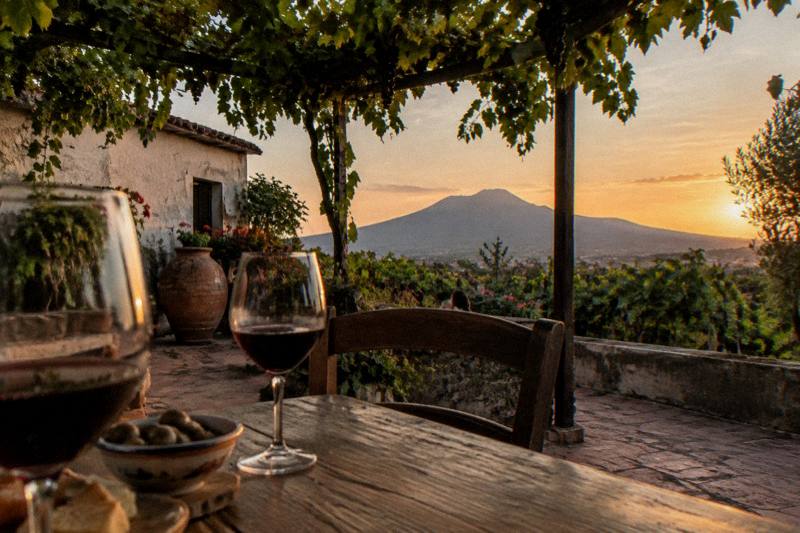
What Wine Is Made From Mount Vesuvius?
The wine made on Mount Vesuvius is Lacryma Christi del Vesuvio DOC, a white and red grown in volcanic soil on 15 slope municipalities. Here are the grapes, the rules and the tours that pour it.
What Wine Is Made From Mount Vesuvius?
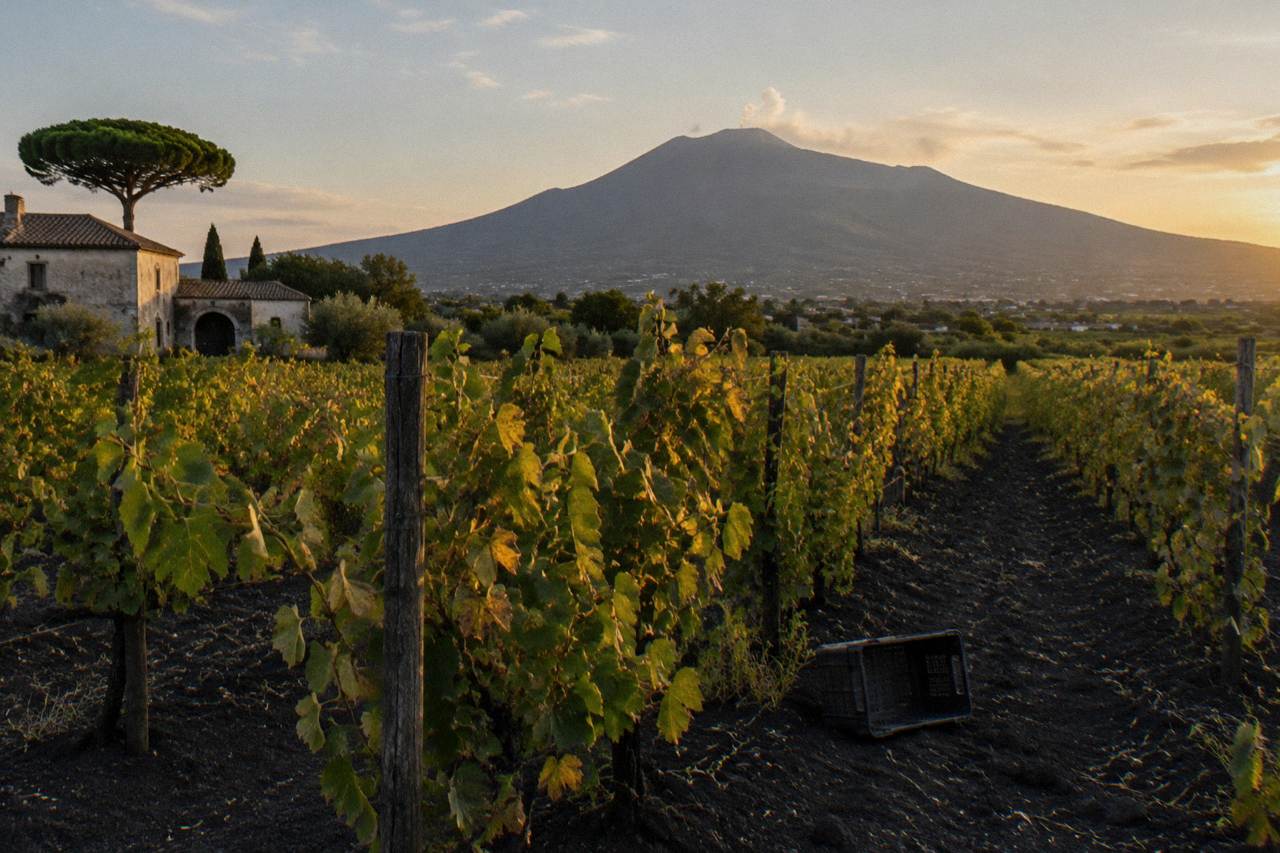
The wine made on Mount Vesuvius is Lacryma Christi del Vesuvio DOC, produced in bianco and rosso styles across 15 municipalities on the volcano's slopes. The white must be at least 80 percent Coda di Volpe and Verdeca, the red at least 80 percent Piedirosso and Sciascinoso, both reaching a minimum 12 percent alcohol under the DOC rules published by the park. If you want to explore these volcanic wines further, the guide to Lacryma Christi wine from Vesuvius explains what to expect from each style and where to taste them.
The name translates as tear of Christ, and the legend behind it is a good one: the story holds that Christ, visiting a hermit on the volcano, let a tear fall onto the vines and blessed them. Winemaking here long predates the legend, of course. The slopes were already covered in vines when the eruption of AD 79, traditionally dated August 24, though a 2018 find points to October, buried Pompeii and Herculaneum under ash. The ash, in turn, became the soil that feeds the modern vineyards. Amphorae and frescoed wine shops excavated at Pompeii show a wine trade that was already sophisticated two millennia ago, and today's DOC is essentially a set of rules for the same landscape. The park itself documents the DOC specification on its own site, from the 15 permitted municipalities to the grape percentages, which is unusual: a national park acting as the reference point for an appellation.
For a wine-curious visitor the practical takeaway is simple. You can taste Lacryma Christi at wineries inside the national park, some reachable on tours from Naples, and you can pair it with a walk on the crater itself. The wine tasting tour on the Vesuvius slopes is the bookable option most focused on the glass, and the trio below is a fair starting spread: a tasting-only half day, a Pompeii-plus-winery combination, and a lunch-included day tour that skips the winery focus. For a fuller picture of what each cellar stop involves, the guide to Vesuvius wine tours and what you'll taste walks through the grapes, the pours, and the practical details.
What Is The Italian Wine From Vesuvius?
The Italian wine from Vesuvius is Lacryma Christi del Vesuvio DOC, the appellation that covers the volcano's slopes. Its production area spans 15 municipalities including Ercolano, Torre del Greco, Boscotrecase, Trecase, Terzigno and Somma Vesuviana, and it makes still whites and reds from local grape varieties at a minimum 12 percent alcohol.
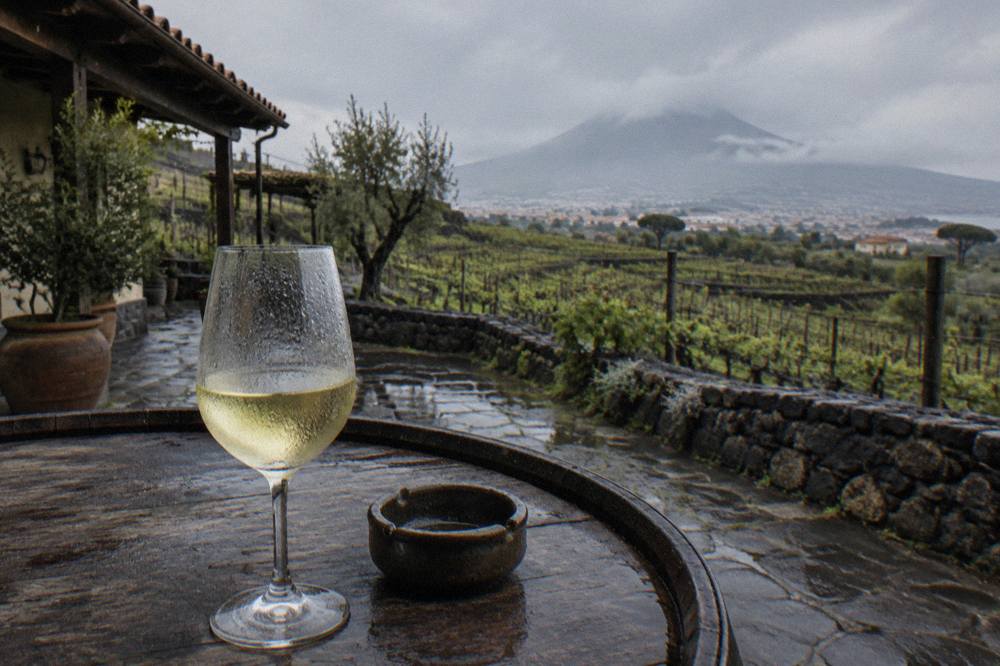
Lacryma Christi is not the only wine bottled around the volcano, but it is the one with the protected designation, and it is what a tasting room on the slopes will pour first. The DOC area hugs the lower and middle slopes on the Naples and Salerno side, the same belt of towns that sits inside the volcano's red zone of about 700,000 residents across 25 municipalities. That geography is part of the wine's story: the vineyards are close enough to the crater that a tasting lunch can be combined with the Gran Cono crater walk, since the trail starts at the Quota 1000 plaza and takes about two and a half hours round trip on a path rated low difficulty by the park. Every visitor above 1,000 m is accompanied by the park's volcanological guides, which is mandatory, so a crater-and-winery day means a guided volcano plus a winery stop.
If you are planning that combination, the question of whether a tasting can fit your itinerary is answered in Are There Vesuvius Tours With Lunch Or Tasting?, and a fuller run through the format options sits in our Mount Vesuvius Wine Tours And What You Taste guide.
Thinking about a tasting day already? The From Naples: Wine Tasting Tour on Vesuvius Slopes with Lunch is bookable for future dates; confirm the operator's current schedule, and note free cancellation is flagged on the listing.
Which Grapes Go Into Lacryma Christi?
The DOC white is built on Coda di Volpe, called Caprettone locally, and Verdeca, which together must be at least 80 percent of the blend, with Falanghina and Greco allowed up to 20 percent. The red is at least 80 percent Piedirosso, known as Palummina, and Sciascinoso, called Olivella, with Aglianico capped at 20 percent.
Those percentages are not marketing language; they are the appellation rulebook, and the park's own page on Lacryma Christi del Vesuvio DOC sets them out in full. Coda di Volpe is the volcano's signature white: a golden, thick-skinned grape that ripens late and holds acidity in hot, mineral-rich soil. Piedirosso, the red counterpart, takes its name from piede rosso, red foot, because the vine's stem base looks like a dusty red foot. It gives light-colored, savory reds rather than blockbuster ones, which is why Aglianico, a bigger southern grape, is allowed in as a seasoning rather than a base.
| Style | Base grapes (minimum 80%) | Allowed addition (maximum 20%) | Minimum alcohol |
|---|---|---|---|
| Bianco | Coda di Volpe (Caprettone) and/or Verdeca | Falanghina and/or Greco | 12 percent |
| Rosso | Piedirosso (Palummina) and/or Sciascinoso (Olivella) | Aglianico | 12 percent |
There is also a spumante and a passito tradition in the area, but the still bianco and rosso are what you will meet on almost every tasting menu. When a guide on the slopes hands you a glass of pale gold white and calls it Caprettone, that is the local name for Coda di Volpe, not a separate variety.
Why Does Volcanic Soil Change The Wine?
Volcanic soil drains fast, holds heat, and is rich in minerals like potassium and iron but often short on organic matter, which stresses the vines and concentrates the grapes. On Vesuvius the soil is layered ash and lava from repeated eruptions, and growers credit it with the smoky, saline character that distinguishes Lacryma Christi from wines grown on the plains below.
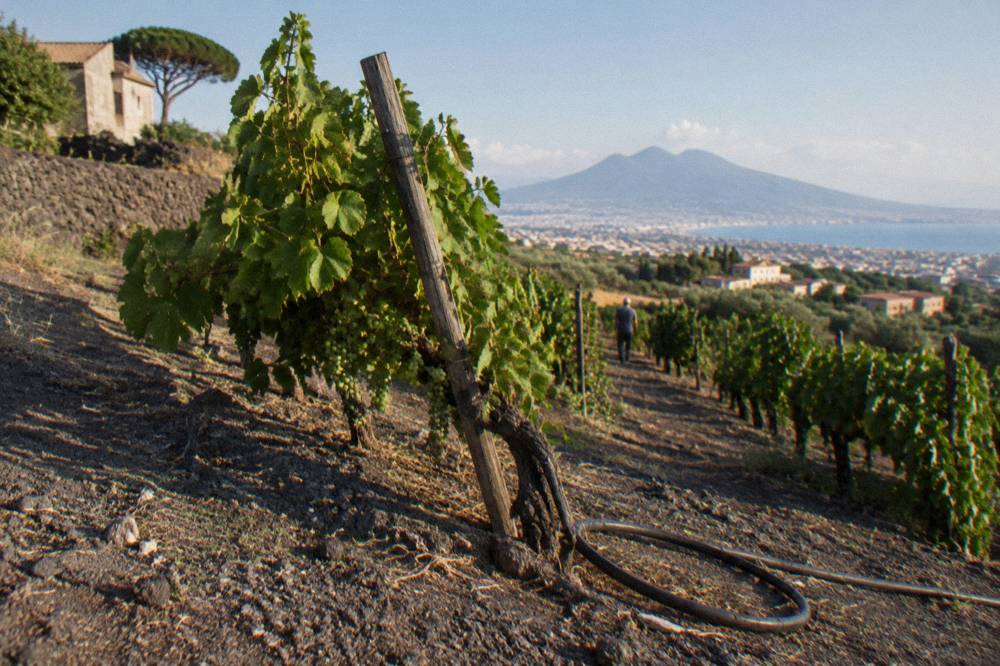
Growers talk about the soil the way bakers talk about flour. The ash that destroyed Pompeii became a deep, dark top layer; successive lava flows broke down into loose, stony ground that forces vine roots to dig for water. Stressed vines produce fewer, smaller berries with thicker skins and more concentrated juice. The classic tasting notes that follow, flint, smoke, sea salt, white peach, come as much from that mineral substrate as from the grapes themselves, and they are the reason sommeliers can often pick a Vesuvius white blind. The sea is the other half of the equation: the slope faces the Bay of Naples, and the maritime breeze slows ripening and keeps acidity in the wine.
None of this is unique among wine regions, but few places combine an active volcano, a sea view and a two-thousand-year-old wine trade in one walkable landscape. The last eruption was in March 1944, when lava reached the towns on 21 March after activity began on 18 March, and the volcano's alert level is published as green by the INGV Osservatorio Vesuviano. The vines simply keep growing on top of that history. For more on the wine country's bigger picture, our coverage at Mount Vesuvius Tours includes the full lineup of lunch-included Vesuvius day tours, where most tastings are bundled with a meal.
Which Wineries Can You Visit On Vesuvius?
Two wineries are verifiably established on the volcano's slopes: Cantina del Vesuvio in Trecase and Cantine Villa Dora in Terzigno, both inside the national park area. The park names them as the area's reference producers. Which winery a given commercial tour visits is not always stated on the listing, so check the operator's page before booking if a specific cellar matters to you.
Cantina del Vesuvio is the most visitor-facing of the two, with its own guided vineyard and cellar tours built around Lacryma Christi tastings and lunch on the farm. A bookable listing on our roster matches that profile directly: the Mount Vesuvius: Vineyard Tour with Wine Tasting and Lunch runs from €55 per person, rated 4.8 from 212 reviews, over about an hour and a half to two hours, with meal included, pickup flagged, and free cancellation on the listing. It is one of the shortest wine experiences on the volcano and works well if you want the cellar without a full-day commitment.
Beyond that, several operators run tastings on the slopes without naming the estate in the listing, which is honest but unhelpful when you are choosing. The Lunch & Wine Tasting in the National Park of Mt Vesuvius (from €58, rated 5 from 241 reviews, organic farm lunch with wine pairing) and the Scenic Wine Tasting & Lunch on the Slopes of Vesuvius from Naples (about four hours, from €90, rated 4.7 from 225 reviews) both fit that pattern. From Sorrento, the Mount Vesuvius Tour with Lunch & Wine Tasting runs about eight hours from €102, rated 4.5 from 277 reviews.
Can You Taste Vesuvius Wine On A Tour From Naples?
Yes, and it is one of the easiest wine day trips in Italy. The From Naples: Wine Tasting Tour on Vesuvius Slopes with Lunch runs about four hours from €90 per person, rated 4.6 from 469 reviews, with hotel pickup, a vineyard walk, tasting and a Mediterranean lunch included. Free cancellation is flagged on the listing. If you'd like to compare other ways to pair the volcano with a meal, our guide to Vesuvius tours that include lunch or a tasting lays out the options side by side.
Four hours is the sweet spot: you leave Naples after breakfast, walk a vineyard on the volcano, eat, and are back by mid afternoon. The related tour on this page is exactly that format. If you want Pompeii folded into the same day, the Pompeii Tour and Vesuvius Wine Tasting with Lunch from Naples runs about six hours from €115, rated 4.7 from 518 reviews, with pickup and meal included, and pairs the ruins with a vineyard lunch. A step up in price and polish, the Vesuvius & Pompeii Signature Tour: Wine & Lunch from Naples runs about eight hours from €150 and carries a 4.9 rating from 461 reviews.
A note on planning around the crater: if you intend to add the Gran Cono walk to a wine day, remember the crater has timed online tickets and seasonal daily caps, from 2,160 entries a day in the winter months to 3,240 in July and August, and access hours shift by month, 09:00 to 15:00 in January, February, November and December, up to 09:00 to 18:00 in July and August. The park's adult ticket is €10 under its ticketing rules; the park's authorised online seller shows €11.68. A combined tour that handles both logistics is often simpler than stitching them yourself, and the Can I Take A Guided Tour From Naples To Vesuvius And Pompeii? post covers that decision in detail.
What Does Lacryma Christi Taste Like With Food?
The bianco is fresh, saline and slightly smoky, with white fruit and a mineral finish that suits seafood, buffalo mozzarella and simple pastas; the rosso is lighter-bodied and savory, with red cherry, pepper and ash-toned tannins that pair with tomato-based dishes, cured meats and grilled meat. Both styles are made to drink young and cool, not to cellar.
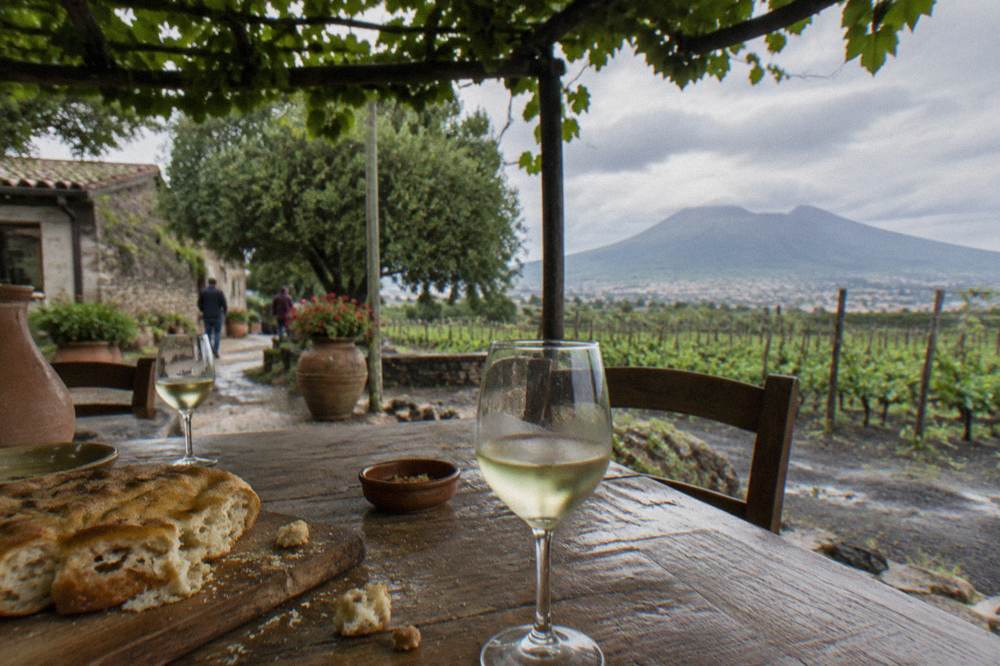
The pairing logic is local before it is theoretical. Vesuvius tomatoes, grown in the same volcanic soil, are the region's other famous crop, and the acidity of Piedirosso cuts through them the way nothing imported does. Most tasting lunches on the slopes lean on exactly that: a starter of cured meats and cheeses, a pasta with pomodorodelpiennolo, a main, and local sweets, each poured with a different glass. Tasting fees and lunch prices on tour listings are bundled rather than itemized, so treat menu details as per-listing and check what the operator says is included; on the roster, every wine tour named in this article flags meal included except the pure tasting experiences, where the tasting itself is the meal.
If you are comparing formats by budget, this is roughly how the wine-adjacent options stack up, all prices per person and all from prices:
| Tour | Duration | From price | Rating (reviews) |
|---|---|---|---|
| Mount Vesuvius: Vineyard Tour with Wine Tasting and Lunch | 1.5 to 2 hours | €55 | 4.8 (212) |
| Lunch & Wine Tasting in the National Park of Mt Vesuvius | about 2.5 hours | €58 | 5 (241) |
| From Naples: Wine Tasting Tour on Vesuvius Slopes with Lunch | 4 hours | €90 | 4.6 (469) |
| Pompeii Tour and Vesuvius Wine Tasting with Lunch from Naples | 6 hours | €115 | 4.7 (518) |
| Vesuvius & Pompeii Signature Tour: Wine & Lunch from Naples | about 8 hours | €150 | 4.9 (461) |
When Is The Best Season For A Vesuvius Wine Tasting?
May through September offers the driest weather on the slopes, with summit-level modelled highs of 15 to 23 C and the fewest rain days in July, while September and October bring the grape harvest and softer light. The crater's access hours are longest from April to August, so a combined hike-and-tasting day is easiest to schedule in those months.
The climate figures here are modelled 1991-2020 averages for the roughly 1,000 m level, and they matter for two reasons. First, the summit runs about 6 to 7 C cooler than Naples every month, so a tasting lunch at a low-slope winery can feel balmy while the crater above is jacket weather; our post on whether it is cold at the top of Vesuvius covers the layers question. Second, November is the wettest summit month at 180 mm of modelled rain across 13.6 days, and the crater trail and box office close automatically on any day with an orange weather alert or higher, with automatic refunds for slots inside a closure. The trail status belongs to the day, not the season page: check the live conditions before you travel, and book tastings and crater tickets with cancellation flexibility, which the listings in this article all flag.
Harvest is the emotional high point. Grapes come in from late August into October, and a tasting during vendemmia can mean watching the crates come in while you eat. The wine events calendar shifts year to year, so treat any specific festival date as per-listing rather than fixed.
Is A Vesuvius Wine Tour Worth It Without A Crater Hike?
For many visitors, yes. A tasting-only day trades the crater's timed tickets, shuttle logistics and weather exposure for a slow lunch among vines, and the shortest options cost from €55 to €60 per person against a fuller €90 to €150 combined day. If the wine is the point, the crater is optional; if the crater is the point, add the winery, not the reverse.
The honest comparison is about attention. A crater hike is a two-and-a-half-hour round trip on a path the park rates low difficulty, but it is scheduled, capped and weather-dependent. A tasting is none of those things to the same degree. Travelers who try both often report that the winery lunch is where the volcano finally makes sense: you can see the whole slope, the bay, and the terraced vines from a table, with a glass of Caprettone in hand, while the crater walk is the adrenaline half of the day. If you want to move between those frames of mind, the lunch-included Pompeii and Vesuvius day from Naples (about 7.5 hours, from €71, rated 4.7 from 826 reviews, pickup included) is a middle path: ruins, crater and a light Italian lunch without the winery stop.
The choice also depends on who is traveling. Tastings welcome children and non-drinkers more easily than a crater schedule does, though one listing, the vineyard tour at Cantina del Vesuvio, sets a minimum age of 18. Always check the listing for age minimums and what entry is included.
What Should You Know Before Booking A Vesuvius Wine Tour?
Check four things on the listing before you book: whether lunch is actually included or sold as an add-on, whether pickup is provided and from where, the minimum age if children are traveling, and the cancellation window. All roster tours named here flag free cancellation on their listings, but pickup ranges from hotel collection to fixed meeting points, and one vineyard tour sets a minimum age of 18.
Bookable for future dates is the right mental model for all of them: schedules shift with the season, so confirm the operator's current calendar before locking plans around it. If a specific winery matters, email the operator and ask which estate the tour visits, because as noted above, most listings do not name it. And if your day includes the crater as well as the cellar, book the crater ticket or the combined tour well ahead: tickets are sold only online by time slot, released 30 days out, 50 per 10-minute slot, and a last-minute release of 10 named tickets per slot happens 30 minutes before each slot near the entrance.
Here is the short version of the whole decision:
| If you want... | Best fit from this article | From price |
|---|---|---|
| A short cellar visit with lunch | Mount Vesuvius: Vineyard Tour with Wine Tasting and Lunch | €55 |
| A half day from Naples, tasting focused | From Naples: Wine Tasting Tour on Vesuvius Slopes with Lunch | €90 |
| Ruins plus wine in one day | Pompeii Tour and Vesuvius Wine Tasting with Lunch from Naples | €115 |
| A general day tour with lunch, no winery | From Naples: Pompeii and Vesuvius Tour with Lunch Included | €71 |
| From Sorrento instead of Naples | From Sorrento: Mount Vesuvius Tour with Lunch & Wine Tasting | €102 |
Whichever way you go, the wine is the same DOC whether you taste it in a candlelit cellar or under a pergola with the volcano above you. Three solid ways to meet it:
Common Questions About Vesuvius Wine
What Wine Is Made From Mount Vesuvius?
Lacryma Christi del Vesuvio DOC, in bianco and rosso styles, grown across 15 municipalities on the volcano's slopes. The white is based on Coda di Volpe and Verdeca, the red on Piedirosso and Sciascinoso, both at minimum 12 percent alcohol.
What Is The Italian Wine From Vesuvius?
Lacryma Christi del Vesuvio DOC is the protected appellation of the Vesuvius slopes. It covers still whites and reds made in 15 municipalities from Ercolano to Somma Vesuviana, with strict grape percentages set out in the DOC rules.
Can You Visit A Winery On Mount Vesuvius?
Yes. Cantina del Vesuvio in Trecase and Cantine Villa Dora in Terzigno are the two named producers on the slopes, and several bookable tours include a vineyard walk, tasting and lunch, from €55 per person for the shortest option.
Is Lacryma Christi A Red Or White Wine?
Both. The bianco is at least 80 percent Coda di Volpe and/or Verdeca; the rosso is at least 80 percent Piedirosso and/or Sciascinoso, with Aglianico allowed up to 20 percent. Both styles need at least 12 percent alcohol.
Do Vesuvius Wine Tours Include Lunch?
Most listings on the roster flag meal included, including the four-hour tasting tour from Naples at €90 and the six-hour Pompeii and winery day at €115. Check the individual listing to confirm, and note one vineyard tour sets a minimum age of 18.
Why Is It Called Lacryma Christi?
The name means tear of Christ. Legend holds that a tear of Christ fell on the volcano's vines and blessed them, a story that long predates the modern DOC and that growers still tell at tastings on the slopes.