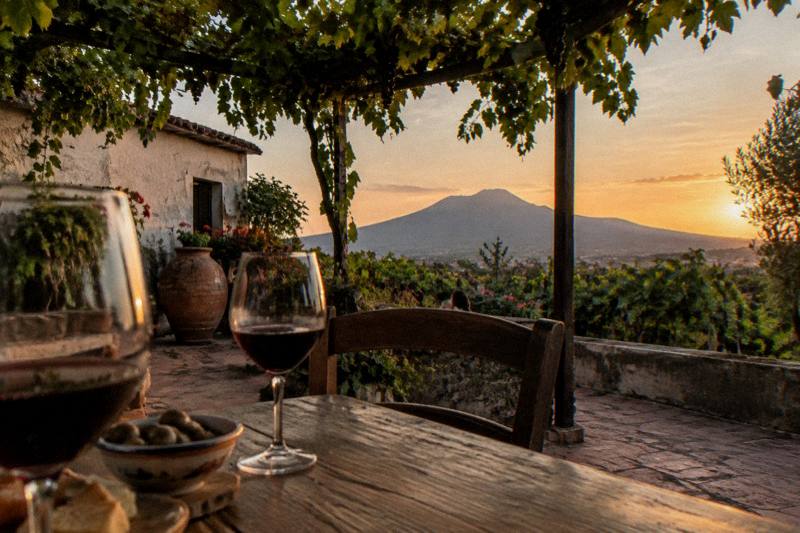
Lacryma Christi Wine From Vesuvius
Lacryma Christi del Vesuvio DOC is the wine grown in volcanic soil on the flanks of one of the world's most famous volcanoes. Here is what is in the bottle, who makes it, and how to taste it where the grapes grow.
Short answer
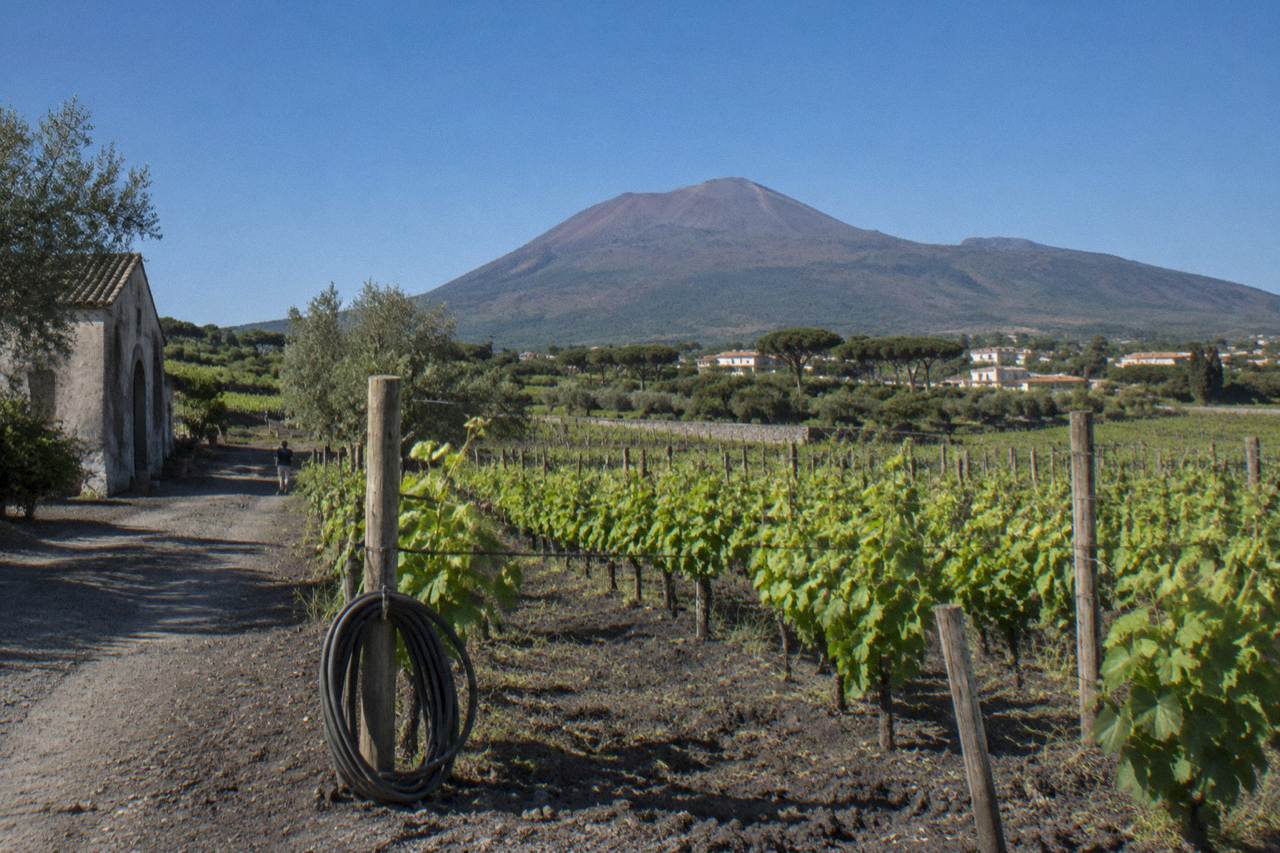
Lacryma Christi del Vesuvio DOC is grown in 15 municipalities on the slopes of Vesuvius. The bianco must be at least 80 percent Coda di Volpe and/or Verdeca; the rosso at least 80 percent Piedirosso and/or Sciascinoso, both with minimum 12 percent alcohol. Winery visits with tasting and lunch run from €55 per person.
What Is Lacryma Christi Wine?
Lacryma Christi del Vesuvio DOC is the protected wine of the Vesuvius slopes, made in 15 municipalities around the volcano in Naples province. It exists in white, red and rosé styles under strict DOC rules: the white must contain at least 80 percent Coda di Volpe and/or Verdeca grapes, the red at least 80 percent Piedirosso and/or Sciascinoso, and every wine must reach at least 12 percent alcohol. It is one of very few wines in the world grown inside an active volcano's vine belt, on soil layered with ash and lava from eruptions across the centuries. If you'd like to taste it where the grapes are grown, our guide to the wine made from Mount Vesuvius rounds up the cellars and tastings you can visit on the volcano's slopes.
The wine is the reason many visitors extend a volcano day into a food day. The crater trailhead at Quota 1000 and the densest vineyards sit on the same flank of the mountain, which is why so many Mount Vesuvius wine tours bundle a tasting with a crater hike or a Pompeii visit rather than treating the wine as a separate trip. The vines begin a short drive below the park boundary and run almost continuously down toward the coast at Torre del Greco and Ercolano.
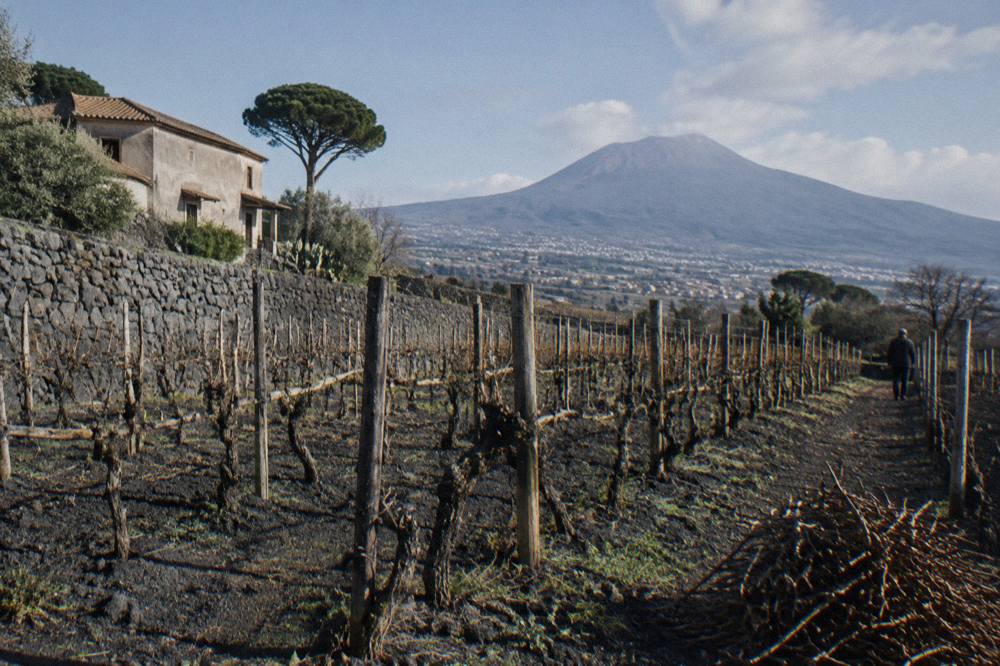
What makes the wine distinctive is the ground itself. The Vesuvian soil is a deep mix of volcanic ash, pumice and lava fragments that drains fast and holds heat, stressing the vines just enough to concentrate flavour while the sea breeze off the Bay of Naples keeps acidity alive. Winemakers on the mountain talk about their soil the way winemakers elsewhere talk about chalk or slate: it is the entire argument for why these grapes, in this place, taste the way they do.
The DOC covers 15 municipalities on the slopes: Boscotrecase, Trecase, San Sebastiano al Vesuvio, Ottaviano, San Giuseppe Vesuviano, Terzigno, Boscoreale, Torre Annunziata, Torre del Greco, Ercolano, Portici, Cercola, Pollena Trocchia, Sant'Anastasia and Somma Vesuviana, per the national park's official DOC page. That arc runs from the lower slopes facing the sea all the way around to the northern towns under Monte Somma, and it means "Vesuvius wine country" is a wide ring, not a single valley.
Where Does The Name Lacryma Christi Come From?
The name means "tears of Christ" in Latin, and local tradition ties it to a legend in which Christ's tears, falling on the land Lucifer tore from heaven when he was cast out, turned the volcanic ground into a place of extraordinary wine. The story is folklore rather than documented history, but it has stuck to the wine for centuries and gives the label one of the most recognizable names in Italian winemaking.
The legend has several versions, some involving Lucifer stealing a corner of heaven that became the Bay of Naples, others focusing on the tears themselves sanctifying the vineyards. None of them can be verified, and no document pins the name to a date. What matters for a visitor is more practical: the name is old, it is tied specifically to this volcano, and it appears on bottles across price levels, from simple table versions sold at vineyard lunches to structured reds that age well.
A second, more mundane explanation you will hear in tasting rooms is that the name refers to drops of sap or juice that fall from the ripe grapes "like tears" during harvest. Winemakers disagree about which story came first, and the honest answer is that nobody knows. Both versions are worth hearing at the tasting counter because they tell you how deeply the wine is woven into local identity, on a mountain where almost every food and drink story runs back to the volcano itself.
The DOC framework sits on top of that folklore. Under Italian and EU protected-designation rules, only wine from the defined 15 municipalities, made from the permitted grapes at the required percentages, may carry the Lacryma Christi del Vesuvio name. The founding year of the DOC is not something we state, because no official source confirms it, but the rules themselves are published and checkable, and they are the reason a bottle from Trecase and a bottle from Somma Vesuviana can both carry the label while a similar wine from outside the zone cannot.
What Grapes Go Into A Bottle Of Lacryma Christi?
The white must be at least 80 percent Coda di Volpe, known locally as Caprettone, and/or Verdeca, with Falanghina and/or Greco allowed up to 20 percent. The red must be at least 80 percent Piedirosso and/or Sciascinoso, with Aglianico allowed up to 20 percent. Both styles require a minimum 12 percent alcohol by volume, per the park's published DOC specification.
Coda di Volpe is the signature white grape. It has a long, tapered bunch that supposedly resembles a fox's tail, hence the name, and on Vesuvius it is often called Caprettone, "little goat (see Walk Up Vesuvius Time)." It ripens late and keeps acidity even in warm years, which is why the whites taste mineral and saline rather than heavy. Verdeca, the other permitted pillar, adds body and a herbal edge. Falanghina and Greco, the allowed minority grapes, round out aromatics.
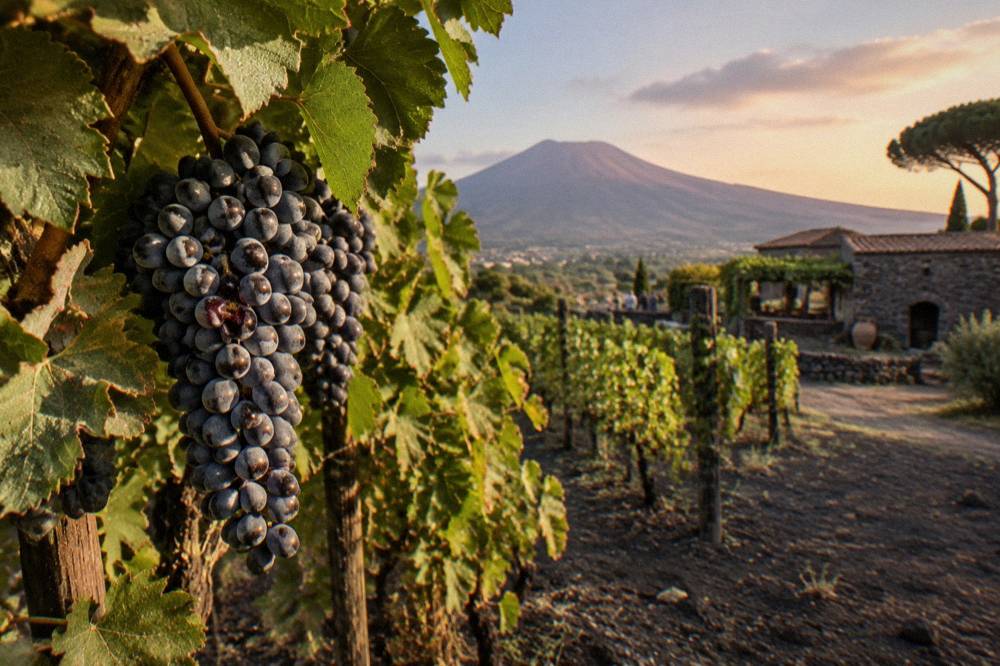
Piedirosso is the heart of the red. Its name means "red foot," a nod to the red stalks that look like a dove's painted feet, and it gives soft, medium-bodied wines with red fruit and a smoky, volcanic undertone. Sciascinoso, the blending partner, brings colour and a gentle sweetness of fruit, while the small permitted share of Aglianico adds structure and tannin in the riper zones. The result is a red that drinks well young alongside pizza and tomato-heavy Campanian food, exactly the cuisine served at vineyard lunches on the mountain.
For visitors, the practical takeaway is simple: order a bianco if you want the crispest expression of the volcanic soil, a rosso if the meal is substantial. Most Vesuvius tasting tours pour both alongside the local dishes the wineries grow or source themselves. If you are planning the wider day, our piece on What Wine Is Made From Mount Vesuvius? breaks down how these same grapes appear in other regional bottles.
How Strict Are The DOC Rules In Practice?
Strict, and enforced through the standard Italian DOC system: the grapes must come from the 15 defined municipalities, the blend percentages are minimums and maximums set by the specification, and the alcohol floor of 12 percent applies to both colours. Producers outside the zone, or outside the percentages, cannot use the Lacryma Christi name on their labels. In practice, many of the best-regarded producers on the mountain go further than the minimums and bottle single-variety wines, especially Caprettone and Piedirosso, from single vineyards.
The blend rules in full, from the park's published specification:
| Style | Main grapes (minimum 80 percent) | Allowed blending grapes (maximum 20 percent) | Minimum alcohol |
|---|---|---|---|
| Bianco | Coda di Volpe (Caprettone) and/or Verdeca | Falanghina and/or Greco | 12 percent |
| Rosso | Piedirosso and/or Sciascinoso | Aglianico | 12 percent |
The 15-municipality zone matters more than most visitors realise. Because the ring runs from seaside Torre del Greco around to inland Somma Vesuviana, the DOC covers dramatically different altitudes, exposures and soils, from deep ash beds near the crater to older lava terraces on the Somma side. Two Lacryma Christi bottles can legitimately taste quite different, and tasting rooms on different flanks of the mountain will make different claims for their own corner of the zone. That variation is a reason to visit more than one producer if your schedule allows.
The DOC is also the legal spine of the local wine economy. Vineyards inside the national park boundary operate under both farming and park rules, and winemaking here is small-scale by necessity: the plots are steep, fragmented and often worked by family crews. This is why most Vesuvius winery experiences are intimate, sit-down lunches rather than industrial cellar tours, and why booking ahead matters in the busy spring and autumn months.
Which Wineries Can You Visit On The Mountain?
The two named producers on the Vesuvius slopes are Cantina del Vesuvio in Trecase and Cantine Villa Dora in Terzigno, both family wineries inside the national park area working with Lacryma Christi grapes. Cantina del Vesuvio, which the roster lists as the operator of the bookable vineyard tour with tasting and lunch, sits closest to the crater access road and is the easiest to combine with a hike.
Cantina del Vesuvio describes itself as a family operation dating to 1930, and its own site carries the vineyard tour and tasting offer that appears in our listings. The tour from the roster runs 1.5 to 2 hours, includes a vineyard walk, the tasting and lunch, and costs from €55 per person, with a 4.8 rating across 212 reviews and free cancellation flagged on the listing. Because the operator field names the winery, this is one of the few cases where we can say which cellar a bookable product actually visits.
Villa Dora, on the Terzigno side, is the other frequently named estate, set on lava terraces on the northern flank. Which other rostered tours visit which cellar is generally not stated on listings, so if a specific producer matters to you, check the listing or ask the operator before booking. What all of them share is the setting: vines in black soil, the crater wall above, and the Bay of Naples below on the seaward side. Other pages covering the same trip are gathered on Mount Vesuvius Tours.
A practical note on logistics. Independent visits to the wineries require a car or taxi, because public transport serves the crater trailhead, not the vineyards, so most wine-focused visitors either drive, book a tour with transport included, or combine a hike with a winery that runs its own shuttle from the trail area. The Mount Vesuvius tours roster on this site filters for the wine-focused products, which removes the guesswork.
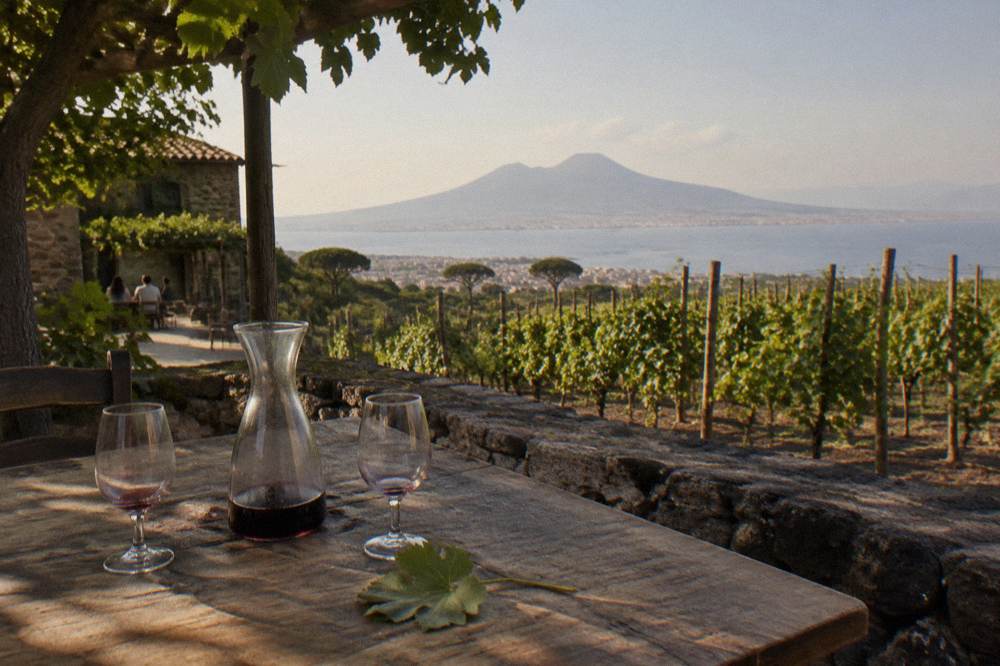
For a fuller rundown of the format, timings and what a cellar visit includes, our companion guide to Mount Vesuvius Wine Tours And What You Taste walks through each bookable option, including products that add an archaeologist-led ruins walk before the lunch.
What Does Lacryma Christi Actually Taste Like?
The bianco is typically dry, medium-bodied and saline, with citrus and white flowers over a distinctly mineral, almost smoky core that tasters regularly attribute to the volcanic soil. The rosso is softer and medium-bodied, red-fruited and gently spiced, low in aggressive tannin, built for food. Neither style is a blockbuster; both are built on freshness and a savoury, ash-and-sea finish that is genuinely hard to find elsewhere.
The white, especially when Caprettone dominates, has a character some sommeliers describe as "salt and stone." The sea breeze and the free-draining pumice keep the grapes from becoming flabby, so the wine reads crisp even at 12 to 13 percent alcohol. Expect lemon peel, yellow plum and a herbal note when Verdeca is in the blend. It pairs naturally with the mozzarella, seafood and fried food of Naples.
The red is the wine you are most likely to meet at a vineyard lunch, because it sits comfortably beside pizza and pasta al pomodoro. Piedirosso gives sour cherry and an earthy, volcanic smoke note; Sciascinoso pushes the fruit forward; a touch of Aglianico firms the finish in richer examples. Served slightly cool, it is an easy wine for a long outdoor table, which is exactly how the wineries serve it.
Tasting at the winery differs from tasting at home in one obvious way: the lunch is part of the tasting. Rostered wine tours on the mountain routinely include a full meal, and the menus lean on local products, tomatoes grown in the same ash soil, cheeses, bread and often a pasta course, finished with the estate's own wines. The wider Vesuvius tours with lunch lineup covers the broader meal-included selection, including products where pizza rather than a winery lunch is the centrepiece.
How Much Does A Vesuvius Wine Tour Cost?
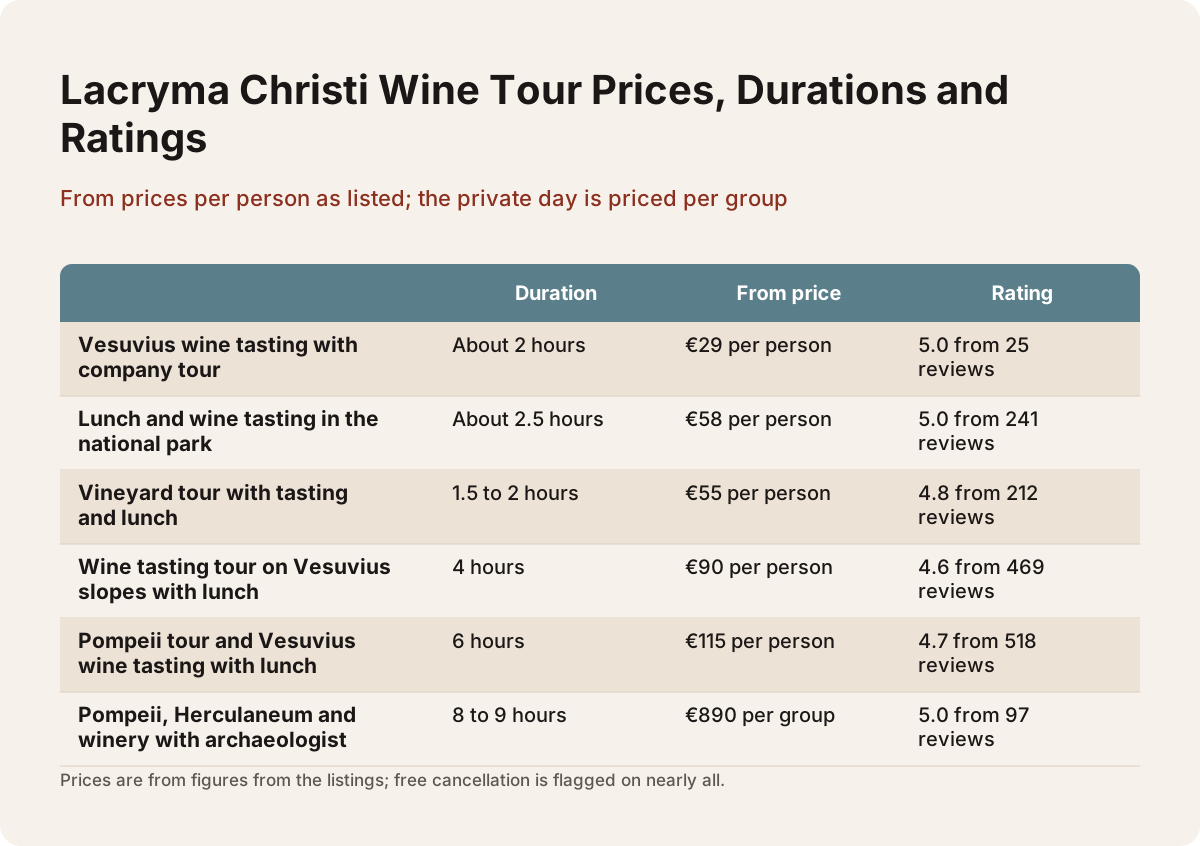
Wine-focused products on this site run from €29 per person for a producer tasting, up to €90 to €115 for a tasting with lunch and transport from Naples, and €890 per group for a full private day with an archaeologist guide and a winery stop. All prices are "from" figures taken from the listings, most are per person, and free cancellation is flagged on nearly all of them.
The spread reflects what is bundled. A tasting-only visit keeps the price low because there is no transport or meal. A tasting plus lunch plus pickup from Naples roughly triples it, because you are paying for the vehicle, the driver and the kitchen. Private formats price by group, not by person, so they look expensive on paper and can work out cheaper for six or more travellers.
| Product | Format | Duration | From price | Rating |
|---|---|---|---|---|
| Vesuvius wine tasting with company tour | Producer visit, tasting only | About 2 hours | €29 per person | 5.0 from 25 reviews |
| Lunch and wine tasting in the national park | Farm lunch with wine pairing | About 2.5 hours | €58 per person | 5.0 from 241 reviews |
| Vineyard tour with tasting and lunch | Winery visit, meal included | 1.5 to 2 hours | €55 per person | 4.8 from 212 reviews |
| Wine tasting tour on Vesuvius slopes with lunch | Transport from Naples included | 4 hours | €90 per person | 4.6 from 469 reviews |
| Pompeii tour and Vesuvius wine tasting with lunch | Ruins plus winery, full day | 6 hours | €115 per person | 4.7 from 518 reviews |
| Pompeii, Herculaneum and winery with archaeologist | Private day, three stops | 8 to 9 hours | €890 per group | 5.0 from 97 reviews |
Two honest caveats on that table. First, the €890 private figure is per group, not per person, and the listing does not state the group size it covers, so divide cautiously. Second, the €29 tasting and the €58 farm lunch come from small review pools, 25 and 241 reviews respectively, so the 5.0 scores carry less weight than a 4.7 from several hundred travellers. Small pools are named as such, and no rating on this site is presented without its count.
When Is The Best Time To Visit The Vineyards?
May, June, September and October are the sweet spots: the modelled 1991-2020 climate average puts summit highs at 15 to 22 C in those months with 30 to 90 mm of rain, the vines are in leaf, and the crater's longer access hours make a hike-plus-winery day easy to schedule. July and August are hottest and busiest; November to February are quiet, cool and occasionally wet.
The vineyard calendar gives each season its own argument. Spring brings flowering vines and green shoots against black soil, and the tasting terraces open in reliably warm weather. Late summer and autumn are harvest time, when you may see crates of Piedirosso coming in, and the wineries are at their liveliest. Winter tastings are intimate and the pours are generous, but the crater's access hours shrink to 09:00 to 15:00 and November is the wettest month at the summit level, averaging 180 mm of rain.
| Month | Crater access | Summit avg high C | Summit rain mm | Wine-visit character |
|---|---|---|---|---|
| March | 09:00-16:00 | 8.3 | 104 | Vines waking, quiet cellars |
| May | 09:00-17:00 | 15.1 | 59 | Flowering vines, long days |
| June | 09:00-17:00 | 19.2 | 30 | Warm, dry, ideal combined days |
| August | 09:00-18:00 | 22.8 | 22 | Hottest, busiest, book early |
| September | 09:00-17:00 | 18.7 | 90 | Harvest build-up, full menus |
| October | 09:00-16:00 | 14.8 | 129 | Harvest and soft light |
| November | 09:00-15:00 | 10.4 | 180 | Quiet, cool, wettest month |
One planning rule applies year round: the crater trail and box office close automatically on any day the regional civil protection authority issues an orange weather alert or higher, with automatic refunds for affected slots, while wineries keep their own schedules. If a combined hike-and-tasting day is the plan, book the hike date-flexibly and keep the tasting for after it, and check the operator's current schedule for the tour's dates. The crater slots sell on a 30-day release cycle, so a peak-season combined day needs a month of lead time.
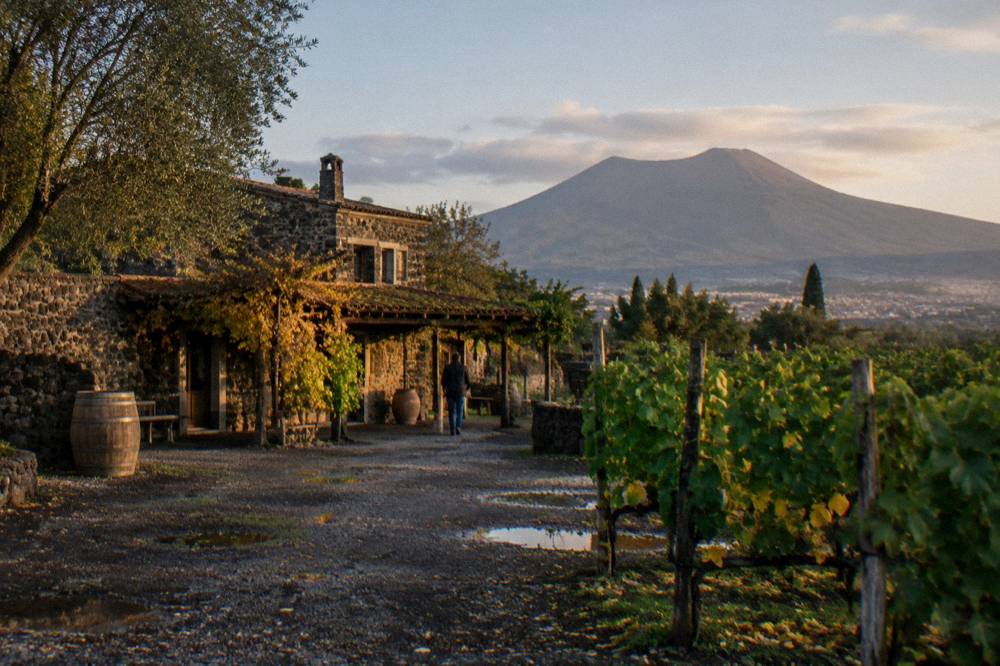
Can You Combine Wine Tasting With The Crater Or Pompeii?
Yes, and it is the most popular way to do Vesuvius. The roster includes crater-plus-winery days from Sorrento from €102 per person, Pompeii-plus-winery days from Naples from €115 per person, and all-three-stop days covering Pompeii, Herculaneum, the crater and a cellar at premium and private price points. Durations run 6 to 9 hours depending on how many stops you stack.
The geography makes the combination natural. The crater trailhead at Quota 1000, the vineyards of Trecase and Boscotrecase, and the Pompeii excavations sit within roughly a 20 kilometre arc, so a competent operator can move a group through all three without backtracking. What you trade is depth: a crater hike plus tasting day gives you the volcano's two best experiences at a brisker pace than either alone.
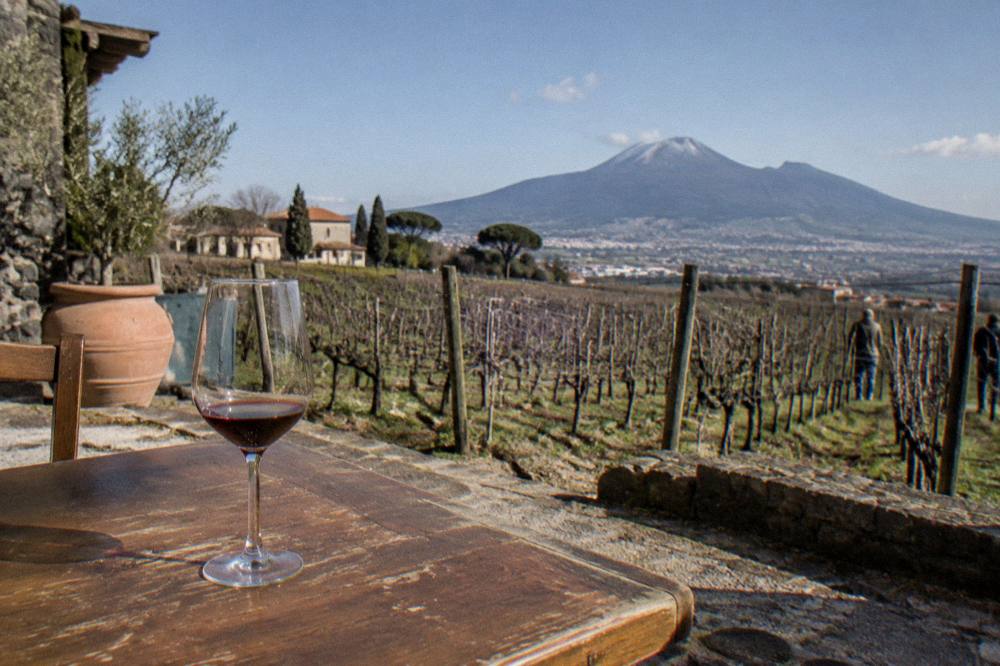
A sensible order matters more than most itineraries admit. The crater walk is 4,010 m round trip with a 2 h 30 official time, best done before the lunch and the wine, for reasons every walker will understand. Several guides on this site cover the sequencing question in detail, including our Pompeii And Vesuvius In One Day planner, which works whether or not a winery is the third stop. Entry tickets for the archaeological sites are separate purchases unless a listing states otherwise: Pompeii Express is €20 and Herculaneum is €16, per the official sites.
| Combined format | Example product | Duration | From price |
|---|---|---|---|
| Crater plus winery lunch, from Sorrento | Vesuvius summit with lunch and wine tasting | 8 hours | €102 per person |
| Pompeii plus winery lunch, from Naples | Pompeii tour and Vesuvius wine tasting with lunch | 6 hours | €115 per person |
| All-inclusive ruins, crater, lunch and wine | All-inclusive Pompeii and Vesuvius day | 8 hours | €127.50 per person |
| Signature private-style day | Vesuvius and Pompeii signature tour with wine | About 8 hours | €150 per person |
| Private archaeologist day with winery | Pompeii, Herculaneum and winery with archaeologist | 8 to 9 hours | €890 per group |
The Rome-based option deserves a special mention for travellers staying in the capital. The Pompeii from Rome day trip with the optional Vesuvius add-on runs about 12 hours from €56 per person, with a pizza lunch included and free cancellation flagged, and it lets a Rome visitor fold a volcanic-food afternoon into a long but single-day excursion.
What Should You Look For On A Lacryma Christi Label?
Check three things: the words "Lacryma Christi del Vesuvio" with the DOC designation, the style, bianco or rosso, which tells you the grape family, and the producer's municipality, which hints at the wine's character, from the saline seaside slopes of Torre del Greco to the firmer inland ground of Somma Vesuviana. A vintage date and single-grape name such as Caprettone or Piedirosso signal a more focused, producer-driven bottle.
The DOC name is the legal guarantee; everything else on the label is the producer's statement of intent. Wines labelled with a single variety inside the DOC percentages are common and often the most interesting pours at a tasting, because they isolate the volcanic-soil character without blending. Reserve-style reds with longer oak aging exist on the mountain but are the exception rather than the rule, and they are worth seeking out only after you have tasted the standard bottlings.
At the winery, ask which parcels the bottle came from. Because the zone is a ring around the volcano, altitude and lava-field age change the glass noticeably, and producers are usually eager to explain the difference between a vineyard on 1944-era flows and one on much older terraces. It is the same conversation you would have in Barolo or Chablis, just conducted over soil that was, geologically speaking, delivered yesterday.
Price honesty helps too. At the cellar door, straightforward Lacryma Christi bottlings are priced for everyday drinking, and the tasting fee structures are simple because the experiences are small. What you are paying for on a tour is the transport, the meal and the guided walk, not a mark-up on the bottle, and most visitors leave with one or two bottles at prices comparable to a wine shop in Naples.
Common Questions About Lacryma Christi Wine
What grapes are in Lacryma Christi del Vesuvio DOC?
The white must be at least 80 percent Coda di Volpe, locally called Caprettone, and/or Verdeca, with up to 20 percent Falanghina and/or Greco. The red must be at least 80 percent Piedirosso and/or Sciascinoso, with up to 20 percent Aglianico. Both styles require a minimum of 12 percent alcohol.
Where is Lacryma Christi grown?
In 15 municipalities on the slopes of Vesuvius, from seaside towns like Torre del Greco and Torre Annunziata around to Somma Vesuviana and Sant'Anastasia on the northern side, all inside the designated DOC zone defined by the park's published specification.
Can you visit a Lacryma Christi winery without a tour?
Yes, the wineries welcome direct visitors, but you will need a car or taxi because public transport serves the crater trailhead rather than the vineyards. Booking ahead is wise in the busy months. A bookable vineyard tour with tasting and lunch runs from €55 per person.
Is Lacryma Christi red or white?
Both. The bianco, built on Coda di Volpe and Verdeca, is dry, saline and mineral. The rosso, built on Piedirosso and Sciascinoso, is medium-bodied and red-fruited, made for the table. Most tastings pour both styles side by side.
What does the name Lacryma Christi mean?
It means "tears of Christ." Local legend says Christ's tears fell on the volcanic land and made it fertile for wine. The story is folklore, but the name is centuries old and is protected today by the DOC rules.
How much does a Vesuvius wine tour cost?
Wine experiences on this site run from €29 per person for a producer tasting, €55 to €90 for tastings with lunch, up to €115 for full-day Pompeii-plus-winery combinations and €890 per group for a private archaeologist-led day with a winery stop.