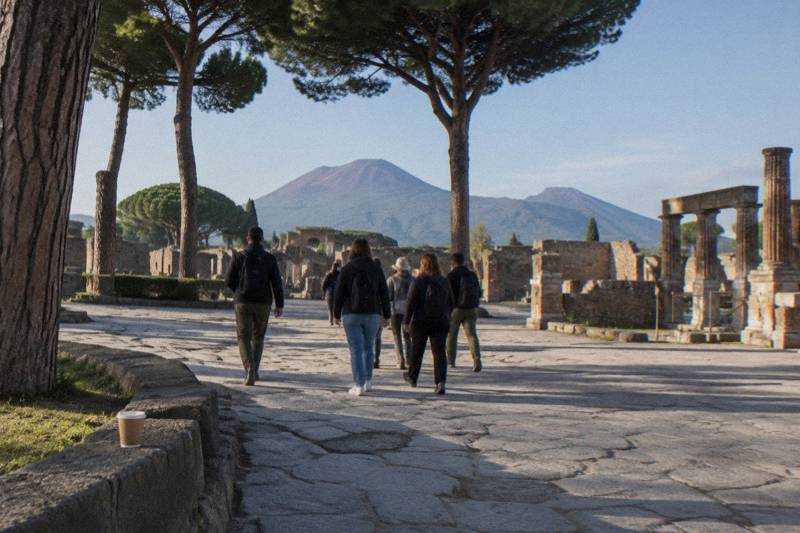
Mount Vesuvius Wine Tours And What You Taste
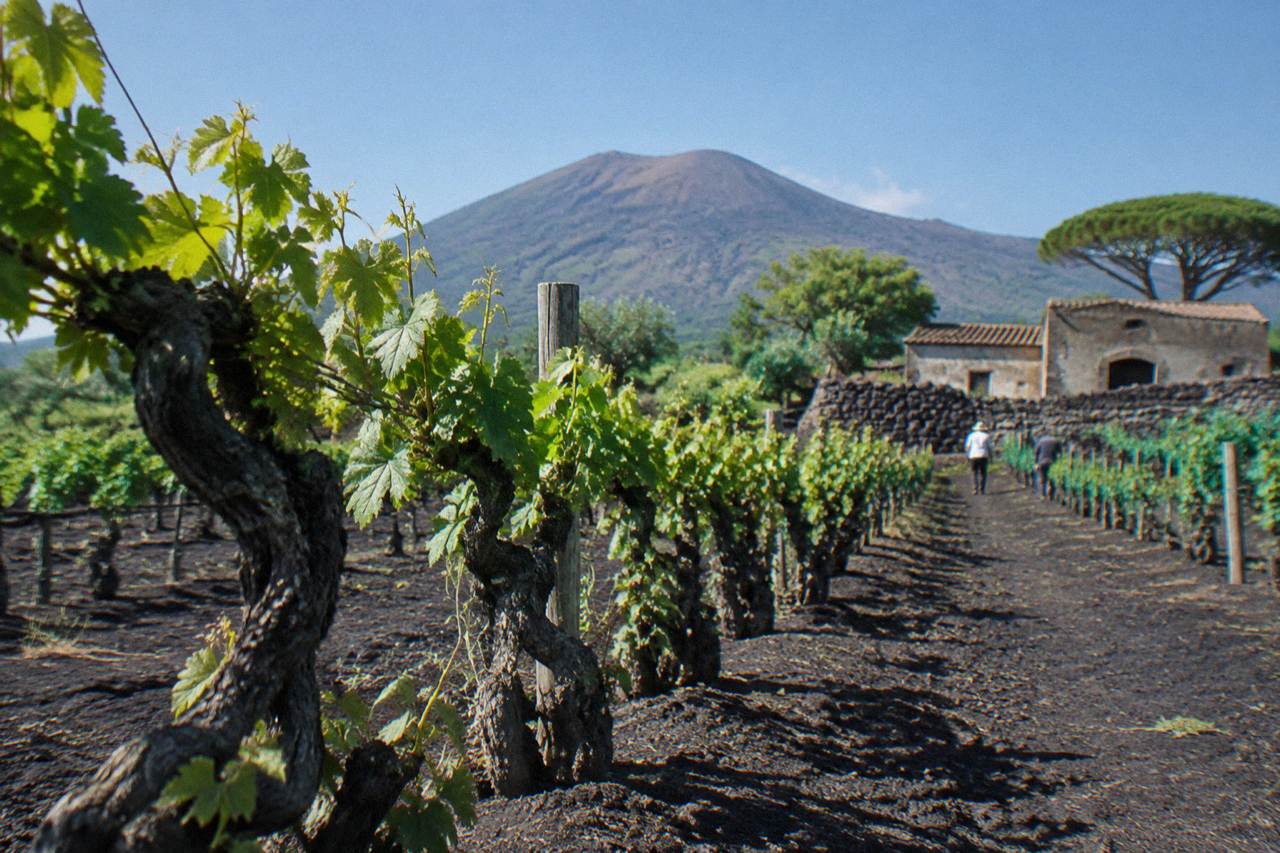
Vesuvius wine comes from vineyards planted in black volcanic soil inside a national park, and the tasting experiences sold on the volcano range from a two-hour cellar visit to full days that pair the crater, Pompeii and a long lunch. This guide explains what is in the glass and what each kind of tour actually includes.
Short answer
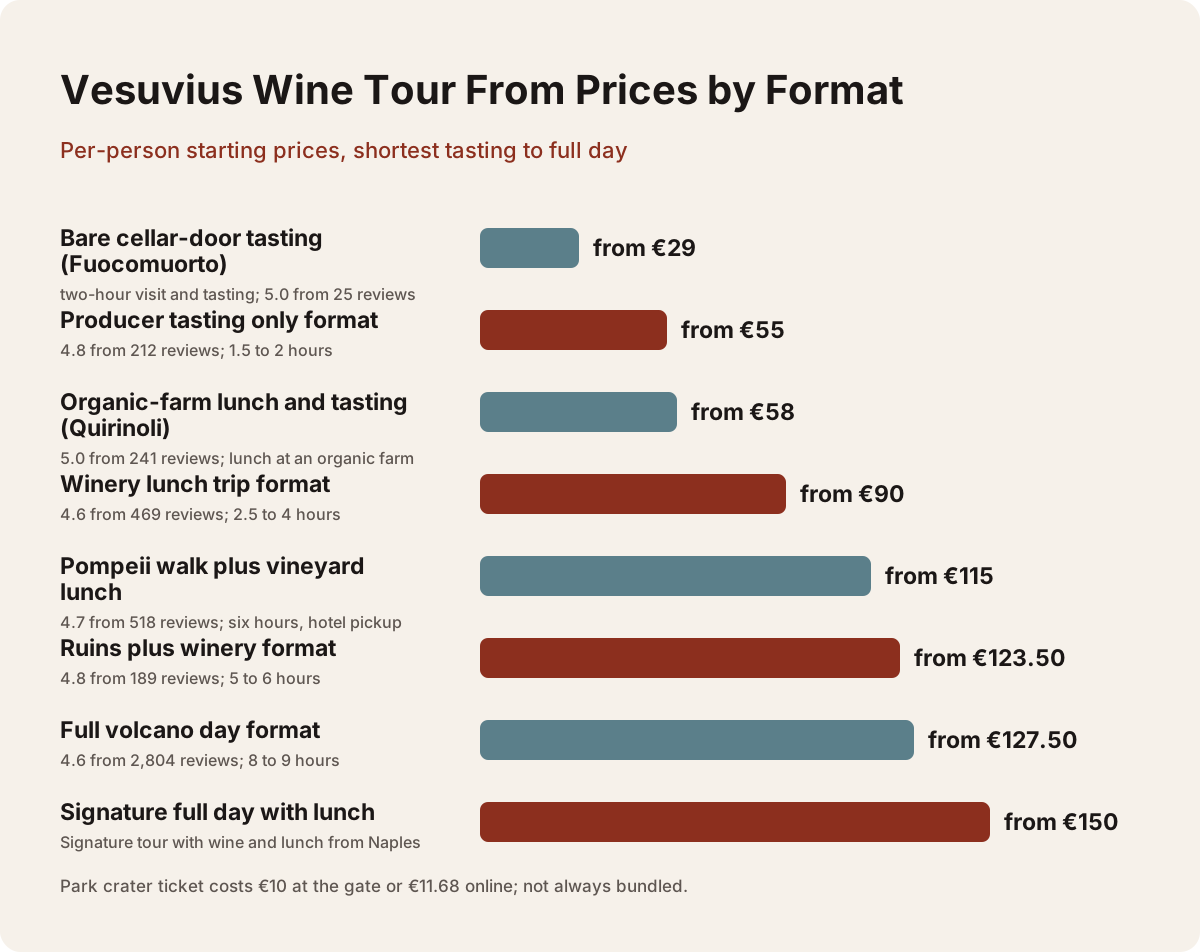
Lacryma Christi del Vesuvio DOC is grown in 15 municipalities on the volcano's slopes, from Bianco made with at least 80 percent Caprettone or Verdeca to Rosso built on Piedirosso. Wine tours on the volcano run from about €29 per person for a producer tasting to €150 for a full day with Pompeii, lunch and the crater.
Grapevines grow on the flanks of one of the world's most closely watched volcanoes. The soil is loose, black and full of minerals from ancient eruptions, the sea is close enough to temper the summers, and the wine that results, Lacryma Christi del Vesuvio DOC, has a production zone that sits almost entirely inside the Parco Nazionale del Vesuvio. Visitors do not only taste it: dozens of bookable tours walk you through the vineyards, pour several glasses with lunch, and in many cases bolt the winery stop onto the crater hike or the ruins of Pompeii. Before you book, our guide to Lacryma Christi and the grape varieties grown on the volcano explains exactly what ends up in your glass.
That range is the reason this guide exists. The wine listings on this site differ enormously in what they include, from a bare producer tasting to a 12-hour day from Rome. Understanding the DOC rules first, then matching a format to your schedule, is the difference between a memorable lunch on the volcano and a rushed glass beside a bus park.
What Is Vesuvius Wine And Why Does The Volcano Matter?
Vesuvius wine means Lacryma Christi del Vesuvio DOC, a protected designation grown in 15 municipalities on the volcano's slopes, plus a handful of park-grown table wines. The volcanic soil, poor in organic matter and rich in minerals, stresses the vines into low yields and concentrated fruit, and the sea breeze keeps acidity lively. That combination is what the wineries on the mountain sell.
The DOC covers 15 communes spread across the southern and western flanks: Boscotrecase, Trecase, San Sebastiano al Vesuvio, Ottaviano, San Giuseppe Vesuviano, Terzigno, Boscoreale, Torre Annunziata, Torre del Greco, Ercolano, Portici, Cercola, Pollena Trocchia, Sant'Anastasia and Somma Vesuviana. Between them they form a crescent around the mountain, from the coast at Torre del Greco up to the northern slopes of Monte Somma. Almost all of it falls inside the national park boundary, which is why a winery visit and a crater hike pair so naturally on a single day.
The name itself is older than the paperwork. Lacryma Christi, "the tears of Christ," belongs to a family of legends in which the wine's origins are tied to the volcano's sacred and destructive history, whichever version a particular winery prefers to tell at the table. The DOC discipline is more prosaic: it fixes the permitted grapes, the minimum percentages and the minimum alcohol, and the park itself publishes the official DOC rules. To see which grapes actually end up in the glass, the guide to the wines grown on Vesuvius lays out the permitted varieties and the estates that pour them.
For a deeper look at the grape varieties and the taste profile of each style, our Lacryma Christi Wine From Vesuvius guide covers the bottles, and the short answer to What Wine Is Made From Mount Vesuvius? is a good primer if the whole category is new to you.
Which Grapes Are In Lacryma Christi DOC Wine?
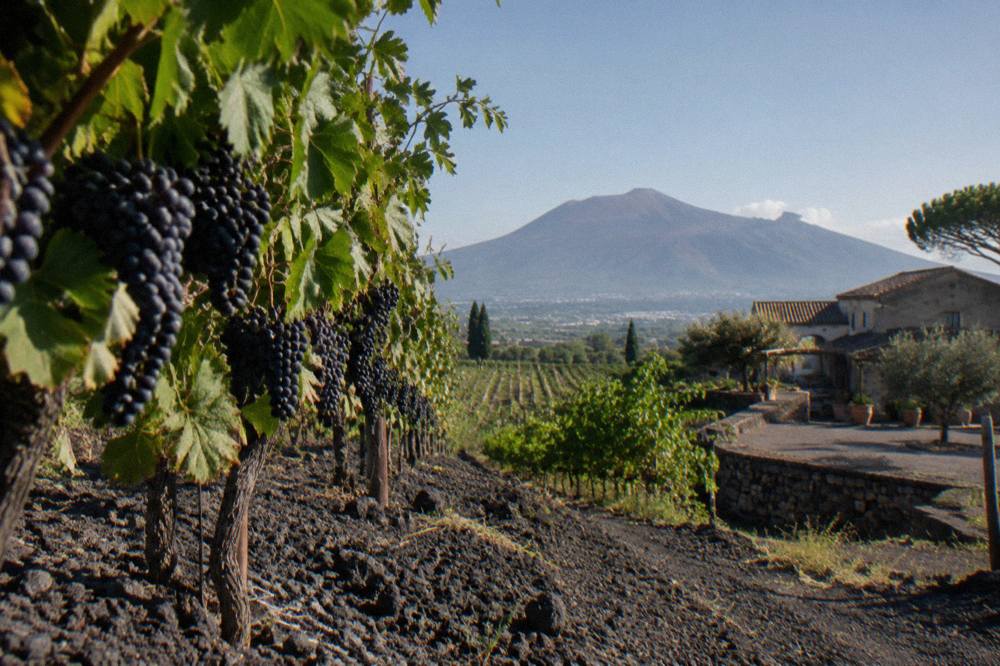
The DOC has two core styles. The Bianco must contain at least 80 percent Coda di Volpe, locally called Caprettone, and/or Verdeca, with Falanghina or Greco allowed up to 20 percent. The Rosso must be at least 80 percent Piedirosso and/or Sciascinoso, with Aglianico capped at 20 percent. Both must reach a minimum 12 percent alcohol.
Those are the numbers that matter when you stand at a tasting bench. A Lacryma Christi Bianco will almost always be Caprettone-led: a white with a saline, volcanic edge and enough body to carry a fish lunch from the Bay of Naples. The Rosso, sometimes labelled Palummina on the Piedirosso side, is lighter in colour than its alcohol suggests, with red fruit and a distinctly mineral finish that locals attribute to the ash and lapilli the vines grow in.
Aglianico's 20 percent ceiling is worth noticing. Campania's most famous red grape, the one behind Taurasi, is permitted here only as a supporting player. The DOC deliberately keeps Piedirosso as the engine of the Rosso, preserving a style that does not exist anywhere else. When a guide at a winery hands you a glass of the red and calls it the true taste of the volcano, that grape discipline is what they mean.
| DOC style | Minimum grape share | Allowed blending grapes (max 20%) | Minimum alcohol |
|---|---|---|---|
| Bianco | Coda di Volpe (Caprettone) and/or Verdeca, min 80% | Falanghina and/or Greco | 12% |
| Rosso | Piedirosso (Palummina) and/or Sciascinoso (Olivella), min 80% | Aglianico | 12% |
A structured tasting on a tour usually walks through both styles plus a spumante or passito where the producer makes one, and pairs each with a local dish. The formats differ far more than the wines do, which is why the rest of this guide is mostly about choosing a format.
If you are still deciding whether a winery stop belongs on your itinerary at all, the comparison in Pompeii And Vesuvius In One Day shows where a lunch and tasting fits between the ruins and the crater without overloading the schedule.
Which Wineries Can You Actually Visit On Vesuvius?
Two producers are named and verifiable on the volcano: Cantina del Vesuvio in Trecase and Cantine Villa Dora in Terzigno, both family wineries inside the park working DOC vineyards. Which winery a specific bookable tour visits is rarely stated on the listing, so if the producer matters to you, check the operator's listing before booking rather than assuming.
Cantina del Vesuvio sits on the Trecase side of the mountain, on the southern flank below the crater, and runs its own vineyard and cellar visits with tastings; the winery's own site is the primary source for its current programme. Cantine Villa Dora is on the Strada Provinciale Zabatta at Terzigno, on the eastern flank, and is the other name that appears in verified sources. Both work with Lacryma Christi DOC fruit from volcanic soils.
The honest caveat is that most tour listings say "a local winery" or "a vineyard on the slopes" without naming the producer. That is not a red flag: the wine, the lunch and the view are the product, and the operators rotate stops for capacity reasons. But if you have read about a specific cellar and want that one, the only reliable move is to ask the operator through the live listing before you pay.
The featured option on this site, the All-Inclusive Pompeii & Vesuvius: Lunch & Wine from Naples, bundles the ruins, the crater and a wine-tasting lunch, from €127.50 per person, rated 4.6 from 2,804 reviews, with pickup in Naples and free cancellation flagged on the listing. It is the cleanest single booking if the wine matters but you also want the full volcano day. If you would rather see the crater in softer evening light, the guide to Mount Vesuvius sunset tours covers what changes on the mountain late in the day.
What Happens On A Vesuvius Wine Tour?
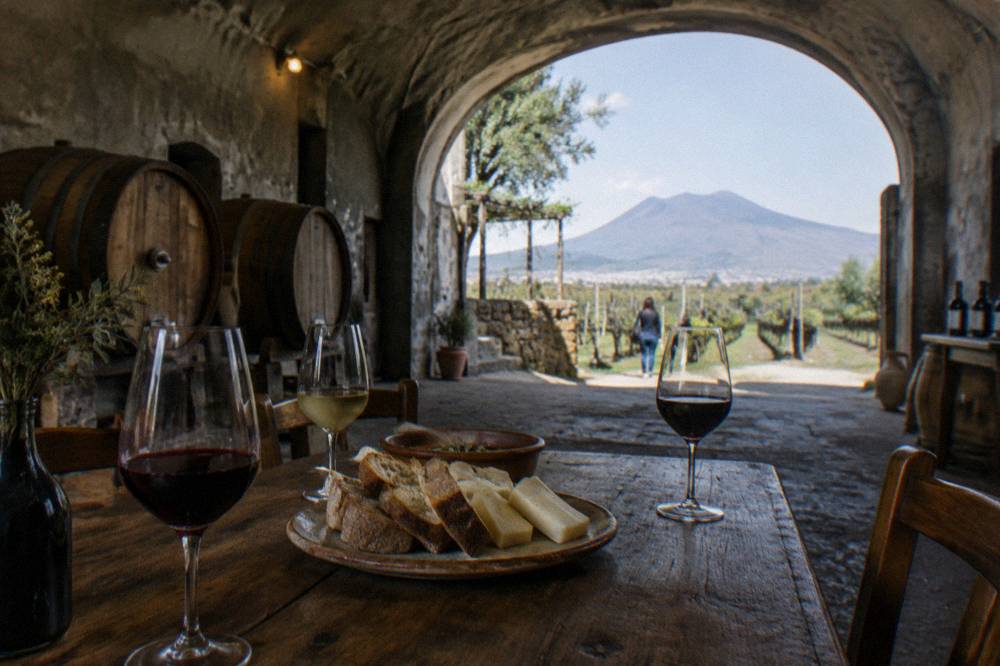
Most tours follow the same arc: a walk through the vineyard rows, a short cellar visit, then a seated tasting of three to five wines paired with a Campanian lunch. Short formats run about 90 minutes to two hours; the longer ones add a crater hike or Pompeii around the winery stop. All include the tasting; most include food; few include park entry unless the listing says so.
The vineyard walk is the part first-time visitors underestimate. Guides stop at the vine rows, pull a handful of the black soil apart, and explain the lava and ash layers underneath, because the soil story is the entire sales pitch of Vesuvius wine and it happens to be true (see What Happens On Tour). The cellar segment is usually brief, a look at the steel tanks or barrels, before the group sits down for the pour.
The lunch is where formats diverge. A light lunch means a board of bread, cheese and salami alongside the wines; a full tasting menu means several courses, often pasta first, matched glass by glass. Operators such as Quirinoli, which runs the Lunch & Wine Tasting in the National Park of Mt Vesuvius (5.0 from 241 reviews, from €58 per person at an organic farm on the volcano), build the whole experience around the pairing rather than around sightseeing.
Durations tell you the shape of the day at a glance:
| Format | Typical duration | What is normally included | Example from the roster |
|---|---|---|---|
| Producer tasting only | 1.5 to 2 hours | Guided visit, 3 to 5 wines, light lunch | Mount Vesuvius: Vineyard Tour, 4.8 from 212 reviews, from €55 |
| Winery lunch trip | 2.5 to 4 hours | Transfer, tasting, full lunch | From Naples: Wine Tasting Tour on Vesuvius Slopes with Lunch, 4.6 from 469 reviews, from €90 |
| Ruins plus winery | 5 to 6 hours | Pompeii guided walk, transfer, tasting lunch | Pompeii: Archeological Tour & Wine Tasting, 4.8 from 189 reviews, from €123.50 |
| Full volcano day | 8 to 9 hours | Pompeii, crater hike, winery lunch | All-Inclusive Pompeii & Vesuvius, 4.6 from 2,804 reviews, from €127.50 |
One review pattern recurs across the wine-and-lunch listings: guests consistently praise the pace. A guest on the Naples Day Tour with lunch wrote that "the tour guide was entertaining and we learnt a lot and had plenty of opportunities to take photos," while warning that surfaces are uneven and summer heat is real, advice that applies double when wine is involved. Plan water before the pour, not after.
The Pompeii Tour and Vesuvius Wine Tasting with Lunch from Naples (4.7 from 518 reviews, from €115 per person, operator GIROMONDO SRL) is a good mid-format example: six hours, hotel pickup, a guided ruins walk, then the vineyard lunch, with a minimum age of 3 so families are not excluded.
How Much Do Vesuvius Wine Tours Cost?
Wine-focused listings on the volcano start at about €29 per person for a bare producer tasting and climb to about €150 per person for a signature full day with Pompeii, the crater and a winery lunch. Most visitors land between €90 and €130 per person for a tasting-with-lunch format that includes transfers. Group privates are quoted per group, not per person, and run far higher.
The entry level is genuinely cheap because the product is the winery's own cellar door. The Vesuvius wine tasting with company tour from Pompeii, operated by Azienda Fuocomuorto, is from €29 per person for a two-hour visit and tasting (5.0 from a small pool of only 25 reviews, so treat the rating cautiously). At the top end, the Vesuvius & Pompeii Signature Tour with wine and lunch from Naples runs from €150 per person with a 4.9 rating from 461 reviews. The full index of guides sits on Mount Vesuvius Tours.
In between sits the widest choice. Note what a price does not tell you: whether the park's crater ticket is included. The park's adult ticket is €10 under its ticketing rules; the park's authorised online seller shows €11.68. Some tours bundle it, some do not, and the listing is the only place that settles it.
| Tour | From price | Rating and reviews | Duration |
|---|---|---|---|
| Vesuvius wine tasting with company tour (Azienda Fuocomuorto) | €29 per person | 5.0, only 25 reviews | about 2 hours |
| Lunch & Wine Tasting in the National Park (Quirinoli) | €58 per person | 5.0 from 241 reviews | about 2.5 hours |
| Wine Tasting Tour on Vesuvius Slopes with Lunch (NapoliCityVision) | €90 per person | 4.6 from 469 reviews | 4 hours |
| Pompeii Tour and Vesuvius Wine Tasting with Lunch (GIROMONDO) | €115 per person | 4.7 from 518 reviews | 6 hours |
| Vesuvius & Pompeii Signature Tour (Worldtours) | €150 per person | 4.9 from 461 reviews | about 8 hours |
Every price above is a "from" figure taken from the live listing; seasonal dates and group sizes can move the final number. For the fuller picture across formats, our guide to Vesuvius tour pricing covers the crater and combo products too.
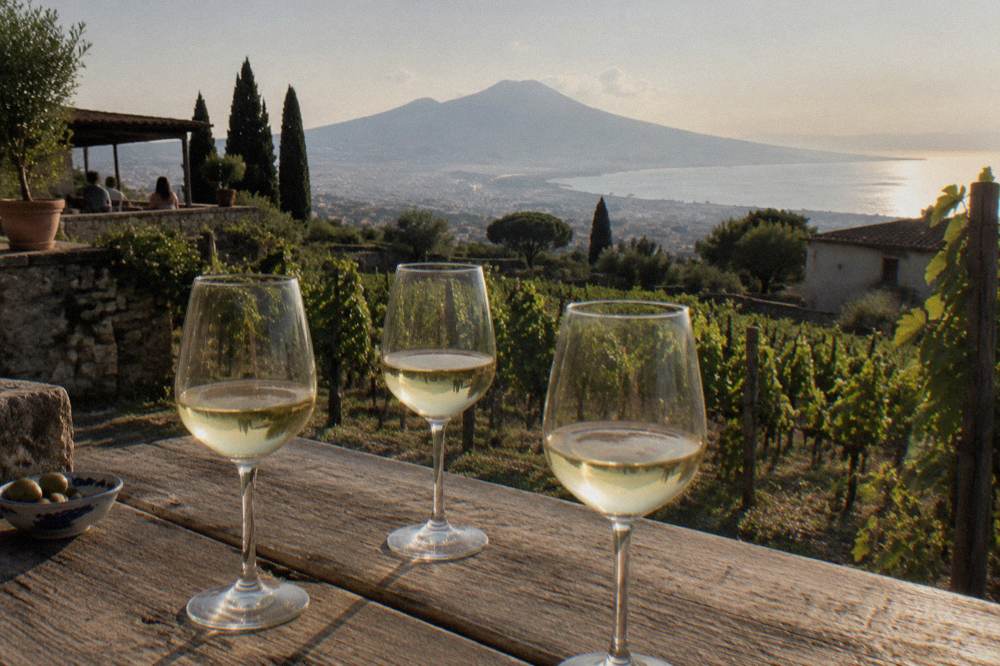
Which Vesuvius Wine Tour Should You Choose?
Match the format to the time you have, not to the price. With two spare hours, book a producer tasting. With a morning or afternoon, take a winery lunch trip with transfers. With one full day and a wish to see everything, take a Pompeii-plus-winery or crater-plus-winery combo. From Sorrento or the Amalfi Coast, only the full-day formats are worth the transfer time.
The two-hour formats make sense when you are already near the mountain, perhaps after a morning at Pompeii, and want lunch with a view rather than a full excursion. The Boscotrecase Vesuvius Wine Tasting Tour (4.9 from only 45 reviews, a small pool, from €43 per person) offers lunch or dinner in a compact one-to-three-hour window, which is the most schedule-friendly wine product on the roster.
Full-day buyers should compare two things the listing summaries hide: how long the winery stop actually is, and whether the Pompeii portion is guided or audio-guided. The From Sorrento: Mount Vesuvius Tour with Lunch & Wine Tasting (4.5 from 277 reviews, from €102 per person) pairs the crater with a winery stop over eight hours, a combination that skips Pompeii entirely, which suits visitors who have already seen the ruins on a previous trip. Once you've settled on a tour, our packing list for the Vesuvius crater walk covers the footwear, water, and sun protection the trail demands.
| If you have... | Best fit | Why |
|---|---|---|
| 2 hours near Pompeii | Producer tasting with lunch | Same-day add-on, no transfer overhead |
| Half a day from Naples | 4-hour winery lunch trip | Pickup, tasting, lunch, back by mid-afternoon |
| One full day, first visit | Pompeii + crater + winery combo | All three headline sights in one booking |
| One full day, ruins already seen | Crater + winery day | More time at the tasting bench and the rim |
| A group or family | Private winery day from Sorrento | Fixed per-group price, own pace, min ages vary |
Guest reviews consistently reward the guides on these products. A guest on the full-day Pompeii and Vesuvius trip with pizza lunch wrote that "guides were very passionate and knowledgeable, overall experience was first class," and that sentiment carries across the wine-inclusive listings, where the guide is often the person pouring.
Can You Combine Wine Tasting With Pompeii And The Crater?
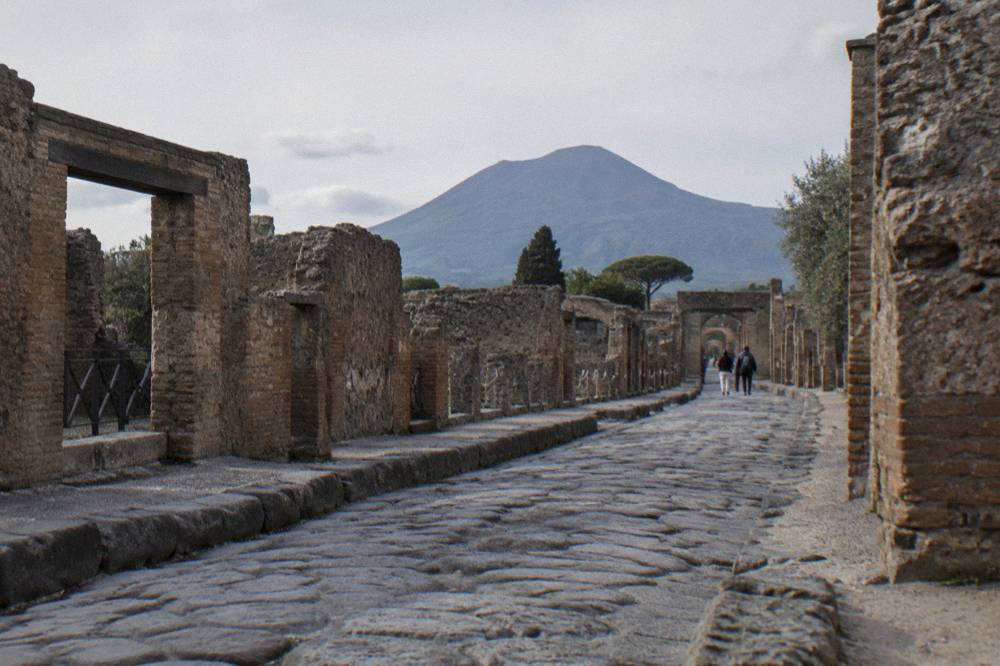
Yes, and for most visitors it is the best-value use of a single day. The classic combo runs Pompeii in the morning, the Gran Cono crater trail in the early afternoon, and a winery lunch either between the two or at the end. Tours that state "park entry included" remove the ticket hassle; where the listing is silent, check it for what entry is covered.
The order matters less than the timing. The crater has fixed seasonal access hours, 09:00 to 16:00 in March and October, 09:00 to 17:00 from April to June and in September, 09:00 to 18:00 in July and August, and the visit must end within one hour of the last access. A winery lunch is flexible; the crater is not, so well-run combos anchor the hike to the access window and let the lunch slide.
Pompeii has its own caps: a daily ceiling of 20,000 entries and timed admission slots in the high season, with tickets nominative and personal. Tickets from January 2026 run €20 for Pompeii Express up to €30 for the three-day multi-site version, and a single €25 ticket covering all park sites arrives from 1 January 2027. Operators who pre-purchase entry as part of the tour remove the single biggest friction of a self-planned combo day.
The all-inclusive listings spell out the bundle. The Amalfi Coast: Pompeii, Vesuvius, & Wine Tasting with Lunch (4.7 from 156 reviews, from €299 per person) covers pickup on the coast, the ruins, the crater and the tasting lunch in one price, while the From Naples: Pompeii and Wine Tasting Tour with Lunch (4.5 from 136 reviews, from €145 per person) drops the crater entirely in favour of a longer winery afternoon. Choose by what you would rather linger over.
When Is The Best Time Of Year For A Vesuvius Wine Tour?
The tasting season runs hardest from May to October, when the vineyard walks are green and the lunch terraces are open. July and August bring heat and crowds on the crater leg; September and October bring the harvest, softer temperatures and the most interesting cellar talk. Winter tastings happen indoors and the drive up is short, but daylight ends early.
The numbers back the instinct. At the summit level the modelled 1991-2020 climate average puts July highs at 22.1 C against Naples at 28.6 C, so the vineyards are warm rather than punishing, but the crater hike in the same months carries the sun. September averages 18.7 C at altitude with 90 mm of rain, and October 14.8 C, which is why autumn is the connoisseur's window: harvest activity in the cellars and comfortable walking temperatures on the trail.
| Month | Crater access | Summit high C (avg) | Wine visit character |
|---|---|---|---|
| May | 09:00-17:00 | 15.1 | Green vines, long lunches, mild |
| July | 09:00-18:00 | 22.1 | Hot, busiest, book far ahead |
| September | 09:00-17:00 | 18.7 | Harvest season, prime window |
| October | 09:00-16:00 | 14.8 | Late harvest, autumn light, quieter |
| November | 09:00-15:00 | 10.4 | Indoor tastings, short days |
One hard rule cuts across all seasons: the crater trail and its box office close automatically on any day the regional civil protection authority issues an orange weather alert or higher, with automatic refunds for slots inside a closure. A winery visit is weatherproof in a way the crater is not, which is a quiet argument for combo days: if the trail shuts, the wine and lunch half of your day still happens. Check current status on the This Season band of the homepage before you travel.
What Should You Know Before Booking A Vesuvius Wine Tour?
Four checks save most disappointment: confirm who picks up and where, since several wine listings depart Naples and several from Pompeii with no pickup stated; check the minimum age, which ranges from 3 to 18 on wine-inclusive tours; read what entry tickets are actually included; and trust the free-cancellation flag, which most listings carry, over any verbal promise. Ratings under about 50 reviews are small pools.
Departure points scatter more on the wine roster than anywhere else. The Cantina del Vesuvio vineyard tour (4.8 from 212 reviews, from €55) lists pickup and a visit lasting 90 minutes to two hours with a minimum age of 18, so it is a grown-ups' afternoon. The Pompeii: Wine Tasting Experience with lunch from Naples Together (4.8 from only 22 reviews, small pool, from €60.45) also sets 18 as the floor. Families should filter for the child-friendly listings instead, several of which cap at 3 or 6.
The volcanic-soil story also travels well beyond wine. The same slopes produce the tomatoes, apricots and hazelnuts that appear on tasting platters, and the DOC rules keep the vineyard landscape protected inside the park. If the geology side of the day appeals, remember that many lunch-inclusive formats skip the wine tasting altogether and simply feed you well on the mountain, which widens the choice if the cellar is not the priority.
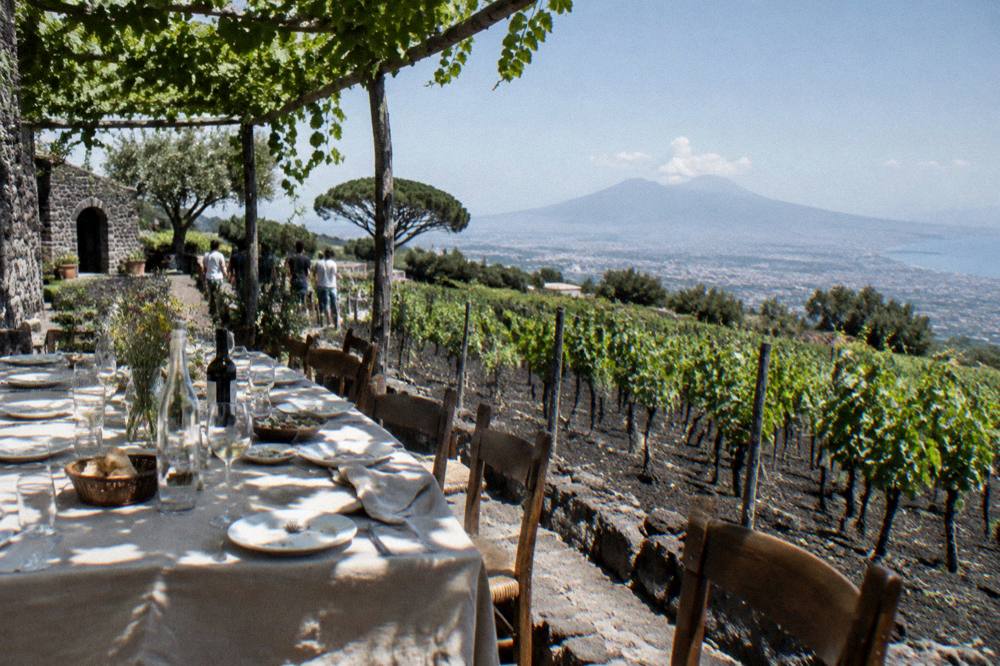
Finally, book the wine day before you book the wine. The most flexible formats sell out first in the September and October harvest window, and the per-group privates, such as the Private tour Pompeii Vesuvius and Winery from Sorrento (5.0 from only 38 reviews, small pool, from €344 per group), need lead time for driver and cellar reservations. Everything on this site's roster is bookable for future dates with free cancellation flagged on the listing, so confirming the operator's current schedule costs nothing.
What Do The Crater Numbers Mean For Your Wine Day?
The Gran Cono trail is a 4,010-metre round trip topping out at 1,175 metres, officially rated low difficulty, with a standard round-trip time of two and a half hours. Group tours are capped at two hours on the shortest route and three on the longest, and every visitor above 1,000 metres is accompanied by the park's volcanological guides. That fits neatly before a winery lunch.
The infographic below lays out how the trail numbers, the seasonal caps and the tasting formats stack together across a combo day.
The pairing logic is simple. The hike is brisk and exposed; the lunch is slow and shaded. Putting the crater first means you earn the tasting, and the volcano's own monitoring body, the INGV Osservatorio Vesuviano, publishes the current alert level if you want reassurance before committing to the trail leg. Green, the lowest level, is the standing state, and the September bulletin counted 121 micro-earthquakes, none above magnitude 1.8.
Common Questions About Vesuvius Wine Tours
What wine is made on Mount Vesuvius?
Lacryma Christi del Vesuvio DOC is the flagship: a Bianco based on Caprettone and Verdeca, and a Rosso based on Piedirosso, both at a minimum 12 percent alcohol, grown across 15 municipalities on the slopes. The full story is in our guide to what wine is made from Mount Vesuvius.
How much does a Vesuvius wine tour cost?
From about €29 per person for a producer tasting to about €150 per person for a signature full day including Pompeii, the crater and a winery lunch. Most tasting-with-lunch formats with transfers sit between €90 and €130 per person.
Do Vesuvius wine tours include lunch?
Most do. Listings tagged as including a meal state it explicitly, from a light lunch with the tasting to a full multi-course pairing. A few tasting-only products skip food, so read the inclusions on the live listing.
Can you visit a winery and the crater on the same day?
Yes. Several tours combine the Gran Cono crater hike with a winery lunch, typically over eight hours from Naples or Sorrento. Anchor the crater leg to its seasonal access window and let the lunch follow.
Which wineries are on Mount Vesuvius?
Cantina del Vesuvio in Trecase and Cantine Villa Dora in Terzigno are the named producers. Which winery a given tour visits is usually not stated on the listing, so confirm with the operator if a specific cellar matters to you.
Is there a minimum age for wine tours on Vesuvius?
It varies by listing: some welcome children from age 3, others from 6, and the tasting-focused cellar visits set 18. Check the age note on each listing before booking with family.