Can You Do Pompeii And Herculaneum In One Day?
Yes, Pompeii and Herculaneum fit in one day, and the three-site roster tours prove it in 7.5 to 8.5 hours. Here is how the hours, tickets and transport actually stack up.
Can You Do Pompeii And Herculaneum In One Day?
Yes, Pompeii and Herculaneum fit into a single day, and the combined tours on this site prove it: roster itineraries covering both ruins run 7.5 to 8.5 hours door to door, with a volcano stop on several of them. The catch is the clock, not the distance. Both sites stop admitting visitors hours before sunset, so the day only works when the first ruin is entered near opening time. If you're weighing which combined itinerary handles that early start best, our side-by-side comparison of Pompeii and Herculaneum tours lays out how the main options differ.
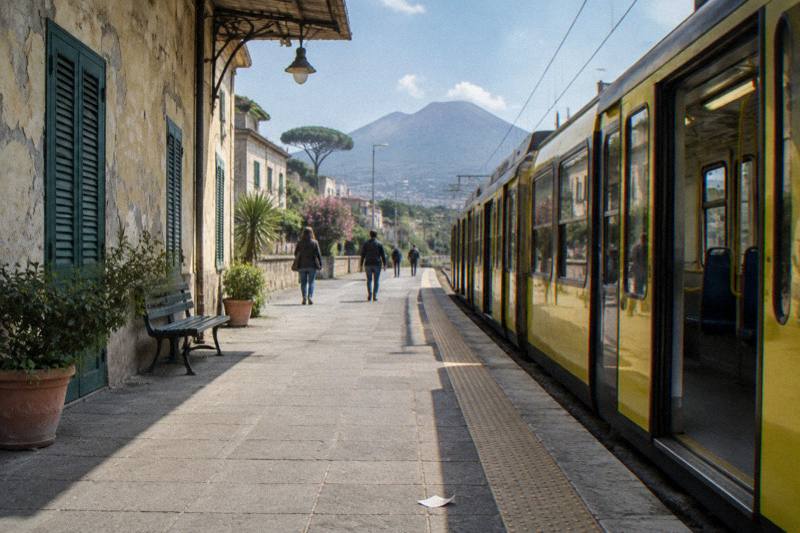
The two excavations sit about 15 kilometres apart on the same side of the Bay of Naples, linked by the Circumvesuviana railway line that stops within walking distance of each. Herculaneum's entrance at Ercolano Scavi and Pompeii's at Pompei Scavi are a short train ride from one another, which is exactly why operators can sell a credible both-sites itinerary. A roster example is the Day Trip to Pompeii, Herculaneum and Vesuvius from Naples, rated 4.6 from 588 reviews, from €120 per person for roughly 8 hours. That tour adds the crater, but the pairing of the two ruins alone is the easier half.
What trips people up is not travel time but closing discipline. From 16 March to 14 October Pompeii admits visitors until 17:30 and closes at 19:00; from 15 October to 15 March the last entrance drops to 15:30 with a 17:00 close, per the official Pompeii timetables. Herculaneum runs 8:30 to 19:30 in the summer window with last entry at 18:00, and 8:30 to 17:00 with last entry 15:30 in winter, per its own ticketing page. In practice a one-day plan means arriving at whichever ruin you choose first between 9:00 and 10:00, and it means leaving the second site no later than early evening. A reader planning both ruins in a day is usually shopping for a combined tour rather than two separate admissions, and that instinct is right, as the schedule below shows.
For anyone weighing whether the effort is worth it, the depth article is it worth going up Mount Vesuvius covers the volcano half of the equation, and the pairing question for the two ruins themselves has a short answer: Herculaneum is compact, roofed in places, and walkable in two focused hours, while Pompeii is an entire city and swallows half a day if you let it. Readers who want the fuller comparison of those two trade-offs can start with Pompeii And Vesuvius In One Day, which breaks down the more common two-site version of this question.
What Order Should You Visit Pompeii And Herculaneum In?
Most one-day plans should visit Pompeii first and Herculaneum second, because Pompeii rewards the morning's energy and full attention while Herculaneum's smaller footprint forgives late-day fatigue. Pompeii's last entry window is also busier and slower through security, so an early start there removes the day's biggest queue risk and leaves a hard, knowable deadline only at the final site.
The argument for Pompeii in the morning is scale. The ancient city holds forum, amphitheatre, bath complexes and the Villa dei Misteri, and its ticket tiers reflect that: Pompeii Express covering the city alone is €20, Pompeii+ with the suburban villas and shuttle is €25, and the three-day Pompeii Plus across all park sites is €30. A visitor with one morning should buy Express and walk the core rather than pay for villas there is no time to reach. Herculaneum by contrast is a single €16 ticket, reduced €2 for visitors aged 18 to 25, and the site's tighter footprint means a 90-minute to two-hour visit covers the boat sheds, the suburban baths area and the main decumanus without rushing.
There is a counterargument worth naming: Herculaneum in the morning light is the more atmospheric of the two, and in the height of summer its partial shade is kinder before noon. If you are travelling without a tour and can be at the Ercolano Scavi station for the 8:30 opening, Herculaneum first, a late-morning train to Pompei, and a Pompeii entry before 13:00 is a legitimate inversion. The order question interacts closely with the volcano, and Should I Go To Pompeii Or Vesuvius First? works through the same logic for the two-site version, where the crater's fixed last-entry times matter even more than the ruins' do.
| Order plan | First entry | Second entry | Best for | Main risk |
|---|---|---|---|---|
| Pompeii then Herculaneum | Pompeii by 9:00 | Herculaneum by 14:30 | First-timers, full coverage | Pompeii morning overrun |
| Herculaneum then Pompeii | Herculaneum at 8:30 | Pompeii by 12:30 | Summer heat, photographers | Pompeii afternoon fatigue |
| Herculaneum, Vesuvius, Pompeii | Herculaneum at 8:30 | Pompeii by 15:30 | Volcano-first travellers | Tight winter timing |
| Guided three-site tour | Operator sets it | Operator sets it | Anyone without a car | Fixed pace, less free time |
How Many Hours Do You Actually Need At Each Site?
Plan on three to four hours inside Pompeii and about two hours inside Herculaneum, which totals five to six hours of ruins time before any travel is added. Tours on the roster that include both sites run 7.5 to 8.5 hours end to end, and that figure already tells you the honest math: roughly six hours of visiting, plus transport, pickups and a lunch stop compressed into the remainder.
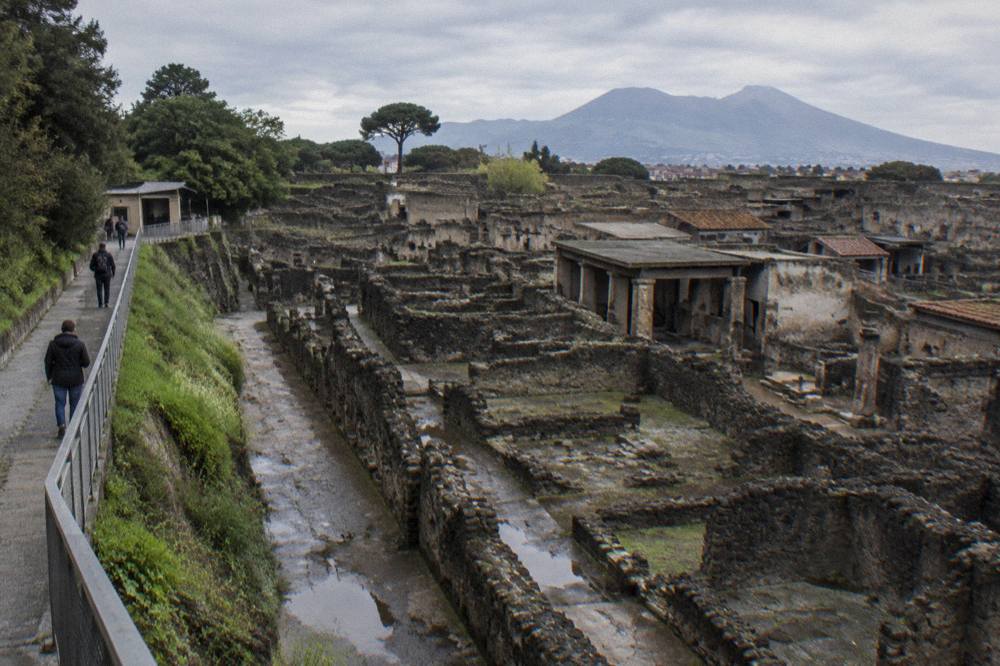
The Pompeii figure deserves honesty. Three hours inside the ancient city is a highlights route, forum to forum, with the amphitheatre or the Villa dei Misteri chosen as one deep stop rather than both. The site caps daily entries at 20,000 with nominative tickets, and the summer admission windows split 15,000 morning entries against 5,000 afternoon entries, so the morning is both the fuller and the busier half of the day. Herculaneum's two hours are gentler: the excavation is a fraction of the area, the carbonised wood and intact upper floors are concentrated along two main streets, and there is no realistic way to spend four hours there without repeating yourself. Those entry caps turn ticket timing into part of the plan, and our guide to buying Pompeii tickets in advance explains when prebooking genuinely matters and when a tour simply removes the headache.
Where the hours go missing is lunch and the station-to-gate walks. Both entrances sit a short walk from their Circumvesuviana stops, but a midday meal near Pompei Scavi plus ticket lines at the second site will quietly consume 90 minutes. This is the arithmetic that pushes most visitors toward a combined itinerary in the first place. The Pompeii, Herculaneum and Vesuvius Full-Day Tour, rated 4.1 from 1,098 reviews and from €112.50 per person, runs 7.5 to 8.5 hours and makes the sequencing someone else's job. A cheaper transfer-based variant, From Naples/Pompeii: Herculaneum, Vesuvius, and Pompeii Trip at from €112.50 with pickup, rated 4.1 from 216 reviews, shows the same sites can be bundled from different start points.
Can You Do Pompeii And Vesuvius In One Day?
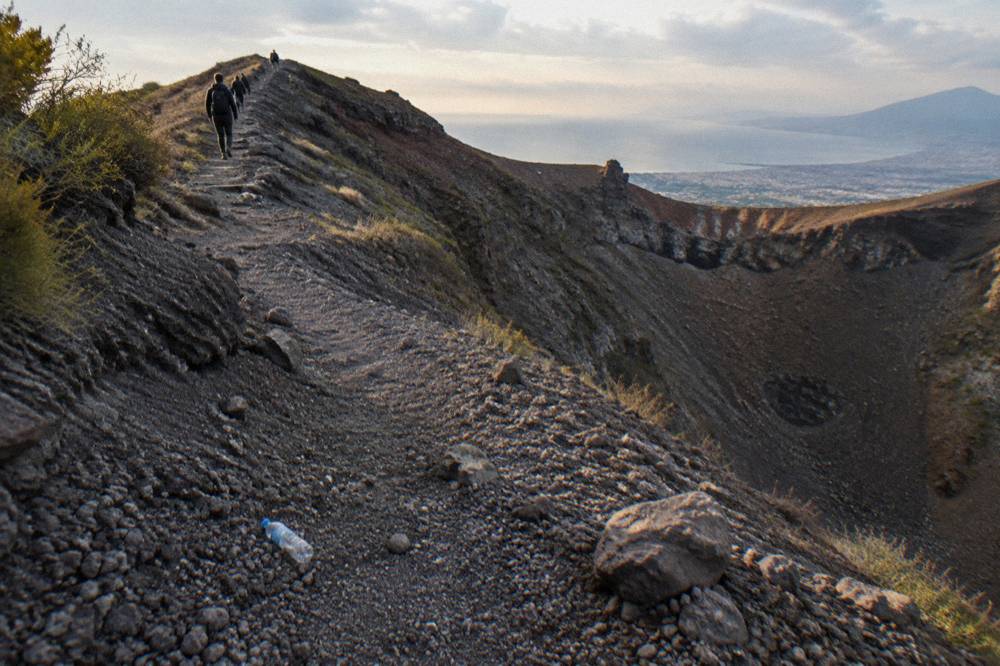
Yes, Pompeii and Vesuvius in one day is not only possible but the single most booked combination from Naples, with roster tours from €67.20 per person covering both in 7 to 7.5 hours. The Naples day tour with lunch included, rated 4.3 from 14,121 reviews, is the volume proof. The pairing works because the crater hike is short, about 2 hours 30 minutes round trip on Trail 5, leaving most of the day for the ruins.
The volcano half is time-boxed by the park, not by you. Crater access hours are 9:00 to 17:00 from April through June and September, 9:00 to 18:00 in July and August, 9:00 to 16:00 in March and October, and 9:00 to 15:00 in the four winter months, with every visit required to end within one hour of the last access time, per the park's Gran Cono page. The trail itself is 4,010 metres round trip from the Quota 1000 plaza, graded low difficulty, and every visitor above 1,000 metres is accompanied by the park's volcanological guides as a mandatory rule, not an optional extra.
Pompeii-then-crater is the usual order on the combined itineraries, and the roster shows the range of price points clearly. The From Naples: Pompeii Ruins & Mount Vesuvius Day Tour with lunch, from €67.20 per person at 4.3 from 14,121 reviews, is the big-bus benchmark. One tier up, the All-Inclusive Pompeii & Vesuvius with lunch and wine from €127.50 per person, rated 4.6 from 2,804 reviews, adds a vineyard stop on the slopes. A full comparison of this pairing, including the skip-the-line ticket question, lives on the site's Pompeii and Vesuvius tours hub, and the timing logic is laid out step by step in the one-day guide already linked above.
Is It Possible To Visit Pompeii And Mount Vesuvius In One Day?
Yes, and doing all three, Pompeii, Herculaneum and Vesuvius, in one day is the roster's real specialty: several tours deliver all three sites in 7.5 to 8.5 hours from Naples. The From Naples: Herculaneum, Mount Vesuvius & Pompeii Day Trip at from €120 per person, rated 4.4 from 169 reviews, is the standard example. Three sites is the ceiling for one day.
The three-site day works because each site's visit time is bounded. Pompeii gets a highlights walk of around two hours on these itineraries, Herculaneum about 90 minutes, and the crater the fixed 2 hours 30 round trip, with transport threading the rest. The private version is the most flexible: the Private Tour: Herculaneum, Pompeii, Vesuvius with pickup is from €265 per group, rated a perfect 5.0 from 309 reviews, and runs 8 to 9 hours with the sequence open to adjustment on the day. A guest review from Jessica E. on that tour describes a guide who "was very knowledgeable about each location on the tour and made sure we had plenty of time to fully see what we wanted."
The Naples: Mount Vesuvius and Herculaneum Guided Tour, from €101.70 per person and rated 4.3 from 109 reviews, shows a quieter two-site variant that skips Pompeii entirely for visitors who have seen it on an earlier trip. For the full spread of three-site options, including a small-group version from €140 per person with a pizza lunch, the Pompeii, Herculaneum and Vesuvius tours hub collects them all with prices and durations side by side.
How Much Does A Two-Ruins Or Three-Site Day Cost?
Entry alone costs €36 per adult for Pompeii Express at €20 plus Herculaneum at €16, before any transport, and EU visitors aged 18 to 24 pay just €4 for both on reduced tickets. Guided combined tours start around €101.70 per person for a two-site guided day from Naples and run from €112.50 to €120 for three-site group itineraries, with private versions from €265 per group.
DIY is the cheapest route and the most fragile. Beyond the €36 of admissions you need Circumvesuviana fares, which the official fare table does not map station to station in a way we can quote here, so check the operator's fare finder before budgeting, plus lunch and, if the crater is added, the park's adult ticket at €10 under its ticketing rules, shown at €11.68 by the park's authorised online seller. One DIY trap worth naming: tickets for both ruins are nominative and sold online, and the free first-Sunday admission at both sites draws heavy crowds with direct gate access, so a quiet paid day beats a free jammed one if the ruins are the point of the trip.
The guided premium buys sequencing, commentary and a vehicle that does not depend on train reliability. The table below places the main roster options against the DIY baseline.
| Option | Sites | From price | Rating | Duration |
|---|---|---|---|---|
| DIY by train | Pompeii + Herculaneum | €36 entries plus fares | not applicable | you set it |
| Naples: Vesuvius and Herculaneum Guided Tour | Vesuvius + Herculaneum | €101.70 per person | 4.3 from 109 reviews | 8 hours |
| Pompeii, Herculaneum & Vesuvius Full-Day Tour | all three | €112.50 per person | 4.1 from 1,098 reviews | 7.5 to 8.5 hours |
| Day Trip from Naples, three sites | all three | €120 per person | 4.6 from 588 reviews | 8 hours approx. |
| Private: Herculaneum, Pompeii, Vesuvius | all three | €265 per group | 5.0 from 309 reviews | 8 to 9 hours |
| Naples private three-site tour | all three | €547 per person | 4.7 from 41 reviews, small pool | 8 hours |
The private tier deserves a plain word. The related tour on this page, the Naples: Pompeii, Herculaneum and Mt. Vesuvius Private Tour at from €547 per person, rates 4.7 from a small pool of 41 reviews, enough to trust the direction but not a large base; the €265-per-group alternative above carries a bigger review pool and a per-group price basis, so compare both listings before committing.
Why Is Herculaneum Not As Famous As Pompeii?
Herculaneum is smaller, harder to reach by habit, and was never branded by a single catastrophe story the way Pompeii was by the AD 79 eruption, traditionally dated August 24, though a 2018 find points to October. Pompeii's scale, its plaster casts and two centuries of popular writing made it the headline site, while Herculaneum stayed the connoisseur's stop: better preserved, less crowded, and easier to walk in two hours. If you're curious how that fame gap opened up in the first place, our explainer on why Herculaneum stayed in Pompeii's shadow traces the history and shows how to fit both ruins into a single trip.
The practical consequence for a one-day visitor is favourable. Because Herculaneum receives a fraction of Pompeii's 20,000-a-day flow, it rarely needs the early-morning assault that Pompeii does, and its entrance is a flat walk from the Ercolano Scavi station. The site is also the better place to see organic material: carbonised doors, beams and furniture survived the pyroclastic surge that buried the town in a denser deposit than Pompeii received. Villa dei Papiri and the Ancient Theatre within the complex remain closed until further notice, which trims the visit time further and quietly helps the one-day arithmetic.
Fame has a second effect worth knowing: it drives the tour market. Almost every combined itinerary from Naples leads with Pompeii in its title, and Herculaneum appears as the second or third stop, which is why readers comparing listings on the site's Pompeii and Vesuvius tours hub see the ruins pairing far more often than the Herculaneum pairing. The fuller story of that asymmetry, including why Herculaneum keeps winning the "better preserved" argument among archaeologists, sits in the dedicated piece on the two sites' fame gap.
Should You Take A Tour Or Go Independently?
Take a tour if you want both ruins plus the volcano in one day, because the three-site version is genuinely difficult to self-manage across train, crater shuttle and two last-entry deadlines. Go independently if you are doing the two ruins only, since a single rail line links both entrances and admissions bought online cost €36 per adult. The decision hinge is whether Vesuvius is in the day.
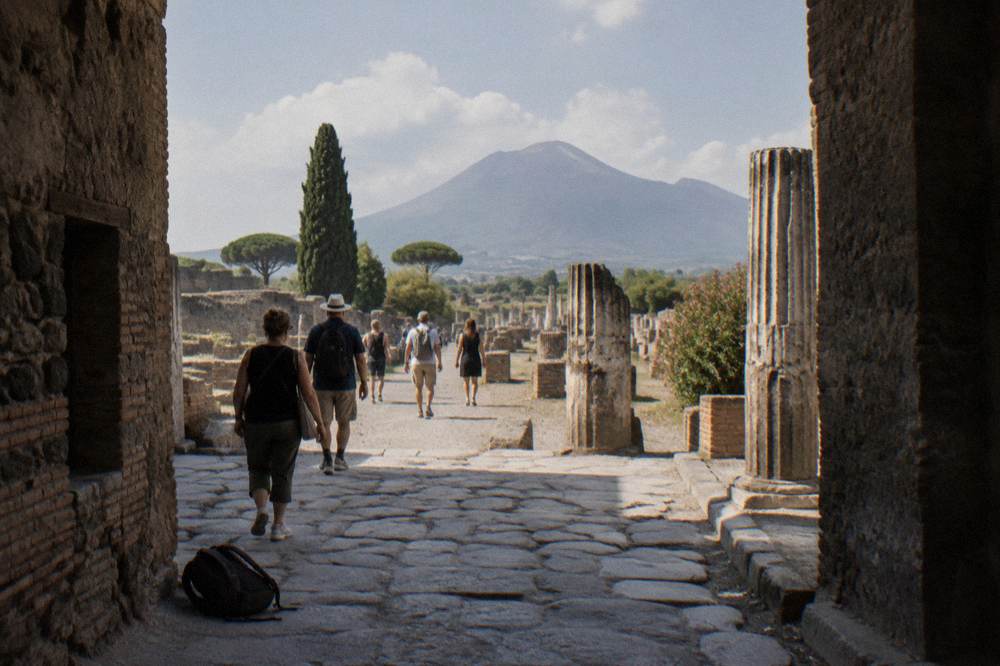
The two-ruins DIY day is forgiving. Both sites sit on the Naples to Sorrento and Naples to Poggiomarino lines, and a miss simply means a shorter stay at the second site, with Herculaneum's 18:00 summer last entry giving a wide margin. The three-site day is a different animal: the crater requires an online timed ticket, a shuttle or transfer up from either Ercolano or Pompei, and the 15:25 arrival of the last EAV 808 bus up from Pompei lands after the winter last entry, so a late train connection can strand the volcano half of the plan entirely. That is the point at which a fixed itinerary earns its fee.
The roster's guided middle ground is worth a look before deciding. From Naples or Pompeii combinations like the Pompei: Vesuvius and Herculaneum Tour at from €75.60 per person, rated 4.3 from a small pool of 20 reviews, cover two of the three sites in six hours by minibus, leaving room for a self-guided Pompeii stop beforehand. Readers still weighing the guide question against a self-guided walk can find the decision framework in the piece on taking a guided tour from Naples to Vesuvius and Pompeii, and this site's own Mount Vesuvius Tours coverage keeps the full roster in one place.
What Could Go Wrong With A One-Day Plan?
The three real risks are a late start, a summer midday meltdown, and an orange weather alert closing the volcano half of a three-site day, with the ruins themselves rarely the failure point. Pompeii's 15,000-entry morning window and Herculaneum's 15:30 winter last entry are hard deadlines. Tours absorb all three risks by starting early and re-sequencing on the day.
A late start is the self-inflicted one. Anything past a 10:00 first entry compresses the second ruin into its final hours, and in the November to February window a 10:00 Pompeii entry means leaving for Herculaneum by 13:00 to clear its 15:30 last entry with margin. Heat is the seasonal one: Naples averages 29.3 degrees in August against 22.8 at the summit level, and Pompeii's exposed streets hold the worse end of that gap, which is why the Herculaneum-first order earns its supporters in high summer. Water and trainers, not sandals, are the standard gear note; one guest review of the big Naples day tour from Millie in the United Kingdom flags "very uneven surfaces and very hot in summer so trainers and water bottles."
Weather is the one nobody controls. The crater trail and its box office close automatically on any day with an orange regional weather alert or higher, with automatic refunds for slots inside a closure, so the volcano segment of a three-site plan is the piece to treat as conditional. The ruins stay open in almost all conditions short of official closure days, with 25 December the shared closed date at both and Pompeii also shut on 1 January. Any booked tour is bookable for future dates, and the operator's current schedule should be confirmed close to travel.
With the risks named, the verdict is simple: one day, two ruins, comfortably; one day, three sites, on a tour; and the earlier the first entry, the more the day gives back.
Common Questions About Pompeii And Herculaneum In One Day
Can You Do Pompeii And Herculaneum In One Day?
Yes. The two sites are 15 kilometres apart on the same rail line, need about six hours of visiting time combined, and roster tours covering both, several with Vesuvius added, run 7.5 to 8.5 hours from Naples.
Can You Do Both Pompeii And Herculaneum In One Day?
Yes, with an early start. Enter the first site between 9:00 and 10:00, allow three to four hours at Pompeii and two at Herculaneum, and respect the last-entry times, 17:30 in summer and 15:30 in winter at Pompeii, 18:00 and 15:30 at Herculaneum.
Is It Possible To Visit Pompeii And Mount Vesuvius In One Day?
Yes, it is the most booked pairing from Naples, with tours from €67.20 per person covering both in 7 to 7.5 hours. The crater hike takes about 2 hours 30 minutes round trip, and every visitor is accompanied by the park's volcanological guides.
How Much Do Tickets For Both Ruins Cost?
€36 per adult at full price, €20 Pompeii Express plus €16 Herculaneum. EU citizens aged 18 to 24 pay €2 at each site on reduced tickets, and both sites admit visitors free on the first Sunday of every month.
Why Is Herculaneum Not As Famous As Pompeii?
Pompeii's scale, its plaster casts and two centuries of storytelling made it the headline site. Herculaneum is smaller and better preserved, with carbonised wood and intact upper floors, and it receives a fraction of Pompeii's daily visitors, which makes it the easier second stop on a one-day plan.