Pompeii And Herculaneum Tours Compared
Pompeii is the vast city, Herculaneum the intact one, and most travellers have time for both only if the day is planned around fixed hours, capped tickets and the drive between them.
Short answer
Pompeii costs from €20 (Pompeii Express) and Herculaneum €16 full price. A combined bus day trip runs from €75.60 per person; a small-group tour with lunch from €140; a private three-site day from €265 per group. Both sites cap and slot admissions, so booking a tour that bundles timed entry is often the simplest route.
Most people who look for a pompeii and herculaneum tour already know they want Roman ruins; the hard part is choosing between a city frozen mid-life and a town buried to its rooftops. Pompeii sprawls across 44 excavated hectares and needs half a day to feel like more than a postcard walk. Herculaneum fits in ninety minutes and preserves wood, frescoes and upper storeys that Pompeii lost. The good news is that the two sites sit roughly 15 minutes apart by road, and a long roster of combined tours, many of them adding Vesuvius as a third stop, covers both without your ever touching a local bus timetable. This comparison is one of the planning guides on Mount Vesuvius Tours, and it sticks to figures verified against the official ticketing pages and the live tour listings.
What Is The Difference Between Pompeii And Herculaneum?
Pompeii is a whole Roman city of streets, amphitheatres and brothels smothered by pumice in AD 79, while Herculaneum is a smaller, wealthier seaside town sealed by pyroclastic material that carbonised wood and preserved two-storey houses. Pompeii shows scale, Herculaneum shows detail, and the two complement rather than duplicate each other, which is exactly why combined tours sell so well.
The eruption itself is the shared backstory, and even its date is still debated: it is traditionally placed on August 24, though a 2018 charcoal graffito found at Pompeii reading 17 October has the park team calling an October date highly probable. What matters for a visitor is the differing burial. Pompeii, downwind of the pumice fall, was buried in loose material that excavators could clear quickly, which is why it was rediscovered centuries before its neighbour and why so much of it is roofless today. Herculaneum took the hotter, denser surge, which charred timber beams in place and left doorframes, beds and shrines standing at a depth that modern diggers have only partly reached; the town still lies beneath the modern settlement above it.
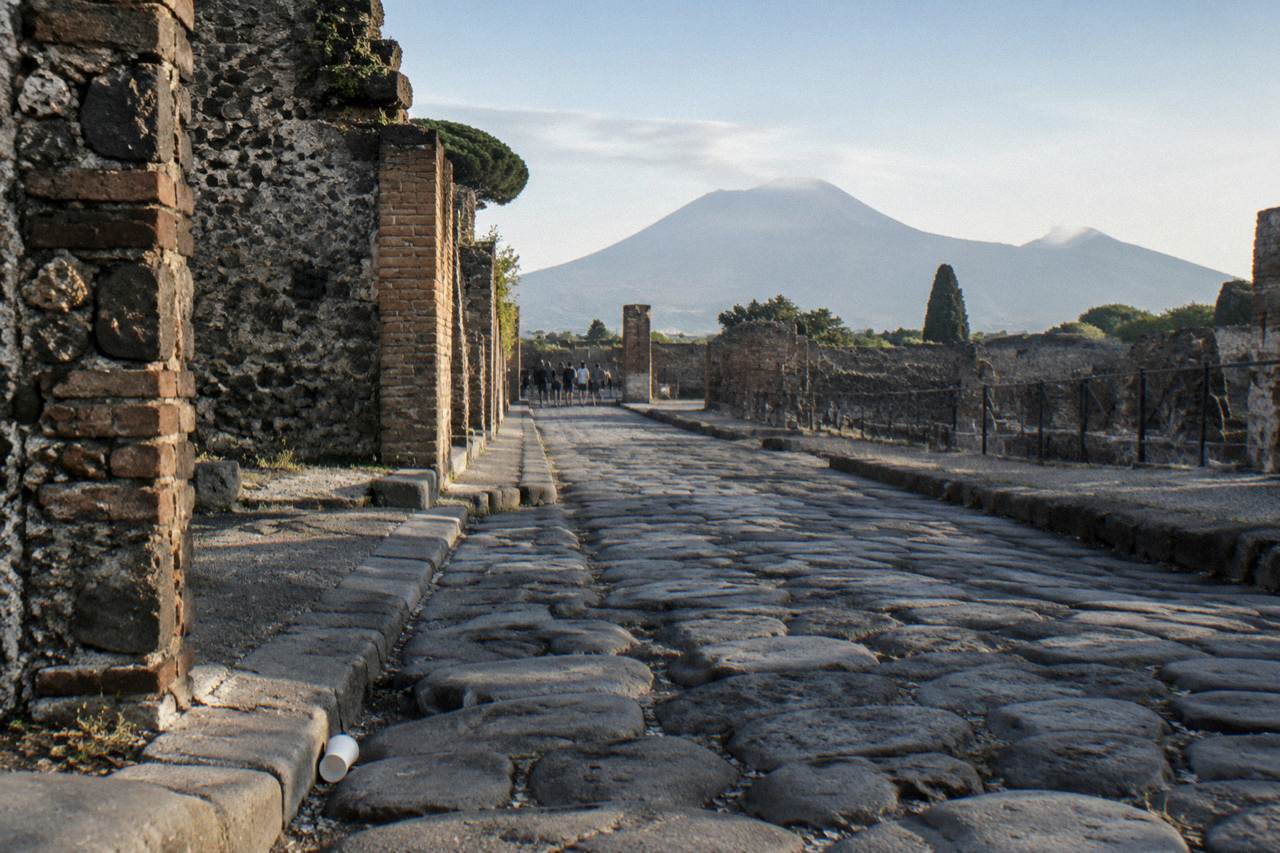
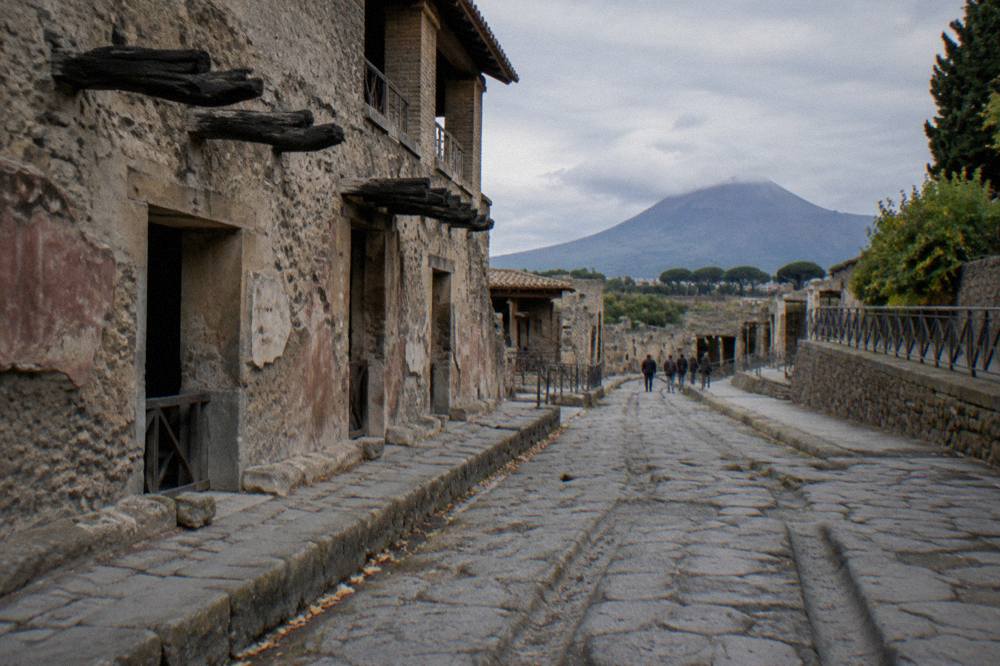
That contrast shows up the moment you walk in. At Pompeii you navigate a grid of basalt streets with cart ruts worn into the stone, past the amphitheatre, the Grand Theatre and the Villa of the Mysteries frescoes. At Herculaneum you look down into a compact excavation pit, walk beneath a carbonised wooden door, and stand in the boat sheds where skeletal remains of shelter-seekers were found. Both sites publish their hours and ticket rules on official pages, and we link the primary sources in the hours section below. Travellers weighing the volcano instead will find the choice framed differently in Pompeii Or Vesuvius: Which Should You Pick.
| Feature | Pompeii | Herculaneum |
|---|---|---|
| Excavated feel | Full city grid, streets and public buildings | Compact town in a pit, houses to second storey |
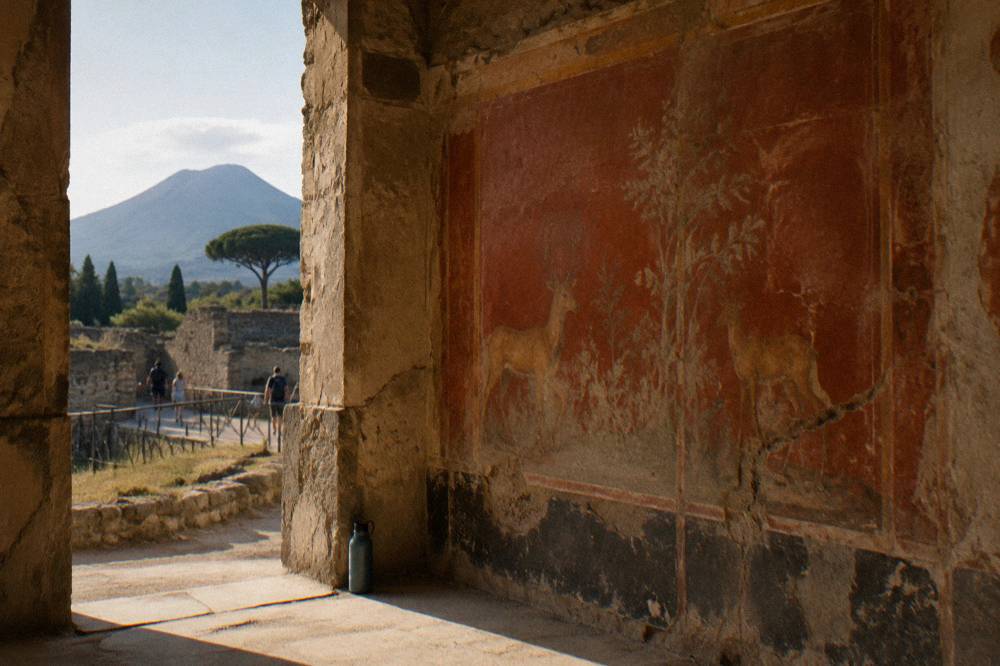
| Star sights | Forum, amphitheatre, Villa of the Mysteries | Carbonised wood, boat sheds, House of the Deer |
| Realistic visit time | 3 to 4 hours minimum | 1.5 to 2 hours |
| Full ticket | €20 Pompeii Express; €25 Pompeii+ | €16 |
| Reduced ticket | €2 for EU citizens 18 to 24 | €2 for visitors 18 to 25 |
| Daily entry cap | 20,000, slotted by ticket type | Not published on the ticket page |
Which Site Should You Visit First On A Combined Tour?
Most tours visit Pompeii in the morning and Herculaneum after lunch, and the logic is sound: Pompeii is the bigger, hotter, more exposed walk and benefits from cooler hours, while its morning admission window holds up to 15,000 slots versus 5,000 in the afternoon. Doing Pompeii first also means the compact Herculaneum stop still feels fresh late in the day.
The official slot system explains the scheduling better than any tour operator's preference. From 16 March to 14 October, Pompeii admits a maximum of 15,000 people between 9:00 and 13:00 and 5,000 between 13:00 and 17:30, with separate sub-caps for Express and Pompeii+ tickets. A morning Pompeii entry lands you in the roomier window. Herculaneum, with no comparable published cap, is the natural afternoon stop, and its summer last entry of 18:00 gives a combined day comfortable slack. In winter the arithmetic tightens: Pompeii's last entrance drops to 15:30 and Herculaneum's to 15:30 as well, so a same-day visit becomes a genuine morning-plus-early-afternoon sprint, a constraint we unpack in Can You Do Pompeii And Herculaneum In One Day.
Independent travellers can copy the tour order. The Circumvesuviana railway serves both, with Ercolano Scavi the station for Herculaneum and Pompei Scavi or Villa dei Misteri serving Pompeii; fares are not stated in our verified sources, so check the operator's fare finder before budgeting. A caution from the transport files: the Campania Express tourist train is suspended from 1 October 2026 until further notice, so plan around ordinary services only. If you would rather someone else own the timetable, the combined category pages collect the options, and the pairing question specific to the volcano is covered in Pompeii And Vesuvius In One Day.
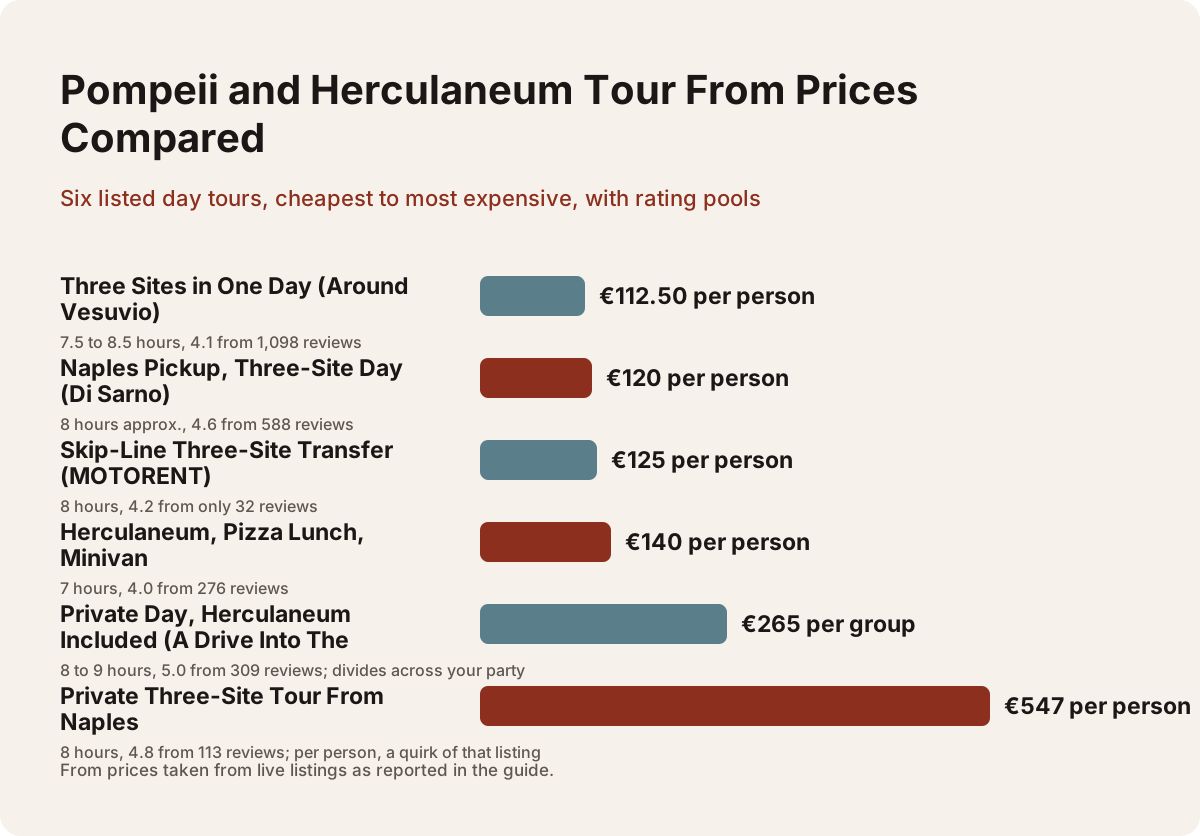
The three listings above span the realistic budget range. The Around Vesuvio full-day tour, from €112.50 per person and rated 4.1 across 1,098 reviews, is the volume choice departing Naples or Pompeii. The private Worldtours version costs from €360 per group and carries a 4.7 rating from a small pool of 41 reviews, a figure worth naming as such. The small-group pizza-lunch tour sits between them at from €140 per person with a 4.0 rating from 276 reviews.
What Does A Pompeii And Herculaneum Tour Cost?
Shared combined day trips start at from €75.60 per person for a minibus tour of both ruins, small-group versions with lunch run from €140 per person, and private three-site days start at €265 per group plus higher tiers to €890. Every price below is a from-price taken from the live listing, and park entries may or may not be bundled, so check what each listing includes before comparing headline fares.
The floor of the market is genuinely low. Around Vesuvio's Pompei: Vesuvius and Herculaneum Tour, a six-hour minibus day from Pompeii with free time at each stop, lists from €75.60 per person with a 4.3 rating from only 20 reviews, a small pool we name as one. At the top, an archaeologist-led private day pairing Pompeii, Herculaneum and a Vesuvius winery with pickup, run by Fabrizio Belleni, lists from €890 per group with a 5.0 rating from 97 reviews. Between them sit most of the products travellers actually book.
| Tour (decision name) | Format | Duration | Rating and reviews | From price |
|---|---|---|---|---|
| Three Sites in One Day (Around Vesuvio) | Shared day, Naples or Pompeii | 7.5 to 8.5 hours | 4.1 from 1,098 reviews | €112.50 per person |
| Naples Pickup, Three-Site Day (Di Sarno) | Shared day with pickup | 8 hours approx. | 4.6 from 588 reviews | €120 per person |
| Skip-Line Three-Site Transfer (MOTORENT) | Transfer-based day | 8 hours | 4.2 from only 32 reviews | €125 per person |
| Herculaneum, Pizza Lunch, Minivan | Small group with meal | 7 hours | 4.0 from 276 reviews | €140 per person |
| Private Day, Herculaneum Included (A Drive Into The Blue) | Private, hotel pickup | 8 to 9 hours | 5.0 from 309 reviews | €265 per group |
| Private Three-Site Tour From Naples | Private | 8 hours | 4.8 from 113 reviews | €547 per person |
Reading the table honestly means watching the price basis. Two of these are per-group prices: the €265 tour divides across your party, which is why private days beat per-person tours for groups of four or more. The €547 figure is per person despite being a private product, a quirk of that listing. Ratings also need their pools printed beside them; a 5.0 from 309 reviews and a 4.2 from 32 reviews are not the same kind of fact. For context on the ruins side of the market, the site's roundup of the best Pompeii tours from Naples carries the two-site equivalents, and the broader price landscape is laid out in the site's tour-prices guide.
Can You See Pompeii, Herculaneum And Vesuvius In One Day?
Yes, and it is the single most popular combined format on this site, with shared three-site days lasting 7.5 to 8.5 hours from around €112.50 per person. The geometry works because all three stops sit within a short drive of each other, but the day is built on fixed last-entry times, so the tour, not you, absorbs the scheduling risk.
The typical shape is Pompeii for two to three hours in the morning, Herculaneum for about an hour at midday, then the drive up to the Vesuvius quota at 1,000 metres for a guided crater walk of roughly two hours. Every visitor above 1,000 metres is accompanied by the park's volcanological guides, which the park mandates for each group, so even a self-guided-style day becomes semi-guided at the crater. The trail itself, the Gran Cono, is a 4,010-metre round trip rated low difficulty with a turnaround at 1,170 metres; the public never reaches the 1,281-metre summit, a detail most first pages of search results miss.
A guest on the Di Sarno three-site day described the rhythm well: "We had a good hike to the crater of Mt. Vesuvius with a beautiful view of Naples, the crater, the country side, Sorrento and Capri. The ruins of Herculaneum and Pompeii were incredible." That tour lists from €120 per person with hotel pickup and a 4.6 rating from 588 reviews. Its sibling from the same operator, a Herculaneum, Mount Vesuvius and Pompeii day trip, is the same price with a 4.4 rating from 169 reviews. Both flag free cancellation on the listing, which matters when weather can close the crater side of the day with little notice.
Bookable for future dates, with the operator's current schedule worth confirming near your travel window, the Di Sarno day above is the pick for travellers who want pickup from a Naples base. Leaving from Sorrento or Rome changes the calculus: Sorrento has a private Pompeii, Vesuvius and Herculaneum tour from €382.58 per group, and Rome-based travellers should read our dedicated Rome to Pompeii and Vesuvius day-trip planning guide, since a Rome start eats three hours of rail time before the ruins appear. First-timers unsure whether the volcano belongs in the itinerary at all can start with Can I Take A Guided Tour From Naples To Vesuvius And Pompeii?.
How Much Time Do You Need At Each Site?
Pompeii needs three to four hours for a first visit that goes beyond the forum, Herculaneum one and a half to two hours, and the Vesuvius crater walk about two and a half hours round trip including the ascent from the 1,000-metre plaza. Any tour promising all three in six hours is spending that time on transfers rather than inside the sites.
The numbers come straight from the official pages. The park lists the Gran Cono at 2 hours 30 minutes round trip and caps commercial tours at two hours on the shortest route and three on the longest, per the access protocol. Pompeii's own ticket structure tells the time story: a Pompeii Plus three-day pass exists because serious visitors cannot cover the city, its villas and the satellite sites in one day. Herculaneum, compact and linear, is the site where two hours genuinely suffices for the boat sheds, the terrace houses and the Sacred Way down to the former shoreline.
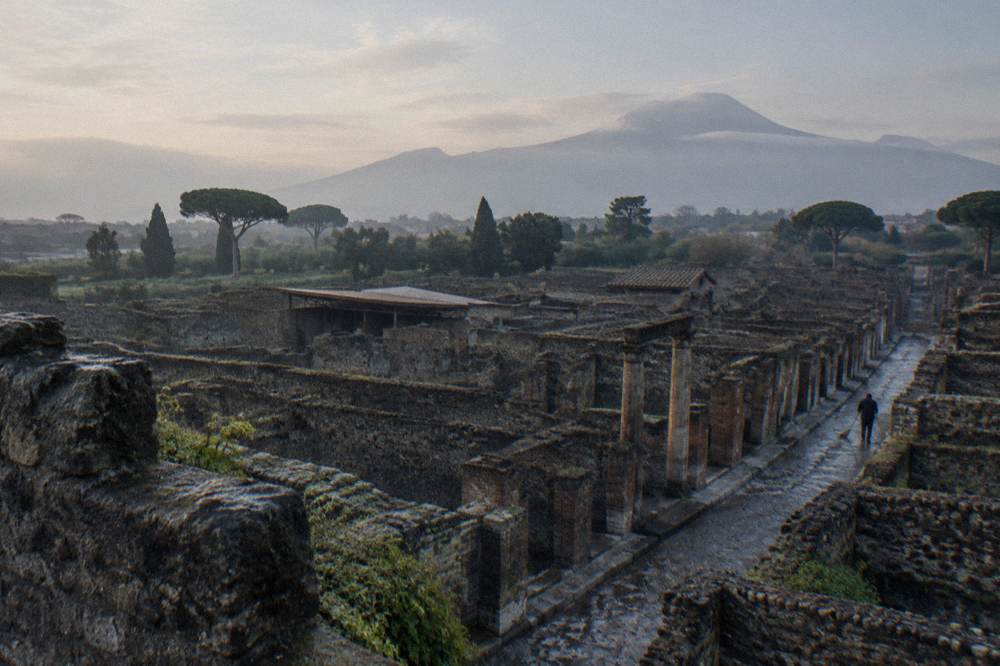
Time of year bends every estimate. In the modelled 1991-2020 climate average, Naples averages 29.3 degrees in August against 12.7 in December, and the walking surfaces at both ruins, exposed basalt and volcanic stone respectively, hold that heat. Millie from the United Kingdom, reviewing a Pompeii and Vesuvius day, flagged exactly this: "Very uneven surfaces and very hot in summer so trainers and water bottles." Winter brings the opposite problem, earlier last entries rather than heat, which we detail in the hours section below. Travellers who prefer to slow the whole day down can drop one site entirely; the time-budget article on the volcano side walks through that trade-off when the crater is the priority.
| Stop | Realistic on-tour time | Official constraint | Notes |
|---|---|---|---|
| Pompeii | 2 to 3 hours on a combined day | Last entry 17:30 summer, 15:30 winter | 20,000 daily cap, nominative tickets |
| Herculaneum | 1 to 1.5 hours on a combined day | Last entry 18:00 summer, 15:30 winter | Free entry first Sundays |
| Vesuvius crater | 2 to 2.5 hours | Tours capped at 2 to 3 hours by protocol | Mandatory park guide above 1,000 m |
| Transfers | 2 to 3 hours total across the day | Road times vary with traffic | Pompeii to Herculaneum roughly 15 minutes |
Group, Small Group Or Private: Which Tour Format Fits?
Shared bus days from €75.60 to €120 per person suit travellers optimising cost, small-group tours of roughly 8 to 15 people from €140 per person add a guide and pace, and private days from €265 per group win for families and anyone with mobility or timing constraints. The format choice matters more here than on most day trips because the three-site schedule leaves no slack for a mismatch.
Private pricing rewards bigger parties quickly. A Drive Into The Blue's private Herculaneum, Pompeii and Vesuvius day lists from €265 per group, rated 5.0 from 309 reviews, with a guest named Jessica E. praising the driver: "Antonino was awesome! He was very knowledgeable about each location on the tour and made sure we had plenty of time to fully see what we wanted." For a family of four that undercuts any per-person premium tour. Solo travellers and pairs, by contrast, get better value from the shared options, where the Around Vesuvio three-site day at from €112.50 per person is the anchor product. Before you book either way, you might wonder why Herculaneum draws far fewer crowds than its famous neighbour, and our explainer on why Pompeii won the fame war answers that question while helping you plan visits to both sites.
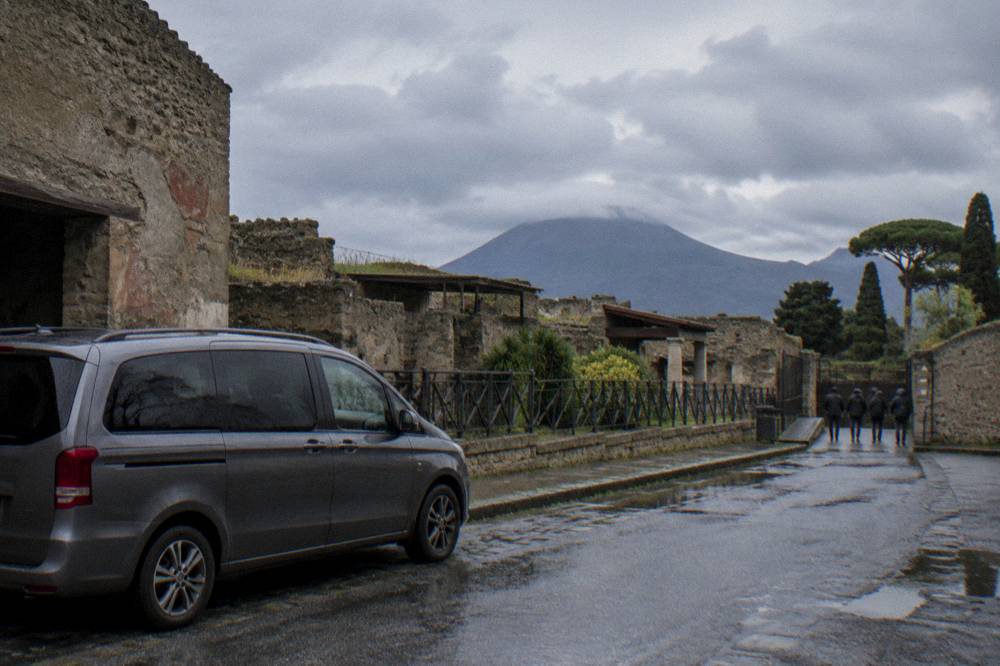
Small-group formats split the difference. The Herculaneum and Vesuvius tour with pizza lunch, from €140 per person with a 4.0 rating from 276 reviews, keeps numbers low and builds a meal into the day; its listing does not state a departure point, so check the meeting details before booking. At the specialist end, the archaeologist-led private tour from €890 per group, rated 5.0 from 97 reviews, is really a different product category: a scholar guiding one family through three sites and a winery over eight to nine hours. Our full comparison of the two formats on the volcano side, with per-group arithmetic worked through, lives in the private versus group guide.
Format also decides who explains the ruins. On shared bus days the listing usually includes a live guide at the sites or an audio guide, and at the crater the park's own volcanological guides take over regardless of what you paid. On private days the driver-guide arrangement varies by listing; the winery-focused private above names its archaeologist guide explicitly, which is the level of detail worth checking for on any premium booking.
What Tickets And Hours Should You Plan Around?
Pompeii tickets run €20 Express, €25 Pompeii+ and €30 for the three-day Plus option, Herculaneum is €16 full price, and both sites close earlier in winter: Pompeii last entry drops to 15:30 and Herculaneum to 15:30 from 15 October. First Sundays of every month are free at both, and from 1 January 2027 Pompeii moves to a single €25 ticket valid 30 days.
The Pompeii tariff, in force since 12 January 2026, is published by the archaeological park itself (timetables and tickets page): Express covers the ancient city only, Pompeii+ adds the suburban villas and Villa Regina with a shuttle, and the three-day Plus spans Oplontis, Stabiae and Boscoreale. Reduced tickets are €2 for EU citizens aged 18 to 24, and every ticket is personal and nominative under the 20,000 daily cap. Herculaneum's €16 full and €2 reduced tariff, with summer hours to 19:30 and winter to 17:00, is on the official Herculaneum ticket page; its Villa dei Papiri and Ancient Theatre remain closed until further notice, so do not build an itinerary around them.
If Vesuvius is the third stop, its ticketing is the strictest of the three. The park's adult ticket is €10 under its ticketing rules; the park's authorised online seller shows €11.68, reduced €8 (€9.55 online) for under-25s and residents of the 13 park municipalities. Sales are online only, by 10-minute time slot, released 30 days ahead, with a last-minute release of 10 named tickets per slot 30 minutes before each slot. The full mechanics are on the park's Gran Cono page. Our dedicated tickets guide walks through buying strategy, and the closure rule to remember is that an orange regional weather alert or higher closes the crater trail and box office automatically, with refunds issued for slots inside a closure.
| Month block | Pompeii last entry | Herculaneum last entry | Vesuvius last access |
|---|---|---|---|
| Mid-March to mid-October | 17:30 | 18:00 | 16:00 to 18:00 by month |
| Mid-October to mid-March | 15:30 | 15:30 | 15:00 to 16:00 by month |
Is A Pompeii And Herculaneum Tour Worth It From Rome?
From Rome it is possible but tight: high-speed rail to Naples takes about 70 minutes before your tour even starts, so the realistic products are 10 to 12-hour days from around €147.60 per person, or an independent fast-train package. A Rome-based traveller should either commit to the long three-site day or save Pompeii alone and return for Herculaneum another trip.
The one Rome-departure listing in the three-site roster is the fast-train option from inStazione, listing from €147.60 per person for a 10-hour day with a 4.1 rating from only 25 reviews, a small pool we name as one. Everything else Rome-tagged on this site pairs Pompeii with Vesuvius, not Herculaneum, which reflects what operators believe fits inside a day that opens with a 2-hour rail leg. Herculaneum is the stop that gets cut, precisely because it is the most substitutable: a visitor who has walked Pompeii's streets has seen a Roman city, even if not the carbonised detail.
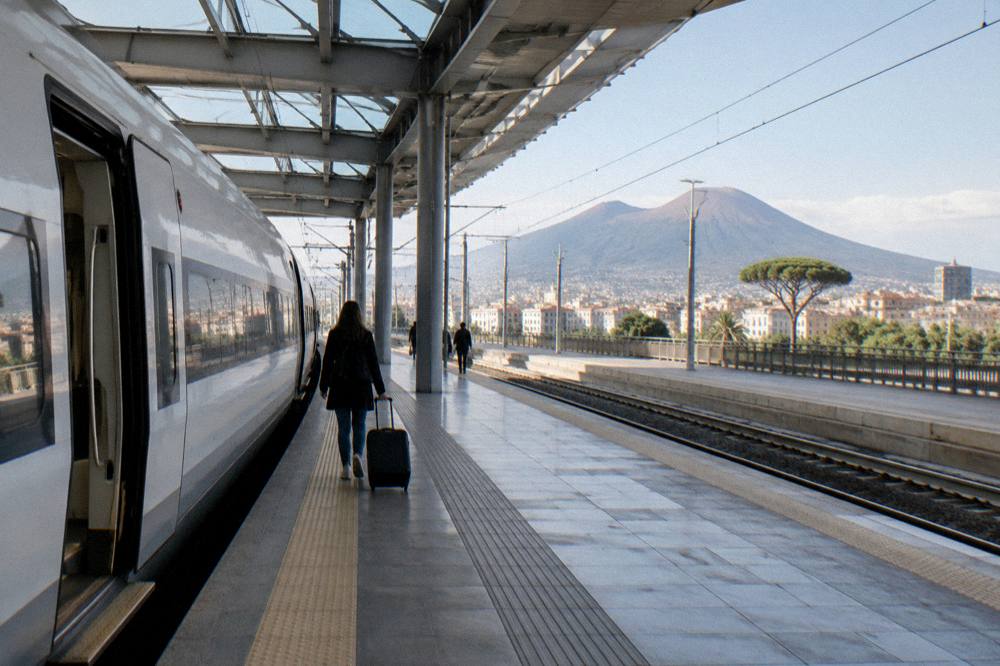
The alternative is to base in Naples even for one night. Naples-departure three-site days start at from €112.50 per person and run to gentler 7.5 to 8.5-hour schedules, with pickup included on most listings, and the city doubles as the best rail hub for the whole bay; the site's guide to getting to Vesuvius from Naples collects the transport options. Our where-to-stay guide covers the practical bases near the stations. If Rome is locked in, the honest advice is on our Rome planning page: pick Pompeii plus one, not all three.
Booking Smart: Timing, Cancellations And What To Check
Book combined tours two to four weeks ahead in shoulder season and earlier for July and August, because Pompeii caps daily entries and Vesuvius releases crater slots only 30 days out. Every tour named here flags free cancellation on its listing, and weather-driven crater closures trigger automatic refunds for slots inside a closure, so early booking carries little downside.
Three checks before you pay. First, whether entries are bundled: the shared transfer-style days often include park tickets while the cheap minibus options sometimes do not, and the listing states this in each case. Second, the departure point: several combined products leave from Pompeii rather than Naples, which suits rail arrivals but not cruise passengers, who have their own shore-excursion options covered in the port guide. Third, meal inclusion: lunch-included days list from €120 to €150 per person on this site, and a midday stop at a winery or pizzeria is often what makes a 12-hour day survivable rather than merely possible.
Seasonality, not just price, should drive the booking date. In the modelled 1991-2020 climate average, the summit level receives 180 mm of rain across 13.6 days in November against 16 mm across 3.3 days in July, and a wet November day threatens both the crater leg and the views that justify it. October sits between the two, with 129 mm across 10.5 days. The site's month-by-month breakdown, Mount Vesuvius by month, carries the full table; the short version is that April to June and September offer the best ratio of daylight, last-entry hours and rain risk. Whatever the month, confirm the operator's current schedule close to travel, since trail and transfer status is volatile and the live listing is the authoritative source on the day.
Common Questions About Pompeii And Herculaneum Tours
Can you visit Pompeii and Herculaneum in one day?
Yes. The sites are roughly 15 minutes apart by road, and combined tours do both in 6 to 8 hours, or both plus Vesuvius in 7.5 to 8.5 hours. Independent visitors can manage it by Circumvesuviana train with an early Pompeii start.
Which is better, Pompeii or Herculaneum?
Neither is strictly better: Pompeii delivers scale, streets and public buildings over three to four hours, while Herculaneum delivers preserved wood, frescoes and two-storey houses in under two. Travellers with time for one usually pick Pompeii; travellers who loved a previous Pompeii visit often prefer Herculaneum's detail.
What does a Pompeii and Herculaneum tour cost?
Shared combined days start at from €75.60 per person, small-group versions with lunch from €140 per person, and private three-site days from €265 per group up to €890 per group for an archaeologist-led private tour. Check each listing for whether site entries are included.
Is Herculaneum included in Pompeii tickets?
No. Herculaneum is a separate site with its own €16 full ticket and €2 reduced ticket. Pompeii tickets from €20 cover only the Pompeii park's own sites, though the three-day Plus option spans Oplontis, Stabiae and Boscoreale.
Do Pompeii and Herculaneum tours include Vesuvius?
Many do. Three-site tours pairing Pompeii, Herculaneum and the crater run from about €112.50 per person shared and €265 per group private, lasting 7.5 to 8.5 hours. The crater leg is always accompanied by the park's volcanological guides, which the park mandates above 1,000 metres.
When is the best month for a combined ruins tour?
April to June and September balance long last-entry hours against manageable heat in the modelled 1991-2020 climate average. July and August are the busiest and hottest; from mid-October last entries fall to 15:30, which compresses any two-site day.