Is 2 Hours Enough For Pompeii?
An honest answer to whether two hours is enough for Pompeii, what you can realistically see, and how to pair a short ruins visit with Mount Vesuvius in one day.
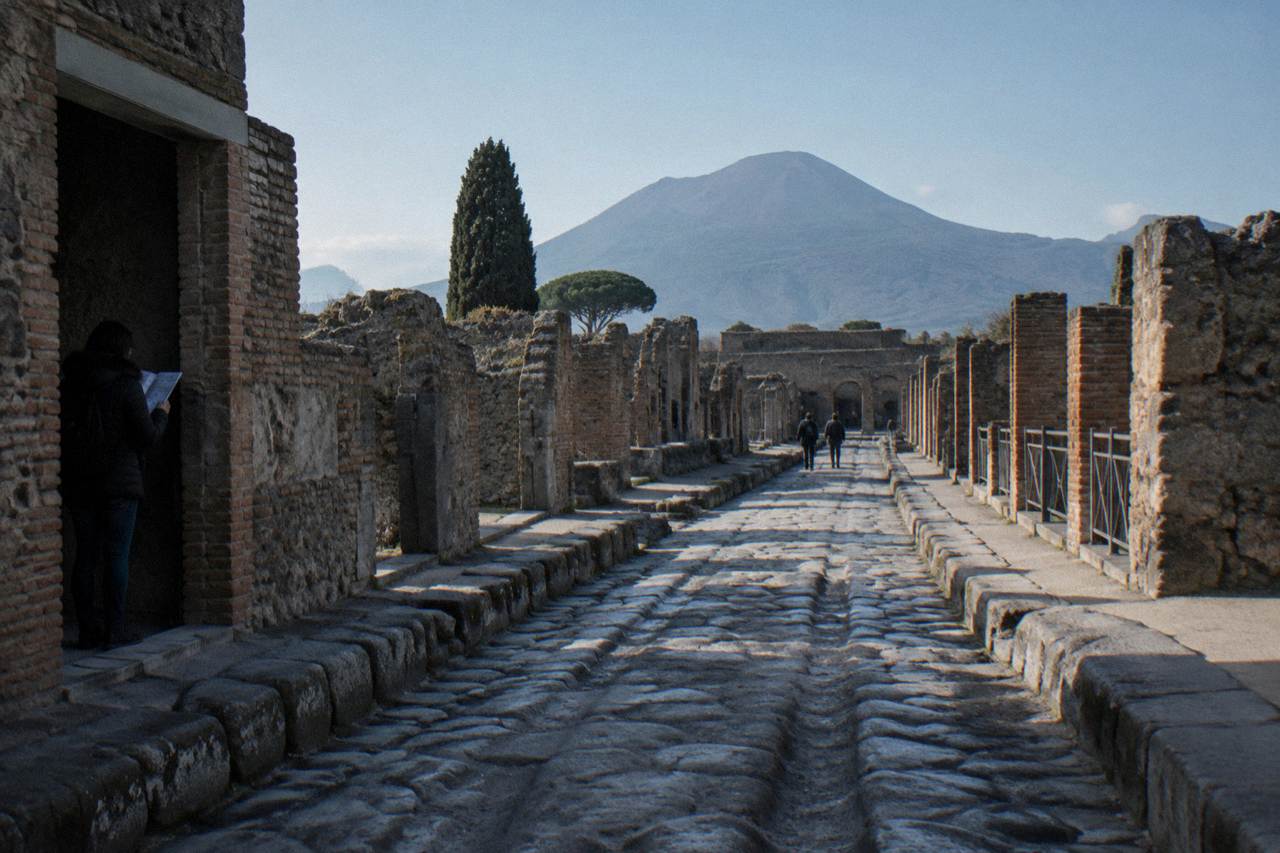
Pompeii is a buried city of roughly 66 hectares, and the park caps entries at 20,000 people a day because there is that much to walk. Two hours covers one carefully chosen axis, maybe eight or ten landmarks, and a lot of skipping. Whether that is enough depends on what the rest of your day holds: for a traveller pairing the ruins with a Mount Vesuvius crater hike, two hours is a workable, even sensible allocation. For anyone whose only stop is Pompeii, it leaves most of the city unseen. Crowds and heat change how much you can realistically see in that window, and the month-by-month guide to the best time to visit Pompeii helps you pick a date when the site is calmer and cooler.
The question matters most for combined days. A crater visit and a ruins visit in one day forces a choice, because the Gran Cono trail runs on timed slots and Pompeii on capped admission windows, and both have last-entry clocks that bite in the afternoon. This guide sets out what two hours genuinely buys at Pompeii, what a fuller budget looks like, and how the pairing works in practice.
The starting point for everything below is the park's own framework: admission is split into timed windows from 16 March to 14 October, with a maximum of 15,000 visitors between 9:00 and 13:00 and 5,000 between 13:00 and 17:30, all inside a 20,000 daily cap. The official hours and ticket detail is published by the Pompeii Archaeological Park, and every figure in this article comes from that page or from the tour listings this site tracks.
Is 2 Hours Enough To See Pompeii?
No, two hours is not enough to see Pompeii, if "see" means anything close to the whole excavated city. It is enough for a disciplined highlight route: the Forum, the Basilica, one bath complex, the Lupanar or a pair of well-preserved houses, and the plaster casts, walked in a single loop from an entrance chosen to match your route. Most visitors who try it leave with a clear sense of the place and a list of what they missed.
The honest framing is that Pompeii rewards hours in a way few sites do. The ancient city is not a monument you circle; it is streets you walk, and the experience scales with time almost linearly. A two-hour visitor sees the spine of the town. A four-hour visitor adds the amphitheatre end or the Villa dei Misteri end. A full-day visitor can do both and still skip entire insulae.
What two hours does well is focus. The park is large but its greatest hits cluster tightly around the Forum and the Stabian Baths, all within a few minutes' walk of the Piazza Esedra entrance. A visitor who enters there, walks the Forum axis, takes in the baths and one decorated house, and exits the way they came will have seen the images most people carry home from Pompeii.
What it does badly is the periphery. The amphitheatre and the Piazza Anfiteatro entrance sit at the opposite end of the town, and the Villa dei Misteri sits outside the walls past the Herculaneum Gate. Reaching either from the Forum costs 20 to 30 minutes of walking each way, which in a two-hour budget is a third of your time spent on movement rather than looking. Two-hour visitors should pick one end or none.
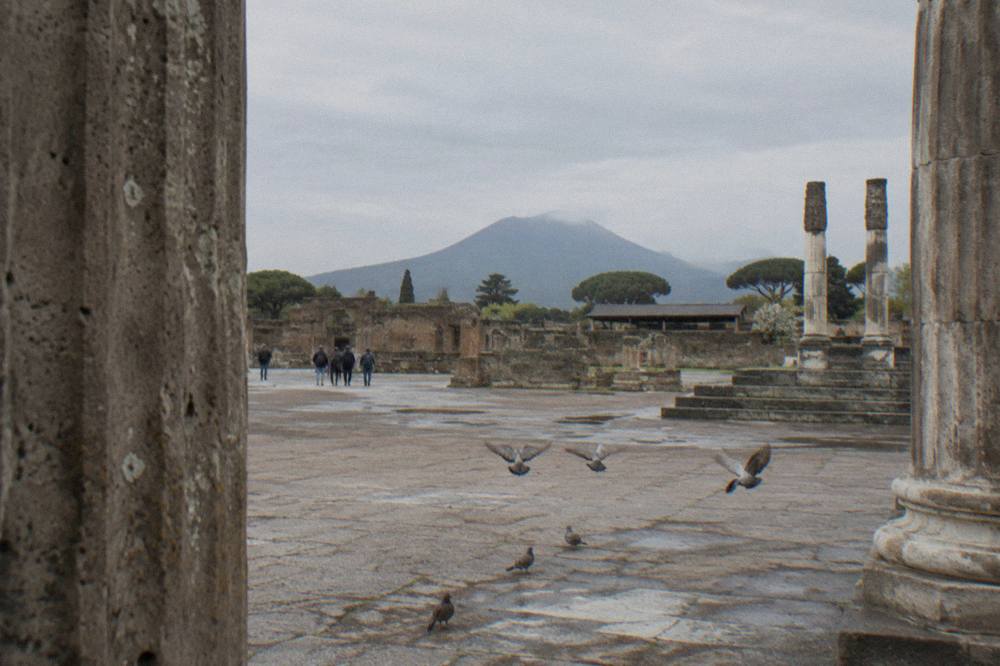
Two hours also changes character with the season. In the summer window, 16 March to 14 October, the park stays open to 19:00 with last entry at 17:30, so a late two-hour visit runs into golden light and thinner crowds. In the winter window, 15 October to 15 March, last entry is 15:30 and the site closes at 17:00, which pushes a two-hour visit earlier into the busier part of the day.
Is 2 Hours Long Enough At Pompeii?
For a stop on a combined Pompeii and Vesuvius day, yes: two hours at the ruins is long enough to feel you visited Pompeii rather than glimpsed it, provided you enter with a route in mind. For a standalone trip, most travellers regret it. The dividing line is not stamina but intent, and two hours serves intent best when the second half of the day is already committed to the volcano.
The reason the combined day works at all is timing symmetry. The Vesuvius crater trail, the Gran Cono, admits its last visitors between 15:00 and 18:00 depending on month, and the hike itself is a 2 h 30 round trip on a 4,010 m trail. A morning at Pompeii followed by an early-afternoon crater slot is the standard shape, and a two-hour ruins visit leaves enough slack to make the transfer without hurrying. The park's Gran Cono page sets those seasonal last-access times, and the schedule is worth checking against your own month before you lock a plan.
Traveller type matters more than any fixed rule. Cruise passengers on shore excursions routinely get two hours at the ruins because the port clock forces it, and the roster reflects that: the Naples Shore Excursion Mt Vesuvius and Pompeii Day Trip runs about 7 hours with pickup and lunch included, from €129.73 per person, rated 4.0 from 316 reviews. Two hours is the native rhythm of that itinerary, and it works because the guide pre-decides the route.
Independent travellers with a whole day behave differently. They linger, they get lost in the western insulae, they queue for the House of the Vettii. If you have no volcano booking and no departure deadline, two hours is a self-imposed constraint with no payoff, and the same ticket buys four unhurried hours.
Families sit between the two. Children burn out on ruins faster than adults, and a two-hour highlight loop with an ice cream stop often lands better than a four-hour march. The pairing question is covered in detail in the site's guide to Pompeii And Vesuvius In One Day, which walks through the same trade-off for the full combined itinerary.
One pairing worth naming here for a short-ruins day is the From Pompeii wine tasting and lunch trip. It books the ruins portion tightly and then spends three hours on a Vesuvius winery visit with lunch and tasting included, from €105 per person with free cancellation flagged on the listing, rated 4.3 from a small pool of 44 reviews. For a traveller who wants Pompeii compact and the afternoon generous, the shape is exactly right.
How Many Hours Is Enough For Pompeii?
A useful scale runs: two hours for a highlight loop on a combined day, three to four hours for a comfortable visit covering the Forum core plus one outlying quarter, and a full day to add the amphitheatre end, the Villa dei Misteri and the suburban villas. Most first-time visitors are happiest at three to four hours. Below two, the visit becomes a checkpoint; above six, fatigue sets in faster than discoveries.
The ticket structure quietly supports the longer budgets. The basic Pompeii Express ticket, covering the ancient city only, costs €20, with a €2 reduction for EU citizens aged 18 to 24. The Pompeii+ ticket at €25 adds the suburban villas, including the Villa dei Misteri, plus the Villa Regina and a shuttle. The Pompeii Plus three-day ticket at €30 spreads the whole park complex across three days. A two-hour visitor buys the Express; the villas are pointless on a tight clock.
| Ticket | Price | Covers | Sensible minimum time |
|---|---|---|---|
| Pompeii Express | €20 (reduced €2, EU 18 to 24) | Ancient city only | 2 hours highlight loop, 4 hours comfortable |
| Pompeii+ | €25 | City, suburban villas, Villa Regina, shuttle | 5 to 6 hours |
| Pompeii Plus three-day | €30 | All park sites, three days | Two or three shorter visits |
| Single outlying sites | €8 | Oplontis, Stabiae museum, Boscoreale each | Half a day each, separate trips |
From 1 January 2027 the ticket system simplifies to a single €25 ticket valid 30 days with one entry per site across all the Pompeii park sites, with Oplontis, the Stabiae museum and Boscoreale remaining €8 each. Nothing in that change alters the time arithmetic: a single €25 ticket still buys exactly as many hours of walking as your legs allow.
The honest wildcard is crowding. The 9:00 to 13:00 window admits up to 15,000 people, three times the 5,000 of the afternoon window. A two-hour visitor arriving at opening walks with the peak crowd; a two-hour visitor arriving at 13:00 gets a calmer site but a shorter runway before last entry. In summer the afternoon choice is the better trade.
What Can You Realistically See In Two Hours At Pompeii?
A realistic two-hour loop from Piazza Esedra covers the Forum core, the Stabian Baths or the Forum Baths, the Lupanar, one decorated house such as the House of the Faun, and the plaster-cast display. At walking pace with photo stops that is 90 to 110 minutes of viewing plus orientation and exit, which fills the budget exactly, with no room for a second end of town.
Route discipline is everything. Enter at the entrance that matches your loop, decide your turns before you arrive, and resist detours, because Pompeii's side streets are seductive and unlabelled in places. A guide or an audio guide earns its cost here: the roster's audio-guide combos, like the From Naples Mount Vesuvius and Pompeii Ruins Combo Day Trip at 6 to 6.5 hours from €77.40 per person, rate 4.1 from 1,673 reviews and solve the orientation problem for visitors who would otherwise spend their two hours finding the way. If you're curious why this place earned such a racy reputation, the real story behind Pompeii's Sin City nickname separates what the excavations actually show from the Victorian gossip.
| Time | Stop | Why it fits a short visit |
|---|---|---|
| 0:00 to 0:15 | Enter and walk the Forum axis | The Forum is the city's centrepiece and frames Vesuvius behind it |
| 0:15 to 0:35 | Basilica and Temple of Apollo | Dense with context, minutes from the Forum |
| 0:35 to 1:00 | Stabian Baths | The best-preserved bath complex near the centre |
| 1:00 to 1:15 | Lupanar | Short, famous, on the natural route |
| 1:15 to 1:45 | House of the Faun or House of the Tragic Poet | One decorated house done well beats three rushed |
| 1:45 to 2:00 | Plaster casts and exit | The emotional close of the visit |
Two things quietly wreck this loop. The first is the site's scale under summer heat: Millie from the United Kingdom, reviewing a combined day tour on this roster, flagged "very uneven surfaces and very hot in summer so trainers and water bottles". The second is the queue at the entrance itself, which in peak season can consume 20 minutes of a two-hour budget before you see a single wall. Pre-booked timed entry or a tour with skip-the-line access absorbs that risk.
Guided two-hour walking formats exist precisely because the independent version is hard. The question of whether a guided or self-guided approach suits a short visit is its own decision, but the shorthand is: the shorter the visit, the more a guide pays back, because route-finding is the thing a guide removes.
Can You Combine Pompeii And Vesuvius In One Day?
Yes, and it is the most common reason people ask the two-hour question. A combined day works as a morning at Pompeii, two to three hours, followed by an afternoon crater slot on the Gran Cono trail. The constraint is the volcano's last-access time, which ranges from 15:00 in winter to 18:00 in July and August, so the ruins visit must end early enough to transfer and clear the crater gate.
The transfer between the two is shorter than most travellers expect. From the Pompei side, the EAV bus line 808 runs from Piazza Anfiteatro up to the Quota 1000 trailhead plaza, 55 minutes, €3.80 on board, with nine departures a day, the last one up arriving at 15:25. That last arrival sits after the winter last entry of 15:00, so late starters cannot rely on the bus alone; the timetable is published by EAV and applies from 1 October 2026.
| Month | Pompeii last entry | Vesuvius crater last access | Realistic ruins budget on a combined day |
|---|---|---|---|
| January, February, November, December | 15:30 | 15:00 | 2 hours, start early |
| March, October | 15:30 or 17:30 | 16:00 | 2 to 3 hours |
| April, May, June, September | 17:30 | 17:00 | 3 hours comfortable |
| July, August | 17:30 | 18:00 | 3 to 4 hours, or ruins second |
Read that table as the answer to the whole two-hour debate: in the shoulder and summer months, a combined day comfortably supports three hours at the ruins, and two hours becomes a choice rather than a necessity. In the winter months it flips, and two hours is roughly the maximum the closing clocks allow.
The order question, ruins first or volcano first, has its own article: Should I Go To Pompeii Or Vesuvius First? The short version for time-pressed readers is that ruins-first suits the standard schedules, since the crater's fixed last access is the harder deadline, while volcano-first flips the crowd profile at Pompeii in your favour.
Booking the pairing as one product removes the coordination burden. The combined-day roster is broad, from the From Naples Pompeii and Vesuvius Day Trip with Pizza Lunch at from €53.25 per person, rated 4.8 across 9,744 reviews, up to the All-Inclusive Pompeii and Vesuvius option with lunch and wine tasting from €127.50, rated 4.6 from 2,804 reviews. The full comparison lives on the Pompeii and Vesuvius tours page.
Which Pompeii And Vesuvius Tours Fit A Tight Schedule?
For a tight schedule, the fits are the short combos and the shuttle-plus-ticket formats: the From Rome Vesuvius Transfer and Ticket at 4 hours to a full day from €25 per person, the shared shuttle options around 3 hours, and half-day crater trips from about 3.5 to 4 hours. Anything labelled full day, 8 hours or more, presumes a longer ruins stop and will not serve a two-hour traveller well.
The shuttle family deserves a specific mention because it decouples the two halves of the day. The Bus Transfer to Vesuvius with Park Entry Fee, from €35.10 per person, rated 4.3 from 1,923 reviews, runs 3 hours from Naples or Pompeii with pickup and park entry included, and a review from Nicola in the United Kingdom calls it an "easy way to get from Pompeii to Vesuvius and back again". A traveller can bolt that onto any independent two-hour ruins visit.
At the opposite extreme sits the Pompeii Guided Tour and Horse Riding on Vesuvius with Lunch, a 7-hour small-group day from Pompeii at from €165 per person, rated 4.9 from 460 reviews, minimum age 6. It compresses the guided ruins walk and then swaps the crater hike for a horseback ride on the volcano's slopes with a wine-tasting lunch. Amanda C., in a review on the listing, put it simply: "Pompeii, to lunch, to horse back on Vesuvius is the way to go!!" It is not a two-hour-ruins product, but it is the answer for travellers whose real question was "how do I see both without a marathon".
Between the poles, the wine-lunch pairings are the fastest-growing format because they cap the ruins portion themselves. The From Pompeii wine tasting and lunch trip already mentioned, and the From Naples Wine Tasting Tour on Vesuvius Slopes with Lunch at 4 hours from €90, both treat the volcano afternoon as the main event. That family of products is compared on the Pompeii, Herculaneum and Vesuvius tours page alongside the three-site days.
What Do Pompeii Tickets And Entry Slots Mean For Your Timing?
Three things: your ticket is nominative and personal, the day is capped at 20,000 entries, and from 16 March to 14 October admission runs in two windows, 15,000 people between 9:00 and 13:00 and 5,000 between 13:00 and 17:30. For a two-hour visitor this means the afternoon window is calmer but shorter, and a named ticket means the person who books must be the person who walks in.
The free days interact with timing too. The first Sunday of every month is free with direct access at the gate, and those days draw locals and families in numbers that can crowd a short visit. A two-hour highlight loop on a free Sunday competes with more people per square metre; the same loop on a paid Tuesday in the afternoon window can feel close to private.
The Vesuvius side of a combined day has its own slot mechanics, and they are stricter. Crater tickets are sold only online by the park's authorised seller, in 10-minute slots of 50 tickets, released 30 days ahead, with a last-minute release of 10 named tickets per slot half an hour before. The park's adult ticket is €10 under its ticketing rules; the park's authorised online seller shows €11.68, with reduced rates of €8 and €9.55 for under-25s and residents of the 13 park municipalities. A two-hour ruins plan should be built backwards from a pre-booked crater slot, not forwards from a ruins arrival.
When Is Two Hours The Wrong Call At Pompeii?
Two hours is the wrong call when Pompeii is your only major stop of the day, when you have bought the Pompeii+ ticket with the suburban villas, or when you are travelling with someone genuinely fascinated by Roman domestic life, because those visitors want the decorated houses scattered across the whole town. It is also wrong in the peak morning window, when 15,000 fellow visitors slow every doorway.
The interest test is the real one. A visitor who has read about Pompeii for years will find two hours quietly painful, and no route discipline fixes that. A visitor who is mainly in the region for the volcano, the wine or the coast will find two hours the correct tax, paid once, cheerfully.

There is also a middle path that converts a rushed ruins visit into a generous one without adding hours: the lunch-and-wine formats that treat the volcano slopes as the second act. Reviews of the pizza-lunch day trip on this roster capture the mood; Dan from the United Kingdom called it "a great trip for anyone wanting to visit Pompei and Mount Vesuvius in one day", and the experience rating, 4.8 across 9,744 reviews, reflects how well the pacing lands. More detail on that whole decision sits in Can I Take A Guided Tour From Naples To Vesuvius And Pompeii?
Is Pompeii Or Herculaneum The Better Short Visit?
If your budget is two hours and nothing more, Herculaneum is arguably the better short visit: it is a quarter of the size, its houses are better preserved at ground level, and two hours covers most of the site rather than a fraction of it. Pompeii wins on scale, the Forum, the amphitheatre and the famous casts. The honest rule is Pompeii for one big visit, Herculaneum when time is the binding constraint.
Herculaneum's full ticket is €16, reduced €2 for visitors aged 18 to 25, and its hours run 8:30 to 19:30 in the summer window with last entry at 18:00. A short morning at Herculaneum therefore pairs even more easily with an afternoon crater slot than Pompeii does, since the site is smaller to walk and the Ercolano side is the classic departure base for the volcano, as covered in the Herculaneum-and-Vesuvius pairing guides.
The three-site ambition, Pompeii plus Herculaneum plus Vesuvius in one day, exists on the roster, but it is not a two-hours-per-site experience. The Pompeii, Herculaneum and Vesuvius Full-Day Tour runs 7.5 to 8.5 hours from €112.50 per person, rated 4.1 from 1,098 reviews, and even that pace keeps each stop compact. Jody S., reviewing a three-site day from Naples, remembered it for "a good hike to the crater" and ruins that "were incredible", which is the right expectation: fast, full, unforgettable, and not deep.
What Is The Verdict On Two Hours At Pompeii?
Two hours is enough for Pompeii when Pompeii is one leg of a Vesuvius day, enough for a first taste that leaves you wanting more, and not enough for a standalone visit you travelled far for. Treat it as a highlight loop with a route chosen in advance, book the crater slot first, and let the season's closing times set your start. Accept the trade and you get both wonders.
The planning sequence that works: book the Vesuvius crater slot or the combined tour first, work backwards to a Pompeii arrival time, choose the Piazza Esedra or Forum-side entrance to match the loop, and buy the Express ticket unless the villas are genuinely on. Add an hour whenever the calendar allows, because at Pompeii the marginal hour is always the best one.
For travellers whose two-hour instinct comes from a wider itinerary, the Naples Mount Vesuvius and Herculaneum Guided Tour shows the alternative shape: an 8-hour guided day from Naples combining the crater and the smaller ruins site, from €101.70 per person, rated 4.3 from 109 reviews with free cancellation flagged on the listing. It trades Pompeii's scale for Herculaneum's density, and it does so at a pace that never feels like a checkpoint. Whichever shape fits, this site's Mount Vesuvius Tours roster exists to make the pairing concrete rather than theoretical.
Common Questions About Visiting Pompeii In Two Hours
Is 2 Hours Enough For Pompeii?
Two hours is enough for a highlight loop at Pompeii, covering the Forum, a bath complex and one or two decorated houses, especially on a day that also includes Mount Vesuvius. It is not enough to see the whole city or the suburban villas, and standalone visitors usually want three to four hours minimum.
How Many Hours Is Enough For Pompeii?
Two hours for a highlight loop on a combined day, three to four hours for a comfortable visit, and a full day to add the amphitheatre end, the Villa dei Misteri and the suburban villas. Most first-time visitors are happiest at three to four hours.
What Can You See At Pompeii In Two Hours?
A realistic two-hour loop covers the Forum, the Basilica, the Stabian Baths, the Lupanar, one decorated house such as the House of the Faun, and the plaster casts, entered from Piazza Esedra or the Forum side with a route decided in advance.
Can You Do Pompeii And Vesuvius In One Day?
Yes. The standard shape is two to three hours at the ruins in the morning followed by an afternoon crater slot on the Gran Cono trail, whose last access ranges from 15:00 in winter months to 18:00 in July and August. Book the crater slot first and work backwards.
Is Herculaneum Better Than Pompeii For A Short Visit?
For a strict two-hour budget, Herculaneum is often the better fit: it is far smaller, better preserved at ground level, and two hours covers most of it. Pompeii wins on scale and spectacle when time is not the binding constraint.