Which Is Bigger, Vesuvius Or Etna?
Vesuvius and Etna are Italy's two most famous volcanoes. One towers far above the other. Here is how the two compare in height, shape, activity and danger, with verified Vesuvius figures.
Etna is bigger, and by a wide margin. Vesuvius reaches 1,281 m above sea level according to INGV, the National Institute of Geophysics and Volcanology, while Etna is broadly described by every monitoring body as standing well over 3,000 m, making it by far the tallest active volcano in Europe. Etna is also much wider, covering an enormous area of eastern Sicily, whereas Vesuvius is a comparatively compact cone inside a dense metropolitan region.
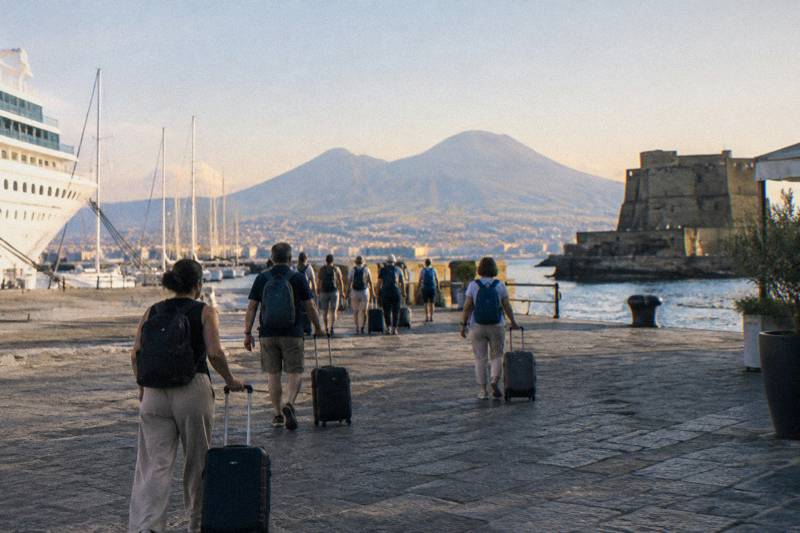
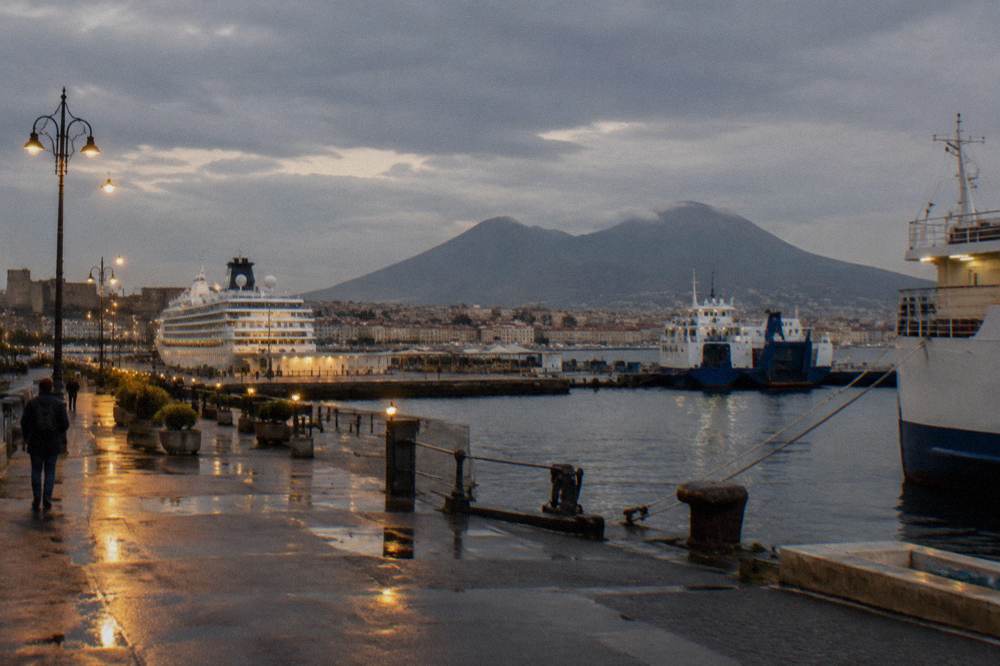
The two volcanoes sit at opposite ends of Italy and opposite ends of almost every comparison travellers make. Etna dominates the skyline of Catania and the whole east coast of Sicily, a snow-capped mass in winter that generates its own weather. Vesuvius, by contrast, rises quietly between Naples and the sea, its summit hidden from the city streets by its own shoulders, and its fame rests not on size but on the destruction it caused in AD 79, traditionally dated August 24, though a 2018 find at Pompeii points to October.
Size, though, is only the opening question. What follows is a fuller comparison: how tall each volcano really is, how their shapes differ, which is more active, which threatens more people, and which one is easier to stand on. For the Vesuvius half of the comparison, every figure below comes from INGV, the Osservatorio Vesuviano or the Vesuvius National Park's own published rules. For Etna, no figure in this site's verified research pool carries official confirmation, so Etna is described in general terms rather than with numbers, and the honest way to settle exact Etna figures is the INGV's Etna observatory pages.
Anyone whose interest in the comparison ends with wanting to stand on the smaller volcano can start with Mount Vesuvius Tours, where the full bookable roster covers crater entry, transfers and combined days with Pompeii.
Which Volcano Is Bigger, Etna Or Vesuvius?
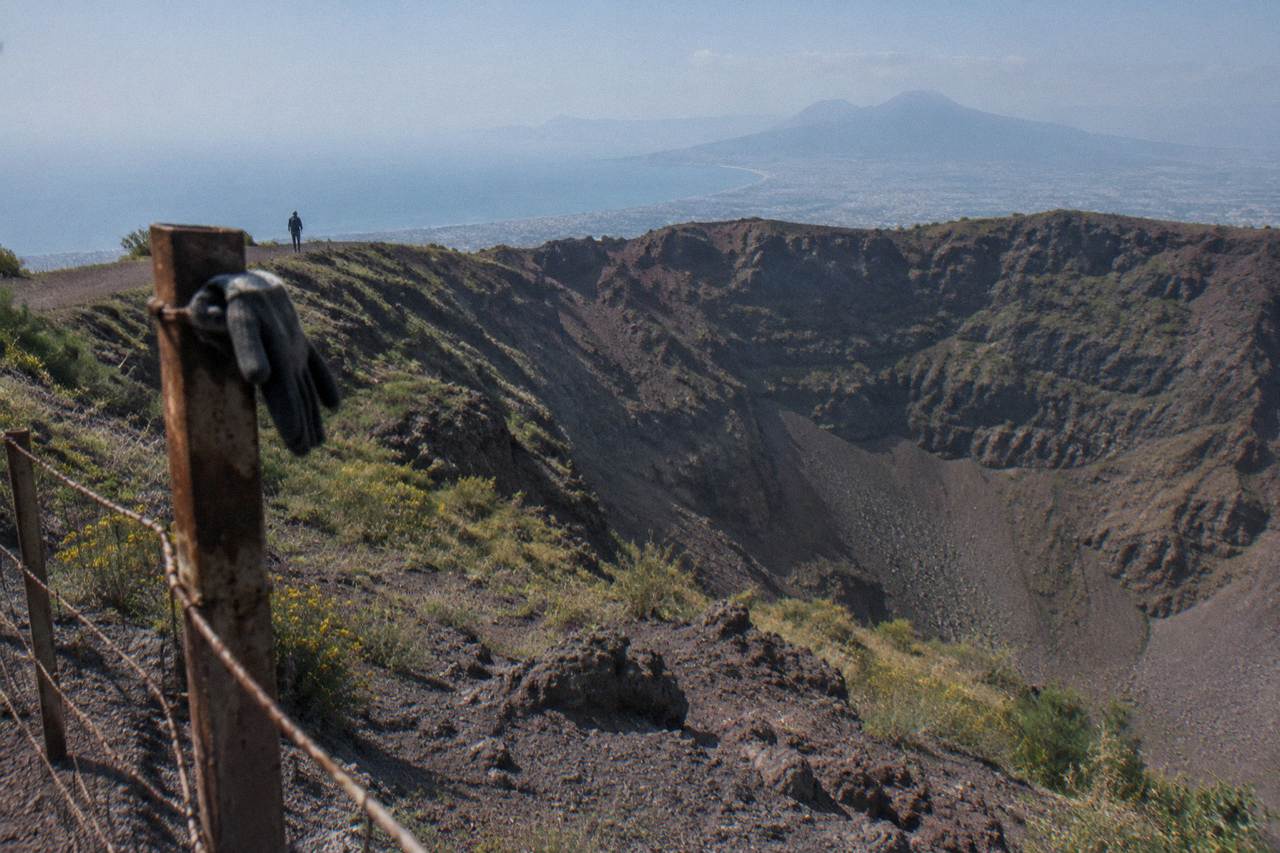
Etna is bigger on every measure that matters: height, footprint and volume. Vesuvius is a single steep cone peaking at 1,281 m, per INGV's Somma-Vesuvius page, with a crater whose maximum diameter the park measures at 580 m. Etna spreads across a huge swathe of Sicily with multiple summit craters and a base hundreds of kilometres around, and its summit is commonly placed above 3,000 m.
The difference in character follows from the difference in scale. Etna is a stratovolcano built over roughly half a million years of eruptions, with multiple summit craters, flank vents opening at different altitudes and lava flows that have reached the sea in historical times. Vesuvius is younger in its present form and far more contained: an active cone inside the collapsed rim of an older volcano, Monte Somma, which is why geologists often write about Somma-Vesuvius as a single complex rather than Vesuvius alone. The public crater trail, Trail 5 or the Gran Cono, ends at 1,175 m, short of the true summit at 1,281 m, so visitors do not quite stand on the top.
To keep the verified half of the comparison honest, here is what the official sources state for Vesuvius side by side with the general standing of Etna.
| Measure | Vesuvius (verified) | Etna (general standing, no verified figure) |
|---|---|---|
| Height | 1,281 m, per INGV | Commonly described as above 3,000 m |
| Crater size | Elliptical, maximum diameter 580 m, per the park | Multiple active summit craters |
| Structure | Cone inside the older Somma rim | Vast stratovolcano with flank vents |
| Where visitors reach | Trail ends at 1,175 m; summit closed | Summit areas accessible by cable car and jeeps on the Sicilian side, subject to activity |
| Last eruption | March 1944, per INGV Osservatorio Vesuviano | Frequently active in recent years |
That table is the honest summary. Etna wins every line of it, and the reason is structural: Etna erupts often enough to keep growing, while Vesuvius has been quiet since 1944 and erosion slowly works the cone down between eruptions.
For readers whose curiosity about the smaller volcano is practical rather than geological, the three simplest ways onto it are the skip-line ticket with multilingual audio guide from €22 per person, the direct transfer with guaranteed entry from €35.10 per person, and the bus transfer from Naples or Pompeii with the park entry fee included, also from €35.10 per person.
Which Volcano Is More Active Today?
Vesuvius is the quieter of the two by a long distance. The Osservatorio Vesuviano publishes the alert level for Vesuvius as green, meaning monitoring parameters sit within base values, and its September 2026 bulletin recorded 121 small earthquakes with a maximum magnitude of 1.7. Etna, in general terms, erupts far more often, with frequent summit and flank activity in recent years, though no specific Etna figure is verified on this site.
The green alert level deserves a plain explanation, because visitors often misread it. Green does not mean asleep; it means ordinary. Vesuvius is an active volcano in a phase of quiescence, with fumaroles, the steam vents, still working on the inner crater walls, which the park notes as a sign the volcano remains alive beneath the surface. The monitoring network run by the Osservatorio Vesuviano, the oldest volcano observatory in the world, tracks seismicity, ground deformation, gas chemistry and temperatures continuously, and publishes a monthly bulletin so the level is never a guess. Readers who want the current status can check the official alert level page directly.
Etna's restlessness is of a different order. It is one of the world's most consistently active volcanoes, and its frequent eruptions, lava fountains and ash plumes that occasionally close Catania's airport are part of ordinary Sicilian news coverage. That activity is exactly why Etna keeps growing: each eruption adds material, and the summit height has historically shifted by tens of metres in a single eruptive episode. Vesuvius, silent since 1944, has held its 1,281 m figure steady enough for INGV to publish it as a single clean number.
For the deeper background on the Neapolitan side of the comparison, the guide Is Mount Vesuvius Active unpacks what quiescence actually means, and the post Would Naples Be Destroyed If Vesuvius Erupted? works through the civil-protection planning in detail.
Which Volcano Threatens More People?
Vesuvius threatens far more people per metre of its height. The red zone around Vesuvius, as defined by Regione Campania's civil protection department, covers about 700,000 residents across 25 municipalities in the provinces of Naples and Salerno, and the wider metropolitan exposure runs into the millions. Etna's slopes are far more sparsely settled, and its eruptions, however frequent, rarely reach populated centres.
This is the point where the size comparison flips. Etna is the bigger volcano, but its bulk rises over farmland, forest and small hill towns. Vesuvius is the smaller volcano, but it stands inside one of the most densely populated regions in Europe, with Naples itself, roughly a million people, close enough that the city wraps around the volcano's western and northern base. The 1944 eruption, the most recent, destroyed villages in San Sebastiano al Vesuvio and neighbouring towns; the AD 79 eruption buried Pompeii and Herculaneum outright. The historical record behind that event is covered in How Many People Died When Mount Vesuvius Erupted?.
| Risk factor | Vesuvius | Etna |
|---|---|---|
| Immediate red-zone population | About 700,000 across 25 municipalities | Far smaller settlements on the flanks |
| Nearby major city | Naples, on the volcano's doorstep | Catania, on the coast at a greater relative distance |
| Recent eruption damage | 1944: lava reached towns on 21 March | Frequent activity, mostly away from population |
| Eruption style concern | Explosive, as in AD 79, or effusive as in 1944 | Predominantly effusive lava flows |
| Monitoring body | INGV Osservatorio Vesuviano | INGV Etna Observatory |
The evacuation planning that follows from that exposure is the real difference between the two mountains. The regional authority's red zone definition sets out the 25 municipalities and the resident count, and the whole system of alert levels and monthly bulletins exists to give that population as much warning as physics allows. Etna's hazards, by contrast, are managed mostly through access restrictions on the mountain itself: when activity rises, the summit closes, and Catania copes with ash.
None of this makes Vesuvius dangerous to visit. The green level, the guided-access rule above 1,000 m and the automatic closure of trail and ticket office on any orange weather alert or higher, with automatic refunds for slots inside a closure, make the crater path one of the most tightly controlled volcano visits anywhere. The trade-off between the two mountains is simply that Etna shows its power more often, while Vesuvius stores it.
How Do The Two Volcanoes Compare In Shape?
Vesuvius is a single steep cone with one large summit crater, 580 m across at its widest, sitting inside the broken rim of the older Monte Somma. Etna is an enormous shield-like stratovolcano with several summit craters, a huge radial drainage of lava channels and flanks that slope gently for tens of kilometres. In short: Vesuvius looks like a textbook volcano, Etna looks like a landscape.
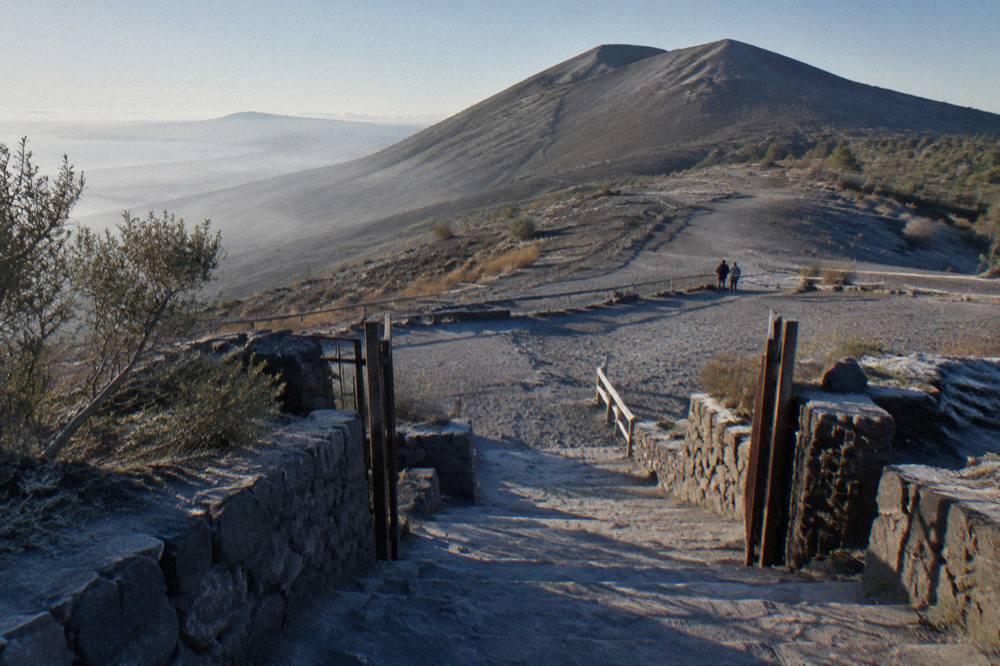
The Gran Cono of Vesuvius earns its name: the great cone is what a child draws when asked to draw a volcano. The trail to the crater, 4,010 m round trip with 2 h 30 of walking at officially low difficulty, climbs ash and loose rock from the Quota 1000 plaza to a turnaround at 1,170 m, where the rim opens onto the elliptical crater with its fumaroles steaming on the inner walls. The upper rim route is closed to the public, reserved for researchers, so the walk everyone takes is the same walk: up one side, along a stretch of rim, and back. The park's Gran Cono page sets out the trail numbers, hours and ticket rules.
Etna cannot be experienced in one walk. Its flanks hold whole vineyard regions, ski areas, lava fields from eruptions of the last century that are still bare, and forests that have reclaimed older flows. Where Vesuvius has 11 numbered trails inside a small national park, Etna is a sprawling massif whose roads alone cover distances longer than the entire circumference of Vesuvius. The two experiences are not substitutes: standing on Vesuvius is standing on one dramatic edge above the Bay of Naples; visiting Etna is entering a volcanic region.
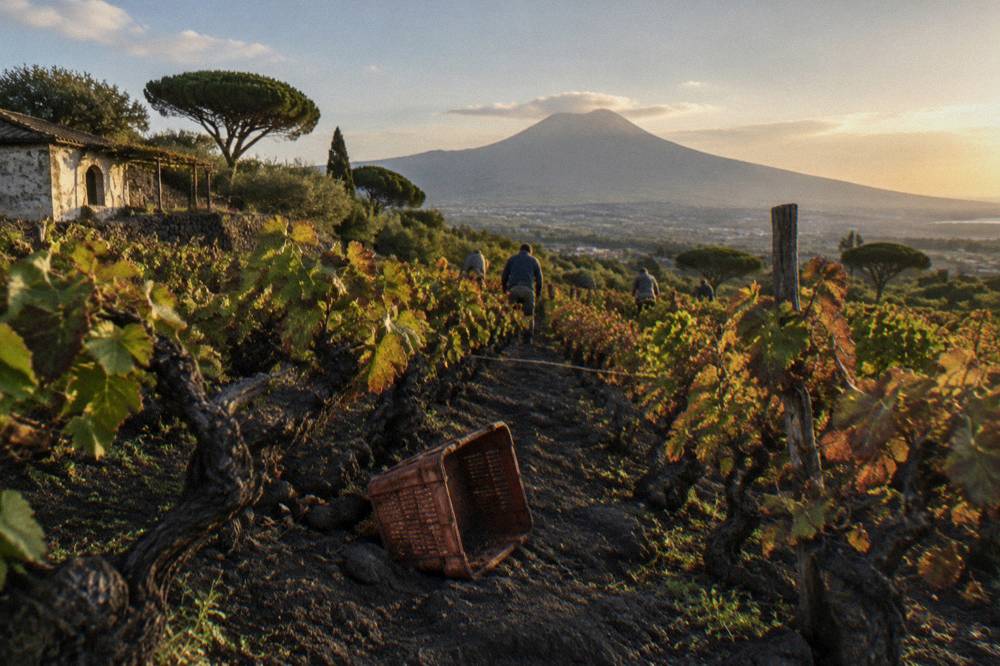
The shape difference also explains the wine. Lacryma Christi DOC grows in 15 municipalities on the Vesuvius slopes, on soils built from centuries of ash, and a vineyard lunch is a natural pairing with a crater morning. Etna has its own celebrated wine sector on the northern flank, another sign that both volcanoes are far more fertile than their reputations suggest.
Which Volcano Is Easier To Visit From A Big City?
Vesuvius is dramatically easier. It sits about 9 km from central Naples, with a Circumvesuviana rail line to Ercolano Scavi, an EAV bus from Pompeii and dozens of bookable transfers and tours from Naples, Pompeii, Sorrento, Rome and the cruise port. Etna requires a full day from Catania or Taormina and far more travel time to reach the usable altitude.
The access gap is where the size comparison becomes a planning decision. Vesuvius can be a half-day: the skip-line ticket with a multilingual audio guide runs from €22 per person with a 2-hour footprint, and the bus transfer from Pompeii or Naples with park entry included starts at €35.10 per person, rated 4.3 across 1,923 reviews. The same journey done as a guided half-day from Naples, the Mount Vesuvius Tour with Ticket from Naples, runs 4 hours from €41 per person with hotel pickup, 4.5 from 596 reviews. One review on the transfer product, from Mia in the United Kingdom, captures the appeal: "Was great and being able to explore and walk up in our own time was amazing!"
Etna rewards commitment. Its base towns are an hour or more from Catania, the summit zones need a cable car and jeep combination booked as an excursion, and activity levels can close the upper mountain at short notice. A traveller pairing both volcanoes into one Italian trip should budget a relaxed day for Vesuvius and Pompeii together, and a full standalone day for Etna at minimum.
| Option | Format | Duration | From price | Rating and pool |
|---|---|---|---|---|
| Vesuvius skip-line ticket, multilingual audio guide | Entry plus guided crater visit | 2 hours | €22 per person | 4.4 from 35 reviews, a small pool |
| Bus transfer with park entry fee | Transfer plus entry, self-guided | 3 hours | €35.10 per person | 4.3 across 1,923 reviews |
| Direct transfer with entry tickets | Transfer, guaranteed entry | 3 hours | €35.10 per person | 4.4 across 1,785 reviews |
| Skip-line ticket and digital guide | Entry plus digital guide | 2.5 hours to 1 day | €16 per person | 4.2 across 3,756 reviews |
| Half-day from Ercolano, roundtrip bus | Entry plus roundtrip bus | 3 hours | €36 per person | 4.2 across 1,308 reviews |
The featured skip-line ticket with multilingual audio guide suits the comparison reader especially well: it is the cheapest way onto the crater itself, and the small review pool is named plainly here, 35 reviews, rather than dressed up as anything more.
Two paragraphs of reassurance sit between that box and the next sales element, because a buying decision deserves context more than repetition. Every product above flags free cancellation on the listing, and crater entry itself is governed by the park's rules rather than any operator's: tickets are sold online by time slot, 50 per 10-minute slot released 30 days ahead, with a last-minute release of 10 named tickets per slot half an hour before each entry time. The trail and box office close automatically on days with an orange weather alert or higher, with automatic refunds for slots inside a closure. Those mechanics are the same whether entry is bought alone or bundled with a transfer.
Can You See Both Volcanoes On One Trip To Italy?
Not easily, and not in one day. Vesuvius and Etna are roughly 400 km apart at the opposite ends of the Italian peninsula, connected by flights between Naples and Catania or a long drive and ferry combination. A realistic pairing is Vesuvius and Pompeii early in a Naples-based stay, then two or three days in eastern Sicily for Etna, treating the two as separate excursions on one itinerary.
The pairing works best when each volcano gets its natural partner. Vesuvius pairs with Pompeii, the city it destroyed in AD 79; the two are 30 minutes apart by road, and combined days from Naples from €53.25 per person, with a pizza lunch included, are the most-reviewed products in this site's entire roster, one of them rated 4.8 across 9,744 reviews. A guest named Dan from the United Kingdom summed that day up on the listing: "A great trip for anyone wanting to visit Pompei and Mount Vesuvius in one day. Guides were very passionate and knowledgeable, overall experience was first class, would definitely recommend."
Etna pairs instead with Taormina, Catania's food markets and the Baroque towns of the Val di Noto. Trying to bolt it onto a Campania trip as a day excursion does the mountain, and the traveller, no favours. The honest itinerary is a week split between the two souths of Italy: Naples and Vesuvius first, then a flight south to Sicily for the big one.
Which Volcano Should You Climb First?
Climb Vesuvius first. It is shorter, cheaper, closer to a major city and tightly organised, with a two-and-a-half-hour round trip on a trail of officially low difficulty and a mandatory volcanological guide above 1,000 m. Etna's altitude demands fitness, weather awareness and booking around variable summit access. Vesuvius is the volcano you can decide to climb tomorrow morning; Etna is the one you plan around.
The practical case for Vesuvius first is written in the numbers that are actually verified. The trail is 4,010 m round trip, 2 h 30 of walking, starting at the Quota 1000 plaza and turning around at 1,170 m, which is a morning, not an expedition. Entry costs €10 under the park's ticketing rules, and the park's authorised online seller shows €11.68, with reduced €8 (€9.55 online) for under-25s and residents of the 13 park municipalities. Group tours may not exceed 2 hours on the shortest route, a rule fixed in the park's protocol, so nothing on Vesuvius overstays its welcome.
Etna at altitude is a different proposition: noticeably thin air on the upper slopes, real cold even beside a summer coast, and closures when the summit stirs. Starting with Vesuvius also builds the vocabulary for Etna: fumaroles, crater rims, lava fields. The smaller mountain is the classroom. Nicola from the United Kingdom, reviewing the bus transfer from Pompeii, described the simplicity well: "Easy way to get from Pompeii to Vesuvius and back again. Well organised and they will drop you back at Pompeii station or the original meeting point."
Whichever transfer route fits, the direct transfer with guaranteed entry from €35.10 per person, rated 4.4 across 1,785 reviews, is the popular middle path between the bare ticket and a fully guided day.
A note on seasons closes the planning picture, because both volcanoes are altitude mountains wearing coastal addresses. The modelled 1991-2020 climate average puts summit-level highs on Vesuvius about 6 to 7 C below Naples in every month, with November the wettest summit month and July the driest. Crater access hours shrink with the daylight: 09:00 to 15:00 in January, February, November and December, stretching to 09:00 to 18:00 in July and August, and the visit must end within one hour of the last access. Etna, higher still, swings harder between coastal heat and summit cold, and its winter access is a ski-resort question rather than a hiking one.
Common Questions About Vesuvius And Etna
Which Is Bigger, Vesuvius Or Etna?
Etna is bigger by a wide margin. Vesuvius stands 1,281 m tall per INGV with a crater up to 580 m across, while Etna is broadly described as above 3,000 m and spreads across a vastly larger footprint of eastern Sicily.
Which Volcano Is Bigger, Etna Or Vesuvius?
Etna. It is taller, wider and more voluminous on every general measure, and it keeps growing through frequent eruptions, while Vesuvius has been quiet since March 1944.
Is Vesuvius more dangerous than Etna?
For people, arguably yes, despite its smaller size. The Vesuvius red zone covers about 700,000 residents across 25 municipalities near Naples, whereas Etna's flanks are far more sparsely populated and its eruptions rarely reach towns.
When did Vesuvius last erupt?
March 1944. Activity began on 18 March with an explosion, intensified on 19 March, and lava reached the surrounding towns on 21 March, per the INGV Osservatorio Vesuviano.
Can you visit Vesuvius without a guide?
Only up to the boundary the park sets. Every visitor above 1,000 m on the Gran Cono trail is accompanied by the park's volcanological guides under the access protocol, so all crater visits are accompanied, even with a bare skip-line ticket.
How long does it take to climb Vesuvius?
About 2 h 30 for the full 4,010 m round trip on a trail of officially low difficulty, starting at the Quota 1000 plaza and turning around at 1,170 m, just below the 1,281 m summit.