Is Mount Vesuvius Active
Vesuvius last erupted in March 1944 and has been quiet since, but volcanologists classify it as active and permanently monitored. The observatory publishes its status every month, and the current reading is green. Here is what that means in plain terms, and what it means for your visit.
Short answer
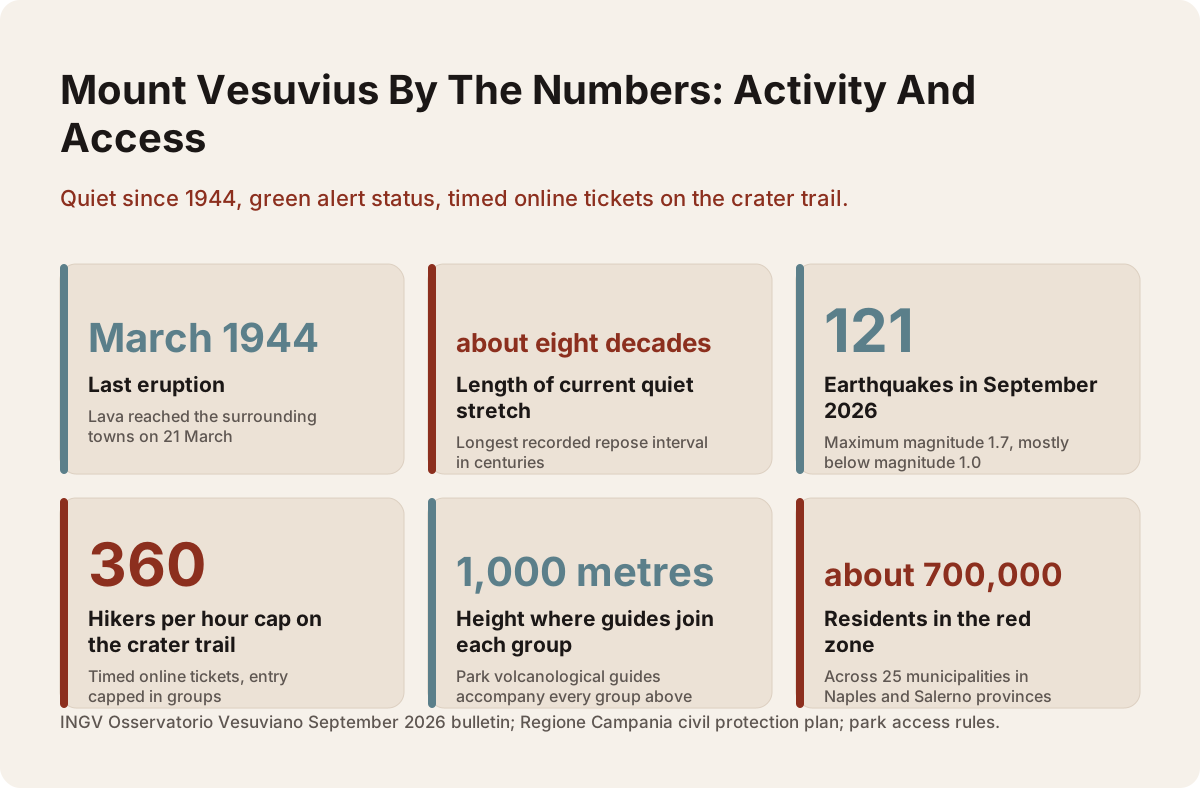
Yes, Mount Vesuvius is active, but in a quiescent, or quiet, phase. It last erupted in March 1944, and INGV, Italy's National Institute of Geophysics and Volcanology, keeps it under continuous watch. The published alert level is green, meaning monitoring parameters sit within base values, and the September 2026 bulletin recorded 121 small earthquakes.
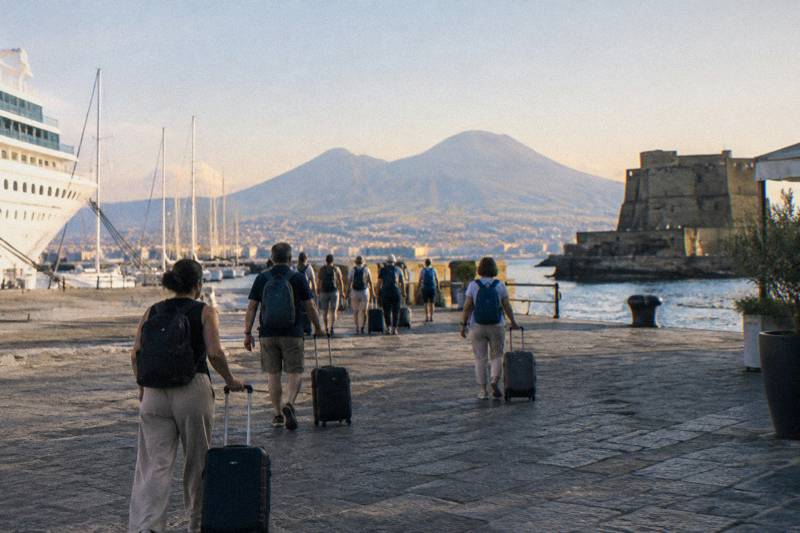
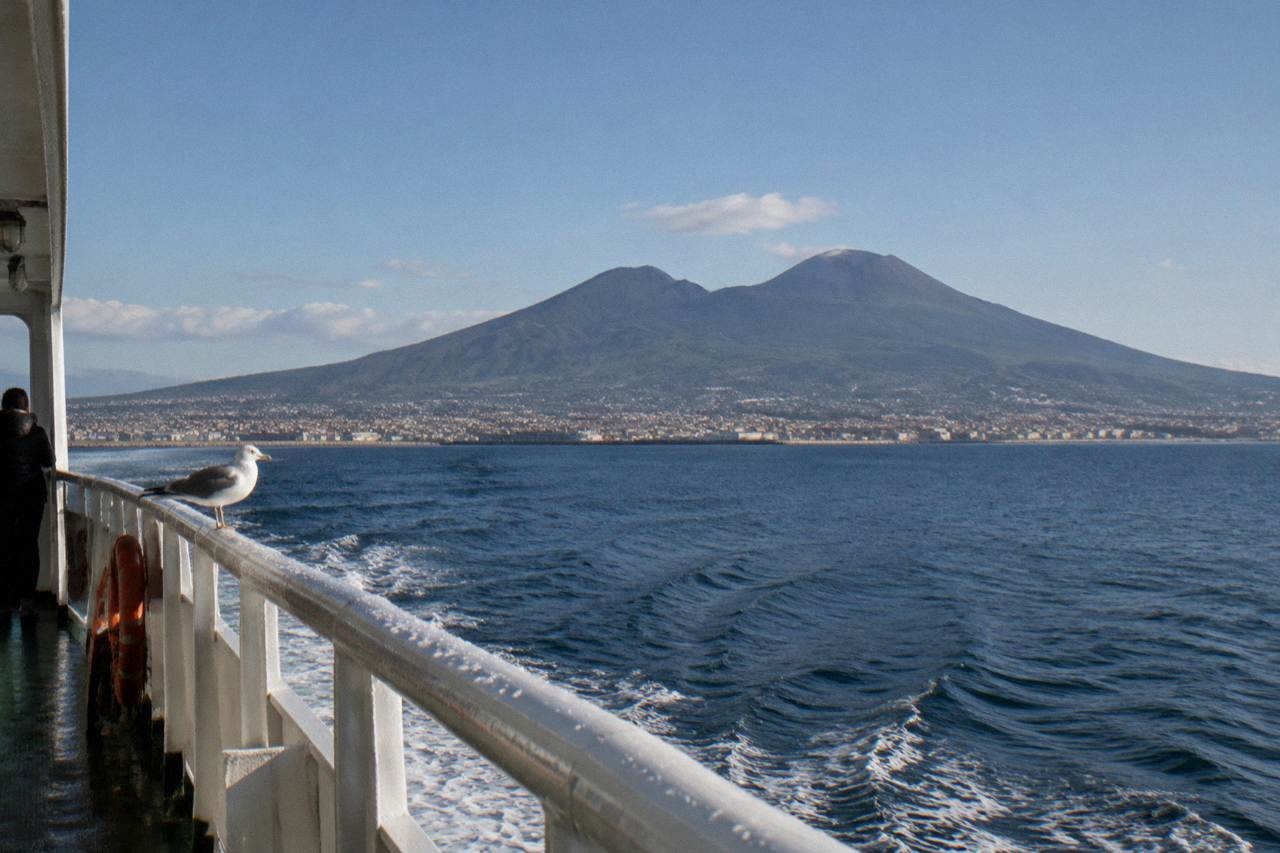
The charcoal-grey cone that dominates the Bay of Naples is a working volcano, not a museum piece. Fumaroles still vent gas on the inner crater walls, instruments on the summit ridge transmit readings around the clock, and a permanent observatory has watched the mountain for generations. At the same time, nobody in Naples goes about their day under a cloud of ash. Vesuvius has been quiet since 1944, and the gap between "active" and "erupting" is exactly what this guide untangles.
The short answer is reassuring but precise: Vesuvius is an active volcano in a quiescent phase. It erupted as recently as March 1944, within living memory, and the scientific consensus is that it will erupt again. What separates it from volcanoes that make headlines is the monitoring density. INGV's Osservatorio Vesuviano publishes a monthly bulletin, and its current status page shows a green alert level, with parameters within base values. For travellers, that translates into a simple planning reality: the volcano can be visited under strict park rules, with tickets sold by time slot and every visitor accompanied above 1,000 metres by the park's volcanological guides.
Is Mount Vesuvius Active Or Dormant?
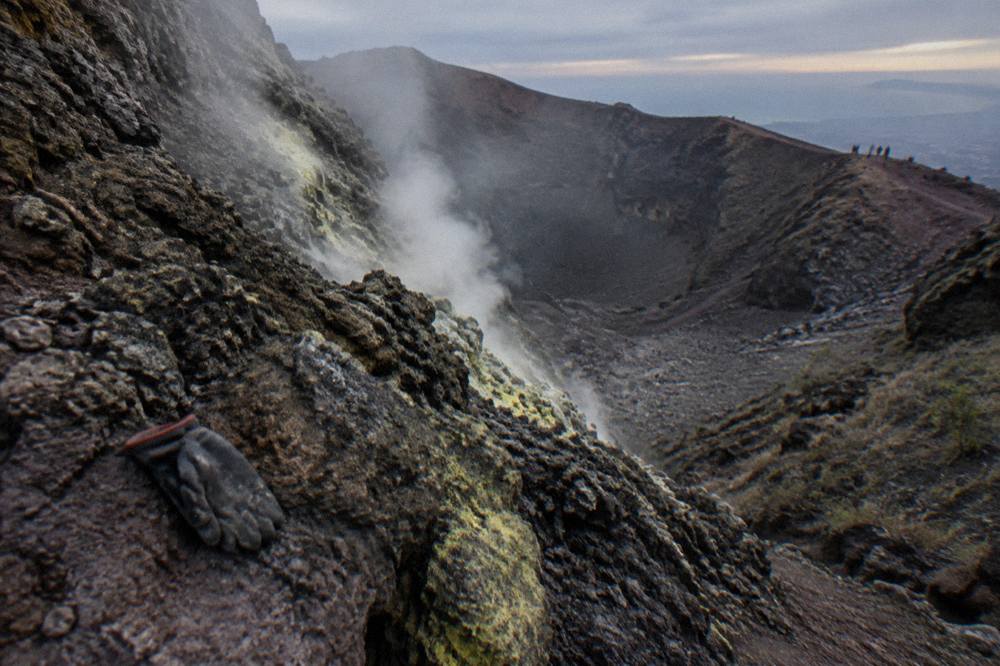
Yes, Vesuvius is classified as an active volcano, currently in a quiescent phase, which means quiet rather than extinct, and that classification comes directly from the park's own description of the volcano as still active albeit in a phase of quiescence. The distinction matters. An extinct volcano has no eruptive future; a quiescent one does, and Vesuvius erupted as recently as March 1944, when lava reached the surrounding towns on 21 March of that year. Fumaroles still release gas on the inner crater walls today, a visible sign the system is not dead, and INGV, the National Institute of Geophysics and Volcanology, treats it as one of the most closely studied volcanoes on Earth.
The word volcanologists actually use is quiescent, from the Latin for resting. Vesuvius sits above a persistent magma system, and the gas escaping through the crater walls confirms a live connection to depth. The park's own trail page describes the volcano as still active, albeit in a phase of quiescence, which is the most compact honest summary available. Nothing about the word active implies an imminent eruption; it implies a system that must be watched indefinitely, and it is.
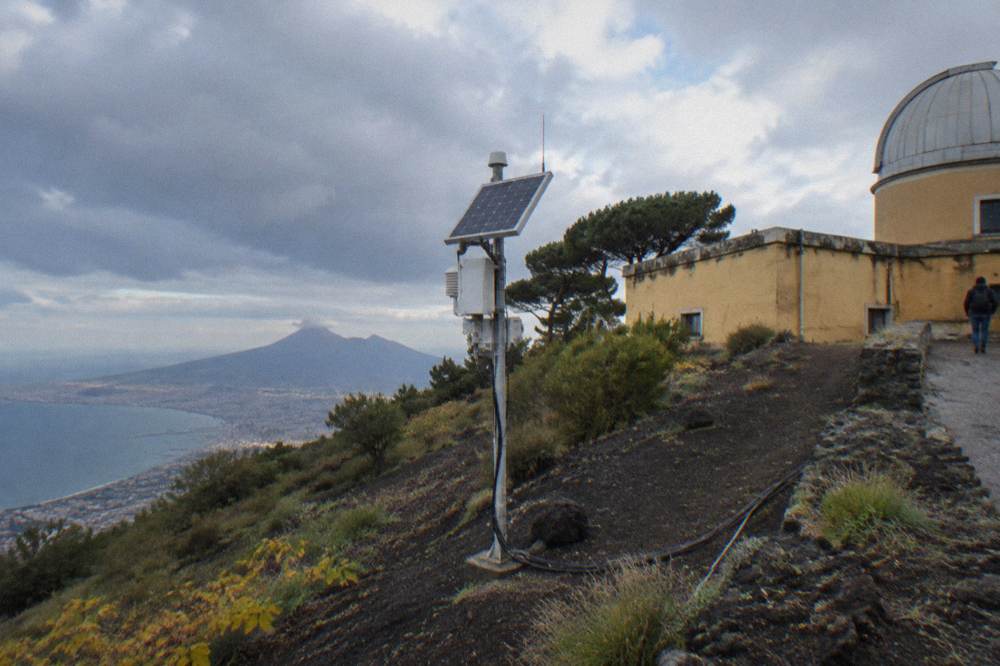
That watching is constant. Seismometers, GPS stations, thermal cameras and gas sensors ring the summit and flanks, feeding data to the Osservatorio Vesuviano in Naples, one of the world's longest-standing volcanology observatories. When the September 2026 bulletin recorded 121 small earthquakes with a maximum magnitude of 1.7, that was not an alarm, it was the instrument array doing its job on a volcano whose baseline includes a steady whisper of tiny seismic events concentrated near the crater at shallow depth.
For visitors, the practical consequence is that access is engineered around a live system rather than a dead hill. The crater trail, the Gran Cono, runs on timed online tickets, capped at 360 hikers per hour in groups, and every group above 1,000 metres is accompanied by the park's volcanological guides. Those rules are not bureaucratic decoration. They are the reason a walking route across the shoulder of an active volcano is considered routine.
What Does The Green Alert Level Actually Mean?
The green alert level is the lowest of Italy's volcanic alert levels, and it means all monitoring parameters are within their base values. That makes green the volcano's ordinary state rather than a special announcement, so a green designation simply reflects normal conditions and not any change in the volcano's behavior. INGV's Osservatorio Vesuviano publishes the level on its current status page, and the reading for Vesuvius is green: ordinary monitoring, no magmatic deformation detected, and a long-term decline in hydrothermal activity in the crater. Levels above green, yellow and orange, would trigger progressively stronger civil protection measures, from intensified surveillance up to evacuation planning for the red zone. Green is the baseline, and it is the published state.
Reading the bulletin itself is more informative than the single colour. The September 2026 bulletin, the latest monthly summary on the status page, recorded 121 earthquakes, of which 113 were below magnitude 1.0 or undetermined, with a maximum magnitude of 1.7. Those numbers describe a volcano producing micro-seismicity, tiny fractures settling under thermal and gravitational stress, not magma on the move. Geodetic data show no significant ground deformation, and fumarole temperatures are described as stationary.
It helps to know what would change the colour. A move to yellow would mean measurable disequilibrium, such as sustained ground uplift or changing gas chemistry, and would prompt intensified monitoring and civil protection review. Orange would mean an escalation toward a probable eruption, with evacuation planning for the red zone activated. None of those thresholds has been approached at Vesuvius in the current published record, and the monthly bulletins describe a multi-year declining trend in hydrothermal activity inside the crater.
You can check the reading yourself before travelling: the observatory publishes the alert level and its bulletins at its current status page, in Italian with clear colour graphics. As a rule of thumb for planning, treat green as the default assumption for any trip, and check the page if you want the freshest number. The park's access rules, by contrast, react to weather rather than volcanism: the crater trail and its ticket office close automatically on any day with an orange regional weather alert or higher, with automatic refunds for affected slots.
When Did Mount Vesuvius Last Erupt?
Vesuvius last erupted in March 1944, and the sequence is documented in detail by INGV's Osservatorio Vesuviano: the eruption began on 18 March with an explosion that partly destroyed the intracrater scoria cone, intensified on 19 March, and sent lava into the surrounding towns on 21 March. That eruption is the reason the volcano's quiet stretch is only about eight decades long, a blink in volcanic time, and well within living memory of older residents on the slopes, which is precisely why the monitoring apparatus around the mountain exists at its current scale.
The 1944 event was a modest eruption by Vesuvian standards. It damaged villages on the northern slopes, but it was small next to the Plinian catastrophe of AD 79 that buried Pompeii and Herculaneum. What followed 1944 is the longest recorded repose interval for the volcano in centuries, and volcanologists read it two ways: as relief, and as the reason monitoring budgets have never been cut. A long quiet period raises the stakes of the next awakening, not the probability of it on any given day.
The historical pattern is worth knowing because it explains the institutional setup around the mountain. The towns on the volcano's flanks grew up alongside centuries of intermittent activity, and today those same towns sit inside a defined red zone of about 700,000 residents across 25 municipalities in Naples and Salerno provinces, per Regione Campania's civil protection plan, with evacuation planning maintained at regional level, documented on the regional civil protection page.
If the deep history draws you, the site carries a full companion piece on When Mount Vesuvius Last Erupted, and for the event that made the volcano world famous, The 79 AD Eruption Of Mount Vesuvius covers the date debate: the eruption is traditionally dated 24 August, though a 2018 charcoal graffito find at Pompeii points to October. INGV's own page on the event, the 1944 eruption, carries the primary narrative in Italian and English.
Who Watches Vesuvius And What Do They Measure?
The Osservatorio Vesuviano, part of the INGV, watches Vesuvius continuously, and what it measures is the volcano's seismic activity, ground deformation, geochemical signals and thermal changes, gathered through dedicated monitoring networks and condensed into a monthly bulletin that summarises what every system records. Its instrumentation on Vesuvius is among the densest anywhere: seismometers detect the smallest earthquakes, GPS and satellite radar track ground deformation to millimetre scale, and gas and temperature sensors sample the crater's fumaroles. Each network answers a different question, their synthesis becomes the alert level, currently green, and the whole record sits in public view on INGV's status page for anyone to read.
Seismicity tells the observatory where rock is fracturing; the September 2026 bulletin located most events in the crater area at depths under one kilometre, consistent with shallow hydrothermal noise rather than magma ascent. Deformation data answer whether the ground is swelling, which would signal new magma arriving at depth; the published finding is no significant deformation. Geochemistry tracks carbon dioxide and other gases, and thermal data track fumarole temperatures, both described as stable or slowly declining inside a multi-year trend.
| Monitoring network | What it measures | What it would show before unrest | Latest published reading for Vesuvius |
|---|---|---|---|
| Seismic | Earthquake count, magnitude, depth | Swarms of deeper, stronger events | 121 events in September 2026, max magnitude 1.7, mostly shallow |
| Geodetic | Ground deformation via GPS and radar | Sustained uplift or inflation | No significant deformation reported |
| Geochemical | Gas composition and flux from fumaroles | Rising CO2 or changed gas ratios | Long-term decline in hydrothermal activity |
| Thermal | Fumarole temperatures | Warming trend in vent gases | Described as stationary |
| Overall alert | Synthesis of all networks | Level raised to yellow or orange | Green, parameters within base values |
The institutional arrangement matters for a visitor's peace of mind: no single sensor decides anything. A colour change requires convergence across networks and a formal review, which is why false alarms are effectively absent and why a routine figure like 121 tiny earthquakes coexists with a green level. The same institutions, INGV and the park authority, cooperate on the trail protocol, so the volcanological guides who accompany every group on the crater path operate inside the monitoring framework rather than apart from it.
Could Vesuvius Erupt Again?
Yes, Vesuvius is expected to erupt again someday, and volcanologists consider another eruption a question of when rather than if. However, there is currently no sign that an eruption is approaching, and this type of volcano typically gives measurable warning signs first, which the monitoring networks described above are designed to detect. The magma system beneath the mountain is still present, evidenced by the fumaroles and the shallow micro-seismicity, and the long repose since 1944 does not close the system's life cycle. What separates the future eruption from a surprise is the monitoring: ground deformation and gas changes of the kind the instruments are built to catch typically develop over weeks to years before an eruption of this volcano's style.
That is the honest, non-alarmist version of the answer, and it is the version the monitoring institutions themselves publish. A green level is a statement that nothing measurable is trending toward eruption. It is not a promise about the next decade, and it is not meant to be; it is a description of the instrument record, refreshed monthly. The record at Vesuvius since instruments were installed shows a volcano whose unrest, when it comes, announces itself in the data long before it announces itself in the sky.
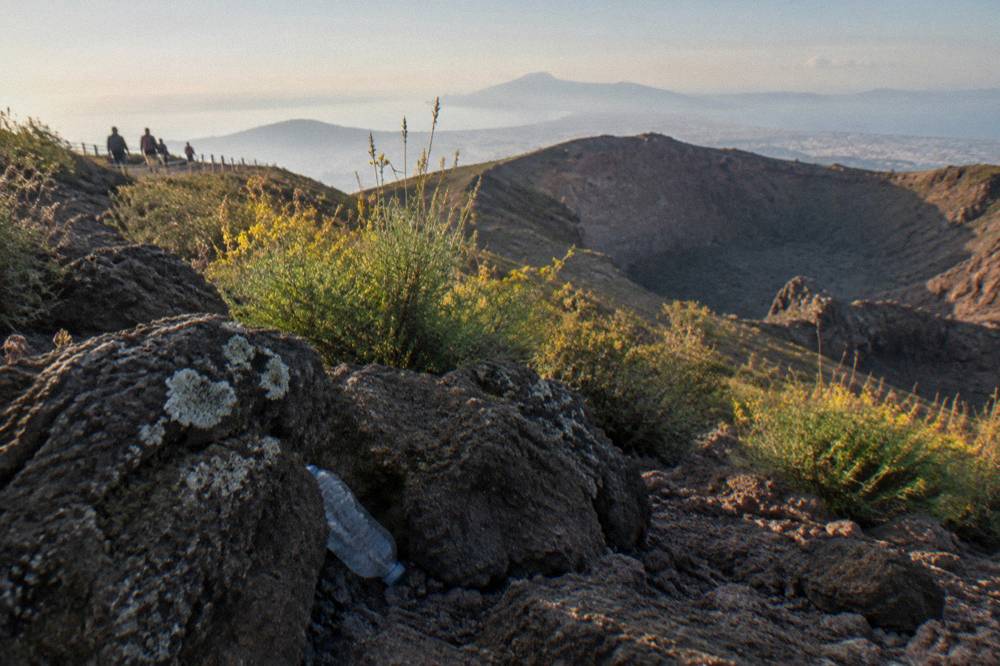
For context on scale, the summit stands at 1,281 metres per INGV's Somma-Vesuvius page, and the crater is an ellipse with a maximum diameter of 580 metres, its present shape carved by the 1944 eruption. The upper rim route stays closed to everyone but researchers, precisely because the crater's inner walls, with their active fumaroles, are the part of the volcano where conditions are least predictable. Public access is confined to the designated Gran Cono trail below the rim.
If the eruption-risk question is the one that actually worries you, the site's companion piece Would Naples Be Destroyed If Vesuvius Erupted? works through the red zone, the evacuation plan and what modern monitoring would mean for warning time. The short version: an eruption would be a regional civil protection event, not a surprise, and the city's exposure is planned for in detail that most visitors never see.
Is It Safe To Hike On An Active Volcano?
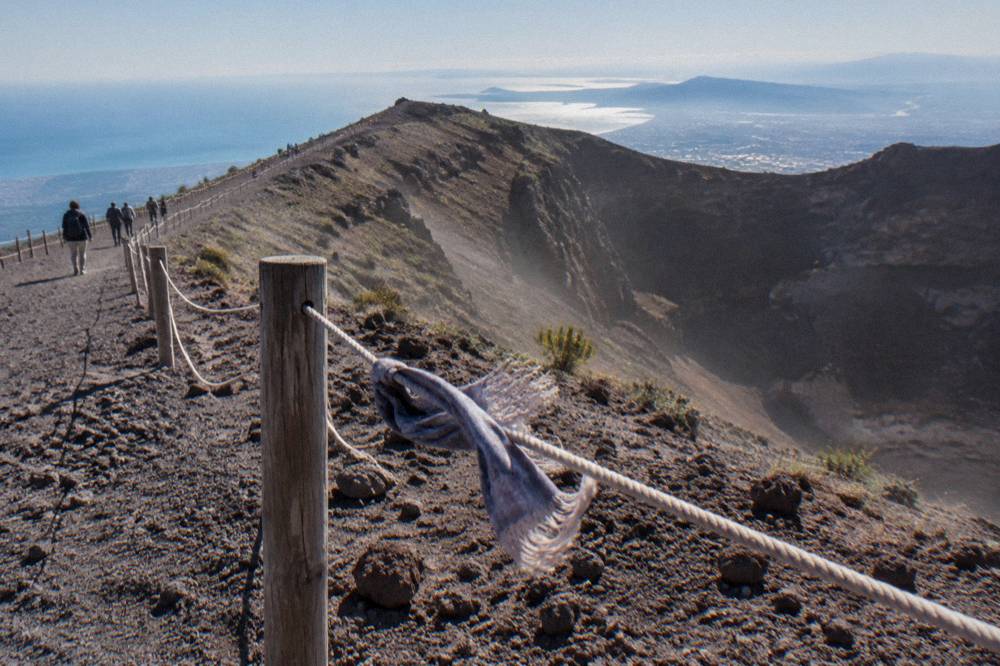
Yes, hiking Vesuvius is considered safe under the park's access rules, because the trail is designed around a monitored volcano rather than in spite of it. Rather than leaving visitors to chance, the park relies on three published controls, which together define when, where, and how hikers are allowed onto the mountain. Entry is sold only online in timed slots capped at 360 hikers per hour, every visitor above 1,000 metres is accompanied by the park's volcanological guides, and the trail and ticket office close automatically on any day with an orange regional weather alert or higher, with automatic refunds for slots inside a closure. Weather, not volcanism, is the realistic hazard on a Vesuvius hike.
The mandatory accompaniment surprises many first-time visitors. It is not a tour-guide upsell, it is Protocol Article 2 of the park's access rules: the Presidio Permanente Vulcano Vesuvio, the park's own volcanological guides, escorts each group, and walkers keep to the right side of the walkway. The trail itself is forgiving by mountain standards, 4,010 metres round trip, roughly two and a half hours, with an official difficulty rating of low, though the loose volcanic gravel underfoot rewards proper shoes, as guest reviews on the combo tours routinely note.
| Safety mechanism | The rule as published | What it means for you |
|---|---|---|
| Timed entry | 50 tickets per 10-minute slot, online only, released 30 days ahead | Book ahead in peak months; a last-minute pool of 10 tickets per slot releases 30 minutes before |
| Daily caps | 2,160 to 3,240 per day depending on month | Sold-out days happen; check the live listing of any tour before locking travel |
| Volcanological guides | Mandatory accompaniment above 1,000 m | Every crater walk is guided, even on a self-guided transfer ticket |
| Weather closure | Orange civil protection alert or higher closes trail and box office automatically | Refunds are automatic for slots inside a closure |
| Route limit | Trail tops out at 1,175 m; upper rim closed to the public | Visitors do not reach the 1,281 m summit or the fumarole walls |
Booking a guided product simply layers an expert on top of that framework. A tour such as the Vesuvius walk with a volcanological guide, a two-hour specialist-led crater visit from €129 per person rated 4.9 across a small pool of 15 reviews, turns the monitoring story into the walk itself, and you can Check availability once dates are firm. For a simple budget format from the same shelf, the easy Vesuvius transfer and entry tour runs from €35.10 per person, rated 4.3 across 244 reviews, and the all-inclusive Naples volcano and wine day bundles the crater, lunch and a Lacryma Christi tasting from €127.50 per person, rated 4.6 across 2,804 reviews.
Does An Active Volcano Change How The Tours Run?
It does: the crater protocol shapes every Vesuvius tour product, from transfer-only shuttles to archaeologist-led full days, because timed entry, daily caps and mandatory guiding apply to everyone equally, from a bare skip-line ticket to a premium signature day. No operator can skip the slot system or the park's guides, so what tour prices actually buy is transport, timing, expertise at the ruins and meals, layered on top of the same regulated crater access. That is why a €16 skip-line ticket and a €150 signature day both deliver the same trail under the same rules.
It also explains the price spread. A bare transfer with entry from Pompeii, such as the guided three-hour crater visit with transfer from €65 per person, rated 4.8 across 282 reviews, handles logistics and guiding. Full days from Naples that add Pompeii, lunch and a winery climb toward €115 to €150 per person, and the all-inclusive options that bundle the volcano with a Lacryma Christi tasting reach from €127.50. None of them can promise a different volcano experience at the rim itself, the protocol fixes that, so the honest comparison is everything around the crater.
| Tour type | What the listing bundles | Typical starting price (from the roster) | Who it suits |
|---|---|---|---|
| Ticket and digital guide | Skip-line crater entry, audio app | €16 per person | Independent travellers already near the mountain |
| Transfer with entry | Round-trip shuttle plus park entry | €35.10 to €49 per person | Visitors without a car, from Naples or Pompeii |
| Guided crater walk | Expert or volcanological guide plus transfer | €65 to €129 per person | Readers who want the science explained on the walk |
| Full-day volcano and ruins | Pompeii or Herculaneum, lunch, crater | €71 to €150 per person | First-time visitors on a one-day budget |
| Volcano and wine day | Crater plus Lacryma Christi tasting and lunch | €90 to €299 per person | Slow travellers pairing geology with the DOC slopes |
For this article's question the sweet spot is a guide-led format, because the activity of the volcano is the story a volcanological specialist tells best. Beyond the two specialist products in the selection band, a solid mid-format is the guided Vesuvius tour with transfer from Pompeii, three hours from €65 per person with a 4.8 rating across 282 reviews, which handles the timed-entry mechanics for you. Readers starting from Naples can also look at the Herculaneum and crater guided day, from €101.70 per person, rated 4.3 across 109 reviews, which pairs the buried city with the volcano that buried it. If you're still sorting out travel logistics, the primer on where the volcano sits and how to reach it covers the approach from both Naples and the Pompeii area.
How Do You Check The Volcano Status Before You Visit?
Before a Vesuvius trip, check two things: the observatory's alert level page, which gives the volcanic reading, and the tour's live listing, which shows the current schedule. The two answer different questions, and neither replaces the other, so plan to look at both before you set out for the volcano. The INGV Osservatorio Vesuviano publishes the alert level and monthly bulletin, currently green with 121 small earthquakes in the September 2026 report, while the operator's listing carries departure times, pickup points and the free-cancellation terms that matter to your booking. The park's trail status is the third input, and the homepage's This Season band tracks it alongside the season pages.
The distinction saves confusion. Travellers sometimes see a word like earthquakes in a bulletin and assume a visit is affected; in reality, a green level with shallow micro-seismicity is the volcano's normal signature, and access decisions are driven by weather alerts, not by magnitude 1.7 events that no hiker would ever feel. Conversely, a perfectly green volcano day can still close the trail if a regional weather alert reaches orange, and those closures are automatic with automatic refunds for the affected slots.
A practical pre-trip checklist takes five minutes. Read the alert level on the observatory status page, scan the tour listing for the current schedule and what entry is included, confirm your crater ticket or tour covers the timed slot, and check the season page for the month's access hours, since last entry shifts between 15:00 in the winter months and 18:00 in July and August. The site's month-by-month breakdown, Mount Vesuvius by month, carries the full table. Once your timing is sorted, the guide to how tall Mount Vesuvius actually is gives you a feel for the climb from the parking area up to the crater rim.
Why Does Vesuvius Being Active Make The Visit Better?
Because a monitored, quietly active volcano is a richer visit than a dead one: you walk a live system with gas venting on the crater walls, a guide whose job exists because of that activity, and a landscape of 1944 lava and ancient ash that no extinct hill could offer. The fumaroles you smell near the rim are the surface expression of the same deep system the observatory instruments track, and standing inside that story is the reason travellers choose Vesuvius over any ordinary mountain hike. The volcano's status is not fine print; it is the entire draw.
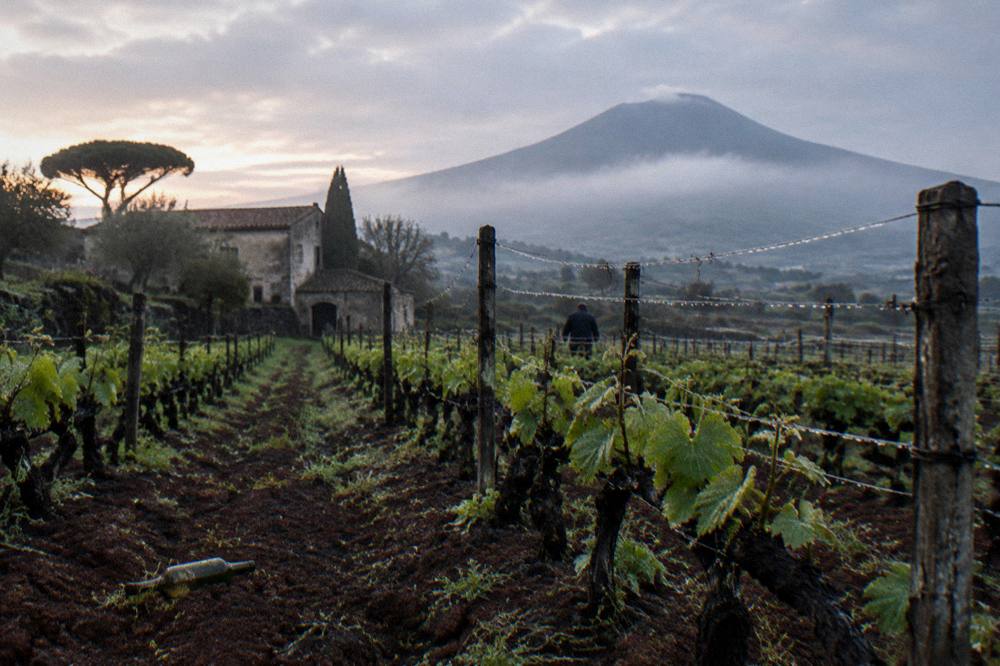
The vineyards make the point most vividly. The lower slopes grow Lacryma Christi DOC wines in volcanic soil, 15 municipalities inside the production area, with white blends built on Coda di Volpe and reds on Piedirosso, and the wine tours that climb from the crater to a winery lunch are, in effect, tasting the volcano's output twice: once as gas, once as grape. Geology, archaeology and agriculture on one cone are the full Vesuvius proposition, and all three exist because the volcano is alive.
This site, Mount Vesuvius Tours, exists to help you book that visit well: honest figures from the live listings, the park's actual rules, and the monitoring context that answers the safety question before it is asked. The volcano's activity is not the caveat on the trip, it is the trip.
Common Questions About Whether Mount Vesuvius Is Active
Is Mount Vesuvius active?
Yes. Vesuvius is an active volcano in a quiescent, or quiet, phase. It last erupted in March 1944, fumaroles still vent gas on the inner crater walls, and INGV monitors it continuously. The published alert level is green, meaning all parameters sit within base values.
Could Mount Vesuvius erupt again?
Volcanologists expect it to erupt again eventually, since the magma system is still present, but there is no current indication of an approaching eruption. The monitoring networks are designed to detect the ground deformation and gas changes that historically precede this type of eruption by weeks to years.
Is it safe to visit Vesuvius given it is active?
Yes, under the park's rules. Entry is by timed online ticket with daily caps, every visitor above 1,000 metres is accompanied by the park's volcanological guides, and the trail closes automatically on days with an orange regional weather alert or higher, with automatic refunds for slots inside a closure.
What is the current alert level for Vesuvius?
Green, the lowest level, with monitoring parameters within base values. The September 2026 bulletin recorded 121 small earthquakes with a maximum magnitude of 1.7, mostly below magnitude 1.0 and concentrated at shallow depth near the crater, which the observatory describes as ordinary background activity.
When did Vesuvius last erupt?
March 1944. The eruption began on 18 March with an explosion that partly destroyed the intracrater cone, intensified on 19 March, and lava reached the surrounding towns on 21 March, per INGV's Osservatorio Vesuviano.
Does an active status affect tours and tickets?
It shapes them. Timed slots, the 360 hikers per hour cap and mandatory volcanological guides apply to every visitor and every operator equally, so tour prices buy transport, expertise at the ruins and meals rather than different crater access. Weather alerts, not the volcano's activity, are the realistic cause of day-of closures.