How Many People Died When Mount Vesuvius Erupted?
No verified count exists for the AD 79 eruption of Mount Vesuvius. Here is what the evidence, the 1944 eruption and today's monitoring actually say.
The honest answer is that no reliable count exists, estimates vary widely across centuries of scholarship, no figure appears in the verified primary record for the AD 79 eruption, and this site prints no number rather than repeat one that cannot be sourced, while what can be stated with confidence is that the eruption buried at least two whole towns and that the last eruption, in 1944, is documented day by day.
The question is one of the most searched Vesuvius queries on the internet, and it is also one where the search results are weakest. Round numbers circulate freely, copied from page to page, each presented as settled fact. Trace any of them back and they dissolve: the ancient letters that describe the eruption describe clouds and darkness, not a body count, and the archaeological record preserves victims, not a census of the missing. For a volcano whose next eruption is a live planning question for around 700,000 people, the difference matters. If the volcano's future is what concerns you more than its past, our guide to whether Vesuvius will erupt again explains what the monitoring data actually shows and how the civil protection plan works.
This article works only from primary and official material: the INGV Osservatorio Vesuviano record of the 1944 eruption, the park and observatory pages for the volcano's current state, and the archaeological evidence from the buried cities themselves. Where a figure exists, it is printed. Where it does not, that gap is the finding.
How Many Died When Vesuvius Erupted?
Stated plainly one more time, because the question keeps being asked in different words, there is no verified number, estimates vary across the scholarship, no official or primary source publishes a total, and any page that opens with a round figure for the dead of AD 79 is estimating and presenting that estimate as fact, a habit this site declines to join.
The reason is structural, not lazy. Pompeii in AD 79 was a mid-sized Roman town with a floating population of residents, seasonal workers and visitors, and no census survives for eruption week. Many people fled before the fatal phase, some returned to loot or rescue property, and the eruption's final surges killed over a span of hours across a wide area. The archaeological sample is necessarily partial: excavations continue, and significant parts of both cities remain unexcavated.
What the record does fix is the sequence. The eruption column collapsed repeatedly into pyroclastic density currents, the killing phenomenon, which swept across Pompeii's southern edges and through Herculaneum at the shoreline. Herculaneum's boat sheds, where people sheltering from the surge were found during the modern excavation campaigns on the waterfront, remain the most cited single body of evidence for how the deaths happened, without ever supporting a total. If a number is what you need, the honest sentence is: estimates vary, and no authoritative figure exists.
There is a second layer to the problem, and it is worth naming. Even the recovered victims are not a stable dataset: excavation reports span many decades, recovery methods changed, early diggers recorded some finds thinly or not at all, and the plaster-cast technique itself, pioneered on the site long before modern field standards existed, preserved some victims while destroying contextual evidence around them. A serious scholar trying to build a count from the literature has to reconcile all of that, which is exactly why the serious literature declines to print one.
How Many People Died In Pompeii When Mount Vesuvius Erupted?
In Pompeii specifically, the victims recovered by excavation are the only countable evidence, they represent a sample of the dead rather than a total, the city's population at the moment of the eruption is itself uncertain, the share that fled early is unknown, and the deposits preserve only those who died where they could later be found, so no verified figure turns that sample into a count.
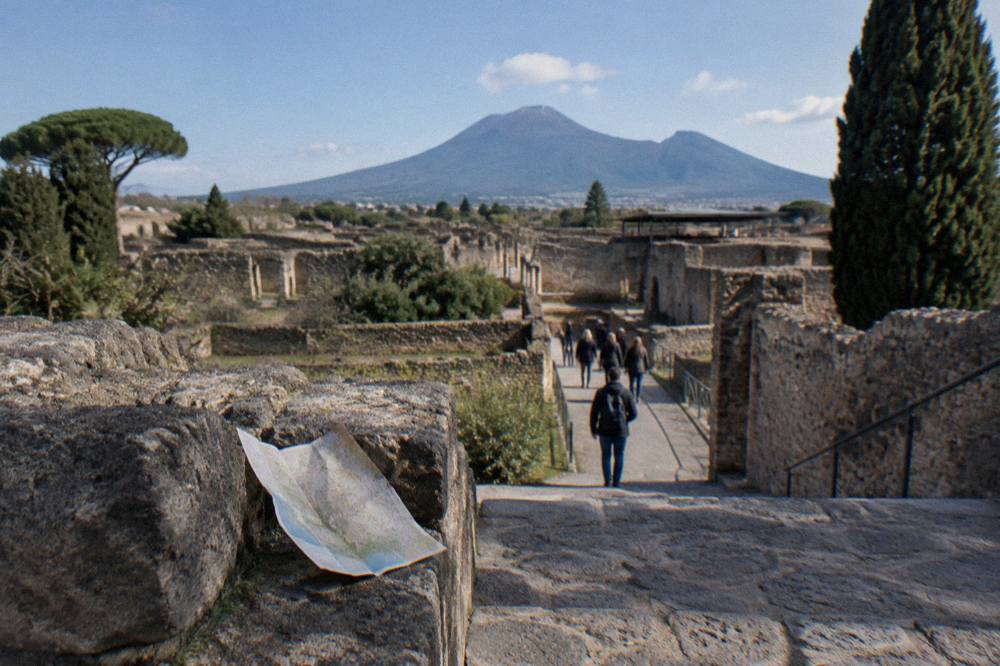
Walking Pompeii today, the human evidence is everywhere and anonymous at once: the famous plaster casts are made from cavities the victims left in the hardened ash, a technique developed on the site during its early excavations. The casts are moving precisely because they are individuals rather than statistics, a crouched figure, a pair embracing, a dog. They are also a statistical trap: each cast is one recovered victim, and the recovered victims are a fraction of an unknown denominator.
Two honest anchors do exist. First, the eruption killed over hours, and most Pompeii victims died in the later pyroclastic surges rather than under falling pumice, which means those with the means and warning to leave early largely did. Second, the traditional date itself is contested: traditionally August 24, though a 2018 find points to October, a charcoal graffito at Pompeii that reads 17 October, which the park team called October highly probable. An October date implies a town population partly swollen or thinned by season, another reason no count can close.
For visitors who want to read the evidence rather than the mythology, a guided day that walks both the ruins and the crater is the most efficient format. The Mount Vesuvius and Pompeii Ruins Day Trip from MOTORENT runs 5 to 7.5 hours with pickup, lunch included, from €77.40 per person, rated 4 from 184 reviews, with free cancellation flagged on the listing. Standing on the crater rim and looking down at the city it buried answers the scale question in a way no number does.
What Do The Buried Cities Actually Show?
The archaeological record from Pompeii and Herculaneum shows how the victims died and where they died, but it has never supported a defensible total for the dead, because Herculaneum's shoreline shelters hold concentrated groups of victims caught by the first surge, Pompeii's victims lie along the surge path and inside buildings, and both patterns remain a partial excavation of an unknown population rather than a census.
The distinction between the two cities is worth holding onto. Herculaneum was closer to the volcano and lay under far deeper material, dozens of metres of hard rock that preserved organic remains, timber and food alike. Pompeii sat further out and was buried more shallowly, which is why it could be tunnelled by treasure hunters for centuries and why its excavation proceeds comparatively quickly today. Different burial, different preservation, different fractions recovered.
| Site | Distance from the vent | Burial conditions | What the human evidence shows |
|---|---|---|---|
| Pompeii | Further from the vent | Shallower ash and pumice, tunnelled for centuries | Victims along the surge path and inside buildings, preserved largely as casts and bones |
| Herculaneum | Closer to the vent | Deep pyroclastic deposits that sealed organic material | Concentrated groups in shoreline boat shelters, caught by the first surge |
| Wider countryside | Rural slopes around the volcano | Villas and farms under the deposits | Scattered finds, no systematic count, large areas never excavated |
The table is deliberately free of a death column. Any number placed there would be invented, and the internet already has too many of those. The trustworthy content is the mechanism, the locations and the preservation conditions, all of which are visible, checkable and, on a good day from the crater rim, laid out below you as geography.
There is also a habit of mind worth borrowing from the archaeologists themselves. When a new discovery is announced at Pompeii or Herculaneum, the official park communications describe the find, its location and its condition; they do not update a running total, because no such total is being kept. Institutions that spend their working lives inside this evidence are the loudest voices refusing to print a number, and that silence is itself the most reliable signal a reader can take from the whole debate.
How Many People Died When Mount Vesuvius Erupted In 1944?
The 1944 eruption, Vesuvius's last, is documented in detail by the INGV Osservatorio Vesuviano, which records the eruption day by day rather than a death toll this site could print, because activity began on 18 March 1944 with an explosion that partly destroyed the intracrater scoria cone, intensified on 19 March, and lava reached the towns on 21 March, with no casualty figure carried in the verified record.
The 1944 eruption matters to this question for what it shows about the modern volcano. It was a modest eruption by Vesuvius's own historical standards, lava fountains and flows rather than a towering Plinian column, yet it destroyed villages, farmland and, famously, part of a US Army airbase's bombers parked at Terzigno. The event sits at the edge of living memory and in the observatory's own published history, which is why its dates can be stated exactly where AD 79's cannot.
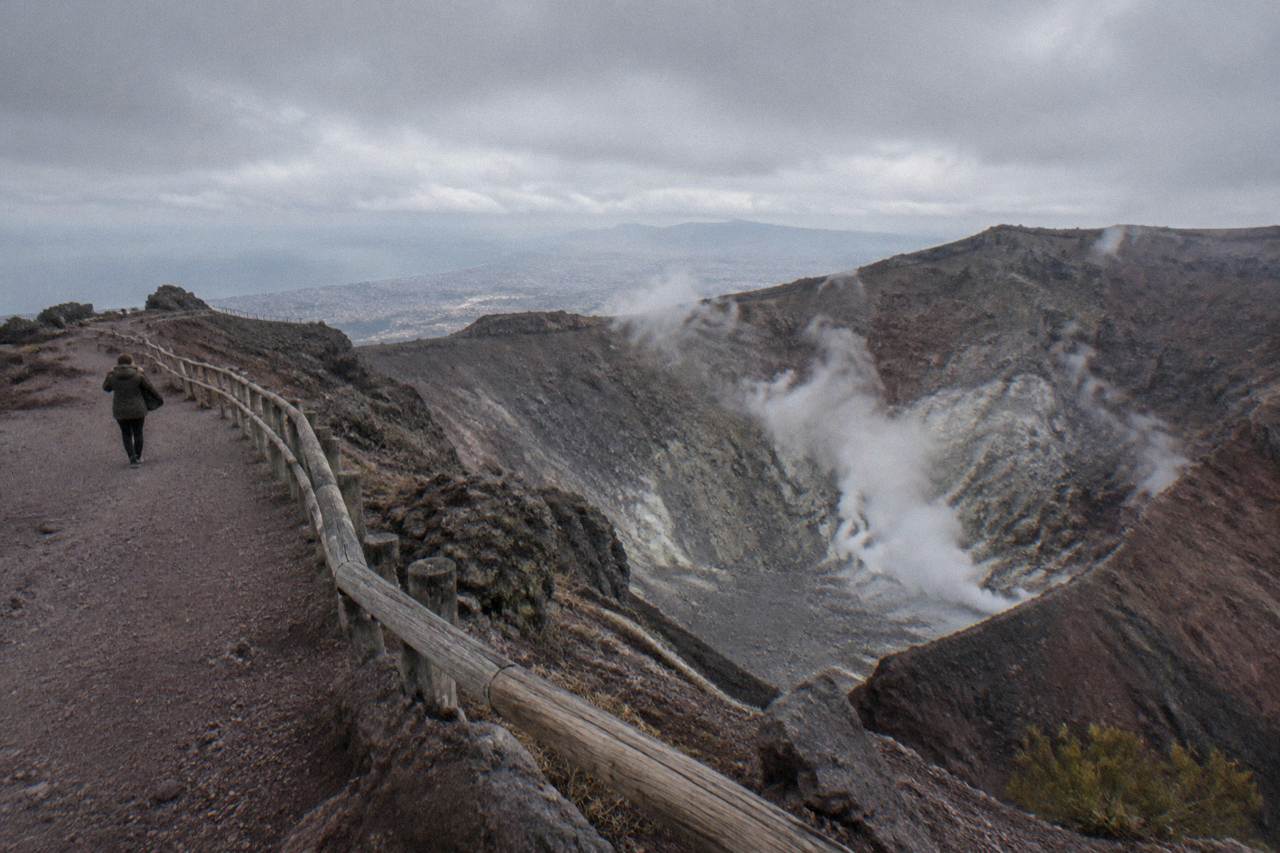
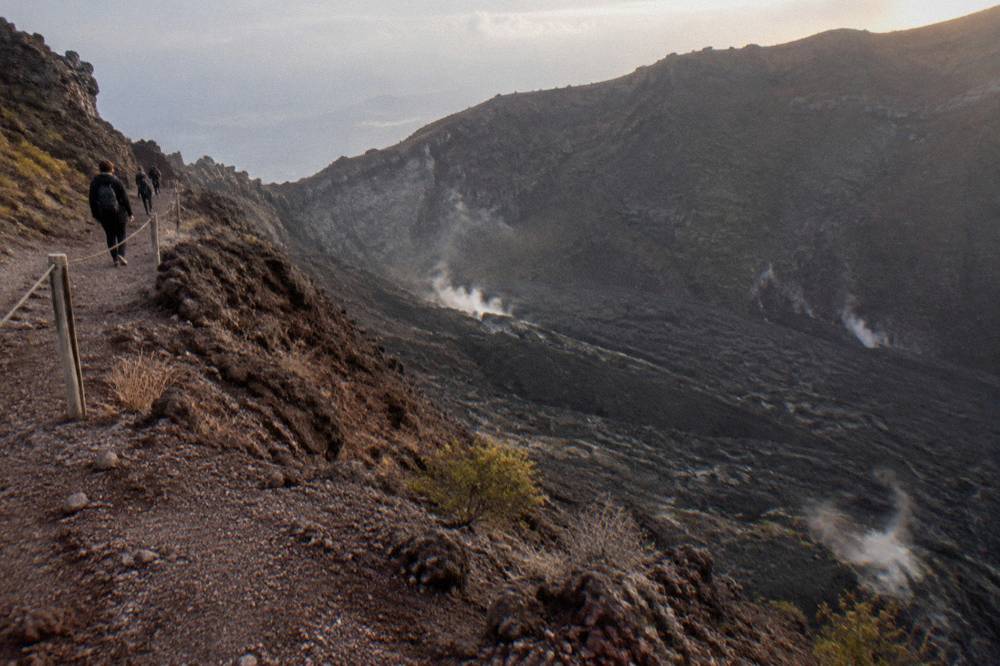
It also reset the context. After 1944 the volcano entered the quiescent phase it is still in: no eruption since, a crater that changed shape, and a monitoring network that now publishes a monthly bulletin. The height published by INGV is 1,281 m, the last eruption is listed as 1944, and the crater is elliptical with a maximum diameter of 580 m, with fumaroles still visible on the inner walls. The volcano that killed an uncounted number in antiquity is today one of the most closely watched mountains on earth.
The 1944 record is also the cleanest demonstration of why the AD 79 question fails. Within weeks of the March eruptions, newspapers, army reports and observatory instruments had fixed the start date, the lava paths and the destroyed property; the eruption passed into history with its facts attached. Eighteen centuries earlier, the only near-contemporary account consists of two letters written decades after the event, describing the experience of one observer across the bay. One eruption has a file, the other has a memory.
How Many Died When Mount Vesuvius Erupted?
Framed against the volcano's whole known history the answer stays the same, because for no eruption of Vesuvius does a verified death toll appear in the primary record this site draws on, the AD 79 totals circulating online are estimates dressed as counts, and the only eruption with an exact documented sequence, 1944, is documented for its dates and its lava rather than for a number of dead. For the eruption itself rather than its body count, the account of the eruption that buried Pompeii walks through what happened from the first tremors to the final ashfall.
Why does the number survive as folklore? Partly because round numbers travel well and sourced caveats do not. Partly because the victim evidence is genuinely large and emotionally overwhelming, which makes a big total feel plausible. And partly because older encyclopedic traditions repeated each other's figures for generations before modern archaeology began publishing the more careful, narrower claims that dominate scholarship today.
The deeper answer to this whole cluster of questions is the one this site's Mount Vesuvius Tours coverage is built on: the volcano is not a historical anecdote but a monitored, populated mountain. The same question that sends people searching for an ancient death count also has a present-day form, how many people live in the danger zone now, and that question has a verified answer, about 700,000 residents across 25 municipalities in the Naples and Salerno provinces under the current red-zone plan of the Regione Campania's civil protection department.
What Modern Monitoring Says About Vesuvius Today?
The observatory publishes the alert level as green, with monitoring parameters within base values, and the September 2026 bulletin recorded 121 small earthquakes with a maximum magnitude of 1.7, while every visitor above 1,000 m on the crater trail is accompanied by the park's volcanological guides under a mandatory accompaniment rule, so the volcano that produced antiquity's most famous eruption is quiet, closely watched and open to visitors. If the guided crater walk leaves you tempted to pocket a small souvenir, the guide to whether you can take a rock home from Mount Vesuvius explains what the park actually allows and what to do instead.
The monitoring story is the modern chapter of the death-toll story. In AD 79 the population had no observatory, no bulletin and no evacuation plan; the eruption arrived as legend and myth even to those who survived it. Today the same mountain carries seismic stations, deformation sensors and geochemical sampling, and the results are public. The contrast between an uncounted ancient catastrophe and a precisely instrumented modern volcano is the single best reason to answer the death-toll question with evidence rather than folklore.
| What is monitored | Current published picture | Source |
|---|---|---|
| Alert level | Green, parameters within base values | INGV Osservatorio Vesuviano |
| Seismicity, September 2026 bulletin | 121 small earthquakes, maximum magnitude 1.7 | INGV Osservatorio Vesuviano |
| Crater | Elliptical, maximum diameter 580 m, fumaroles on inner walls | Parco Nazionale del Vesuvio |
| Height | 1,281 m | INGV |
| Last eruption | 1944, began 18 March | INGV Osservatorio Vesuviano |
For the broader picture of the volcano's activity and rest periods, the companion guide Is Mount Vesuvius Active works through the monitoring network in detail. For the forward-looking version of the question, Would Naples Be Destroyed If Vesuvius Erupted? covers the red zone, the evacuation planning and what the alert levels actually mean for the city.
Could A Future Eruption Threaten People Today?
Yes in principle, and that contrast is exactly why the modern planning numbers are published while the ancient ones are not, because the current red-zone plan of the Regione Campania civil protection department covers about 700,000 residents across 25 municipalities in the provinces of Naples and Salerno, a verified official figure unlike the AD 79 death toll, and the one worth remembering from this whole line of questioning.
The comparison is instructive. The ancient count fails because the evidence is partial and the population is unknown. The modern count succeeds because it is a planning document: a defined area, a defined resident population, and a staged alert system that runs from green, where Vesuvius sits today, through yellow and orange to red. Nobody in AD 79 had a plan; the point of the modern apparatus is that the next eruption, whenever it comes, would not be met with mythology.
Visitors sometimes ask whether standing on the crater is itself a risk. The honest framing is that access is engineered around the monitoring: the crater trail closes automatically on days with an orange weather alert or higher, with automatic refunds for slots inside a closure, and every group above 1,000 m moves with the park's volcanological guides, the same specialists whose institution, in its earlier guise, has watched the volcano since before the 1944 eruption. The trail's daily caps, between 2,160 and 3,240 visitors depending on the month, exist to keep numbers controlled on the path.
Seeing The Story Firsthand On Vesuvius And Pompeii Tours?
The most rewarding way to answer this question is to stand in both places in one day, the crater that produced the eruption and the city that received it, because combined formats typically run 6 to 9 hours with pickup from Naples and crater-only formats sit on the volcano itself, most around 3 hours from the trailhead plaza at Quota 1000, with a specialist guide interpreting either landscape.
The choice of guide matters more here than at most sites, because the story being told is a scientific one. The Vesuvius V.I.P. tour with volcanological guide, the only crater format in this site's lineup that names a volcanological guide in the listing title, runs about 2 hours from €129 per person, rated 4.9 but from only 15 reviews, a small pool. On the full-day side, the From Naples: Pompeii and Vesuvius Day Trip with Pizza Lunch from HP TRAVEL runs 3.5 to 8 hours from €53.25 per person with lunch included, rated 4.8 across 9,744 reviews, and a guest review from Dan in the United Kingdom calls it "a great trip for anyone wanting to visit Pompei and Mount Vesuvius in one day."
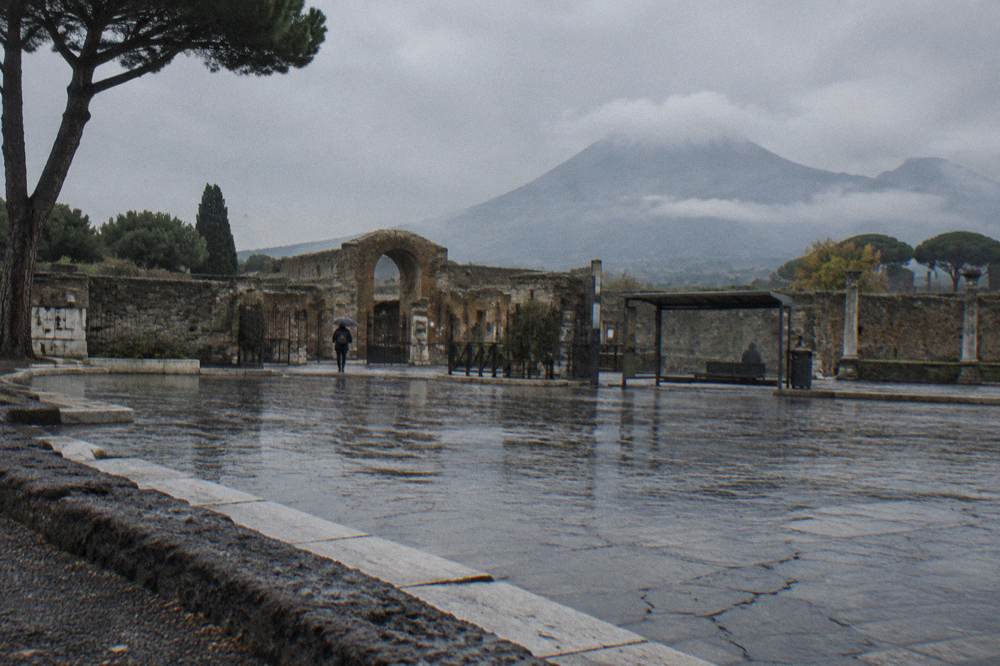
What the visits give you that the numbers never can is sequence and scale. From the crater rim, the whole buried landscape lies in one view: Pompeii as a low spread of walls, Herculaneum invisible under modern Ercolano, the sea where the fugitives ran. From the streets of Pompeii, the mountain returns the gaze. Between the two, the question of how many died quietly converts into a better one, how it happened and how we know, and that question has real answers.
Common Questions About The Vesuvius Death Toll
How Many People Died When Mount Vesuvius Erupted?
No verified count exists. Estimates vary widely, no figure appears in the primary record, and this site prints none rather than repeat an unsourced number. What is documented is the mechanism, the buried cities and the victims' locations.
How Many People Died In Pompeii When Mount Vesuvius Erupted?
The victims recovered by excavation are the only countable evidence, and they are a sample of an unknown population. The city's eruption-day population and the share that fled early are both unknown, so no total can be derived.
How Many People Died When Mount Vesuvius Erupted In 1944?
The INGV Osservatorio Vesuviano documents the sequence in detail: activity began 18 March 1944, intensified on 19 March, and lava reached the towns on 21 March. This site prints no casualty figure, because none is carried in the verified record.
Is Vesuvius Still Dangerous Today?
The published alert level is green, with parameters within base values. The current red-zone plan covers about 700,000 residents across 25 municipalities, and the crater trail closes automatically on days with an orange weather alert or higher.
When Exactly Did The Famous Eruption Happen?
Traditionally August 24, though a 2018 find points to October: a charcoal graffito at Pompeii reads 17 October, and the park team called October highly probable. Neither date is settled.