Best Time To Visit Mount Vesuvius
Picking the right month changes everything on Vesuvius: the crater's opening hours, the number of hikers allowed up each day, the temperature at the trailhead and the chance of a weather closure. Here is how the year actually breaks down.
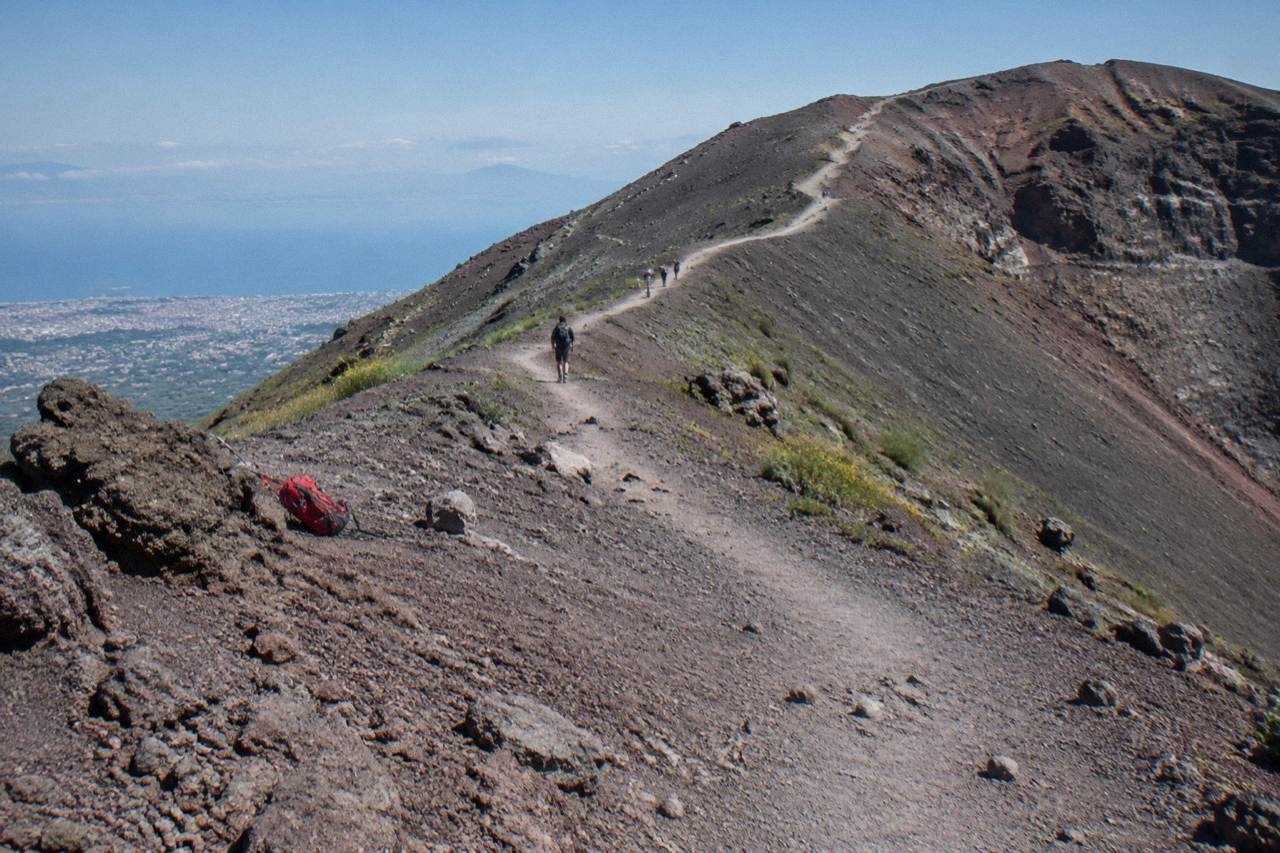
Short answer
May, June, September and October are the best months to visit Mount Vesuvius: crater access runs 09:00 to 17:00 or 09:00 to 16:00, daily caps are 2,880 or 2,520, summit highs sit between 14.8 and 19.2 C and rain days stay low relative to winter. July and August offer the longest hours but the biggest crowds and the hottest Naples base temperatures.
Picking a date for Vesuvius is not like picking a date for a museum. The crater trail is the only part of the volcano most visitors can walk, and its hours, its daily visitor cap and its weather-closure risk all shift with the calendar. In July the trail admits hikers until 18:00 and up to 3,240 people a day. In January the last access is 15:00 and the cap drops to 2,160, with the wettest weather of the first half of the year. The same €10 park ticket buys a very different day depending on the month printed on it.
This guide walks through the year using the park's own access rules and a modelled 1991-2020 climate average for the 1,000 m level, so you can match your travel month to the experience you actually want. It also covers the tours that book year-round, because no tour runs only in a given month: every product on this site's roster is bookable for future dates, and the right question is which month suits you, not which month the tours exist.
What Is The Best Time Of Year To Visit Mount Vesuvius?
The best time to visit Mount Vesuvius is late spring through early autumn, with May, June, September and October as the standout months. Crater access runs to 17:00 in May, June and September and to 16:00 in October, summit highs sit between 14.8 and 19.2 C, and rain days stay at 8 or fewer per month. July and August give the longest hours but add the year's biggest crowds and the hottest Naples temperatures.
The shoulder months win for a simple reason: they combine long access windows with moderate summit conditions. In May the modelled average summit high is 15.1 C against 21.5 C in Naples, a gap of roughly 6 to 7 C that holds every month of the year. That gap matters more than most visitors expect. People board a bus in Naples in short sleeves and step off at the Quota 1000 plaza into air that feels like a different season, with wind on the exposed ash slopes making it feel colder still. Our guide to How To Hike Mount Vesuvius covers the layering that solves this.
October deserves a special mention because it is the last month with a 16:00 last access before the winter schedule cuts in, and its modelled summit high of 14.8 C is still mild. The trade-off is rain: 129 mm across 10.5 rain days on average, one of the wetter months of the year. September splits the difference nicely, with 18.7 C highs and 90 mm of rain over 8.7 days. For the full month-by-month picture, including January through April, see Mount Vesuvius by month.
There is one planning rule that applies in every month: the trail and the ticket office close automatically on any day the regional civil protection authority issues an orange weather alert or higher, with automatic refunds for tickets inside a closure window. A wet-season visit is not a bad visit, but it is one where you should check the forecast the day before and know your refund position.
Which Months Have The Best Weather On The Crater Trail?
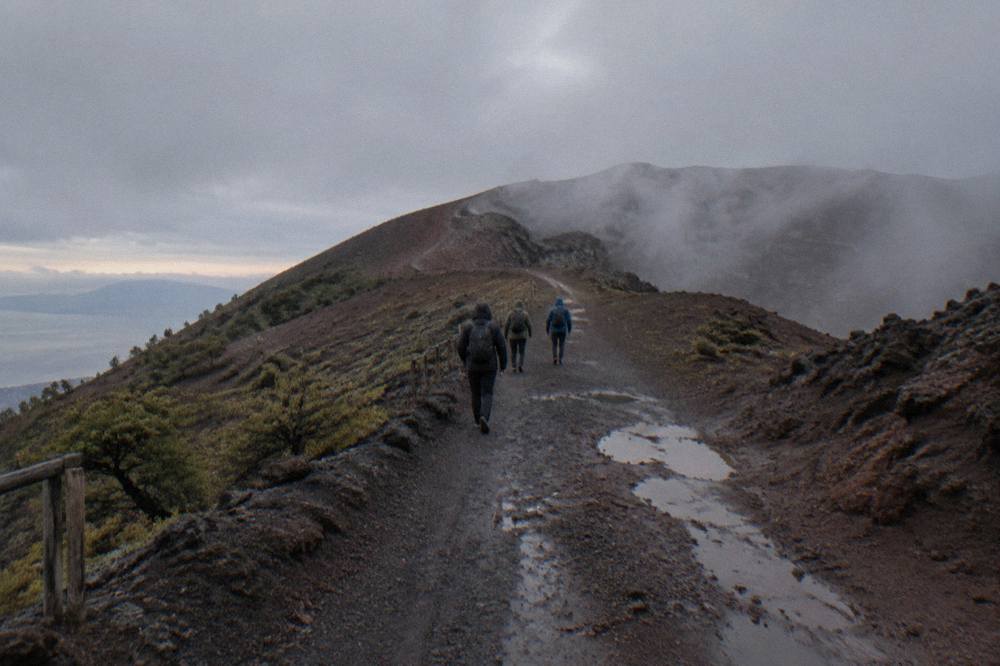
For weather alone, June and July are the best months on the crater trail: June averages a 19.2 C summit high with only 30 mm of rain over 5.3 days, and July averages 22.1 C with just 16 mm over 3.3 days, the driest month of the year. April, May and September follow closely, each combining comfortable summit highs with manageable rainfall.
The numbers below are modelled 1991-2020 climate averages for the 1,000 m level, not forecasts, and they describe the air you will actually walk in rather than the air down in the city.
| Month | Summit high/low C | Summit rain mm (days) | Naples high/low C |
|---|---|---|---|
| January | 5.6/0.0 | 119 (11.7) | 11.7/5.5 |
| February | 6.0/-0.1 | 103 (11.2) | 12.2/5.4 |
| March | 8.3/1.5 | 104 (10.5) | 14.6/7.1 |
| April | 11.1/3.8 | 87 (11.1) | 17.4/9.4 |
| May | 15.1/7.5 | 59 (8.0) | 21.5/13.3 |
| June | 19.2/11.6 | 30 (5.3) | 25.7/17.5 |
| July | 22.1/14.5 | 16 (3.3) | 28.6/20.3 |
| August | 22.8/15.2 | 22 (3.9) | 29.3/21.0 |
| September | 18.7/12.0 | 90 (8.7) | 25.1/17.7 |
| October | 14.8/8.5 | 129 (10.5) | 20.9/14.1 |
| November | 10.4/4.9 | 180 (13.6) | 16.4/10.4 |
| December | 6.7/1.4 | 147 (13.1) | 12.7/6.8 |
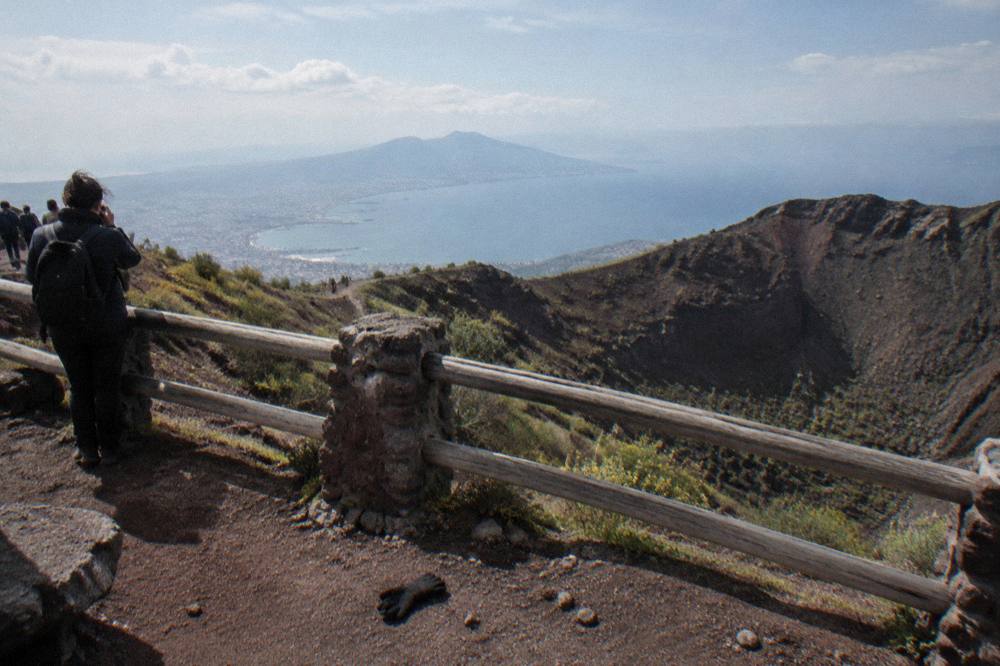
Two patterns jump out of that table. First, the summit-to-Naples gap of roughly 6 to 7 C: an August day that reads 29.3 C in the city is a 22.8 C day on the trail, and a January city day of 11.7 C is a 5.6 C day at altitude, at or below freezing overnight. Second, November is the wettest summit month at 180 mm across 13.6 rain days, roughly eleven times July's rainfall. Wet months do not just mean rain on your walk; they raise the odds of an orange-alert closure, since the closure rule is weather-triggered. Visibility is its own variable, and our page on weather and haze goes deeper into how the bay view from the rim changes with the season.
A practical note on heat: the park has no documented closure for August heat, and none should be assumed. The July and August answer to heat is timing, not avoidance, since those are also the months with the longest access windows. Start at 09:00, finish on the crater by midday, and the heat question largely solves itself.
When Is Vesuvius Least Crowded, Month By Month?
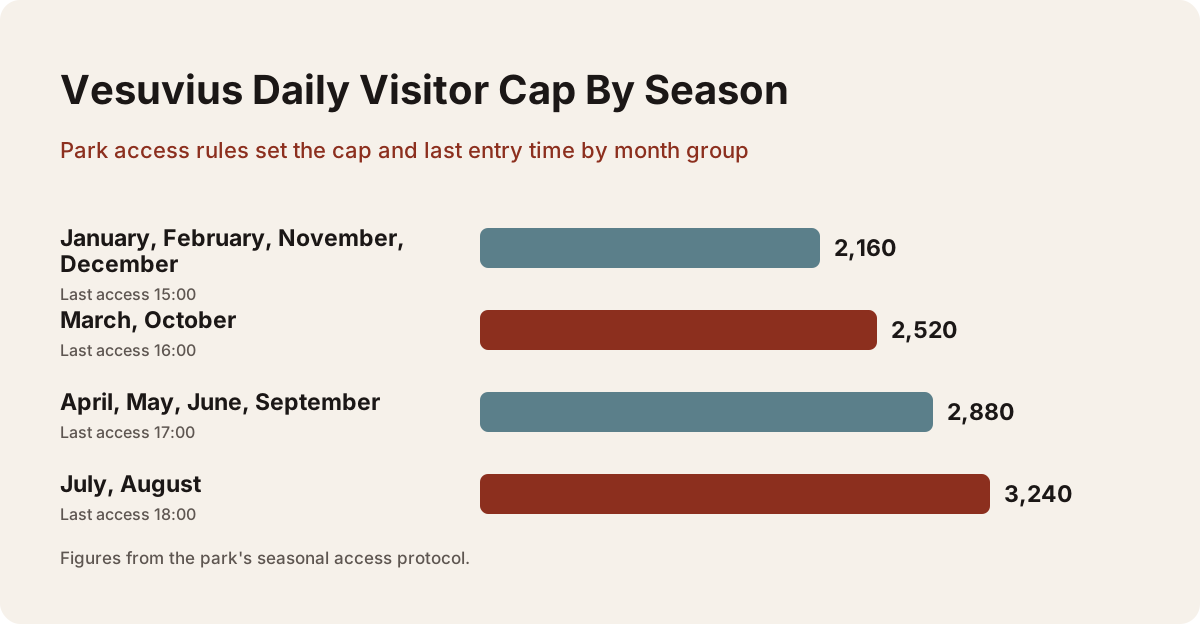
Crowds track the daily cap, not just the school calendar. The smallest crowds come in November through February, when the daily cap is 2,160 and the trail closes at 15:00, followed by March and October at 2,520. April through June and September allow 2,880 a day, and July and August allow 3,240, which makes them the busiest months by design as well as by demand.
The park's access protocol sets a maximum of 360 hikers per hour, moved in groups of 60 every 10 minutes, and then multiplies that out into a seasonal daily ceiling. The table shows how the two numbers move together.
| Months | Daily cap | Last access | Crowd character |
|---|---|---|---|
| January, February, November, December | 2,160 | 15:00 | Quietest, shortest window |
| March, October | 2,520 | 16:00 | Moderate, good balance |
| April, May, June, September | 2,880 | 17:00 | Busy but spread over more hours |
| July, August | 3,240 | 18:00 | Peak crowds, peak cruise and holiday season |
Tickets are sold only online by the park's authorised seller, in 10-minute time slots of 50 tickets each, released 30 days ahead, with a last-minute release of 10 named tickets per slot 30 minutes before each slot. That 30-day window is the real crowd lever: in the 2,160-cap months you can often book days out, while in July and August the popular morning slots for a party of four can go quickly once the release opens. Our guide to booking in advance walks through the mechanics.
Even in peak months, the slot system keeps the trail itself from feeling like a stadium. The crowds concentrate at the plaza and the ticket hut at 1,118 m, thinning as groups space out along the 4,010 m round trip. If your month is fixed in August by school holidays, book the earliest slot you can and treat the crowd as the price of the longest daylight and the driest trail conditions of the year.
One crowd factor worth naming honestly: the tour bus. A large share of the daily cap arrives as part of organised combined days, such as the Naples day tour with lunch, which cluster around mid-morning and early afternoon. Independent visitors who take a 09:00 or 09:10 slot in any month consistently walk ahead of the main wave, and by 15:00 the trail is thinning even in August. Timing within the day matters nearly as much as the month on the ticket.
How Do Crater Opening Hours Change Through The Year?
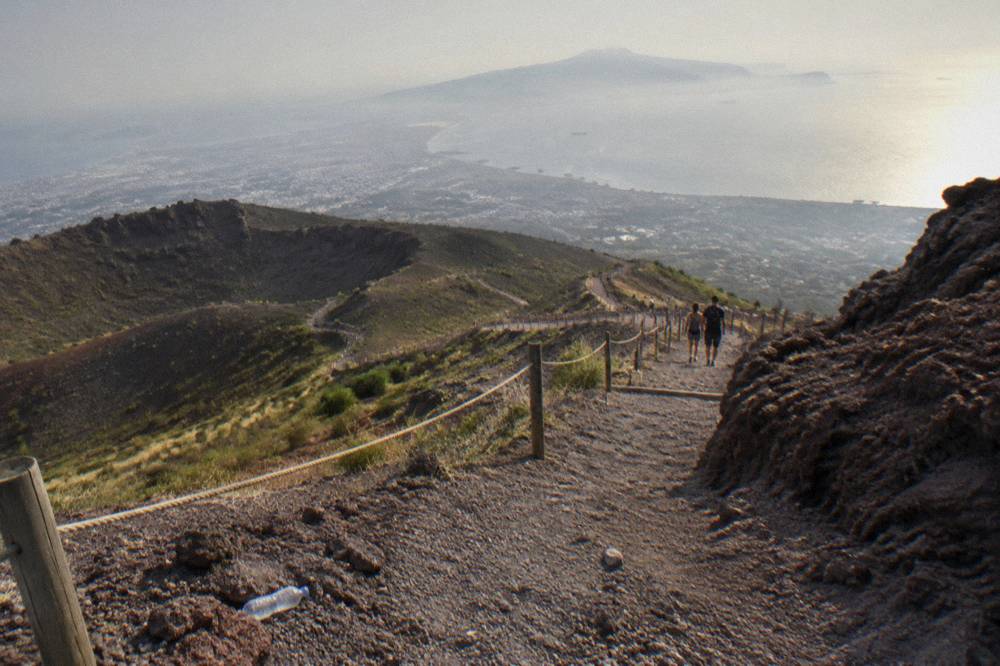
Crater access runs 09:00 to 15:00 in January, February, November and December, 09:00 to 16:00 in March and October, 09:00 to 17:00 in April, May, June and September, and 09:00 to 18:00 in July and August. The printed closing time is the last access, and every visit must end within one hour of it, so the usable day is shorter than the hours suggest.
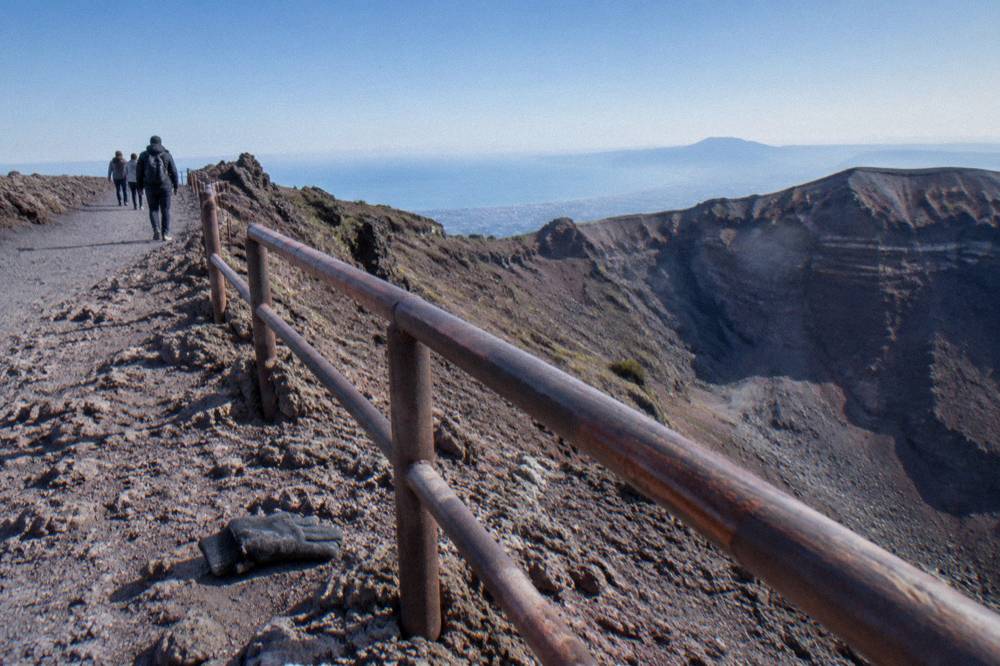
That one-hour rule is the detail that catches people out. A 15:00 last access in February means the trail is being cleared from 16:00, and a 16:00 October last access means you should be heading down by 17:00. Plan your arrival so that the crater rim, the part you came for, comes in the first two-thirds of your window, not the last. The park's own Gran Cono page sets out these hours and the accompaniment rule that applies above 1,000 m, where every group walks with the park's volcanological guides.
A ticket bought for a specific slot is not a rigid appointment. Because of the 120-minute window either side, a 10:00 slot holder can enter from 08:00, subject to opening hours, which is exactly how early birds beat the mid-morning tour wave. The last-minute release, 10 named tickets per slot released 30 minutes before, buyable on the Wi-Fi near the entrance with a maximum of 5 per email, exists as a fallback if your month's slots look full. It is a genuine fallback, not a strategy: in peak months it is the most contested inventory on the mountain.
Spring Or Autumn: Which Shoulder Season Is Better For Vesuvius?
Spring gives steadily improving weather and longer hours: April offers 11.1 C summit highs and 17:00 access, and May offers 15.1 C highs with the same hours and only 59 mm of rain. Autumn reverses the trend: September reaches 18.7 C with 17:00 access, but October cools to 14.8 C, a 16:00 close and 129 mm of rain. Spring edges autumn overall for reliability, while September alone beats any spring month for warmth.
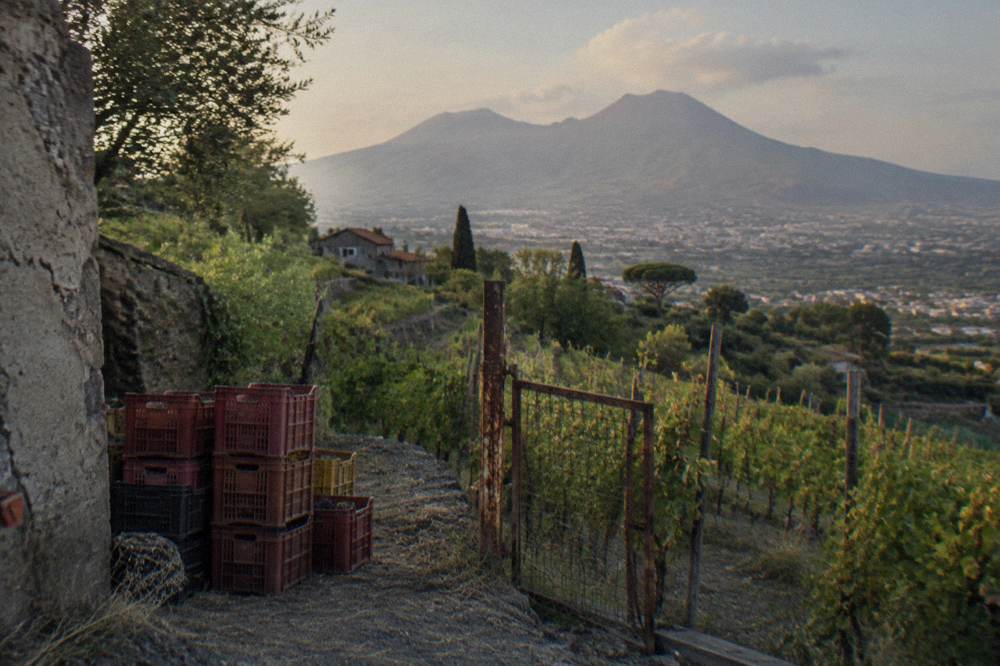
Both shoulders beat July and August for comfort, and both beat winter for hours. The differences are about trajectory and mood. In spring the slopes are greener after the winter rains and the crowds build gradually toward summer; in autumn the light is lower and warmer for photography, the harvest is on in the vineyards below, and the crowds fall away faster than the temperatures do. Our Mount Vesuvius in spring and Mount Vesuvius in autumn pages carry the month-level detail.
The autumn case has one strong practical argument: September is the last month that pairs a 17:00 last access with a sub-20 C summit average and a drying trend behind it, at 90 mm of rain against October's 129 mm. The spring case has two: May's 59 mm of rain is the driest month between March and September, and spring travel dates are usually easier to move if an orange alert closes the trail on your first choice day. More of these guides are collected on Mount Vesuvius Tours.
Wine-minded visitors should weigh autumn more heavily. The Lacryma Christi vineyards on the lower slopes are in harvest season, and several roster tours stop at a winery as part of the day, among them the Vesuvius wine tasting tour with lunch. Our guide to Lacryma Christi explains what is in the glass.
What Is Summer On Vesuvius Actually Like?
Summer on Vesuvius means the longest access window of the year, 09:00 to 18:00 in July and August, the highest daily cap at 3,240, and the driest walking conditions, with 16 mm of rain in July and 22 mm in August. It also means the busiest cruise and holiday traffic, the largest tour-bus share of the daily cap, and a Naples base temperature averaging 28.6 to 29.3 C.
The summit numbers are kinder than the city numbers. August's modelled summit high of 22.8 C is genuinely pleasant walking weather on an exposed ash slope with wind, and it is more than 6 C below what the same day feels like in Naples. The heat problem on a summer Vesuvius visit is mostly the segments around the walk: the queue at the plaza, the shuttle or bus ride up, and any Pompeii portion done in the middle of the day. One guest review of a Naples day tour that includes both sites put it plainly: "Very uneven surfaces and very hot in summer so trainers and water bottles."
Book the earliest slot, carry more water than feels reasonable, and front-load the crater before the afternoon builds. If your summer day pairs Vesuvius with Pompeii, do Pompeii first at opening or second after 16:00, since the ruins are fully exposed and the crater trail at least gets you moving uphill in moving air. The Mount Vesuvius in summer page covers the full picture.
Is Winter A Good Time To Visit Vesuvius?
Winter is the quiet, short-window season: crater access runs 09:00 to 15:00, the daily cap is 2,160, and summit highs average 5.6 C in January, 6.0 C in February and 6.7 C in December, with lows at or below freezing and 103 to 147 mm of rain a month. It suits visitors who value empty trails and clear cold-air views over long days, and who can hold their plans loosely.
The winter trade is straightforward. You get the year's smallest crowds, the lowest prices on some tour formats, and, on a clear high-pressure day, some of the sharpest visibility of the year because the cold air holds less haze. What you give up is margin: a 15:00 last access means a 16:00 trail clearance, and November's 13.6 average rain days plus the orange-alert closure rule mean a real chance your first chosen day does not happen. Build a two-day window if you can.
Cold-weather packing is non-negotiable. The summit runs about 6 to 7 C below Naples every month, wind on the rim does the rest, and January and February lows average at or just below freezing. Our pages on what to wear and on conditions at the top have the details. For the full winter breakdown, see Mount Vesuvius in winter.
Winter also compresses the transport day. The EAV bus 808 from Pompei, useful for visitors based near the ruins, makes nine runs a day up to Quota 1000 with the last uphill arrival at 15:25, which sits after the winter last access, so a winter visit via that bus needs an earlier run, not the last one. The schedule is published by EAV and is worth checking against your month's access hours before you commit.
Which Vesuvius Tours Can You Book In Every Month?
Every Vesuvius tour on this site's roster is bookable across the seasons; no tour runs only in a given month. The seasonal variables that change are the park's crater hours, the daily cap and the weather, not the existence of the products. Confirm the operator's current schedule for your dates, and check the listing for what entry is included.
That said, formats fit seasons differently, and the price spread is wide enough to be worth seeing side by side.
| Tour | Format | Duration | From price | Rating |
|---|---|---|---|---|
| Mount Vesuvius Tour with Ticket from Naples | Guided crater trip with skip-line ticket | 4 hours | €41 per person | 4.5 from 596 reviews |
| Bus Transfer to Vesuvius with Park Entry Fee | Transfer plus park entry | 3 hours | €35.10 per person | 4.3 from 1,923 reviews |
| Exclusive Pompeii and Vesuvius Tour with Lunch | Archaeologist guide, lava caves option | 8 hours | €78.20 per person | 4.7 from 3,701 reviews |
| Pompeii and Mt. Vesuvius Elite Tour with Lunch | Pizza or wine tasting choice | 8 hours approx. | €120 per person | 4.7 from 3,476 reviews |
| All-Inclusive Pompeii and Vesuvius with Lunch and Wine | Lunch and wine tasting included | 8 hours | €127.50 per person | 4.6 from 2,804 reviews |
In the short-window winter months, a half-day or transfer-plus-ticket format protects your margin: a four-hour guided trip from Naples or a three-hour transfer gets you up and down inside the 15:00 access without the day feeling rushed. In the long summer months, a full-day combination earns its price, because you have the hours to give both Pompeii and the crater real time. The featured Pompeii and Mt. Vesuvius Elite Tour with Lunch, from €120 per person with a 4.7 rating across 3,476 reviews, includes lunch with a choice between pizza and a wine tasting, a pairing that suits the long-access months especially well. One guest on the pizza-lunch day trip from Naples described it as "a great trip for anyone wanting to visit Pompei and Mount Vesuvius in one day."
Visitors combining the volcano with the ruins should also read our comparison of the two sites, and if your month is fixed by a Pompeii priority rather than a Vesuvius one, the question of which month suits the ruins has its own answer in What Month Is Best To Visit Pompeii?, since Pompeii's admission slots and heat exposure follow a different logic than the crater's.
How Much Does Daylight Matter For A Vesuvius Visit?
Daylight sets a hard boundary on every Vesuvius month because park access always ends before sunset: last access ranges from 15:00 in the winter months to 18:00 in July and August, against sunsets from about 16:35 in December to about 20:35 in June. There is no sunset crater hike in the public access system, so plan the rim walk for the morning or midday in every season.
The sunrise and sunset figures below are computed for the 15th of each month, and the gap between them and the last-access column is the usable planning margin.
| Month | Last access | Sunrise/sunset (15th) | Daylight margin |
|---|---|---|---|
| January | 15:00 | 07:25/16:57 | Under 2 h of daylight after last access |
| March | 16:00 | 06:16/18:08 | About 2 h |
| June | 17:00 | 05:30/20:35 | About 3.5 h |
| August | 18:00 | 06:12/20:03 | About 2 h |
| October | 16:00 | 07:12/18:24 | About 2.5 h |
| December | 15:00 | 07:19/16:35 | Under 1.5 h |
Two consequences follow. First, winter visits are genuinely morning affairs: with a 15:00 last access and a 16:00 clearance, an afternoon arrival is not a plan, it is a missed crater. Second, summer's 18:00 last access still ends in daylight, but the golden-hour photography people imagine from the rim belongs to the descent path, not the crater edge, because the visit must end within an hour of last access. Evening guided excursions under evening schedules exist separately on the mountain in some seasons, but they are not the Gran Cono ticket, and no sunset product appears in this site's tour roster, so treat any evening ambition as a separate research task rather than an assumed add-on.
The daylight margin also shapes transport decisions. In the 2,160-cap months, the last uphill EAV bus arriving 15:25 is already too late for the crater, and the Circumvesuviana-plus-shuttle routes from Naples and Sorrento need an early train to leave room for the walk. Every access route has its own timing detail, and the season you choose decides how much slack those routes need.
Can You Visit Vesuvius And Pompeii In The Same Day In Every Month?
Yes, in every month, but the month determines the order. From mid-March to mid-October Pompeii admits visitors until 17:30 and closes at 19:00, while in the winter half of the year last entrance is 15:30 with a 17:00 close, so in winter the ruins work best first and the crater early afternoon at the latest, and in the long months either order is possible.
The winter version is the one that needs discipline. A Pompeii arrival at 09:00 opening gives roughly five hours before the 15:30 last entrance is moot and, more importantly, leaves a tight bridge to a crater slot that closes access at 15:00 in the deepest months. That is why the winter recommendation is Vesuvius first at 09:00 or 09:30, Pompeii after, reversing the more natural instinct. March and October, with their 16:00 crater access and Pompeii's long hours, are the friendliest split-day months of the year.
Combination tours solve the sequencing for you, which is a real argument for them in the short months. The roster of trips out of the city includes eight-hour combined days from €67.20 per person with lunch, such as the Naples Pompeii and Vesuvius day tour, and the archaeologist-led formats from €78.20 per person handle both the crater slot and the ruins timing as a single booked structure. Free cancellation is flagged on those listings, which matters in exactly the months where an orange-alert closure risk is highest, and the Pompeii official timetable is the authority on the ruins' own seasonal hours.
For what the crater itself delivers once you are up there, in every month of the year, our page Inside The Mount Vesuvius Crater covers the rim walk, the fumaroles and the view down into the ellipse, and for the wider planning picture across the seasons, this site's season pages, linked throughout this guide, carry the month-level detail.
The short version of the whole year: choose the shoulder months for balance, choose summer for hours and dryness and accept the crowd, choose winter for silence and pay in margin, and in every case book the crater slot before you book anything else.
Common Questions About The Best Time To Visit Mount Vesuvius
What is the best month to visit Mount Vesuvius?
May, June, September and October are the strongest months overall, combining 16:00 or 17:00 last access, moderate summit temperatures between 14.8 and 19.2 C and comparatively few rain days. June is the best single month for weather, averaging 19.2 C highs with only 30 mm of rain.
Is Vesuvius open all year?
The crater trail operates in every month of the year, with last access varying by season: 15:00 in January, February, November and December, 16:00 in March and October, 17:00 in April, May, June and September, and 18:00 in July and August. The trail and ticket office close automatically on days with an orange weather alert or higher.
What is the busiest month on Vesuvius?
July and August are the busiest months, with the year's maximum daily cap of 3,240 visitors and the largest share arriving with organised tours and cruise traffic. Booking an early 09:00 or 09:10 time slot, released 30 days ahead, is the standard way to stay ahead of the mid-morning wave.
Is Vesuvius too hot in summer?
The summit averages 22.1 C in July and 22.8 C in August, roughly 6 to 7 C below Naples, so the crater walk itself is usually manageable, especially with an early slot. The exposed parts around the plaza and any Pompeii portion in midday sun are where the heat is felt most.
Is winter a bad time to visit Vesuvius?
Winter trades margin for quiet: the daily cap is 2,160, the trail's last access is 15:00, summit highs average 5.6 to 6.7 C and November is the wettest month at 180 mm of rain. Visitors who can hold a flexible two-day window often get empty trails and sharp clear-air views.
Do Vesuvius tours only run in certain months?
No tour runs only in a given month; the roster's products are bookable across the seasons. What changes by month are the park's crater hours, the daily visitor cap and the weather, so confirm the operator's current schedule for your dates and check the listing for what entry is included.