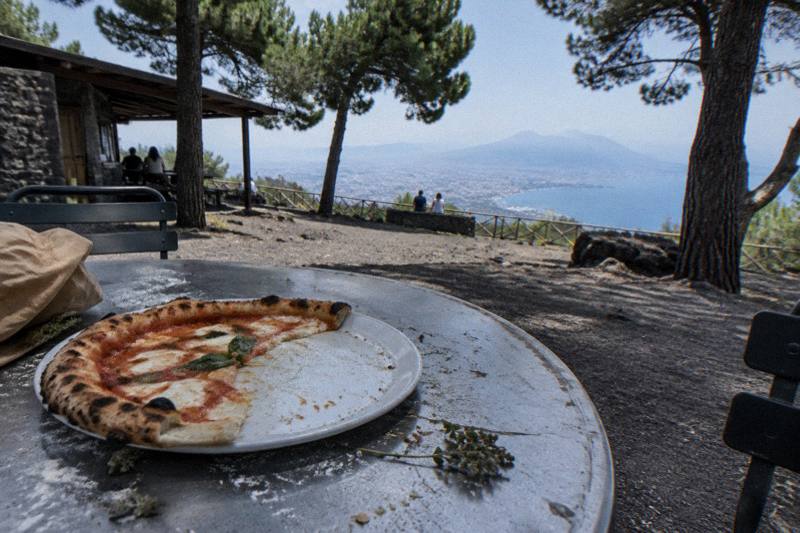
Where Is Mount Vesuvius
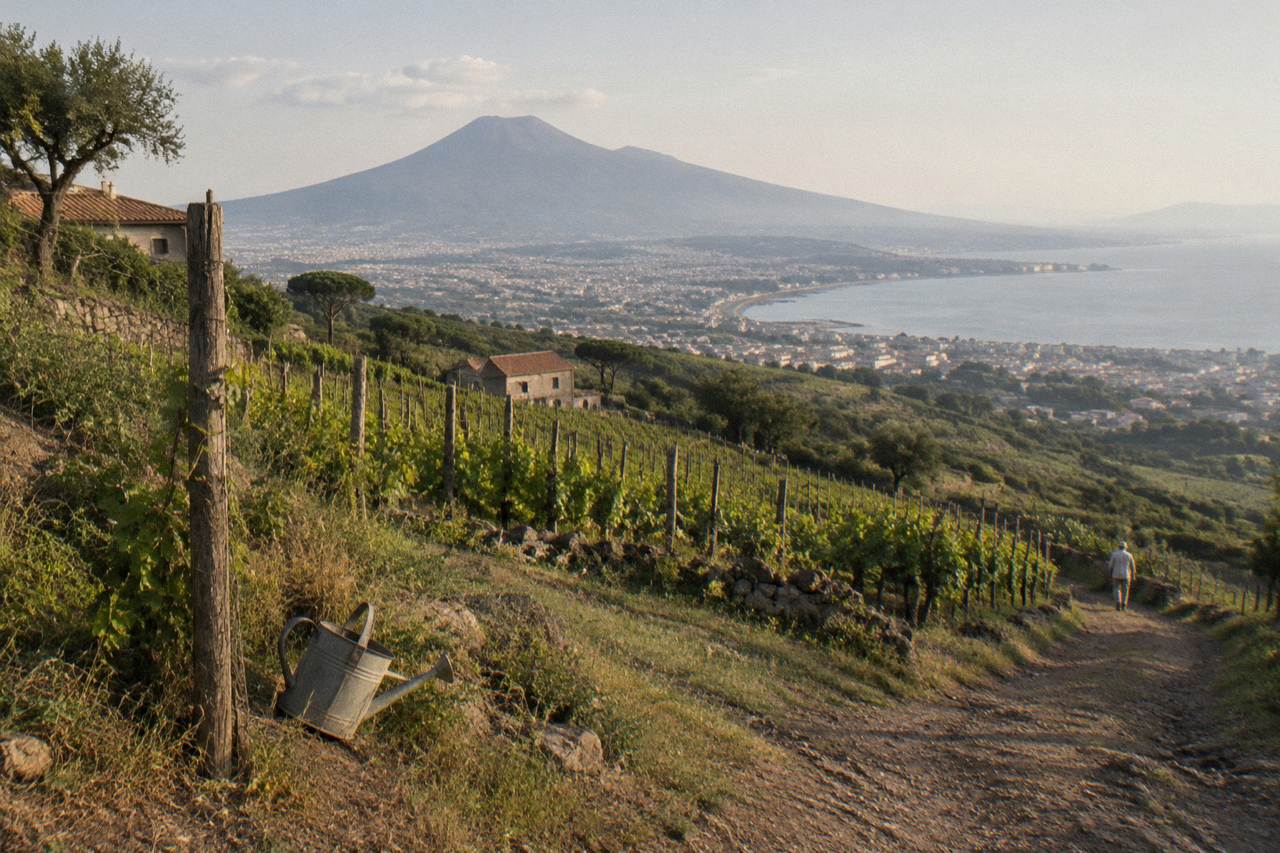
Vesuvius rises on the eastern shore of the Bay of Naples, roughly between the city of Naples and the Sorrento peninsula, with Pompeii at its southern foot and Ercolano on its northern flank.
Short answer
Mount Vesuvius stands at 40 49 18 N, 14 25 33 E on the Bay of Naples in Campania, reaching 1,281 m per INGV. Naples lies to its northwest, Pompeii at its southwestern foot. By car the A3 exit at Torre del Greco leads 7.3 km to the Quota 800 car park, about 15 minutes.
The question sounds simple until you stand on the Naples waterfront and realise there are ridgelines everywhere. Vesuvius is the single great cone on the eastern shore of the Bay of Naples, inland of the coast, with the modern city of Naples spread to its northwest and the excavations of Pompeii pressed against its southwestern foot. Mount Vesuvius Tours covers this volcano from every angle, and this guide pins down the geography first: the coordinates, the neighbours, the drive, and the ways the volcano's position shapes every tour you can book.
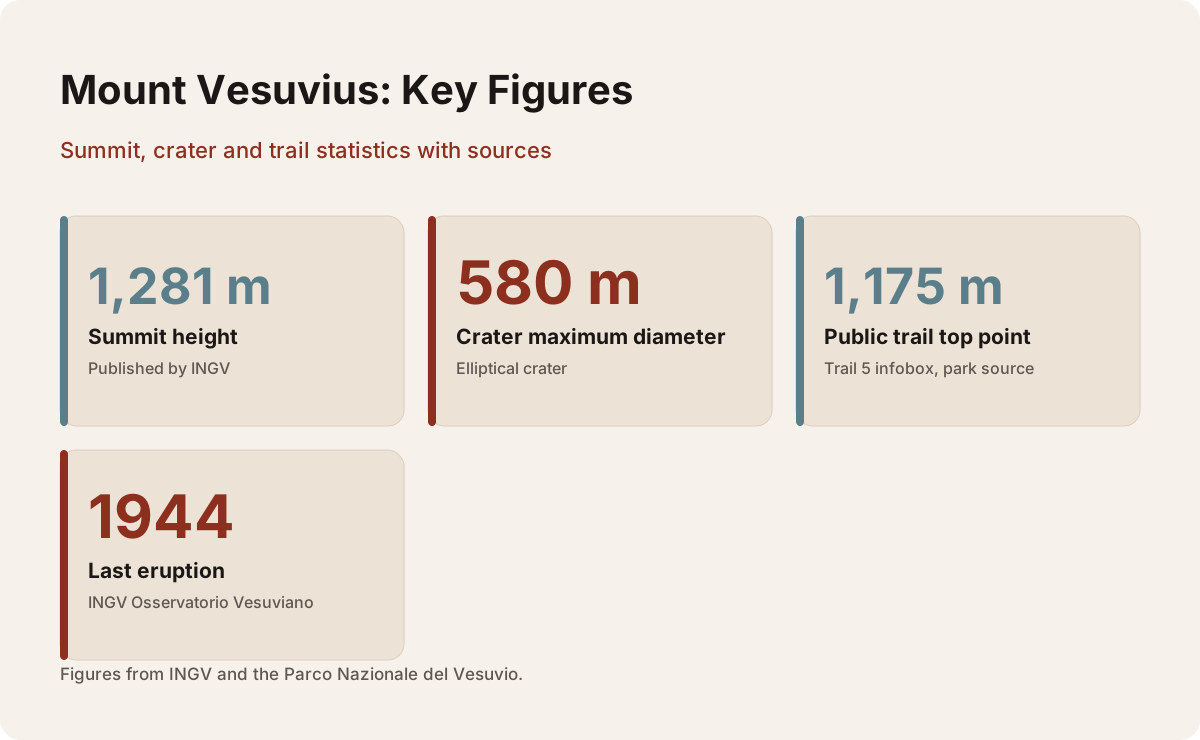
The summit stands at 1,281 m above sea level, a figure published by Italy's National Institute of Geophysics and Volcanology, at coordinates 40 49 18 N, 14 25 33 E. The crater you look into from the public trail is elliptical, with a maximum diameter of 580 m, and fumaroles still steam on its inner walls. Those two facts, a live but quiet volcano a short drive from a million-person city, explain both the visit and the monitoring effort around it.
Where Exactly Is Mount Vesuvius On The Map?
Mount Vesuvius sits in Campania, southern Italy, on the southeastern shore of the Bay of Naples, at 40 49 18 N, 14 25 33 E. Its summit reaches 1,281 m per INGV, and the cone rises directly between two dense urban strips, the Naples conurbation to the northwest and the Sarno plain with Pompeii to the southeast. It is about as urban a volcano as exists anywhere.
Understanding the map means understanding the Somma-Vesuvius complex. What looks like one mountain is technically two: an older outer rim, Monte Somma, wrapped around the younger inner cone, Vesuvius, which built itself inside the older collapsed caldera after the AD 79 eruption. The public crater trail climbs the inner cone from the Ercolano side. The whole massif is protected as the Parco Nazionale del Vesuvio, and the 11 numbered park trails thread its flanks, though only Trail 5, the Gran Cono, reaches the crater rim area open to visitors.
| Fact | Figure | Source note |
|---|---|---|
| Summit height | 1,281 m | INGV |
| Coordinates | 40 49 18 N, 14 25 33 E | INGV |
| Crater maximum diameter | 580 m | Park official page |
| Public trail top point | 1,175 m | Park, Trail 5 infobox |
| Last eruption | 1944 | INGV Osservatorio Vesuviano |
| Region | Campania | Naples province |
The alert level is published as green, and the September 2026 monitoring bulletin recorded 121 small earthquakes, none stronger than magnitude 1.7. That is background noise for a monitored volcano, not a warning. For the deeper story of the volcano's status, read Is Mount Vesuvius Active, and for the most recent eruption, When Mount Vesuvius Last Erupted.
Which Cities And Towns Sit Closest To The Volcano?
The closest towns ring the base of the volcano itself: Ercolano with its Herculaneum excavations sits on the northern flank, while Torre del Greco, Trecase, Boscotrecase and Torre Annunziata wrap the southern and western slopes. Pompeii lies at the southwestern foot, Naples beyond to the northwest, and Sorrento across the bay on its own peninsula.
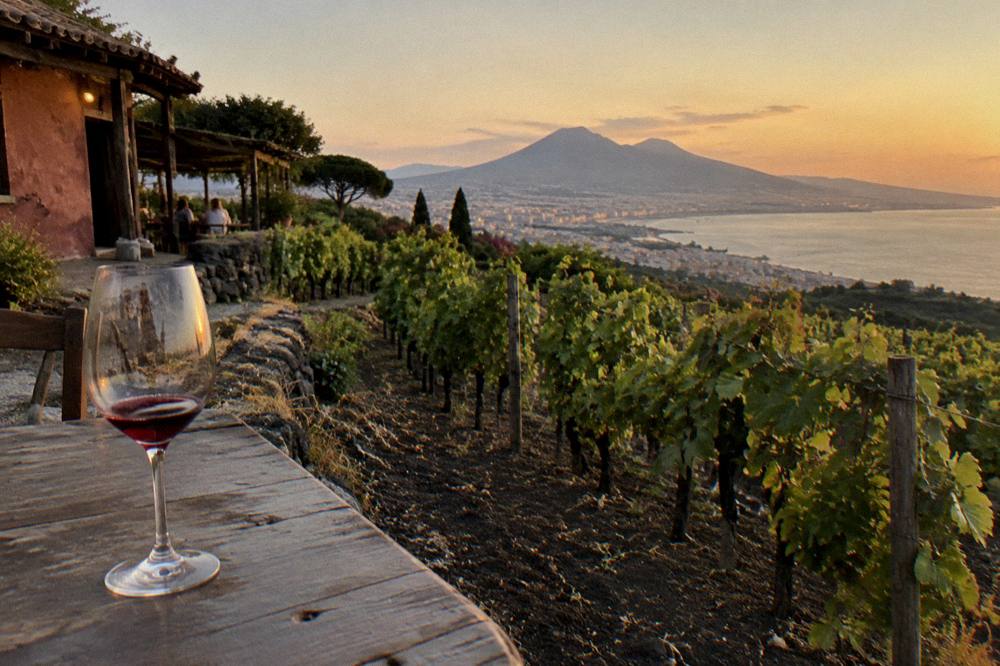
The red zone mapped by Regione Campania's civil protection department covers about 700,000 residents across 25 municipalities in the Naples and Salerno provinces, which tells you the volcano's neighbourhood is a continuous urban fabric rather than empty countryside. Vineyards climb the lower slopes, growing the Lacryma Christi DOC grapes in volcanic soil, and above them the forested national park takes over. The transition from city street to protected woodland takes minutes.
This geography is why departure point matters so much when booking. A tour from Naples approaches from the northwest, a tour from Sorrento crosses the Sorrento peninsula and arrives via Pompeii, and a tour from the Amalfi Coast adds the mountain coastal road. Roster durations reflect that: the From Naples: Pompeii Ruins & Mount Vesuvius Day Tour runs 7 to 7.5 hours, while the Pompeii and Vesuvius Full-Day Tour from Amalfi Coast runs 8 to 9 hours from its starting point across the water.
The pattern of neighbours also produced the AD 79 tragedy that makes the site famous. Herculaneum and Pompeii were buried on opposite sides of the cone, and both are now paired with the crater on combined itineraries. The eruption date is traditionally given as August 24, though a 2018 find points to October.
How Do You Get To Mount Vesuvius From Naples?
From Naples the fastest route is the A3 Napoli-Salerno motorway to the Torre del Greco exit, then the SP144 provincial road up to the Quota 800 car park, 7.3 km and about 15 minutes from the exit. By public transport, the Circumvesuviana train toward Sorrento or Poggiomarino stops at Ercolano Scavi, where shuttles and taxis climb to the trailhead.
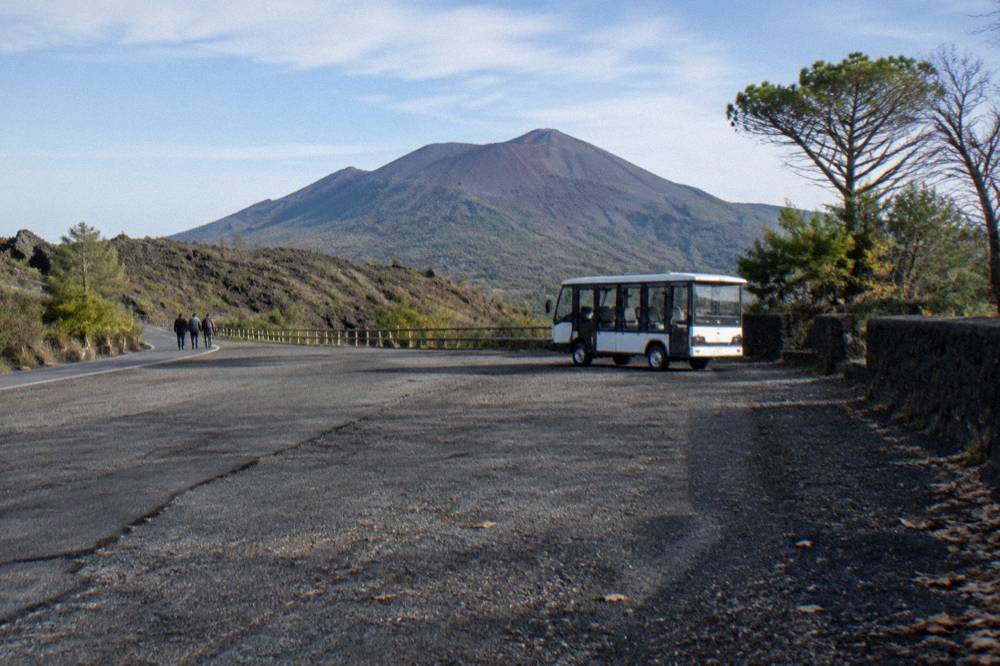
The car route is unambiguous and signposted, but the drive ends at Quota 800, not at the crater. From Quota 800 to the Quota 1000 plaza, the true start of Trail 5, you walk about 30 minutes covering 1.8 km, or ride the Comune di Ercolano shuttle for €1 each way, a trip of roughly 4 minutes. The last stretch of road, Via Osservatorio, carries traffic restrictions for private cars at set hours, which is one more reason tours and shuttles handle the climb well.
Train riders should note that the Campania Express tourist service is suspended from 1 October 2026 until further notice, so the ordinary Circumvesuviana is the rail option. Fares for the train are not stated on the pages we verified; check the operator before travel. Guided options remove the logistics entirely, and most Naples departures include hotel pickup, flagged on the listings of the From Naples All-Inclusive Mount Vesuvius Half Day Tour, from €44.80 per person, or the Mount Vesuvius Tour with Ticket from Naples, from €41 per person. Both are crater-first products, and the wider roster of guided volcano walks sits alongside them on the site.
Because the volcano sits between Naples and the Sorrento peninsula, many visitors combine the crater with Pompeii in a single day. The classic pairing is the From Naples: Pompeii Ruins and Mount Vesuvius Day Tour, which lists lunch and pickup and rates 4.3 across 14,121 reviews, and every other paired departure from Sorrento, Rome and the coast follows the same geographic logic.
How Far Is Vesuvius From Pompeii?
Vesuvius rises directly behind Pompeii, so close the excavations sit under the wall of the volcano's southwestern flank. No verified straight-line distance appears in the official sources we checked, so treat proximity qualitatively: Pompeii is at the foot of the mountain, and every Vesuvius tour from Pompeii reaches the trailhead within its listed three-hour duration.
What the roster durations do show is that the Pompeii-to-crater leg is short enough to run as a standalone half-day product. The Mount Vesuvius Tour from Pompeii, a bus transfer with entry ticket, lists 3 hours from €35.10 per person, and the From Pompeii: Mount Vesuvius Hike and Tour by Bus lists the same span at the same from price. Several other shuttle products cluster around that duration, all using the same access system at Quota 1000.
Public transport connects the two as well. EAV bus line 808 runs from Pompei Piazza Anfiteatro to Quota 1000 in 55 minutes for €3.80 on board, with nine departures a day each way under the timetable in force from 1 October 2026. The catch is the last uphill run arrives at 15:25, after winter's final entry time, so the bus works best for a morning visit. The EAV publishes the full 808 timetable for planning.
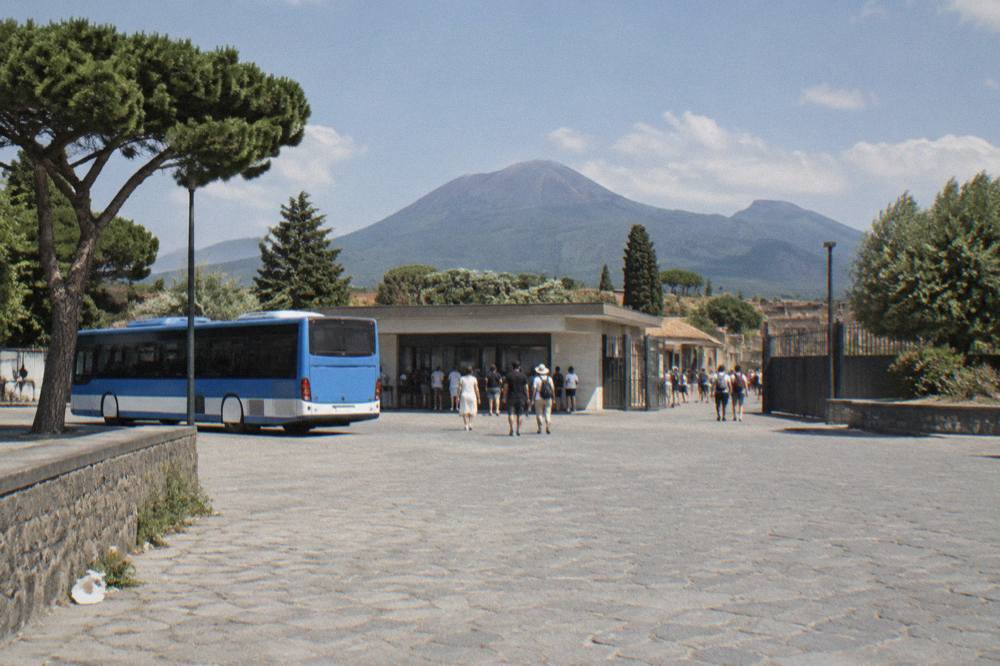
The pairing works so well that combined Pompeii and crater tours dominate the site's roster. The From Naples: Mount Vesuvius and Pompeii Ruins Combo Day Trip, 6 to 6.5 hours with audio guide from €77.40 per person, rated 4.1 across 1,673 reviews, is the entry-level version. Guests on fuller days consistently report the same surprise: the ruins are bigger and the climb steadier than expected.
Where Do You Park And Start The Hike?
The hike starts at the Quota 1000 plaza on the Ercolano side of the volcano, reached from the Quota 800 car park on the SP144. Parking at Quota 1000 itself is not allowed, and there are no public toilets there. Roadside parking along the provincial road is run by the Comune di Ercolano, capped at a 4-hour stay, with cars up to 8 seats paying €7.
The park's own guidance is to secure a crater ticket before buying parking, because entry is sold only online by timed slot. The park's adult ticket is €10 under its ticketing rules; the park's authorised online seller shows €11.68. Reduced entry is €8, or €9.55 online, for under-25s and residents of the 13 park municipalities with ID, and children under 6 with an adult go free. Tickets are nominative and released 30 days ahead at 50 per 10-minute slot, with a last-minute release of 10 tickets per slot half an hour before each entry time, buyable near the entrance.
A normal ticket is valid from 120 minutes before to 120 minutes after the printed slot, within opening hours, which gives drivers real flexibility if the road up is slow. Full ticket mechanics, refund rules and the closure system are covered in detail in the site's dedicated tickets guide. The short version of the closure rule: the trail and box office close automatically on days with an orange weather alert or higher, with automatic refunds for slots inside a closure.
For anyone weighing the transfer-only products, the Bus Transfer to Vesuvius with Park Entry Fee, from €35.10 per person and rated 4.3 across 1,923 reviews, bundles the road leg and entry, and a reviewer named Nicola from the United Kingdom called it "easy way to get from Pompeii to Vesuvius and back again".
What Part Of The Volcano Can You Actually Visit?
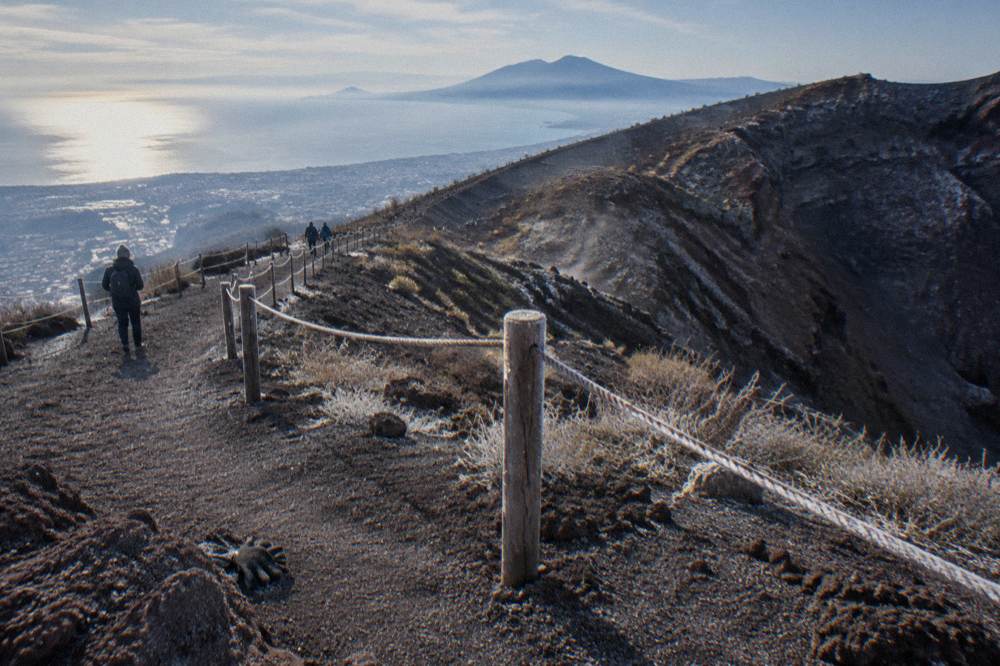
Visitors walk Trail 5, the Gran Cono, a 4,010 m round trip from the Quota 1000 plaza to a turnaround at 1,170 m, taking about 2 hours 30 minutes, with official difficulty rated low. The public trail tops out at 1,175 m, short of the 1,281 m summit, and the upper rim route is closed to everyone but researchers.
Above 1,000 m every group is accompanied by the park's volcanological guides, a mandatory service included with access, and walkers keep to the right side of the path. A tour may not exceed 2 hours on the shortest route and 3 hours on the longest under the park protocol. The reward at the turnaround is the elliptical crater, up to 580 m across, with fumaroles steaming on the inner walls and the whole Bay of Naples laid out below.
Access hours shift by month because the visit must end within one hour of the final entry time, and daily caps change with them. The park's Gran Cono page governs all of this, and the seasonal pattern looks like this:
| Months | Crater access hours | Daily visitor cap |
|---|---|---|
| January, February, November, December | 09:00 to 15:00 | 2,160 |
| March, October | 09:00 to 16:00 | 2,520 |
| April, May, June, September | 09:00 to 17:00 | 2,880 |
| July, August | 09:00 to 18:00 | 3,240 |
Because the trail is the only crater access, every product on this site, from the €35 transfer to the €165 horse riding day, uses the same path and the same quota system. Position on the volcano, not itinerary, is what varies.
Is The Volcano's Location Near Naples Dangerous?
Living beside Vesuvius means living inside Europe's most closely monitored volcanic zone. The civil protection red zone covers about 700,000 residents across 25 municipalities, yet the published alert level is green and the observatory's September 2026 bulletin showed only low-energy seismicity, 121 events with a maximum magnitude of 1.7. Monitoring, not distance, is the safety mechanism.
The question visitors usually mean is whether Naples itself is at the volcano's mercy. Naples sits mostly outside the highest-hazard zone on the map; the exposed belt is the ring of towns on the volcano's own flanks, which is precisely where Herculaneum and Pompeii stood in AD 79. The scenario thinking is laid out in Would Naples Be Destroyed If Vesuvius Erupted?, which works through the red-zone plan rather than the myth.
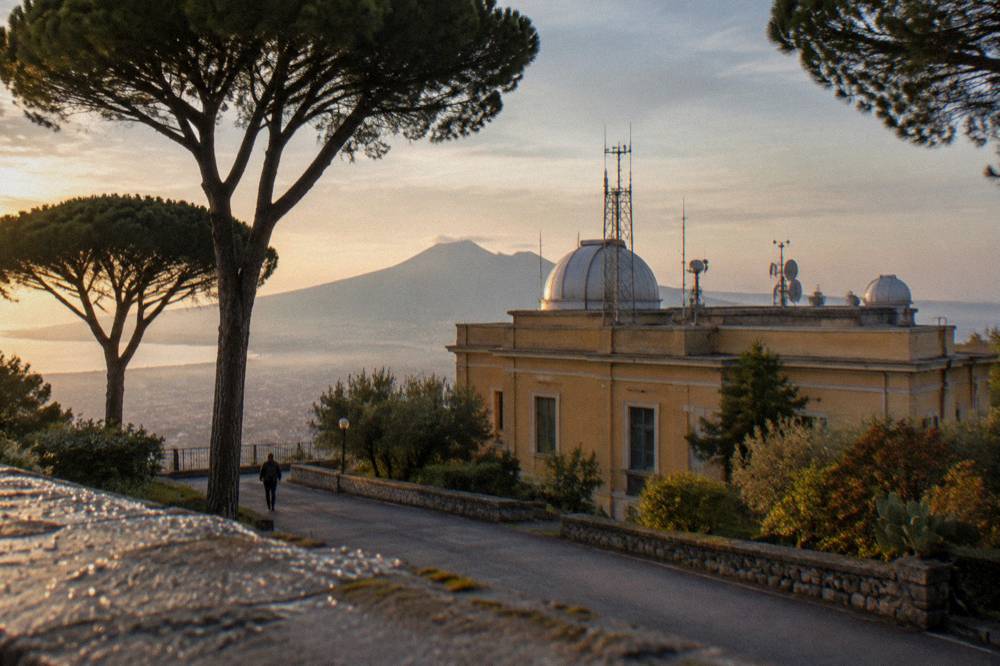
Practically, the danger a visitor manages is weather, not magma. The automatic closure on orange alerts, the mandatory guide service above 1,000 m and the capped flow of walkers exist because the trail is exposed, steep in stretches and busy in summer. Wear proper shoes and carry water, as one guest review of the classic Naples day tour put it: "Very uneven surfaces and very hot in summer so trainers and water bottles."
Which Tours Reach Vesuvius From Each Direction?
Tours depart toward the volcano from Naples, Pompeii and Ercolano, Sorrento, Rome, the Amalfi Coast, Positano and Salerno, because the volcano sits at the hub of every Bay of Naples route. Naples products are the most numerous and cheapest from €16 per person for a skip-line ticket product; Rome days run about 12 hours and command higher fares from €56 per person.
| Departure | Example roster tour | Duration | From price (per person) | Rating and reviews |
|---|---|---|---|---|
| Naples | From Naples All-Inclusive Mount Vesuvius Half Day Tour | 3.5 to 4 hours | €44.80 | 4.5 from 891 reviews |
| Pompeii | Mount Vesuvius Tour from Pompeii | 3 hours | €35.10 | 4.2 from 59 reviews |
| Sorrento | From Sorrento: Mount Vesuvius Tour with Lunch & Wine Tasting | 8 hours | €102 | 4.5 from 277 reviews |
| Rome | Pompeii from Rome with Optional Mt. Vesuvius & Pizza Lunch | 12 hours approx. | €56 | 4.6 from 6,517 reviews |
| Amalfi Coast | Pompeii and Vesuvius Full-Day Tour from Amalfi Coast | 8 to 9 hours | €145 | 4.6 from 414 reviews |
The directions differ in character, not just duration. Naples lines lean on hotel pickup and quick crater access. Sorrento and coast lines cross the bay and almost always fold in Pompeii, since the excavations sit on the natural route. Rome lines are long days by coach or fast train, and the From Rome: Pompeii or Herculaneum and Vesuvius by fast train, from €147.60 per person, treats the volcano as the finale of a rail-and-ruins circuit.
One format uses the volcano's position more literally than any other: riding its slopes on horseback. The Pompeii Guided Tour and Horse Riding on Vesuvius with Lunch, run by TASTETHEXPERIENCE from Pompeii, spends roughly 7 hours combining the ruins with a ride across the volcanic terrain and a wine-tasting lunch, from €165 per person and rated 4.9 across 460 reviews. A guest named Amanda C. described it bluntly: "Pompeii, to lunch, to horse back on Vesuvius is the way to go!!"
For travellers who want the geography without the walk at all, wine tours stay on the lower slopes, tasting the Lacryma Christi DOC grown in the soil the volcano created. The Vesuvius and Pompeii Signature Tour with Wine and Lunch, from €150 per person and rated 4.9 across 461 reviews, spends its 8 hours between the ruins and the vineyards rather than the crater rim.
When Is The Best Time To Stand On Vesuvius?
Timing follows the access hours and the caps more than the calendar. July and August give the longest window, 09:00 to 18:00, but carry the full 3,240 daily cap and summit highs near 22.8 C on the modelled 1991-2020 climate average. April to June and September offer 09:00 to 17:00 access with smaller crowds per slot, while winter halves the window and doubles the rain.
The summit runs about 6 to 7 C cooler than Naples in every month of that climate average, which surprises visitors in shorts. November is the wettest summit month at 180 mm of modelled rain, and closures follow weather alerts rather than seasons, so a spring morning slot booked a few weeks out is the most reliable combination of long access and reasonable odds. Whatever the month, book the crater slot in advance, since same-day tickets exist only through the last-minute release.
If the plan is a paired ruins-and-crater day, give Pompeii the morning, when its 9:00 to 13:00 window carries most of the site's daily 15,000 morning admissions, and climb to the crater in the afternoon light. The full decision framework, including the half-day versus full-day trade-off, sits in the site's season-by-season breakdown, and every product listed above is bookable for future dates, so confirm the operator's current schedule when you book.
Common Questions About Where Mount Vesuvius Is
Where is Mount Vesuvius exactly?
On the southeastern shore of the Bay of Naples in Campania, at coordinates 40 49 18 N, 14 25 33 E, with its summit at 1,281 m per INGV. Naples lies northwest of the cone, Pompeii at its southwestern foot, and Sorrento across the bay.
Which city is closest to Mount Vesuvius?
Ercolano, on the volcano's northern flank, is the closest town to the crater trailhead, followed by Torre del Greco on the western side. Both sit between the volcano and the city of Naples, and Herculaneum's excavations lie within Ercolano itself.
How do you drive to Mount Vesuvius?
Take the A3 Napoli-Salerno motorway to the Torre del Greco exit, then the SP144 to the Quota 800 car park, 7.3 km and about 15 minutes. From Quota 800, walk 1.8 km uphill, about 30 minutes, or ride the municipal shuttle for €1 each way to the Quota 1000 trailhead.
Can you see Mount Vesuvius from Naples?
Yes, the cone dominates the skyline from most of the city's waterfront and eastern districts. The flip side is also true: the bay, the Sorrento peninsula and Capri open up below the crater trail, which is why the viewpoint is a stop on nearly every tour.
Is Pompeii right next to Vesuvius?
Yes. Pompeii's excavations sit at the southwestern foot of the volcano, which is why the two are so often combined in one day. Transfer-and-ticket products from Pompeii list a 3-hour duration to reach the trailhead, walk and return.
Where does the Vesuvius hike start?
At the Quota 1000 plaza on the Ercolano side, the start and finish of Trail 5, the Gran Cono. The round trip is 4,010 m, takes about 2 hours 30 minutes, and is rated low difficulty, with the park's volcanological guides accompanying every group above 1,000 m.