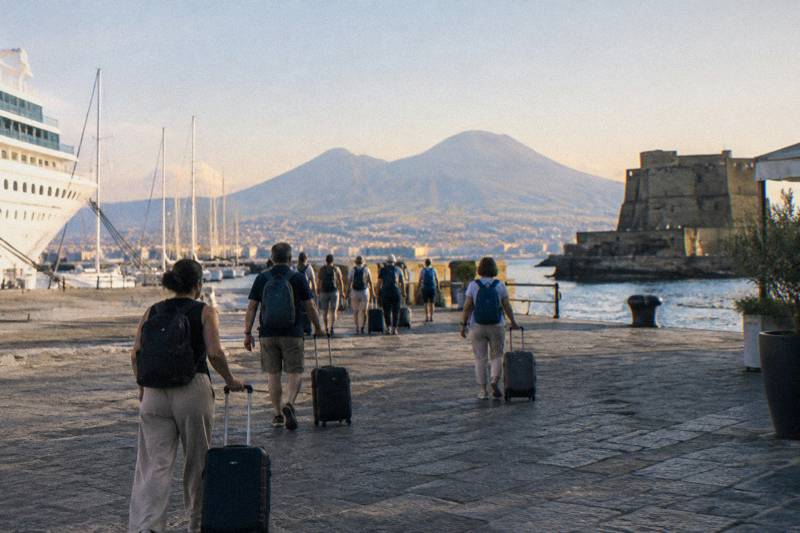
Can I Take A Rock From Mount Vesuvius?
No verified park rule bans taking a rock from Mount Vesuvius, but the trail is inside a protected national park with mandatory volcano guides. Here is what is actually published, and what to do instead.
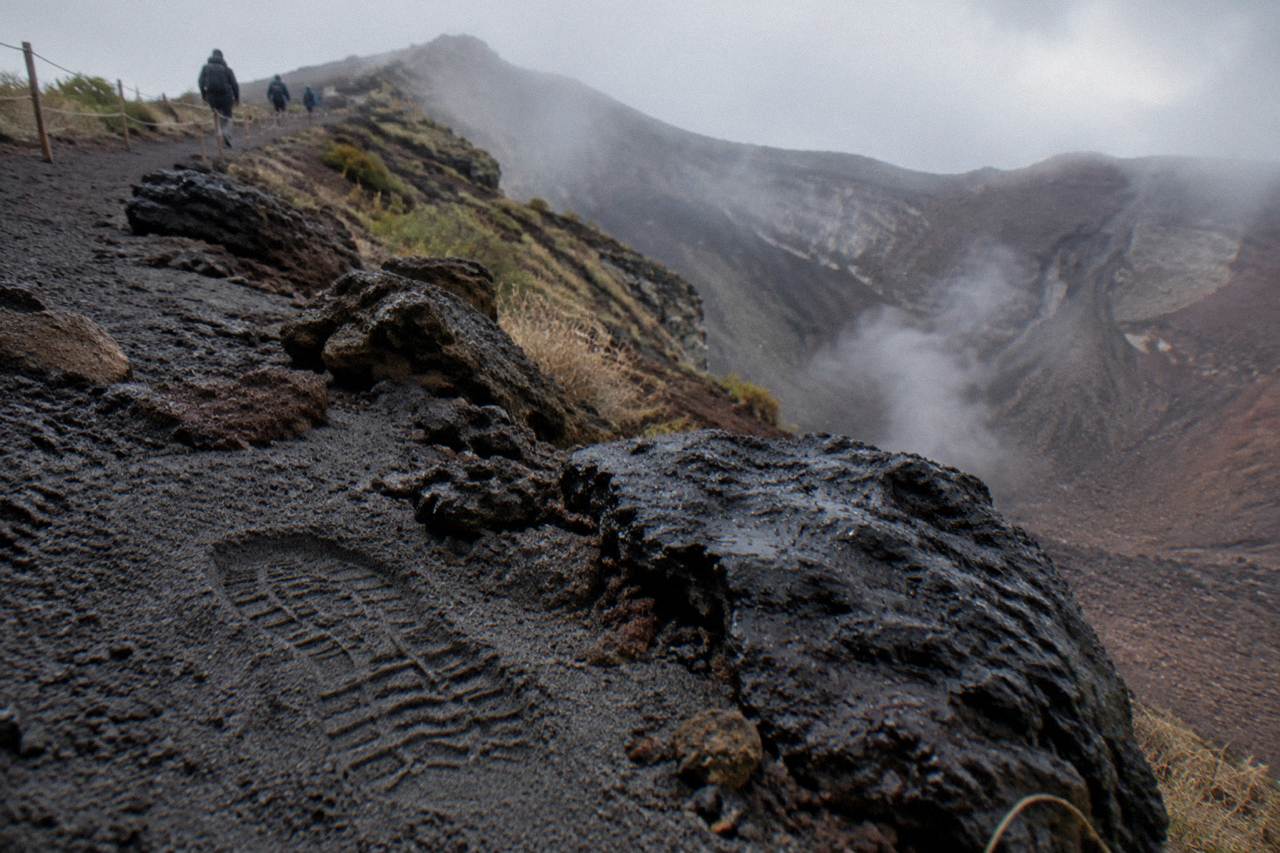
Can I Take A Rock From Mount Vesuvius?
No rule we could verify says you cannot. The park's official Gran Cono page, the 2026 access protocol and the park's published guidance contain no sentence about removing rocks, and we found no published fine. That said, Vesuvius is a protected national park, every visitor above 1,000 m walks with the park's volcanological guides, and if a guide tells you to put a stone back, that instruction is the rule that applies to you. If you're still weighing whether Vesuvius or its larger Sicilian rival makes the better hike, our Vesuvius versus Etna comparison covers what each climb is actually like on the ground.
The honest version of this answer has three layers. The first layer is what is written down. We read the park's own Gran Cono page, the ecosustainable access protocol approved in June 2026 and the park's visitor guidance, and none of them contains a rule about taking rocks, sand or ash. The second layer is the legal frame. The trail sits inside Parco Nazionale del Vesuvio, a national park, and parks of this kind exist precisely to stop things being carried out of them, even when no sign spells it out at the trailhead. The third layer is the practical one. Every single visitor on the crater path is accompanied by the park's volcanological guides above 1,000 m, as the protocol requires, so the on-site instruction you receive on the day is the one that governs your walk. If you're planning the walk itself, the full guide to Vesuvius National Park explains how the escorted crater visits work and what to expect on the trail.
That combination, nothing published, everything protected, someone watching, is why the sensible advice is simple. Enjoy the rocks where they lie. Photograph the black scoria and the rust-coloured walls of the crater, feel free to pick a piece up and look at it, and then leave it where you found it. If you want a souvenir, there are legitimate ways to get one, and we cover them lower down, from the wine grown in volcanic soil to the shops around the Pompeii entrances.
If you are still planning the day itself, the crater walk is a short one, 4,010 m round trip on Trail 5, the Gran Cono, with a maximum altitude of 1,175 m and an official round-trip time of 2 h 30 at low difficulty. Most visitors arrive on a tour rather than alone, and guided hiking products exist exactly for this: a transfer up, the entry ticket handled, and a guide at the crater. The question of souvenirs tends to come up mid-hike, usually when someone crouches next to a fumarole and picks up something glittering and black.
What Rules Are Actually Published For The Vesuvius Crater Trail?
The published rules cover tickets, timing and behaviour, not souvenirs. Tickets are online only, 50 per 10-minute slot, released 30 days ahead, with 10 last-minute tickets per slot released 30 minutes before. A normal ticket is valid from 120 minutes before to 120 minutes after its printed slot. Above 1,000 m, accompaniment by the park's volcanological guides is mandatory for each group, and walkers keep to the right side of the path.
That is the real rulebook, and it is worth knowing because it shows where the park's attention actually sits. The official Gran Cono page is detailed about ticketing mechanics: the park's authorised online seller is the only approved outlet, tickets are nominative, and last-minute releases, capped at 5 per email address, must be bought over the wifi near the entrance. It is equally detailed about weather. On days when the regional Civil Protection authority issues an orange weather alert or higher, the ticket office and the trail close automatically, with refunds issued for slots inside a closure.
What the page does not contain is any sentence about drones, dogs, bags, smoking or rocks. We checked, and the verification trail behind this article records the same gap: rules on drones, dogs, smoking, bags and by extension rock removal are simply not found on the park page or in the protocol PDF. That absence cuts both ways. It means nobody can quote you a published fine for pocketing a pebble, and it also means nobody can quote you a permission slip. The park's practical guidance boils down to taking care, checking the weather and wearing suitable shoes.
| Rule area | Published for the Gran Cono? | What the official source says |
|---|---|---|
| Ticket sales | Yes | Online only via the authorised seller, timed slots, 50 per slot, 30 days ahead |
| Last-minute tickets | Yes | 10 per slot, 30 minutes before, nominative, max 5 per email |
| Ticket validity window | Yes | 120 minutes before to 120 minutes after the printed slot |
| Guide accompaniment | Yes | Mandatory above 1,000 m by the park's volcanological guides, per group |
| Trailside conduct | Partly | Keep right on the walkway; take care; suitable shoes; weather checks |
| Rock, sand or ash removal | Not found | No published rule or fine we could verify |
| Drone, dog or bag rules | Not found | Not on the park page or in the protocol we read |
The entry price itself is two figures on the same page and both belong in any honest summary: the park's adult ticket is €10 under its ticketing rules, while the park's authorised online seller shows €11.68, with reduced rates of €8 and €9.55 for under 25s and residents of the 13 park municipalities. Children under 6 with an adult go free.
Is there a budget way to get up there that avoids buying a full guided day? Yes, and it changes the calculus on this question, because self-guided visitors still meet the volcanological guides at the top. The direct transfer with entry tickets, a Mount Vesuvius transfer with tickets product, is a 3-hour round trip from Naples at from €35.10 per person, rated 4.4 from 1,785 reviews, where the operator states park entry is included, and you can Check availability for your date.
Is Vesuvius A Protected National Park, And Does That Change The Answer?
Yes, it changes it entirely in spirit if not in letter. Parco Nazionale del Vesuvio is a national park established to protect the volcano's geology and ecosystems, and removing material from a protected area runs against the purpose of the designation even where no sign forbids it. No published Vesuvius-specific fine exists that we could verify, so we will not invent one, but protection is the default posture of the place you are standing in.
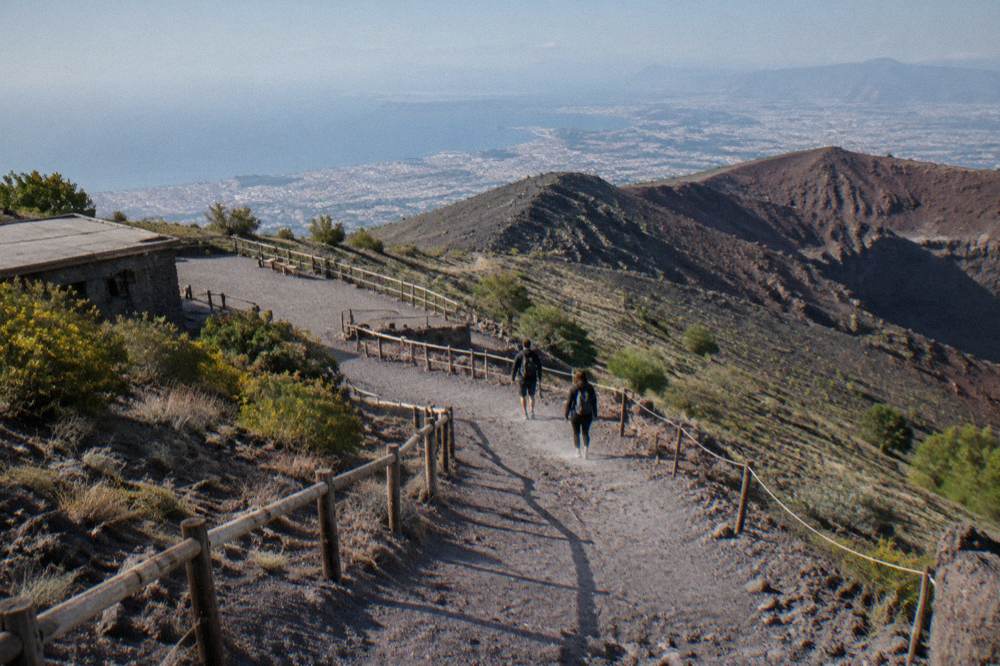
Think about what the trail actually is. Trail 5, the Gran Cono, climbs the 1944 eruption's lava shoulder to a viewpoint at 1,170 m, a few metres below the path's high point at 1,175 m. The crater beyond is an ellipse up to 580 m across, its inner walls streaked with fumaroles, the visible breath of a volcano in quiescence, monitored continuously by the Osservatorio Vesuviano. The summit itself stands at 1,281 m, but the public trail ends at 1,175 m, and the upper rim route is reserved for researchers. Everything you can touch on that walk is either 1944 lava or older volcanic material, and every piece of it is part of what the park was created to protect.
The last eruption is closer in time than people assume. Activity began on 18 March 1944, intensified on 19 March, and lava reached the towns on 21 March, per the INGV Osservatorio Vesuviano's own eruption history. The black glassy rock under your boots on the Gran Cono is, in the plainest sense, recent history. Carrying a piece of it away is carrying a piece of the park, which is why guides tend to discourage it even without a laminated rule to point at.
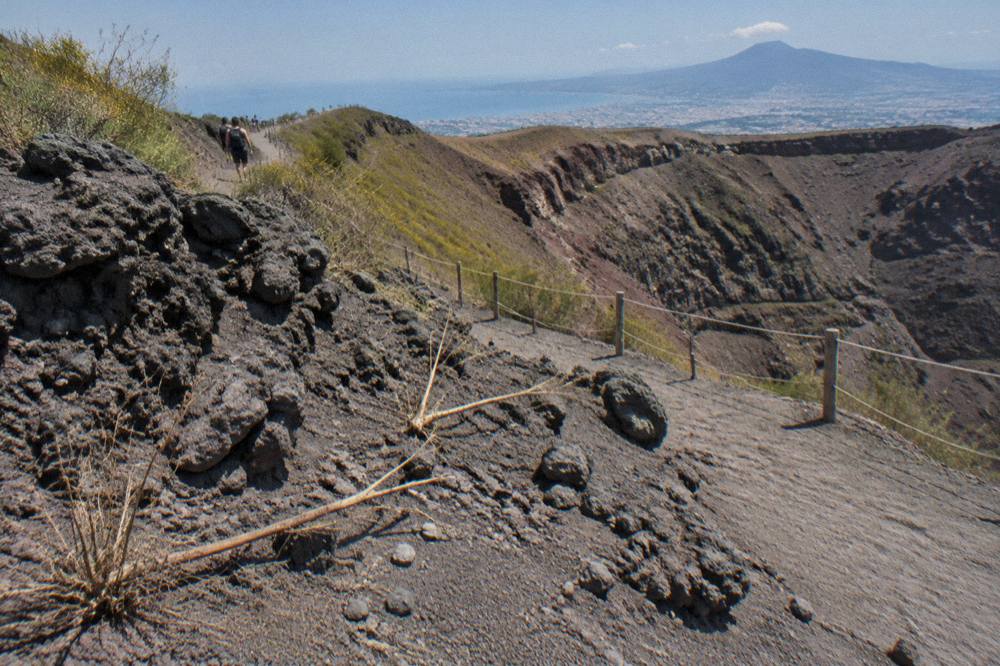
There is also a monitoring story that most visitors never hear. The volcano's alert level is published as green, and the September 2026 bulletin recorded 121 small earthquakes, the largest at magnitude 1.7, with a long-term decline in hydrothermal activity inside the crater. None of that bears on souvenirs, but it explains why the park treats the crater as a scientific instrument as much as a viewpoint, and why the upper rim stays closed to the public. If the monitoring side of Vesuvius catches your interest, our side-by-side comparison of Vesuvius and Etna's size and activity shows how the two volcanoes stack up.
What Happens On The Crater Walk, And Who Is Watching?
You park or are dropped at the Quota 1000 plaza, show your nominative ticket at the hut at 1,118 m, and climb to the turnaround at 1,170 m with the park's volcanological guides, who accompany every group above 1,000 m. The round trip is 4,010 m, officially 2 h 30, rated low difficulty. Guided tours may not exceed 2 h on the shortest route or 3 h on the longest.
The mechanics matter here because they answer the follow-up question people usually ask: would anyone even notice? The answer is that the trail is not a wilderness where you vanish into the scenery. Entry is metered at 60 people every 10 minutes, in three groups of 20, capped at 360 hikers per hour. The daily caps run from 2,160 in the winter months to 3,240 in July and August. You walk a defined path, keep to the right, and a park guide is with each group the whole time you are above 1,000 m. Guides rotate through this trail all day, every day, and they have seen every version of the souvenir impulse, including the one where a visitor fills a backpack.
None of this is stated as enforcement against rock-taking, because no such rule is published. It is simply the context: the Gran Cono is a staffed, timed, guided path, not a place where quiet pocketing goes unwitnessed. If a guide asks you to return a stone, the polite and correct response is to return it.
Getting to the plaza in the first place shapes your day more than any rule does, so here is the transport picture in one table, all figures from the park's own access page and the EAV timetable.
| Way up | From | Time up | Cost | Notes |
|---|---|---|---|---|
| EAV bus 808 | Pompei Piazza Anfiteatro | 55 minutes | €3.80 on board | 9 runs a day up, 8:30 to 14:30; last up arrives 15:25 |
| Comune di Ercolano shuttle | Quota 800 car park | About 4 minutes | €1 each way | Otherwise a 1.8 km walk, about 30 minutes |
| Car, A3 exit Torre del Greco | Then SP144 to Quota 800 | 15 minutes, 7.3 km from the motorway | Parking €7 for cars up to 8 seats, max 4 h | No parking or toilets at Quota 1000 |
| Organised transfer tour | Naples, Pompeii or Ercolano depending on listing | About 3 hours round trip | From €35.10 per person | Entry ticket included on several listings |
Note that the bus does not deliver you early enough to be an only plan in winter: the last run up arrives at 15:25, after the 15:00 last access in January, February, November and December. For a fuller treatment of where tours collect from, the Mount Vesuvius Tour Meeting Points And Pickups guide lists the plaza mechanics by departure city.
If a whole planned day is more your speed, the related tour on this page handles it end to end. The Naples, Pompeii and Vesuvius Full-Day Tour runs 9 hours with hotel pickup, a guided Pompeii walk and lunch included, from €130 per person, rated 4.4 across 153 reviews, and free cancellation is flagged on the listing.
Do Guides Search Bags At Vesuvius?
No bag-search rule is published anywhere we could verify, and nothing in the access protocol or on the park page mentions inspecting luggage, so treat any claim of mandatory searches as invented. The published conduct rules are instead about staying right on the walkway, following the volcanological guides, and respecting the timed slot system, none of which concerns your pockets.
This question tends to follow the first one, because travellers who hear "protected park" imagine airport-style checks at the ticket hut. Nothing like that appears in the official material. What appears, repeatedly, is accompaniment: the guides of the Presidio Permanente walk with groups, answer questions about the 1944 eruption and the fumaroles, and manage the flow of 20-person subgroups up the path. If a guide notices someone hammering at the crater wall or filling a bag, the reasonable expectation is an intervention, but that is a human managing a protected site, not a codified search regime. If the guides' stories of past eruptions leave you wondering about the human cost, the question of how many lives Vesuvius's most famous eruption claimed is answered with a close look at the evidence.
The same honesty applies in reverse. Some blogs state confidently that taking lava rock from Vesuvius carries a specific fine, or that tourists have been stopped and fined on the spot. We found no official source for any such fine, and this site does not print fines it cannot source. If a ranger or a guide tells you otherwise on the day, they outrank a blog, this one included.
Where Can You Legitimately Get A Piece Of Vesuvius To Take Home?
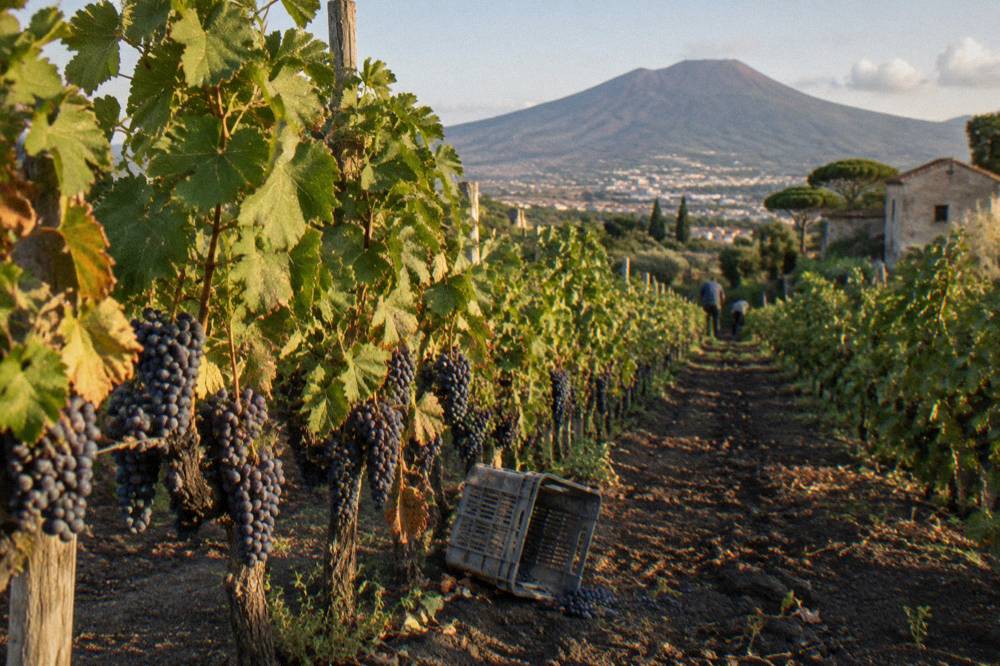
Buy it, do not pick it. Shops around the Pompeii entrances and in Ercolano sell tuff, obsidian-style fragments and ash-glass souvenirs sourced from outside the protected trail, and the wineries on the slopes sell Lacryma Christi DOC, a wine that is quite literally the volcano in liquid form, grown in the park's volcanic soils across 15 municipalities.
The wine route deserves the explanation, because it is the best answer to the souvenir impulse. Lacryma Christi del Vesuvio DOC covers 15 municipalities on the slopes; the bianco is at least 80 percent Coda di Volpe, locally called Caprettone, and/or Verdeca; the rosso is at least 80 percent Piedirosso and/or Sciascinoso. Both must reach a minimum 12 percent alcohol. The vines grow in soil the volcano made, which is about as close to taking a piece of Vesuvius home as the park would ever want you to get. Wine-focused crater days are a category of their own on this site, pairing the hike with a cellar visit and a tasting. And while you sip wine grown in soil the volcano made, you might reasonably wonder whether Vesuvius is due for another eruption, since the mountain is still very much alive.
Several roster tours build exactly that pairing. The Vesuvius and Pompeii Signature Tour with wine and lunch from Naples, from €150 per person and rated 4.9 from 461 reviews, bundles the ruins, the crater and a winery stop in about 8 hours. Shorter and tasting-first, the Mount Vesuvius Vineyard Tour with Wine Tasting and Lunch run by a Trecase winery lasts 1.5 to 2 hours from €55 per person, rated 4.8 from 212 reviews. These are honest souvenir routes: you leave with bottles, not rocks.
For a physical keepsake, the ticket itself is a decent one. Nominative, timed and increasingly hard to obtain at short notice in peak months, a Gran Cono ticket is a small document of a managed, protected place, which is exactly the framing this article keeps returning to.
What About Taking Rocks From Pompeii Or Herculaneum?
The same logic applies with far more force. Pompeii and Herculaneum are archaeological parks, and removing anything from an archaeological site, including loose-looking fragments, mosaic tesserae or plaster, is theft of protected heritage under Italian law, a categorically different matter from an unpublished pebble rule. Everything inside the excavations is part of the protected site, full stop.
There is no ambiguity to litigate here and no gap in the published rules to note honestly. The ancient city of Pompeii is capped at 20,000 visitors a day with nominative tickets, and every wall, fresco, stone and shard inside the perimeter belongs to the site. Herculaneum works the same way. If the Vesuvius question is genuinely open, the Pompeii question is closed, and any guide at either site will say so immediately.
The AD 79 layers are the reason both places exist as parks, and the date itself carries a footnote most visitors enjoy learning: the eruption is traditionally dated August 24, though a 2018 find at Pompeii, a charcoal graffito reading 17 October, points to October, with the park's own team calling an October date highly probable. Walking off with a piece of that archive is not a souvenir, it is looting, and Italian authorities do prosecute it.
What Else Should You Not Do On The Vesuvius Trail?
Stay on the marked route, keep to the right of the walkway, finish within one hour of the last access time, and do not attempt the upper crater rim, which is reserved for researchers. The trail and ticket office close automatically on orange weather alerts or higher, with automatic refunds for slots inside a closure. Bring water and proper shoes; there are no public toilets at the Quota 1000 plaza.
A few of those deserve expansion because they surprise people. The closing times in the park's table are last-access times, and the visit must end within one hour of them, so an October ticket at 16:00 does not mean a sunset linger. The weather rule is strict and automatic: from orange alert upward, the box office and path shut, refunds flow for affected slots, and adjacent slots can be refunded on request within 30 days. And the plaza itself is spartan by design, with no parking and, the park states, no public toilets temporarily, which is why the question of facilities is worth checking before you go in Are There Toilets At Mount Vesuvius?.
Dress for a summit that runs cooler than the bay below. Modelled 1991-2020 climate averages put the 1,000 m level about 6 to 7 C below Naples in every month, so a July day that starts at 29 C in the city can feel like 23 C in the wind at the crater, and a December visit can sit near freezing at the top even when Naples reads 13 C. A review from Millie in the United Kingdom on the Naples day tour with lunch, rated 4.3 from 14,121 reviews, makes the same point from the trail: "very uneven surfaces and very hot in summer so trainers and water bottles."
For anyone weighing whether the climb earns its half day at all, Is It Worth Going Up Mount Vesuvius? works through the view, the crowds and the cost, and this site's own Mount Vesuvius Tours homepage carries the current season status for the trail in its This Season band.
Which Tours Put You On The Trail Without The Guesswork?
The transfer-and-ticket products solve the two hard parts, getting up and getting in, from €35.10 per person from Naples and €42 per person from Ercolano, while full-day tours from €130 add Pompeii and lunch. Every option still hands you to the park's volcanological guides above 1,000 m, so the conduct question in this article follows you up regardless of how you travel.
The comparison below pulls the three products in this article's selection band, all figures firm from the listings.
| Tour | From | Duration | Rating | Includes |
|---|---|---|---|---|
| Naples, Pompeii and Vesuvius Full-Day Tour | €130 per person | 9 hours | 4.4 from 153 reviews | Pickup, guided Pompeii, lunch, crater visit |
| Mount Vesuvius Transfer with Entry Tickets | €35.10 per person | 3 hours | 4.4 from 1,785 reviews | Round-trip transfer, entry ticket, guaranteed entry |
| Mount Vesuvius tour by bus from Ercolano | €42 per person | About 3 hours | 4.1 from 71 reviews | Bus up, entry ticket |
The from-Ercolano option earns its place for Circumvesuviana riders: Ercolano Scavi is the stop the park itself names for travellers heading to the volcano, and a bus-and-ticket package from there removes the shuttle-and-walk leg entirely. Mia from the United Kingdom, reviewing the direct-transfer product, summed up the appeal: "being able to explore and walk up in our own time was amazing!" For more choices leaving from the city, the full Naples day tour with lunch is one of many Naples departures collected on this site, and shuttle-style transfers sit in their own category alongside it.
One framing note before the wrap-up. Tours on this roster advertise free cancellation on their listings, which matters in a place whose trail shuts automatically in bad weather; pair that with the park's automatic refund rule for closure slots and a Vesuvius day becomes unusually low-risk to book ahead. Confirm the operator's current schedule when you book, since trail hours shift by season.
Common Questions About Taking Rocks From Mount Vesuvius
Can I Take A Rock From Mount Vesuvius?
No published park rule forbids it and no fine is documented that we could verify, but the crater trail is inside a protected national park and is walked with the park's volcanological guides. If a guide tells you to leave a stone where it is, that instruction applies. Enjoy the rocks in place and buy your souvenir instead.
Is There A Fine For Taking Lava Rock From Vesuvius?
No Vesuvius-specific fine appears on the park's Gran Cono page or in the 2026 access protocol, and this site will not invent a number. Any specific euro figure you read elsewhere should be treated with caution unless it cites an official source.
Do The Guides Search Bags At The Vesuvius Crater?
No bag-search rule is published on any official page we could verify. The published rules concern timed tickets, keeping right on the walkway and mandatory accompaniment by volcanological guides above 1,000 m.
Can I Take A Rock From Pompeii Or Herculaneum Instead?
No. Both are archaeological parks, and removing any material from them, including loose fragments, is treated as theft of protected heritage. This is a different and much stricter category than the unpublished pebble rule at the volcano.
What Is A Good Legal Souvenir From Vesuvius?
A bottle of Lacryma Christi DOC from a winery on the slopes, or tuff and volcanic-glass pieces sold in the shops around the Pompeii entrances, sourced from outside the protected trail. Your nominative crater ticket also makes a decent keepsake.
Who Accompanies Visitors On The Crater Trail?
Above 1,000 m, every group is accompanied by guides of the park's permanent volcano unit, per the access protocol. Walkers keep to the right side of the path, and the visit must end within one hour of the last access time.