The 79 AD Eruption Of Mount Vesuvius
The eruption of Mount Vesuvius in 79 AD buried Pompeii and Herculaneum and made the volcano's name a byword for catastrophe. This guide sets out the timeline, the date debate and the sites a visitor can still walk.
Short answer
The eruption of Mount Vesuvius in 79 AD buried Pompeii, Herculaneum and surrounding villas under ash, pumice and volcanic flows. The date is traditionally August 24, though a 2018 find points to October. Today the crater, Pompeii and Herculaneum sit within reach of Naples and are commonly combined on one tour.
On 24 August, by the traditional reckoning, or more probably in October, the most famous volcanic disaster in history began on the western flank of a mountain the Romans knew as a vine-covered ridge, not a threat. The eruption of Mount Vesuvius in 79 AD buried two prosperous towns, a stack of seaside villas and an unknown number of farms under pumice and ash, then preserved them with a completeness no other ancient site can match. Pliny the Younger, watching from Misenum across the bay, wrote the surviving eyewitness account, and his letters gave volcanology the term "Plinian" for an eruption column of that kind. His uncle, Pliny the Elder, sailed toward the disaster and died on the shore. To picture how Pliny's vantage point at Misenum and the buried towns relate to the volcano itself, see our guide to exactly where Mount Vesuvius stands today.
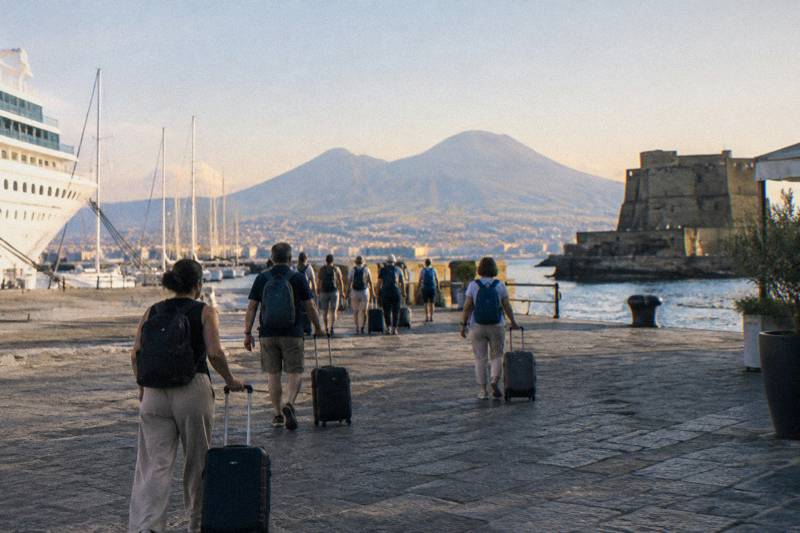
The story is why most visitors come. The three sites that tell it, the crater itself, Pompeii and Herculaneum, sit within about half an hour of one another, and a well-built three-site tour day can cover all of them in a single outing. This guide lays out what happened, when it happened, what you can still see, and how the modern tour routes follow the ancient event.
What Happened During The Eruption Of Mount Vesuvius In 79 AD?
Vesuvius produced a towering eruption column of pumice and ash, driven by escaping gas, which then collapsed into fast, searing flows of rock and gas that overwhelmed settlements on the volcano's flanks. Pompeii, downwind, was buried gradually by falling pumice and then by the flows. Herculaneum, closer to the volcano, was struck first and hardest. The event ran its main course within about two days. For readers wondering how much of that destructive reach came down to the volcano's sheer stature, our guide to the height of Mount Vesuvius puts the summit in context.
The sequence matters for anyone visiting the sites, because it explains why the two towns look so different. Over the first hours and night, a plume rose and spread, and pumice rained down on Pompeii, kilometres to the south-east. Roofs collapsed under the weight. Many residents who stayed indoors died there; many who left early survived. Then, as the eruption column lost its lift, parts of it collapsed, sending pyroclastic density currents, turbulent mixtures of hot gas and volcanic debris, racing down the slopes. Herculaneum, on the volcano's western flank, took these surges first. Pompeii was reached later in the sequence, when the currents had grown large enough to cross the ridge and bury the town to a depth that sealed it for seventeen centuries.
The town's name, and its modern fame, rest on that seal. Organic material rotted away in the packed ash, leaving voids, including the shapes of victims, that archaeologists later filled with plaster to recover the final poses of the dead. The plaster casts are among the most affecting objects in any archaeological museum, and they exist only because the burial was both deep and gentle enough to hold the forms.
Vesuvius itself was remade by the event. The summit the Romans knew was largely destroyed, leaving the much lower caldera within which the modern cone later grew. The mountain's current height is 1,281 m according to INGV, Italy's national volcanology institute, and the crater visible today, elliptical with a maximum diameter of 580 m per the national park, is a product of later eruptions, most recently the last one in 1944. Readers curious about the volcano's behaviour since can follow the story in Is Mount Vesuvius Active and When Mount Vesuvius Last Erupted.
Was The Eruption In August Or October Of 79 AD?
The date is traditionally August 24, taken from medieval copies of Pliny the Younger's letters, though a 2018 find points to October. A charcoal graffito uncovered at Pompeii reads 17 October, and the park team called an October date highly probable. No scholar treats either date as settled, so honest guides carry both.
The graffito, found in Regio V during excavations, appears to be a worker's note dated sixteen days before the Kalends of November, which lands on 17 October. Since the city could not have been inscribed after it was buried, an eruption later than mid-October follows if the reading is right. The inscription is not the only argument: an autumn date also fits the preserved autumn fruits, the heavier clothing on some casts and the wine jars found sealed, more consistent with the harvest than high summer.
The counterweight is the manuscript tradition. Every surviving copy of Pliny gives a summer date, though copyists' errors in dating formulas are a known problem in transmitted texts. The reporting on the find captures the scholarly split well. For a visitor, the practical point is that October is a genuinely atmospheric month to stand in the forum and imagine the sky turning dark, and crater access hours in October run 09:00 to 16:00, with a daily cap of 2,520 visitors under the park's current protocol.
The date debate is a good example of why Pompeii keeps surprising: new evidence still surfaces from a city that archaeologists have been digging for a very long time, and the official park pages carry the details as they develop.
What Did The Eruption Destroy And Preserve?
The 79 AD eruption destroyed Pompeii, Herculaneum, the villa complexes at Oplontis and Boscoreale, and numerous farms and villas across the southern and western slopes, killing a number of people no source can fix with confidence. The same burial preserved streets, frescoes, food, tools and documents at a level of detail unique in the archaeological record.
No honest count of the dead exists, and none should be printed as fact. Excavated remains point to well over a thousand victims at Pompeii and several hundred at Herculaneum, but the towns' populations are unknown and large areas remain unexcavated. What the ash did preserve is better documented than what it killed: at Herculaneum, carbonised wood, doors, furniture and even loaves of bread; at Pompeii, election slogans on walls, graffiti, frescoes and the plaster casts of victims.
The wider toll shaped the region's memory. The fertile volcanic soil that made the slopes worth farming in the first place, the same soil that today carries the Lacryma Christi vineyards, drew people straight back after the eruption, and the red-zone plan now in force covers about 700,000 residents across 25 municipalities in the Naples and Salerno provinces, per Regione Campania's civil protection pages. The what-if question for the modern city is handled in Would Naples Be Destroyed If Vesuvius Erupted?
A compact way to hold the destruction and the preservation side by side:
| Site | What the eruption did | What survives today |
|---|---|---|
| Pompeii | Buried under falling pumice, then pyroclastic flows | A whole town: streets, forums, baths, villas, frescoes, plaster casts |
| Herculaneum | Hit early by hot pyroclastic material, buried deep | Carbonised wood, doors, food, boatsheds with victim remains |
| Oplontis (Torre Annunziata) | Buried, likely a luxury villa of Nero's family | Frescoed villa, now a single-site ticket at €8 |
| Boscoreale | Buried farm and villa | Villa remains and an agricultural museum site, €8 single ticket |
| Vesuvius summit | Older summit largely destroyed in the eruption | Today's caldera and cone, 1,281 m, formed by later activity |
What Can You Still See Of The 79 AD Eruption At The Crater?
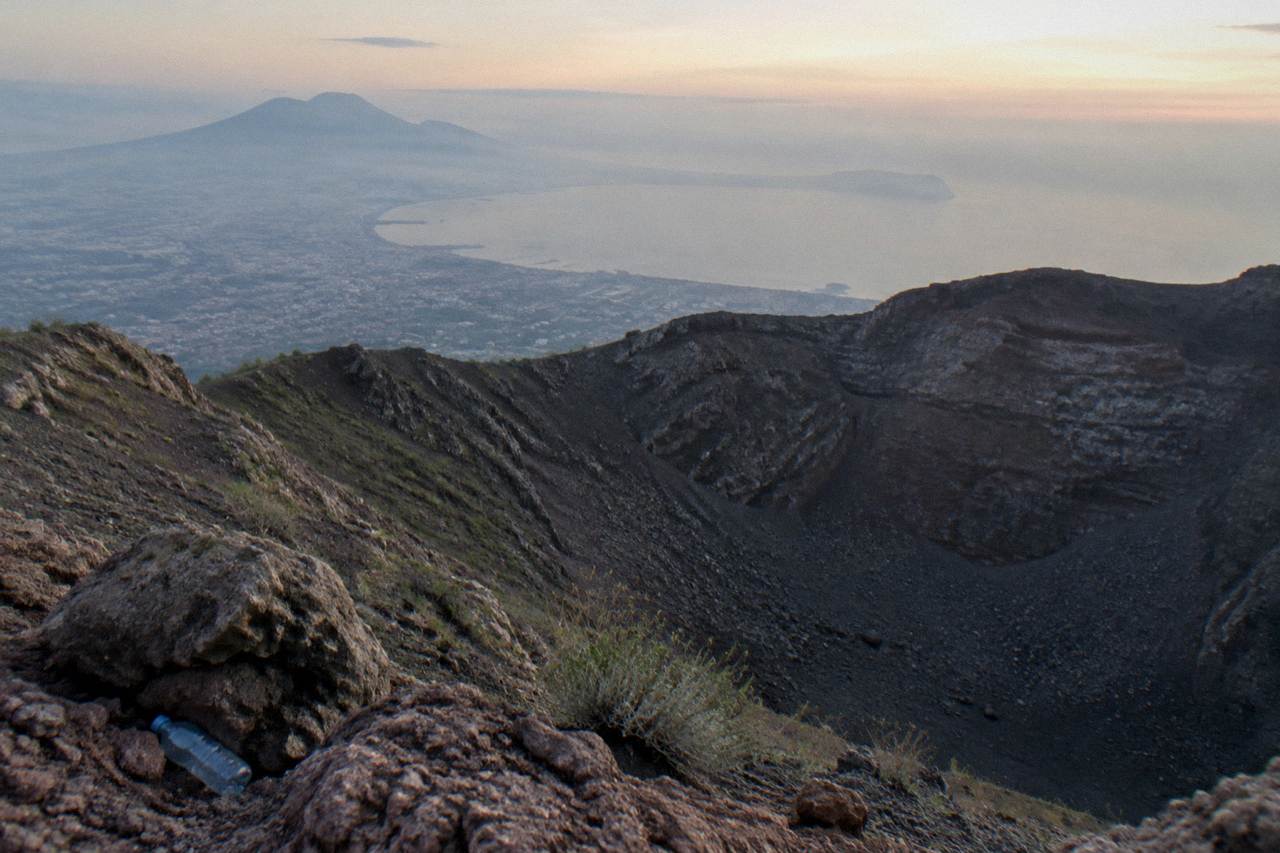
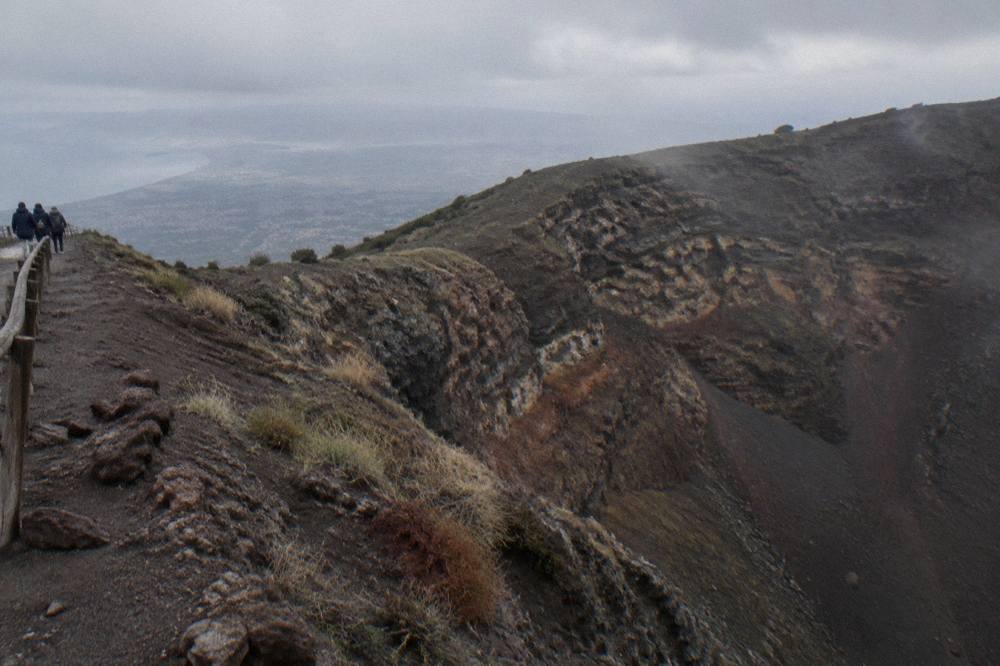
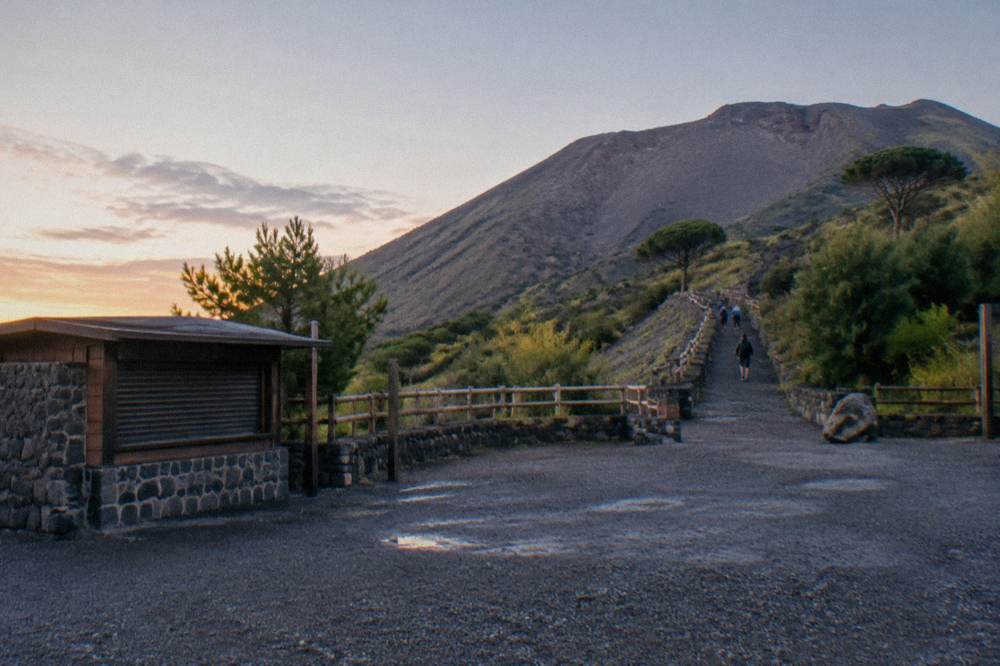
From the crater rim you can read the eruption directly in the rock: the caldera walls show the shattered remnants of the older summit that collapsed in 79 AD, while the inner cone, capped by fumaroles, is the product of later eruptions ending in 1944. The public trail ends at 1,175 m, short of the 1,281 m summit.
Trail 5, the Gran Cono, is the route every crater visitor walks. It runs 4,010 m round trip from the Quota 1000 plaza, takes about 2 hours 30 minutes round trip at the park's own estimate, and the park grades its difficulty as low. The turnaround point, at 1,170 m on the trail's final pitch, overlooks the elliptical crater, with fumaroles steaming on the inner walls, a visible reminder that the volcano is dormant, not extinct. Above 1,000 m every group is accompanied by the park's volcanological guides under a mandatory accompaniment rule, and hikers keep to the right side of the walkway.
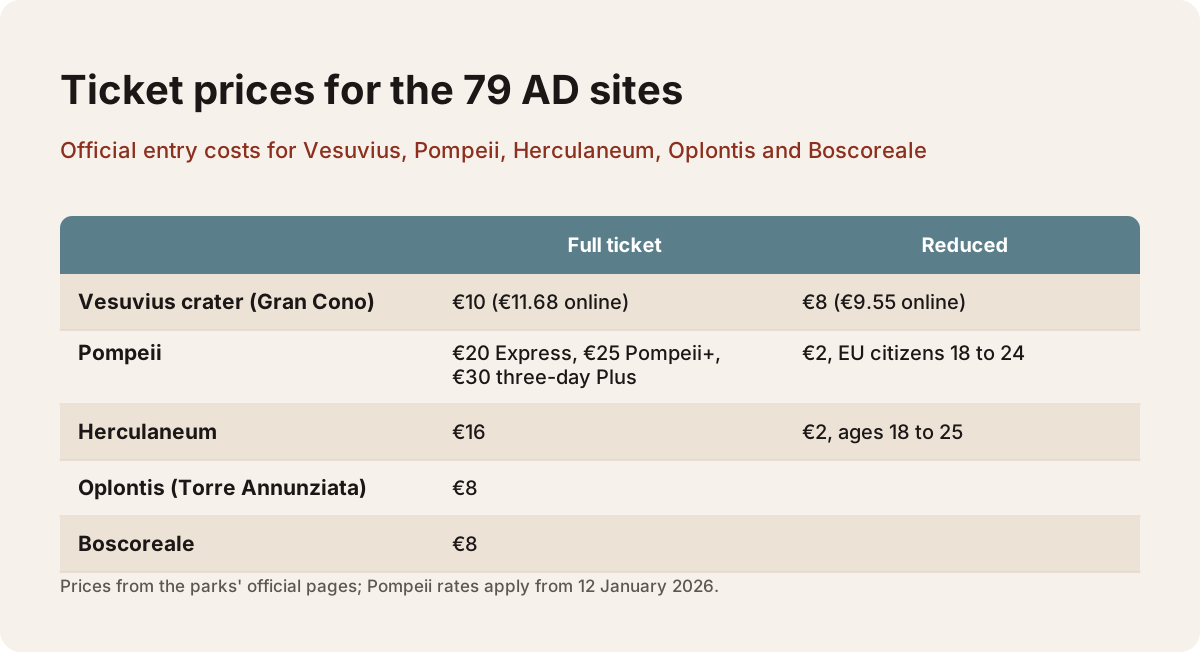
Tickets are sold only online, by time slot, through the park's authorised seller: 50 tickets per 10-minute slot, released 30 days ahead, with a last-minute release of 10 tickets per slot half an hour before each slot. The park's adult ticket is €10 under its ticketing rules; the park's authorised online seller shows €11.68. Reduced entry is €8 (€9.55 online) for under 25s and residents of the 13 park municipalities with ID, and children under 6 with an adult go free.
The crater pairs naturally with a guided walk on the volcano, and the site's Mount Vesuvius hiking tour listings cover every format from bare transfer-plus-ticket to fully guided small-group hikes.
How Do Pompeii And Herculaneum Tell The Story Differently?
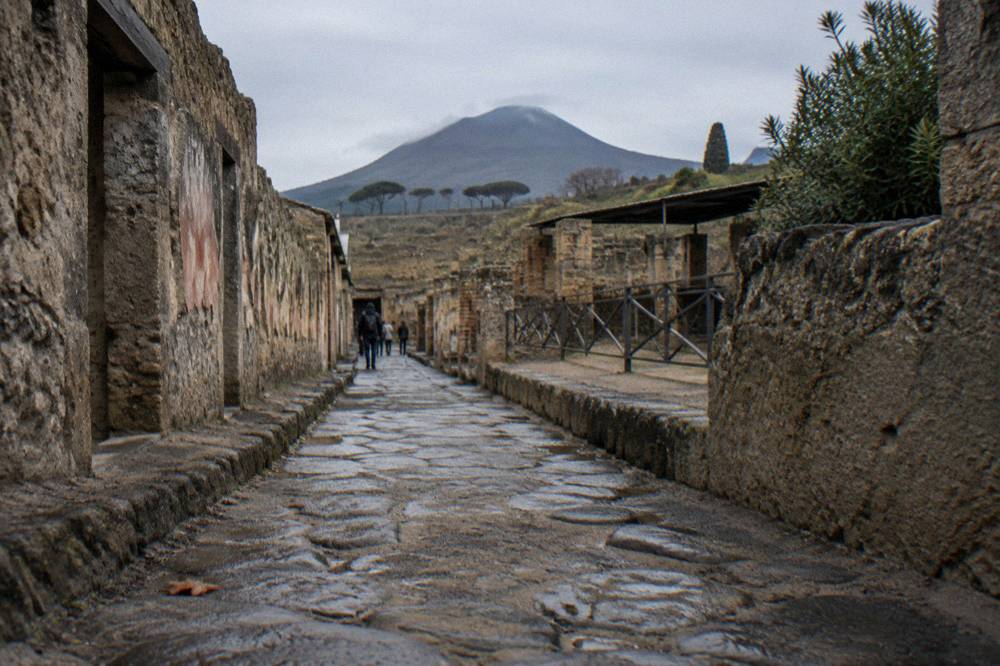
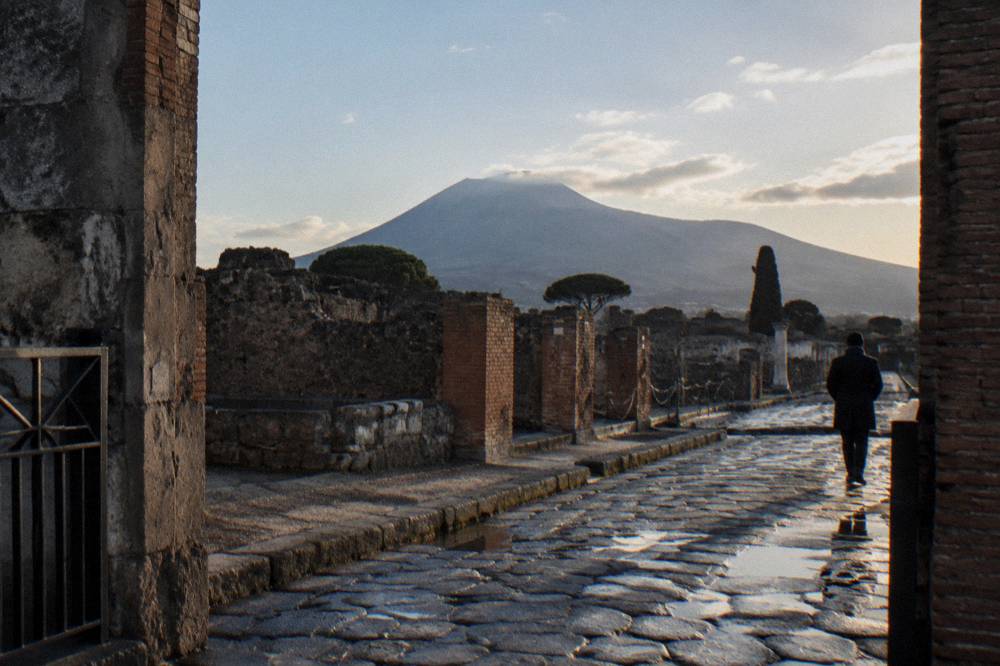
Pompeii shows the eruption's slow first act: a mid-sized commercial city buried by falling pumice over hours, giving many residents time to flee and leaving a cross-section of urban Roman life. Herculaneum shows the violent second act: a smaller, wealthier seaside town struck almost at once by hot pyroclastic material, preserving organic matter that ash alone never could.
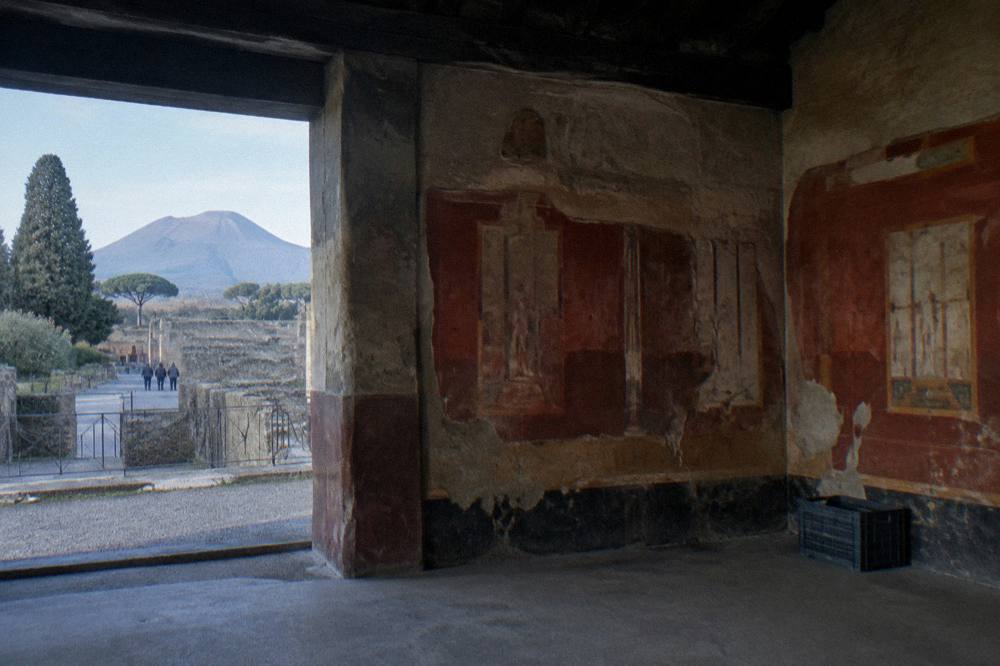
Pompeii is the bigger walk and the bigger story. It was a working town of forums, brothels, bakeries and election politics, and its ruins, roughly two-thirds excavated, hold the amphitheatre, the Villa of the Mysteries frescoes and the garden of the Fugitives casts. Herculaneum is the more intimate and, in places, more startling site: carbonised doors and window frames, a wooden screen in the House of the Wooden Partition, and the boatsheds where dozens of sheltering residents were found. Its smaller footprint, about a quarter the size of Pompeii's excavated area, makes it the better second stop when legs are tiring. The full index of guides sits on Mount Vesuvius Tours.
The two sites' official tickets differ too, and the details matter when you are budgeting a day. Pompeii's prices from 12 January 2026 are set out on the park's official visiting page: Pompeii Express at €20 for the ancient city, Pompeii+ at €25 with the suburban villas, and a three-day Pompeii Plus ticket at €30. From 1 January 2027 the official single ticket becomes €25. Herculaneum is €16 full, €2 reduced for 18 to 25s, per the park's ticket page, and both sites are free on the first Sunday of each month.
| Pompeii | Herculaneum | |
|---|---|---|
| Full ticket | €20 Express, €25 Pompeii+, €30 three-day Plus | €16 |
| Reduced | €2, EU citizens 18 to 24 | €2, ages 18 to 25 |
| Free days | First Sunday of each month | First Sunday of each month |
| Scale | Large city, hours of walking | Compact town, tighter site |
| Best for | Streets, forums, amphitheatre, casts | Carbonised wood, boatsheds, detail |
| Hours (16 Mar to 14 Oct) | 9:00, last entry 17:30, closes 19:00 | 8:30 to 19:30, last entry 18:00 |
Can You Follow The 79 AD Story On One Tour?
Yes, and the combo format is the most natural way to do it. A three-site day tour from Naples covers Pompeii, Herculaneum and the crater in about eight hours, which is the realistic minimum for all three with transport and entry handled. Travellers with more time or a bigger budget take a private version for flexible pacing.
The workhorse option on this site's roster is the Day Trip to Pompeii, Herculaneum and Vesuvius from Naples, run by Di Sarno Car Service, about 8 hours at from €120 per person, rated 4.6 from 588 reviews with free cancellation flagged on the listing. It exists almost precisely for this article's reader: the eruption story, start to finish, in one moving day. One guest review on the listing, from Jody S., captures the arc: "We had a good hike to the crater of Mt. Vesuvius with a beautiful view of Naples, the crater, the country side, Sorrento and Capri. The ruins of Herculaneum and Pompeii were incredible."
For a pace you control, the private version is the Pompeii, Herculaneum and Mt Vesuvius Private Tour from Naples, about 8 hours at from €360 per group, rated 4.7 from a pool of only 41 reviews, small enough to name as such, with pickup and free cancellation flagged. A guest review from Jessica E. praises a driver-guide arrangement: "Antonino was awesome! He was very knowledgeable about each location on the tour and made sure we had plenty of time to fully see what we wanted and to ask questions." Neither listing's write-up should be read as promising entry tickets; check the live listing for what is included.
Rome-based readers are not shut out. The From Rome: Pompeii Day Trip with Optional Vesuvius and Lunch runs 9 to 12 hours at from €56 per person, rated 4.6 from 5,931 reviews, with pickup and free cancellation flagged, and pairs the ruins with an optional crater add-on. The timing maths of a Rome departure gets its own full treatment elsewhere on this site.
The two-group-versus-private trade-off, with price bands for every departure city, is laid out in Private vs Group Mount Vesuvius Tour, and the wider Pompeii and Vesuvius tour roster lists every two-site alternative if three sites feels like one too many.
How Much Time Do You Need For The Eruption Sites?
The crater needs about three hours door to door, including the 2 hours 30 round-trip walk; Herculaneum rewards two to three hours; Pompeii deserves four hours minimum and can absorb a full day. A three-site combo day of about eight hours is therefore brisk but genuinely doable, which is why it is the most popular history format on the roster.
The crater number comes straight from the park: the trail is 4,010 m round trip, 2 hours 30 minutes, and the protocol caps guided tours at 2 hours on the shortest route and 3 hours on the longest. Add transport up from Ercolano or Pompeii and the half-day crater trips on the roster, running 3 to 4 hours, make sense. Herculaneum's compactness is its gift; two unhurried hours cover the decumanus maximus, the boatsheds and the Villa of the Papyri's terrace view, noting the villa itself is closed for works with no announced reopening.
Pompeii punishes under-planning. The site's summer last entry is 17:30 and the daily cap is 20,000 visitors, with morning slots capped at 15,000 between 9:00 and 13:00 in the 16 March to 14 October window, so an early timed entry is the difference between the Forum in quiet and the Forum in a crowd.
| Site | Realistic visit | Key constraint |
|---|---|---|
| Vesuvius crater | 2.5 hours on trail, about 3 hours total | Timed slot valid 2 hours before to 2 hours after printed time |
| Herculaneum | 2 to 3 hours | Last entry 18:00 in summer season |
| Pompeii | 4 hours minimum | 20,000 daily cap, timed morning slots |
| All three, self-managed | Not advised from Naples in one day | Transport between sites eats the margins |
| All three, combo tour | About 8 hours | Fixed itinerary, entry logistics handled |
The half-day versus full-day question, including which site to drop if time is short, is a real decision point for this itinerary, and the same reasoning applies whether you build the day yourself or let an operator sequence it.
Is Vesuvius Dangerous Today After 79 AD?
Vesuvius is dormant and closely watched, not extinct. The alert level is published as green, with monitoring parameters within base values, and the September 2026 bulletin recorded 121 small earthquakes with a maximum magnitude of 1.7, shallow and clustered in the crater area. The last eruption was in March 1944, and planning, not panic, is the official posture.
The monitoring that makes that confidence possible is permanent. The Osservatorio Vesuviano, the world's oldest volcano observatory, runs seismic, deformation and geochemical networks on the mountain, and publishes its current alert level and monthly bulletin openly. The 1944 eruption, which began on 18 March and sent lava toward the towns on 21 March, is the most recent chapter of the same volcano that remade itself in 79 AD; its story is told in When Mount Vesuvius Last Erupted.
For visitors, the operative rules are practical. The trail and box office close automatically on any day with an orange regional weather alert or higher, with automatic refunds for slots inside a closure, and refund windows of 30 days for adjacent slots. Booking language on any tour should be read as "bookable for future dates, confirm the operator's current schedule." The broader risk picture, including the red zone and evacuation planning, is covered in Is Mount Vesuvius Active.
Which Tours Best Match The 79 AD History Reader?
The history reader is best served by a three-site combo from Naples, a private three-site version for pacing, or a Rome departure with an optional crater add-on. Wine and lunch formats suit food-motivated travellers more than eruption-motivated ones, though they walk the same ash soils the Romans farmed.
The trio that earns its place on this page:
| Tour | Format | Duration | From price | Rating and pool |
|---|---|---|---|---|
| Day Trip to Pompeii, Herculaneum and Vesuvius from Naples | Three-site day, Naples departure | About 8 hours | €120 per person | 4.6 from 588 reviews |
| Pompeii, Herculaneum and Mt Vesuvius Private Tour | Private, Naples pickup | About 8 hours | €360 per group | 4.7 from only 41 reviews, a small pool |
| From Rome: Pompeii Day Trip with Optional Vesuvius and Lunch | Day trip, Rome departure | 9 to 12 hours | €56 per person | 4.6 from 5,931 reviews |
Two-site alternatives make sense for a shorter day. The From Naples: Herculaneum, Mount Vesuvius and Pompeii Day Trip, also from Di Sarno Car Service, about 8 hours at from €120 per person with hotel pickup, is listed at 4.4 from 169 reviews, and the From Naples/Pompeii: Herculaneum, Vesuvius, and Pompeii Trip from Visiting Campania, 8 to 8.5 hours at from €112.50 per person, carries entry logistics in its title, so check the listing for what entry is included. Both pair well with a Herculaneum-and-Vesuvius-only day if Pompeii is being saved for a second visit.
What Does The Eruption Story Look Like Through The Day?
A well-ordered day runs crater first or ruins first depending on season, not preference. The crater closes early, last access 15:00 to 18:00 depending on month, while Pompeii admits until 17:30 in high season, so in the shorter months the crater must lead. In summer, ruins in the cooler morning and the crater in late afternoon is the comfortable order.
The seasonal logic is unforgiving and easy to get wrong. From November through February, crater access ends at 15:00, which makes a morning volcano slot and an afternoon at Herculaneum the only sane sequence. From April through June and in September the crater holds until 17:00, and in July and August until 18:00, which allows the reverse. The full monthly picture, with climate averages and crowd notes, sits on this site's season pages.
Layer the archaeology opening hours on top and the shape of the day writes itself: the earliest entry that works for your departure city, the tighter site while energy is high, and the crater with its hard closing time as the fixed peg everything else swings around. This is the quiet advantage of the combo tour, whose operator solves the sequencing for you.
Common Questions About The 79 AD Eruption Of Mount Vesuvius
When exactly did Mount Vesuvius erupt in 79 AD?
The date is traditionally August 24, though a 2018 find points to October: a charcoal graffito at Pompeii reads 17 October, and the park team called October highly probable. Neither date is settled, and honest sources carry both.
How many people died in the eruption of Mount Vesuvius in 79 AD?
No reliable figure exists. Excavations have found well over a thousand victims at Pompeii and several hundred at Herculaneum, but the towns' populations and the number who fled are unknown, so any precise death toll is invention.
Can you visit the crater of Vesuvius on the same day as Pompeii and Herculaneum?
Yes. A three-site combo tour from Naples runs about 8 hours and covers all three, with transport and logistics handled. Doing it independently in one day is possible but tight, since the crater's timed slots and early closing times constrain the schedule.
Is the crater you see today the one from 79 AD?
No. The 79 AD eruption largely destroyed the summit the Romans knew. Today's caldera, with a maximum diameter of 580 m, and the inner cone with its fumaroles, were shaped by later eruptions, the most recent in March 1944.
Is Vesuvius still dangerous after 79 AD?
The volcano is dormant and permanently monitored at green alert level, with the September 2026 bulletin recording 121 small earthquakes of maximum magnitude 1.7. The last eruption was in 1944, and civil protection planning covers about 700,000 residents across 25 municipalities.